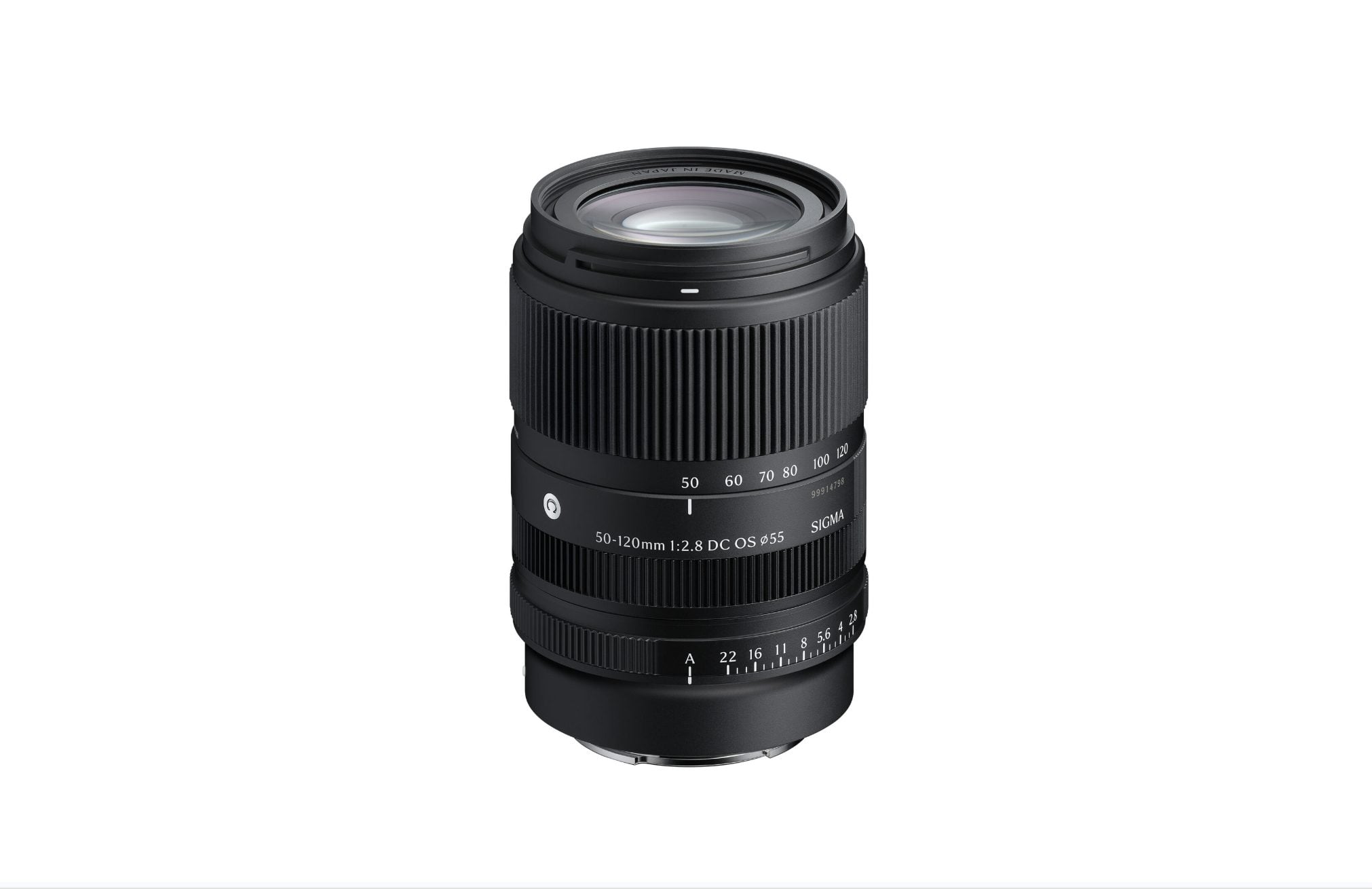





APS-C cameras have always promised less weight. Then you mount a big fast telephoto lens and the kit weighs about the same as full frame. Well Sigma just lightened the load and they’re taking preorders now.
The new 50-120mm F2.8 DC OS Contemporary is a constant-aperture telezoom for Sony E, Fujifilm X and Canon RF. It weighs 390 grams, costs $799 and ships October 22.
Alongside it, Sigma announced a Nikon Z version of its 16-300mm F3.5-6.7 DC OS Contemporary, a lens that first arrived in 2025 for other mounts. This one lands November 5 at $769.
One lens built for speed, one built for everything. Let’s take a look at both.
The Specs at a Glance
| Specification | 50-120mm F2.8 DC OS | 16-300mm F3.5-6.7 DC OS (Nikon Z) |
|---|---|---|
| Status | New lens | New Nikon Z version of a 2025 design |
| Mounts | Sony E, Fujifilm X, Canon RF | Nikon Z (also L, RF, X, E) |
| Full-frame equivalent | 75-180mm (E, X), about 80-192mm (RF) | 24-450mm |
| Maximum aperture | Constant f/2.8 | f/3.5 to f/6.7 |
| Stabilization (Sigma, CIPA rated | 6.5 stops at 50mm, 4.5 at 120mm | 6 stops at 16mm, 4.5 at 300mm |
| Autofocus | HLA linear motor | HLA linear motor, Z-specific control |
| Minimum focus | 23cm wide, 55cm tele | 17cm wide, 105cm tele |
| Maximum magnification | 1:3 wide, 1:4.7 tele | 1:2 at 70mm, 1:3 wide, 1:4 tele |
| Optical design | 18 elements in 13 groups | 20 elements in 14 groups |
| Aperture blades | 11, rounded | 9, rounded |
| Filter | 55mm | 67mm |
| Size | 66.8 x 99mm (E), 66.8 x 99.3mm (X), 69 x 97mm (RF) | 73.8 x 125.4mm |
| Weight | 390g (E, X), 410g (RF) | 630g |
| Weather sealing | Dust and splash resistant, repellent front coating | Dust and splash resistant, repellent front coating |
| Price and ship date | $799, October 22, 2026 | $769, November 5, 2026 |
The APS-C Lens We’ve Been Looking For?
Sony and Canon each sell APS-C bodies with NO native constant-f/2.8 telezooms to go with the cameras. Fujifilm makes one, the XF 50-140mm F2.8, and it’s excellent. It’s also 995 grams and $1,899.95.
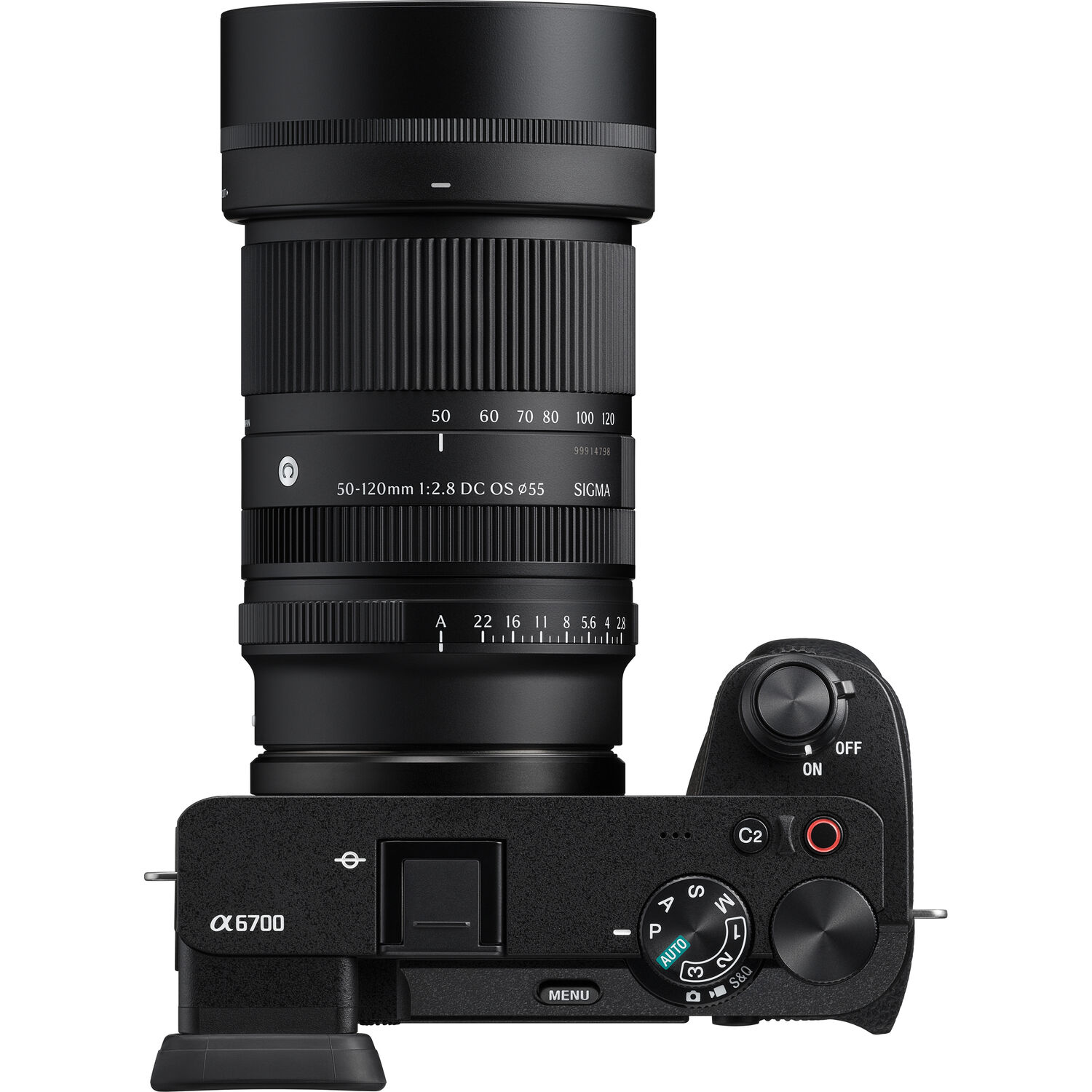
Sigma’s new lens weighs 390 grams in E and X mount and measures about 99mm long. That’s smaller than lots of other standard zooms.
A quick word about crop factor: Multiply by the crop factor and the 50-120mm frames like a 75-180mm on Sony and Fujifilm (1.5x crop), or about 80-192mm on Canon (1.6x crop).
That crop factor number describes how to think about the field of view.
Exposure is fast and stays at f/2.8, which is wonderful in a dark gym or reception hall.
A Three-Lens Kit Under a Kilogram
Here’s where the story gets smaller. Sigma now has three APS-C f/2.8 zooms that cover 10mm to 120mm, about 15-180mm equivalent. In E mount, they add up to 935 grams.
| Lens | Equivalent (1.5x) | Weight (E mount) | Filter | Worth knowing |
|---|---|---|---|---|
| 10-18mm F2.8 DC DN | 15-27mm | 255g | 67mm | Unstabilized |
| 18-50mm F2.8 DC DN | 27-75mm | 290g | 55mm | Unstabilized, no aperture ring |
| 50-120mm F2.8 DC OS | 75-180mm | 390g | 55mm | Stops short of 200mm equivalent |
| Total | 15-180mm | 935g |
You can carry all three for less than Fujifilm’s single 50-140mm. That’s awesome if you’re trying to build a lightweight kit.
The set has a few quirks. Only the 50-120mm has stabilization and an aperture ring, and the ultra-wide takes a 67mm filter while the other two share 55mm. It’s a great optical kit with slightly mismatched controls.
What the 50-120mm Does Well
- Size for speed. Constant f/2.8 telephoto in a 390g package.
- Price. $799 is less than half the list price of Fujifilm’s 50-140mm.
- Stabilization. Sigma rates it at 6.5 stops wide and 4.5 stops long. That’s a big deal on the Canon R10 and R50, which lack in-body stabilization.
- Autofocus. HLA stands for High-response Linear Actuator, a linear motor that drives focus quickly and quietly. DPReview’s early hands-on found it swift and reliable, though demanding sports testing is still ahead.
- Hybrid friendly. Sigma says focus breathing (the shift in framing as you rack focus) stays minimal, and the physical aperture ring gives direct exposure control.
- Close focus. 23cm at 50mm gives 1:3 magnification. Fujifilm’s 50-140mm tops out at 0.12x.
- Shared filters. Same 55mm thread as the 18-50mm F2.8.
- Weather resistance. Dust and splash resistant, with a water- and oil-repellent front element. Sigma stops short of calling it waterproof.
The Trade-offs
- Reach. 180mm equivalent on Sony and Fujifilm falls short of a classic 70-200mm.
- Wide end. 75mm equivalent (80mm on Canon) can feel tight in cramped venues and courtside.
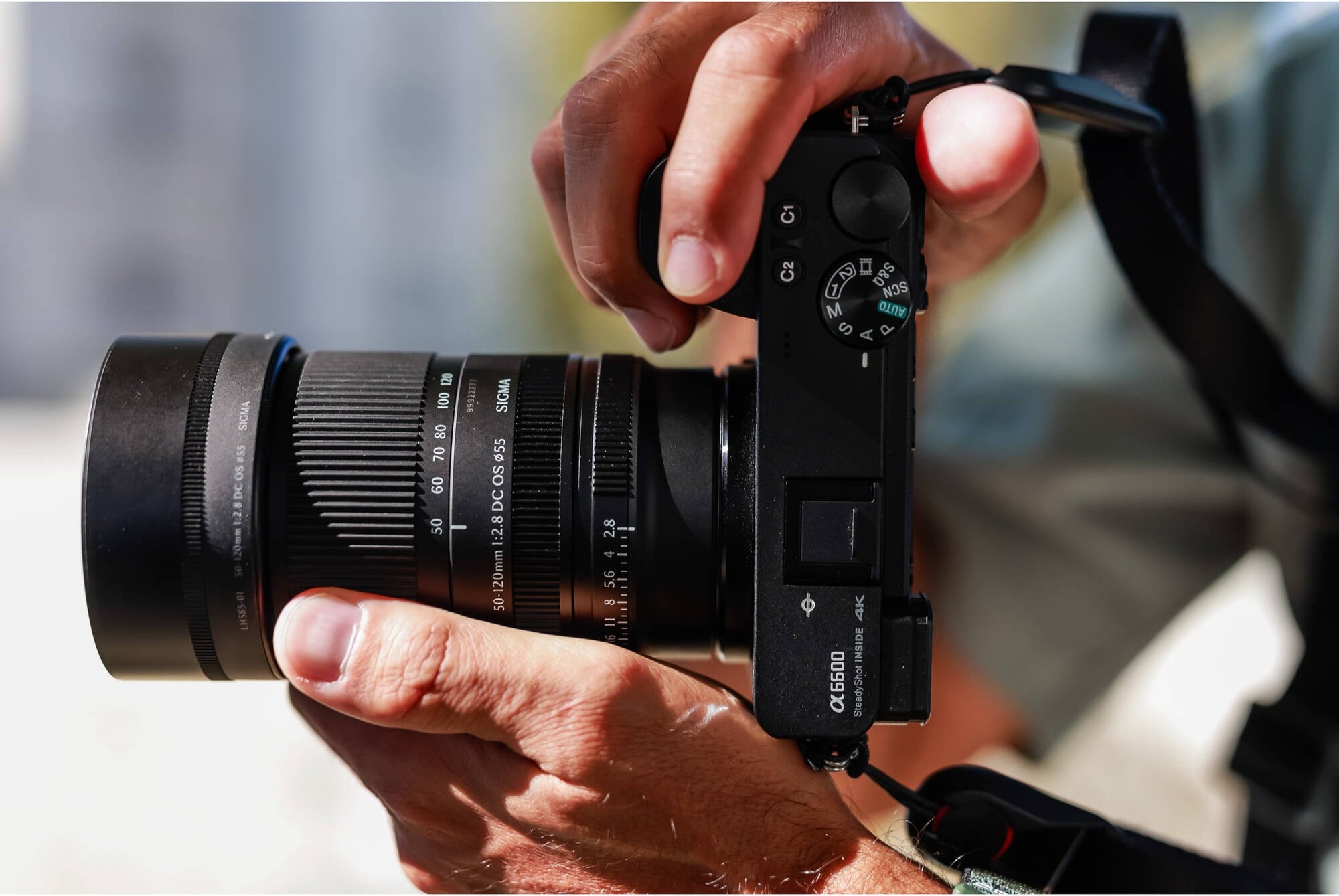
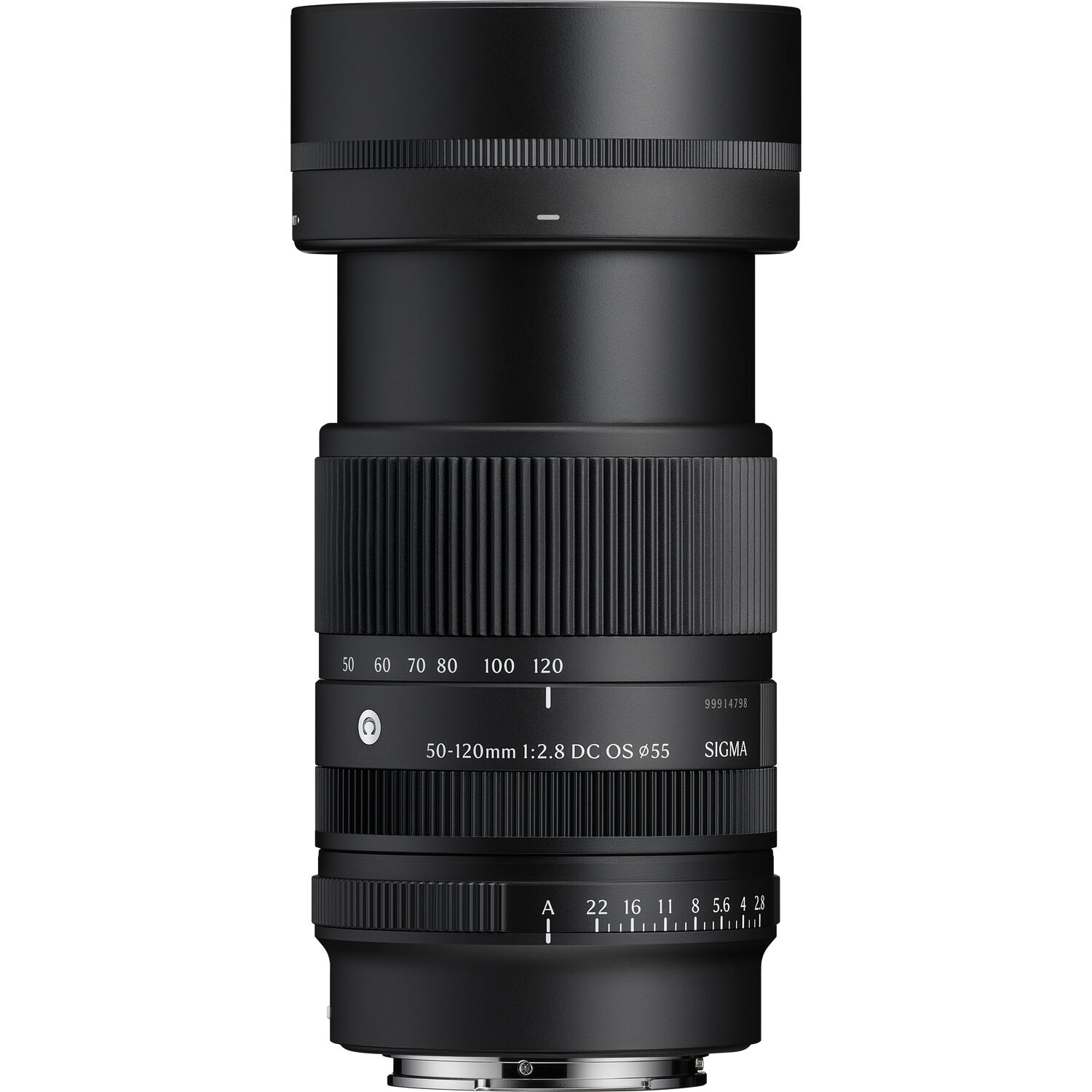
- Extending barrel. DPReview reports it grows about 25% at full zoom. Pro telezooms zoom internally, and the shifting balance means rebalancing on a gimbal.
- Fewer switches. AF/MF and stabilization settings live in your camera menu.
- Click-only aperture ring. Sigma lists no de-click switch, so smooth exposure pulls in video are out.
- Tripod collar. Sigma skips one. At 390g, most people won’t need it.
- Mounts. Nikon Z and L-Mount versions are absent at launch.
- Teleconverters. Sigma leaves this lens off its compatibility list, so consider 120mm as the top focal length.
- Close-focus corners. DPReview saw soft, swirly corners on flat subjects near minimum focus at 50mm, while overall sharpness looked strong. Call that preliminary until production samples get tested.
- Depth of field. At matched framing, f/2.8 on APS-C looks like about f/4.2 on full frame (f/4.5 on Canon). You get f/2.8 exposure with a little less background blur.
A strong fit
- Canon shooters gain the most. R7, R10 and R50 owners had no native constant-f/2.8 telezoom at all, and the built-in stabilization matters even more on bodies without IBIS.
- For portrait and headshot photographers who want compression without a full-frame 70-200
- Wedding and event shooters running two APS-C bodies, if 75mm is wide enough for the room
- Indoor and youth sports photographers on Sony, Fujifilm or Canon
- Hybrid creators building lightweight rigs
- Travel and street photographers who want telephoto compression in a smaller kit
- Fujifilm shooters who value weight and price over the 50-140mm’s extra reach and pro build
Better served elsewhere
- Field sports and wildlife specialists who need more than 180mm equivalent
- Full-frame owners, since this DC lens covers an APS-C image circle
- Pros who need internal zoom, a tripod collar or teleconverter support
How It Stacks Up
| Lens | Format | Equivalent range | Weight | Length | Price | Main advantage |
|---|---|---|---|---|---|---|
| Sigma 50-120mm F2.8 DC OS | APS-C | 75-180mm (E, X), 80-192mm (RF) | 390-410g | 97-99.3mm | $799 | Portability and value |
| Fujifilm XF 50-140mm F2.8 OIS WR | APS-C | 76-213mm | 995g | 175.9mm | $1,899.95 | Reach, internal zoom, pro handling |
| Tamron 70-180mm F2.8 G2 | Full frame | 70-180mm | 855g (E), 865g (Z) | 156.5mm | About $1,099 | Full-frame coverage, strong close focus |
Against the Fujifilm, the Sigma is about 61% lighter and $1,100 cheaper. It gives up 20mm, internal zooming, a tripod collar and teleconverter support. Call it the first credible lightweight alternative.
Nikon Z Gets the 16-300mm
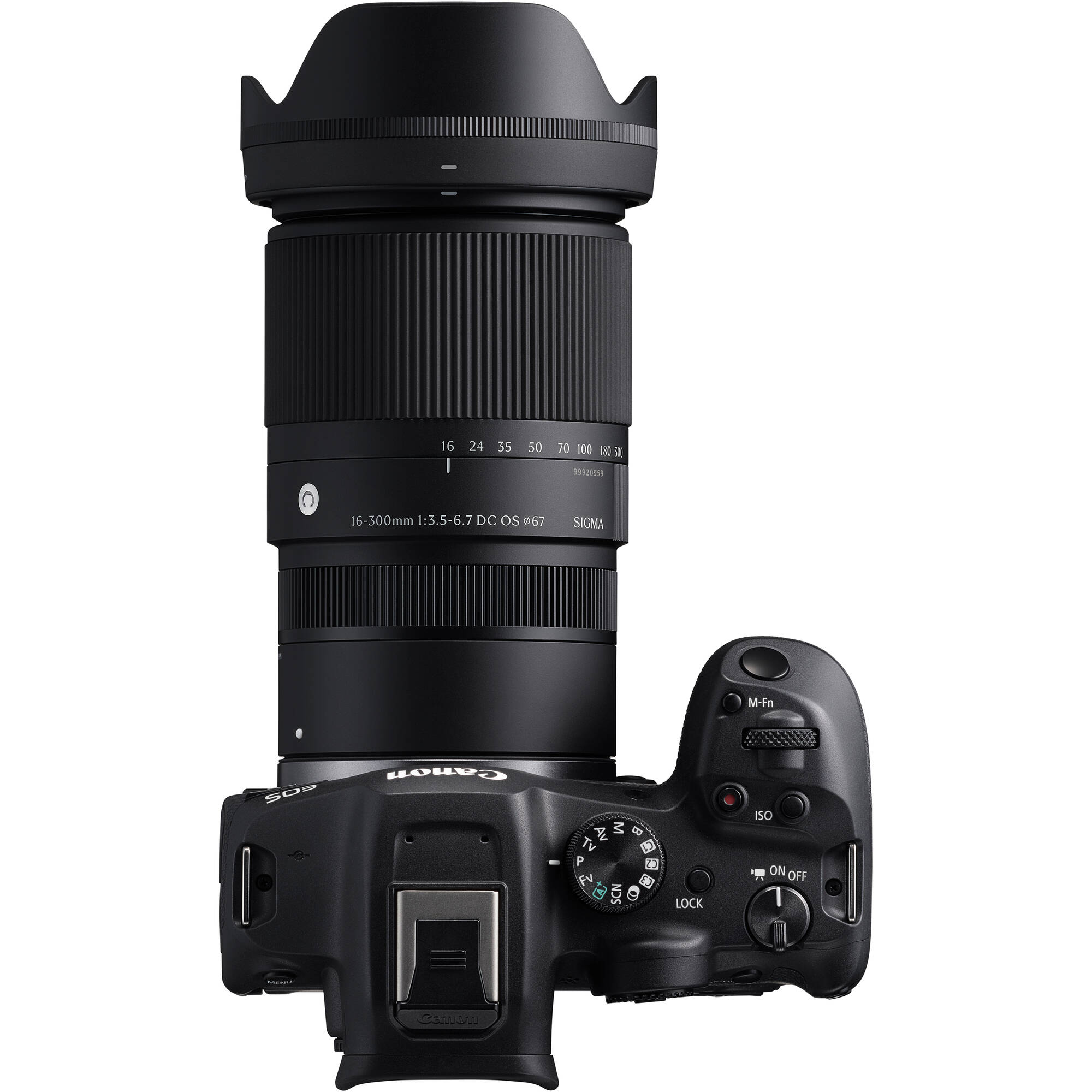
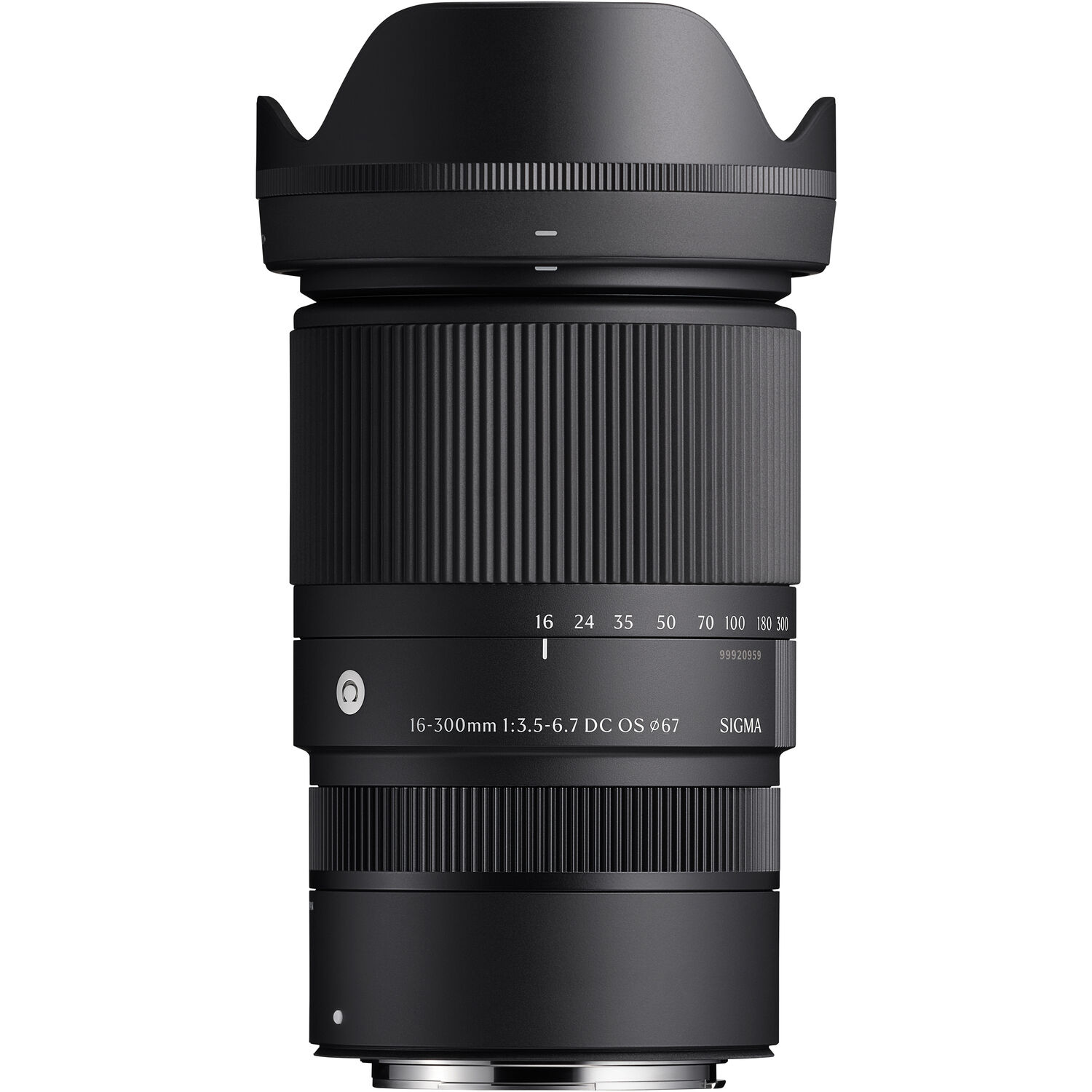
Nikon shooters, your lens is the opposite philosophy. The 16-300mm F3.5-6.7 DC OS uses the same optics Sigma released for other mounts in 2025. What’s new is the mount. It’s Sigma’s first Z-mount zoom, with AF-C support, in-camera aberration correction and a focus algorithm tuned for Nikon Z.
The range is the real deal: 24-450mm equivalent in one weather-resistant lens. Interiors, landscapes, portraits, field sports, zoo animals and aircraft, very versatile – all without a lens change.
Nikon’s Z DX 18-140mm starts at 27mm equivalent. The Sigma starts at 24mm, a small but noticeable difference in a small room or a tight city street. It also reaches more than twice as far.
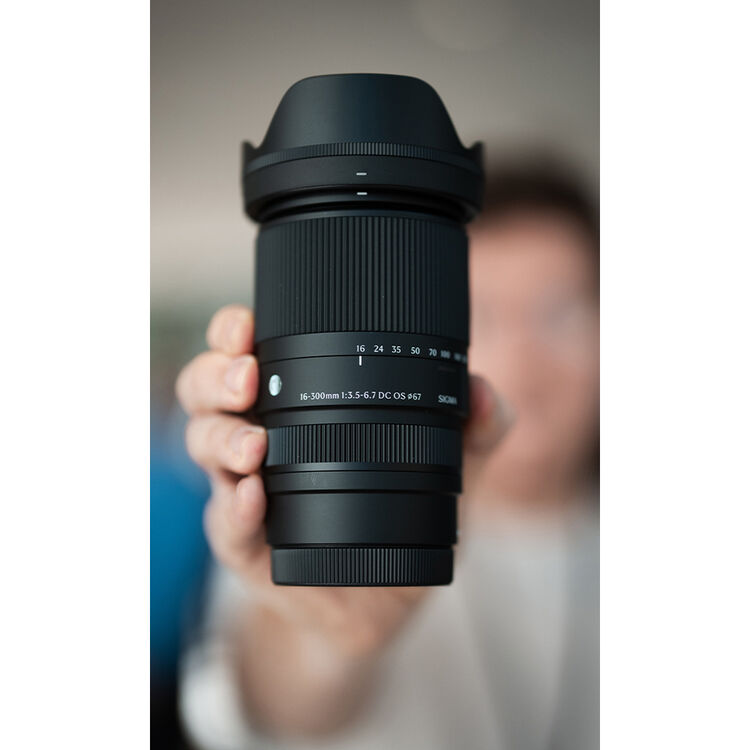
The cost is weight: 630g against the Nikon’s 315g.
- Close-up ability. 1:2 at 70mm, 1:3 wide and 1:4 at 300mm.
- Autofocus. Independent reviews found the HLA motor quick and reliable for everyday action and wildlife.
- Stabilization. Sigma rates it at 6 stops wide and 4.5 long, useful on DX bodies that lean on lens stabilization.
- Image quality. Fstoppers found sharpness outstanding at 16mm, even wide open, with the biggest drop around 150mm.
- Travel details. Weather resistant, 125.4mm long, with a zoom lock and suppressed focus breathing for video.
The trade-offs are classic superzoom:
- The aperture slows fast and ends at f/6.7, so expect higher ISOs in dim light.
- Corners stay soft. PetaPixel saw corner blur at 16mm, and Fstoppers found soft corners at 300mm at every aperture.
- Expect barrel distortion wide and pincushion through the middle of the range, so lens profiles matter.
- Bokeh is busy. PetaPixel saw soap-bubble highlights and onion rings, and called bokeh the lens’s weak point.
- The 1:2 setting is useful, with softer detail at the closest distances. PetaPixel also found you’re about an inch from the front element, which can cast a shadow on your subject.
- PetaPixel flagged that the zoom lock can engage by accident.
It’s built for family and travel photographers, hikers, daylight field sports, zoo and aviation shooters, and Z50-series, Z fc and Z30 owners who want the widest native range.
Low-light sports and stage photographers, corner-critical landscape shooters and portrait specialists will do better with faster glass.
Price and Availability
- 50-120mm F2.8 DC OS Contemporary: $799 (€799 in Europe), ships October 22, 2026, in Sony E, Fujifilm X and Canon RF. Preorders are open at B&H.
- 16-300mm F3.5-6.7 DC OS Contemporary for Nikon Z: $769, ships November 5, 2026.
Two Ways to Travel Light
Sigma just offered two ways to pack light. One is a fast three-lens kit that weighs less than a single pro telezoom. The other is one lens that covers almost everything and keeps the dust out of your sensor.
Both lenses give APS-C a complete system worth building around.
Pick what fits how you work, and go find some light.

Sources
- Sigma: 50-120mm F2.8 DC OS Contemporary product page
- DPReview: Sigma’s 50-120mm F2.8 OS DC is an APS-C legend in the making, for just $799
- PetaPixel: Sigma 50-120mm f/2.8 Contemporary Review: You’ll Want to Take This Lens Everywhere
- PetaPixel: The Sigma 50-120mm f/2.8 Completes Its Ultra-Compact APS-C Trinity
- PetaPixel: Sigma 16-300mm f/3.5-6.7 DC OS Review: A Long-Awaited Return
- CineD: SIGMA 16-300mm f/3.5-6.7 DC OS Contemporary for Nikon Z Mount Announced
- B&H Explora: Sigma Announces Compact 50-120mm f/2.8, Brings 16-300mm to Z Mount
- Sigma: 16-300mm F3.5-6.7 DC OS Contemporary original announcement (2025)
- Fstoppers: Versatile Zoom, Real-World Tradeoffs: A Review of the Sigma 16-300mm f/3.5-6.7 DC OS Contemporary Lens





Elevate Your Vision


Read this story and all the best stories on The Luminous Landscape
The author has made this story available to Luminous Landscape members only. Upgrade to get instant access to this story and other benefits available only to members.
Why choose us?
Luminous-Landscape is a membership site. Our website contains over 5300 articles on almost every topic, camera, lens and printer you can imagine. Our membership model is simple, just $2 a month ($24.00 USD a year). This $24 gains you access to a wealth of information including all our past and future video tutorials on such topics as Lightroom, Capture One, Printing, file management and dozens of interviews and travel videos.
- New Articles every few days
- All original content found nowhere else on the web
- No Pop Up Google Sense ads – Our advertisers are photo related
- Download/stream video to any device
- NEW videos monthly
- Top well-known photographer contributors
- Posts from industry leaders
- Speciality Photography Workshops
- Mobile device scalable
- Exclusive video interviews
- Special vendor offers for members
- Hands On Product reviews
- FREE – User Forum. One of the most read user forums on the internet
- Access to our community Buy and Sell pages; for members only.
You may also like