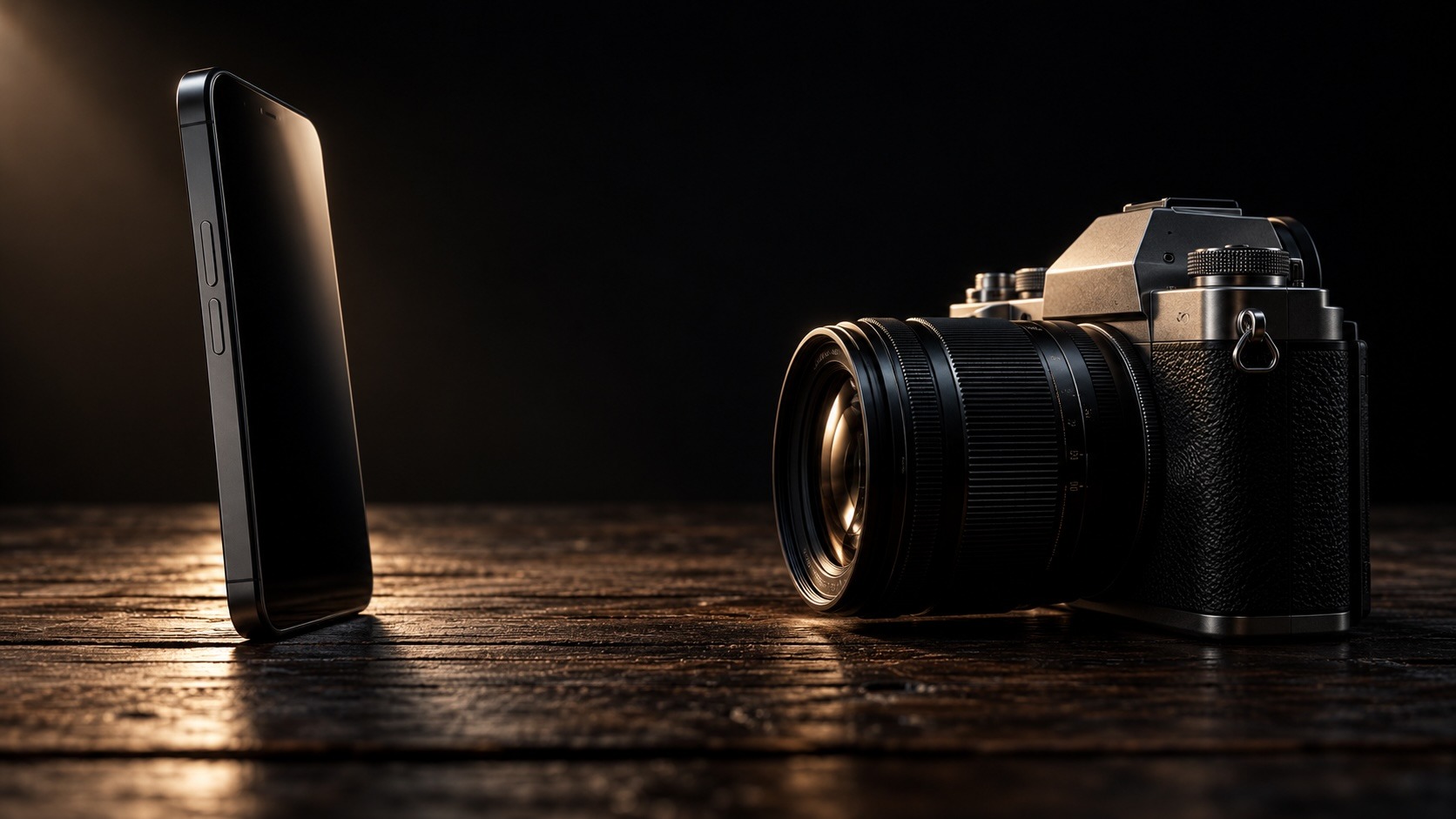





For most of the digital era, there’s been a spec sheet race – how do we get more megapixels, faster bursts, better autofocus, and cleaner high ISO.
Has that race run its course?
In a recent Nikkei series of executive interviews, Canon, Nikon, Sony and Fujifilm each laid out where they think cameras go next. If you haven’t heard of it, Nikkei is Japan’s version of The Wall Street Journal, the country’s top business paper, and it gets rare access to the executives who run these companies.
What did these camera companies say to the reality that phones already make good pictures, and AI can make a picture with no camera at all.
So why carry a camera? Here’s how each company answers.

Canon: The Experience
Canon’s Go Tokura, head of its Imaging Group, says younger buyers care about how a camera feels to shoot, and how it looks. Canon plans to grow its video-leaning V series, both bodies and lenses.
This idea makes sense as Canon says the EOS R50 V and PowerShot V1 did well with younger customers and helped push imaging sales up 12.5% in 2025.
Canon’s going to keep racing the spec race. It still plans a full lineup from flagship to entry level, for stills, video and hybrid shooters. It’s focus on the experience.
The risk: “experience” can turn into marketing talk and chasing vibes.
Nikon: Flagship Tech for Less
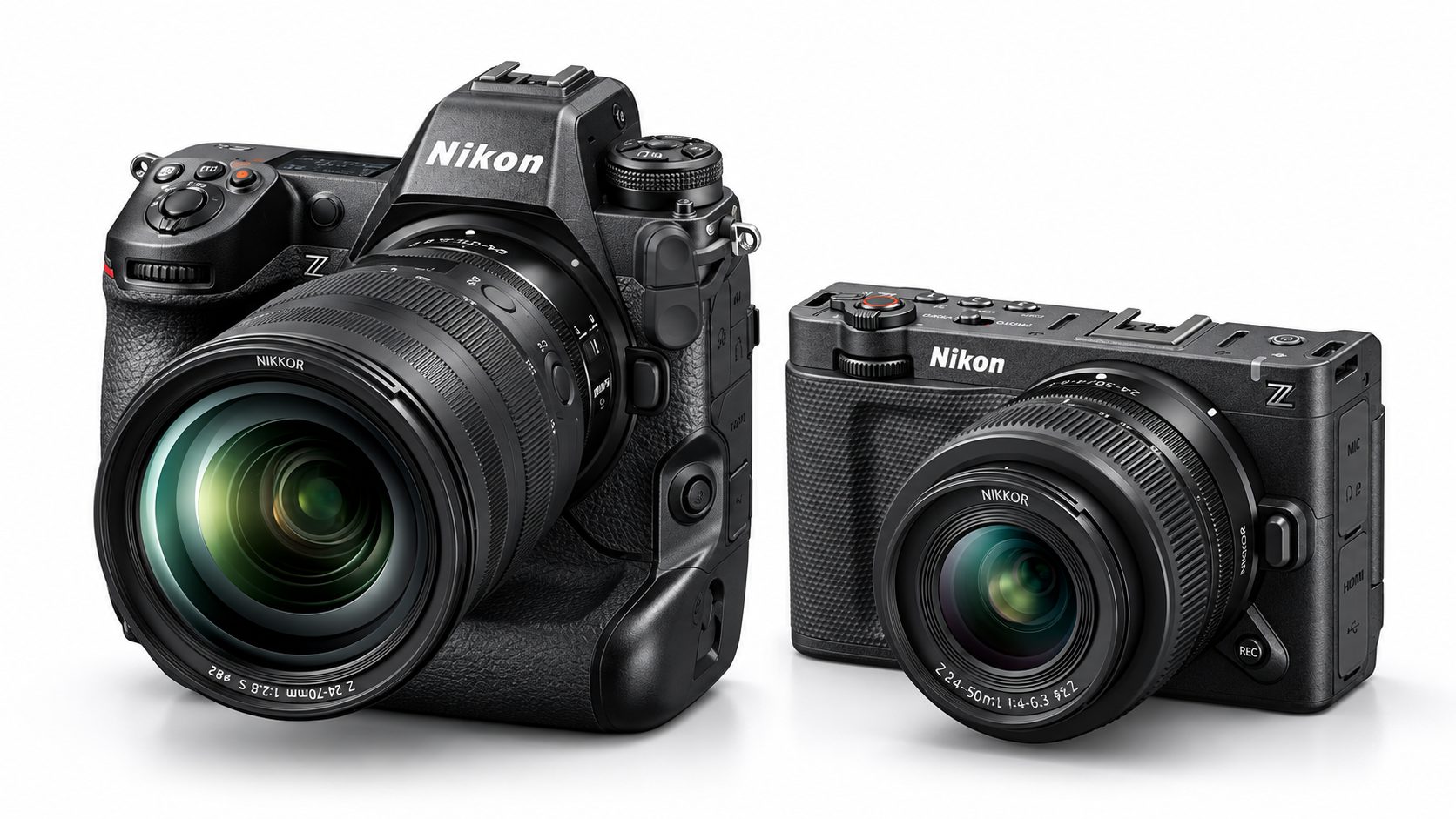
Nikon’s Hiroyuki Ikegami is the most traditional approach of the four. Nikon wants to move Z9 features into cheaper bodies, and it’s already done that with the Z5II and Z50II.
The bigger operating idea is a shared engine and software platform across all the price points. If this works as planned, top-end features should reach affordable cameras faster.
Ikegami also pitched the camera as “smartphone + 1,” a way to save your phone’s battery. That’s one reason to carry a camera, but that doesn’t seem like a real pain point to focus on.
Video matters a lot for them. Nikon bought RED in 2024 and built the ZR, a compact full-frame cinema camera that blends Nikon and RED tech – a hybrid if you will.
The risk: Nikon has to balance better cheaper cameras growing the market while trying not to shrink the value of its premium ones. Cheaper flagship features can pull prices down across the line. This seems like a good thing to attract the consumer and give them value.

Sony: The Camera as a Sensor
Sony’s answer is the least like a camera roadmap. CEO Kenji Tanaka talked about “Spatial AI,” Sony’s term for capturing real spaces and people, rebuilding them in 3D and turning them into entertainment.
It’s already happening. Sony’s XYN system pairs an Alpha camera with a phone app and cloud processing to build 3D assets for virtual production. Sony also points to games, architecture, manufacturing and cultural preservation.
The risk: Spatial AI is a pitch to corporate and broadcast buyers. If Sony’s best ideas keep going there, the photographer choosing between two Alpha bodies might be overlooked.
Fujifilm: The Feel
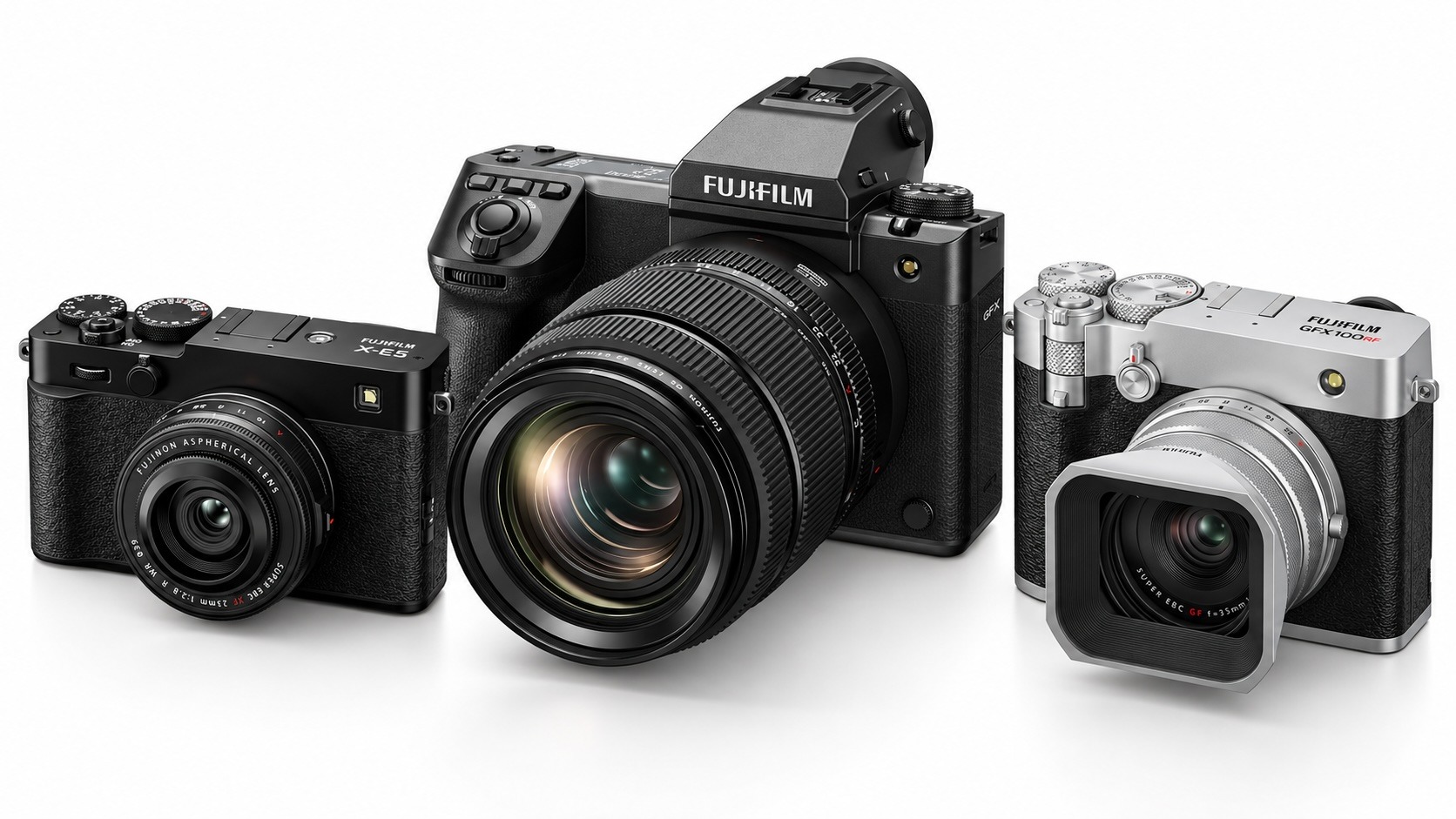
Fujifilm’s Koji Matsumoto made the case that most of us understand about photography. Dials, film color and the pleasure of making a picture are features on their own. His line: “AI can generate images, but only humans possess the subjective sense.”
Fujifilm still welcomes AI where it helps, in autofocus and subject detection. It draws the line at generated content inside the photograph.
Nikkei-based reporting says more than 70% of X-series users are in their 30s or younger, and about 40% are women. At a Tokyo hands-on event, roughly 90% of about 1,400 visitors were new to Fujifilm.
Here’s the deal: most of these buyers never loaded film. To them, dials and film looks are something new, exciting, tactile, and textured.
The risk: style can turn into a formula. Retro looks and film simulations are easy to copy. Trends can fade. Autofocus, app reliability and having cameras in stock are harder.
What They Agree On
The four overlap a lot.
- A camera needs a reason to exist beyond image quality
- Young people, phone-first buyers are the growth market
- Video is the main event now, with Canon’s V series, Nikon’s RED and Sony’s spatial capture – Hybrid is the way
- AI is around the shot, helping it, more than replacing it
- The camera is becoming part of a bigger ecosystem. A culture of creating and sharing experiences
CIPA, the Camera & Imaging Products Association, is the Japanese trade group behind those “CIPA rated” battery and stabilization numbers, and it tracks what Canon, Nikon, Sony, Fujifilm and others ship each month.
The camera manufacturers shipped about 9.44 million cameras in 2025, and built-in-lens models jumped about 30%. In the first half of 2026, total shipments held flat while fixed-lens cameras grew about 16%. These count cameras shipped to stores, not cameras sold to buyers, but it’s the best sort of scoreboard the industry has.
The Bottom Line
Phones and AI pushed camera makers to really question where they are going. Their direction says a lot about who each manufacturer is building for. As always, the best camera is still the camera that makes you want to go shoot.
Which answer speaks to you? Tell us at [email protected].
Join the discussion in the forum.
Sources
- Canon, Nikon, Sony, and Fujifilm All See Photography’s Future Differently, PetaPixel
- Sony Electronics Announces the Launch of XYN’s Spatial Capture Solution, Sony
- Sony’s Cutting-Edge XYN Spatial Capture Solutions Arrive Very Soon, PetaPixel
- Digital camera shipment statistics, CIPA





Elevate Your Vision


Read this story and all the best stories on The Luminous Landscape
The author has made this story available to Luminous Landscape members only. Upgrade to get instant access to this story and other benefits available only to members.
Why choose us?
Luminous-Landscape is a membership site. Our website contains over 5300 articles on almost every topic, camera, lens and printer you can imagine. Our membership model is simple, just $2 a month ($24.00 USD a year). This $24 gains you access to a wealth of information including all our past and future video tutorials on such topics as Lightroom, Capture One, Printing, file management and dozens of interviews and travel videos.
- New Articles every few days
- All original content found nowhere else on the web
- No Pop Up Google Sense ads – Our advertisers are photo related
- Download/stream video to any device
- NEW videos monthly
- Top well-known photographer contributors
- Posts from industry leaders
- Speciality Photography Workshops
- Mobile device scalable
- Exclusive video interviews
- Special vendor offers for members
- Hands On Product reviews
- FREE – User Forum. One of the most read user forums on the internet
- Access to our community Buy and Sell pages; for members only.
You may also like