





What if the most important story at the world’s biggest camera show had nothing to do with a camera body?
CP+ 2026 just finished up from February 26 through March 1 at Pacifico Yokohama, drawing 58,924 visitors – up from 55,791 the year before – across 149 exhibitors (45 of them first-timers).
This was the largest CP+ yet. The conversation centered on lenses, adapters, audio tools, and the modular accessories that make a camera system work better for you.
CP+ used to be about the next big body. Now it seems to be about supporting the ecosystem around the body you already own. That shift is exciting.

Photo by: CP+
The Glass: Three Philosophies on Display
The lens announcements at CP+ 2026 fell into three clear camps, each appealing to different kinds of photographer. Here’s what was shown:
The Pro Workhorse: Nikon NIKKOR Z 70-200mm f/2.8 VR S II
Nikon’s refresh of its flagship telephoto zoom was the most talked-about lens at the show – and the first batch reportedly sold out in Japan before the doors even closed on CP+.
The Zoom Mark II brings an internal zoom design (the barrel no longer extends), improved dust and moisture sealing, a fluorine-coated front element, and a control ring with a click/de-click switch for smooth video transitions.
- Focal length: 70-200mm
- Maximum aperture: f/2.8 constant
- Key upgrades: Internal zoom, improved VR, dust/drip resistant, fluorine coating
- Price: $3,199.95 USD
- Availability: Late March 2026
For sports, wildlife, and event shooters already in the Nikon Z system, this is a nice refinement of a core tool. The internal zoom is a practical upgrade for anyone who’s fought barrel extension in dusty or wet conditions. At $3,200, it’s a serious investment – but Nikon is clearly targeting working pros who need reliability over novelty.
The Compact Hybrid: Tamron 35-100mm f/2.8 Di III VXD

Tamron surprised the floor with a lens that attempts to replace both your 24-70mm and your short telephoto with one compact, constant-aperture zoom.The 35-100mm f/2.8 packs the four most popular portrait focal lengths – 35mm, 50mm, 85mm, and 100mm – into a package that weighs just 565g on Sony E-mount (575g on Nikon Z) and measures 119mm long.
That’s lighter than many first-party 24-70mm f/2.8 options.
- Focal length: 35-100mm
- Maximum aperture: f/2.8 constant
- Construction: 15 elements in 13 groups, 67mm filter thread
- Minimum focus: 0.22m at wide end (1:3.3 magnification)
- Mounts: Sony E ($899) and Nikon Z ($929) – simultaneous launch
- Availability: March 26, 2026
This lens evolved from feedback on Tamron’s popular 35-150mm f/2-2.8, which photographers loved optically but found it really heavy for all-day carry.
The 35-100mm trades some reach and a half-stop at the wide end for a dramatically smaller package. For travel, weddings, and run-and-gun video work, that trade-off makes a lot of sense. Tamron also introduced Tamron-Link, a Bluetooth accessory that brings wireless lens control to iOS devices for the first time – a small but nice addition for creators managing settings from a phone or gimbal.
The Artisan Primes: Sigma and Zeiss Go Fast
Sigma brought a trio of primes that signal its continued push into no-compromise fast glass for mirrorless systems.
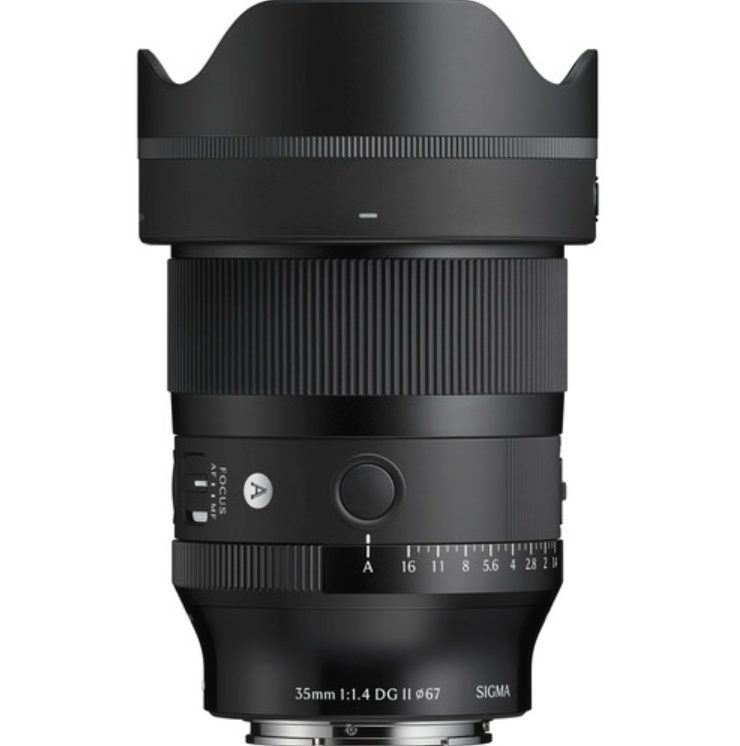
Sigma 35mm f/1.4 DG II | Art – A ground-up revision of the lens that started the Art line. Fifteen elements in twelve groups, 67mm filter, 530g. Available for L-mount and Sony E-mount starting April 16, 2026 at $1,059. Sigma emphasized reduced focus breathing and improved close-focus performance – both meaningful upgrades for hybrid shooters.
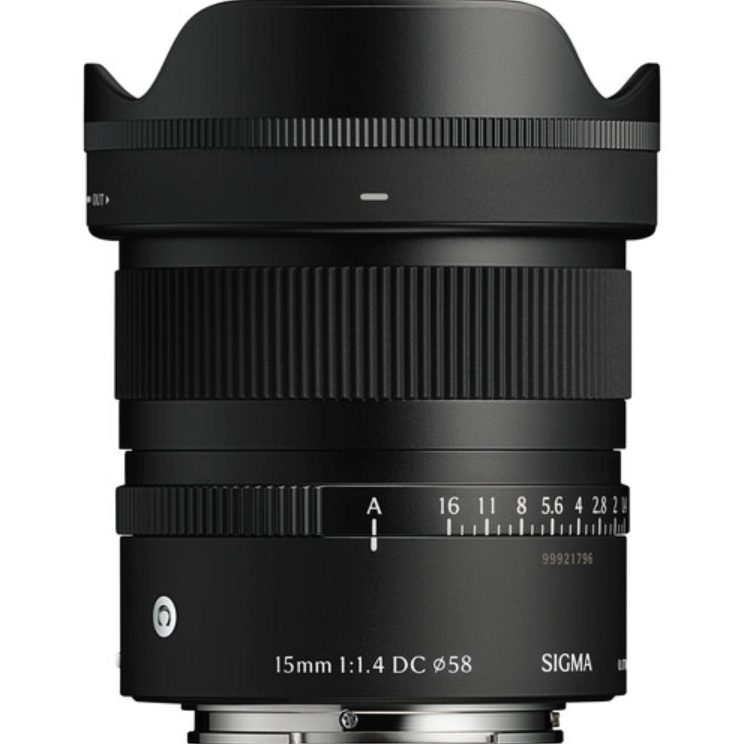
Sigma 15mm f/1.4 DC | Contemporary – An APS-C ultra-wide prime weighing just 220g with a 58mm filter thread. Available for Sony E, Fujifilm X, and Canon RF at $579. Shipping March 12, 2026. For astrophotography and environmental work on crop-sensor bodies, this is a standout.
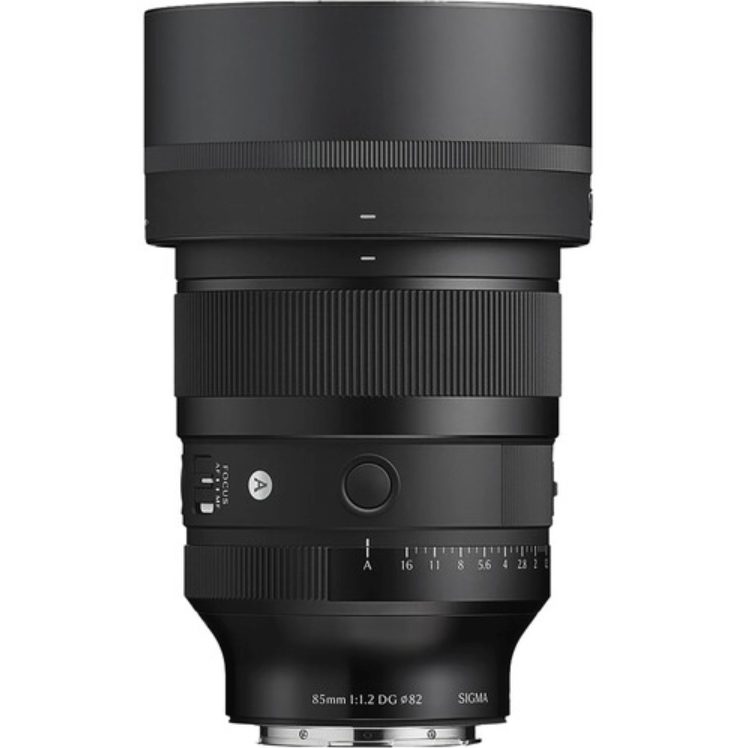
Sigma 85mm f/1.2 DG | Art – Announced as a development item for L-mount and Sony E, targeting September 2026. No pricing yet. An 85mm f/1.2 from Sigma will be closely watched by portrait photographers who want that rendering without the first-party price tag.
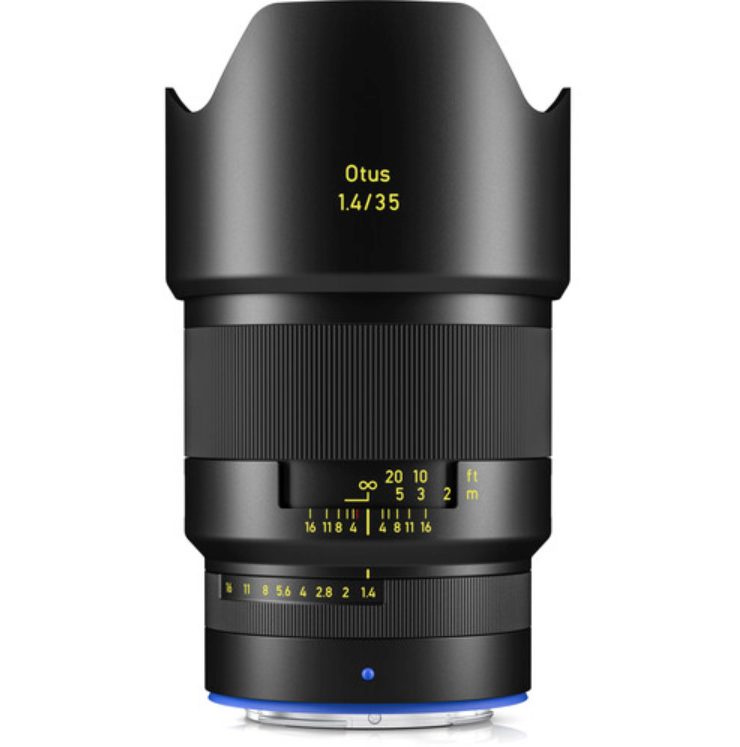
On the manual focus side, Zeiss unveiled the Otus ML 1.4/35 – a new mirrorless-native version of their legendary Otus 35mm for Sony E, Canon RF, and Nikon Z mounts. At $2,299, it’s unapologetically premium and unapologetically manual focus.
Show floor reports noted the lens was displayed behind glass at some booths, adding to its mystique. For the photographer who cares more about micro-contrast and rendering character than autofocus speed, the Otus line remains in a category of its own. Spring 2026 availability.
The Really Cool Adapter for Vintage Glass Shooters
If you shoot Leica M-mount lenses – or Voigtlander Noktons, Zeiss ZMs, TTArtisans, or any of the growing family of M-mount glass – the Megadap M2RF might be the most exciting announcement at CP+ 2026. Period.
The M2RF is the world’s first autofocus adapter for Leica M lenses on Canon RF-mount cameras. It uses a motor-driven helicoid inside the adapter body to physically move the lens forward and backward, achieving focus without modifying the lens itself.
When the Megadap is paired with a Canon RF body, the adapter taps directly into Canon’s Dual Pixel AF system – meaning you get eye detection, subject tracking, face priority, and AF-C support with glass that was designed decades before autofocus existed.
That’s a wow! Your manual Summicron, your vintage Nokton, your quirky little 7Artisans 35mm – all of them get working autofocus on a Canon R5, R6, or R8.
The adapter includes electronic contacts for EXIF data, an aperture selector through the camera interface, and a quick MF/AF toggle switch. It also supports adapter stacking, so you can mount EF or F-mount lenses through additional adapters and still retain autofocus functionality.
- Mount conversion: Leica M to Canon RF
- AF system: Motor-driven helicoid, Canon Dual Pixel AF compatible
- AF features: Eye detect, subject tracking, face priority, AF-C
- Extras: EXIF transmission, aperture selector, MF/AF switch, macro/infinity modes
- Build: Rigid construction rated for heavier M optics, adapter stacking compatible
- Release: May 2026
- Price: Not yet announced (comparable adapters from Megadap/TechArt run $250-400)
A few honest caveats worth noting. Motorized adapter AF will never match the speed of a native autofocus lens. Based on similar adapters (like the TechArt TZM-02 for Nikon Z), expect solid AF-S performance but occasional hunting in AF-C, especially with heavier lenses like the 50mm f/0.95 Noctilux. Lighter M-mount glass tends to focus faster and more accurately.
And there’s always the question of whether Canon might restrict third-party adapter compatibility through future firmware updates – something the community has flagged given Canon’s history with RF mount licensing.
That said, for photographers who have built a collection of M-mount glass and want to use it on modern Canon bodies with real AF support, the M2RF opens up something really cool.
This validates holding onto those legacy lenses in your kit a little longer rather than selling them off when you switch systems.
Hybrid Workflow Tools: Audio and Monitoring Step Up
Two accessories stood out as genuine workflow upgrades for photographers who also shoot video – or for video crews looking to simplify their rigs.
Panasonic LUMIX DMW-DMS1 Shotgun Microphone
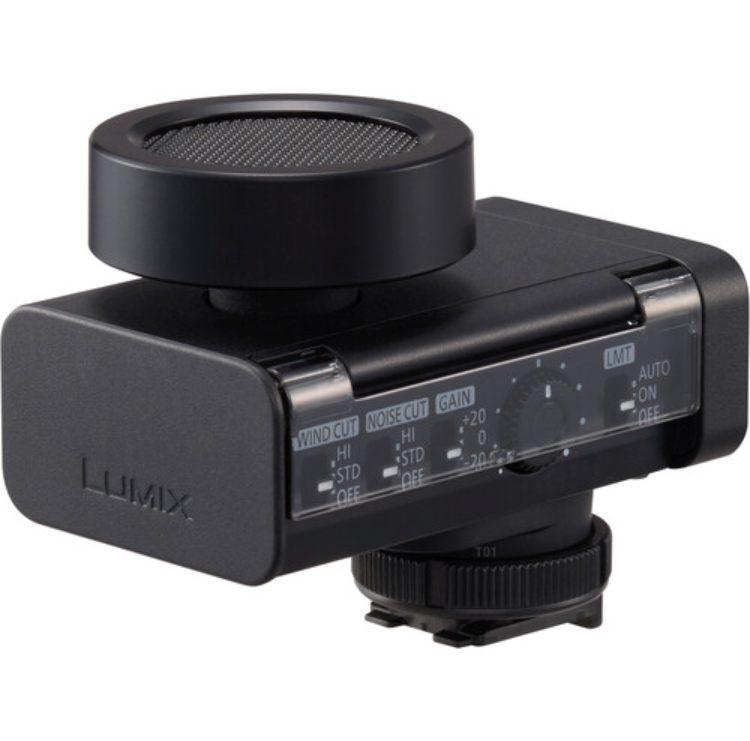
Panasonic brought a hot-shoe mounted shotgun mic that packs 32-bit float recording and six selectable directional pickup patterns into a compact on-camera form factor.
At $399.99, the DMW-DMS1 is positioned as a do-it-all audio solution for creators who want clean sound without carrying a separate recorder and external mic setup. The 32-bit float capability is the real selling point here – it almost eliminates clipped audio in post, which is huge. Expected availability March 23, 2026.
Panasonic paired the mic launch with coordinated firmware updates across its S-series camera bodies and updates to its Lumix Flow and Lab apps, signaling a broader push toward tighter ecosystem integration between camera, audio, and software.
Atomos Ninja RAW Monitor-Recorder
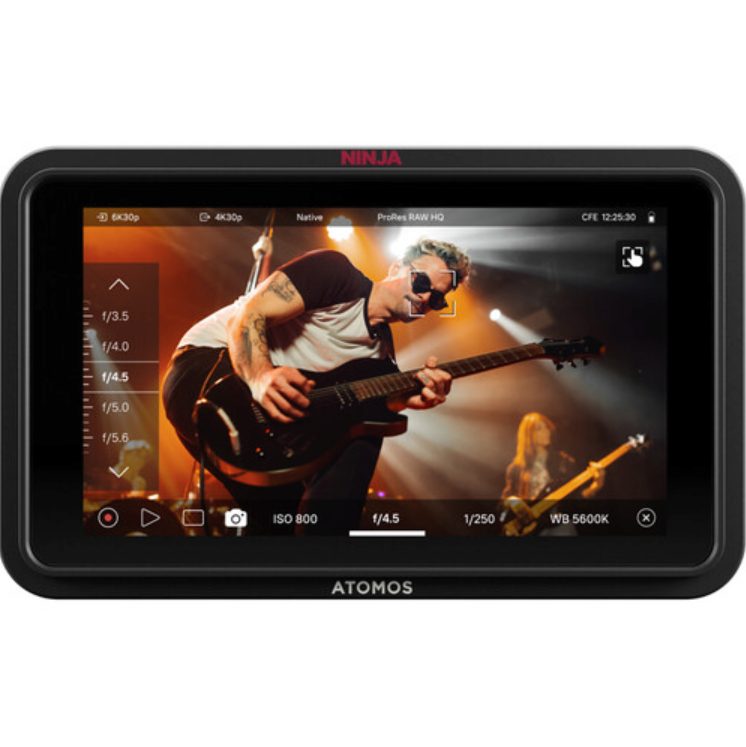
Atomos introduced the Ninja RAW, a 5-inch, 1500-nit HDR monitor-recorder that captures ProRes and ProRes RAW up to 6K at 30fps. It records to CFexpress Type B or via dual USB-C, and includes camera control over USB-C – meaning you can adjust camera settings directly from the monitor.
At $699, it consolidates monitoring, recording, and camera control into a single compact unit.
- Display: 5-inch HDR, 1500 nits
- Recording: ProRes / ProRes RAW up to 6K30p via HDMI
- Storage: CFexpress Type B or USB-C
- Features: Waveform, exposure tools, camera control over USB-C
- Price: $699 USD, available now
Canon’s Concept Camera: Nostalgia Meets R&D
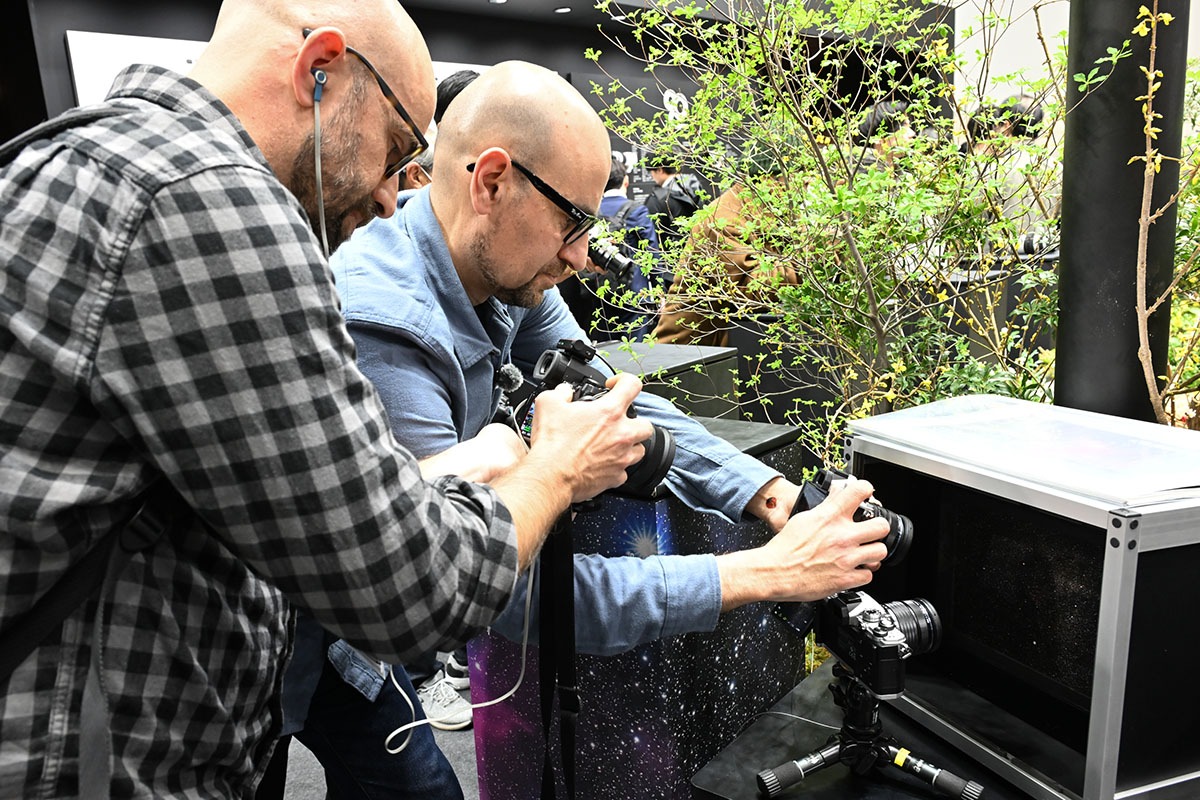
Photo by: CP+
Canon generated plenty of floor traffic with an unnamed prototype that looked like nothing else at the show – an SLR-style fixed-lens camera with a Type 1 sensor, a lever-actuated mirror path, and a waist-level viewfinder.
The concept was designed to evoke the tactile, deliberate shooting experience of classic film cameras while exploring how Canon’s dual pixel technology might enable more accessible 3D capture.
Canon chose not to announce pricing or availability.
Instead, they set up an on-booth feedback loop, actively asking attendees for reactions and feature requests. That approach tells you something about where Canon’s head is – this is R&D and a conversation with the community.
The interest was real, and it signals that Canon sees value in form factors beyond the traditional mirrorless box. Whether this becomes a shipping product or just influences future designs, it was one of the most photographed items at the show.
Supply and Demand: The Market Signals

Photo by: CP+
Two supply stories from CP+ week are worth watching.
Nikon’s 70-200mm f/2.8 S II reportedly sold through its initial Japanese allocation almost immediately after announcement. Early demand for a $3,200 telephoto zoom confirms that working pros are willing to spend when the upgrade addresses real pain points like weather sealing and internal zoom.
Meanwhile, Fujifilm’s Instax Mini Evo Cinema – a hybrid instant camera with a cinematic twist – saw immediate stock shortages and resale markups, echoing the X100VI supply chaos from last year. Physical print tools aimed at younger creators continue to outpace supply projections. For those planning gear purchases around in-demand products, the pattern is clear: pre-order early or plan to wait.
The Bigger Picture
This year’s show proved that the health of the photography industry isn’t measured by one headline body announcement – it’s measured by the depth, variety, and ingenuity of the tools surrounding the cameras we already own.
The glass got better. The adapters got smarter. The audio tools got simpler. And the camera bodies? They didn’t really show up – and that might be the most encouraging sign of all.
It means manufacturers are investing in helping adapt our systems that make our images better.
Luminous Landscape – Educating and inspiring photographers since 1996. luminous-landscape.com





Elevate Your Vision


Read this story and all the best stories on The Luminous Landscape
The author has made this story available to Luminous Landscape members only. Upgrade to get instant access to this story and other benefits available only to members.
Why choose us?
Luminous-Landscape is a membership site. Our website contains over 5300 articles on almost every topic, camera, lens and printer you can imagine. Our membership model is simple, just $2 a month ($24.00 USD a year). This $24 gains you access to a wealth of information including all our past and future video tutorials on such topics as Lightroom, Capture One, Printing, file management and dozens of interviews and travel videos.
- New Articles every few days
- All original content found nowhere else on the web
- No Pop Up Google Sense ads – Our advertisers are photo related
- Download/stream video to any device
- NEW videos monthly
- Top well-known photographer contributors
- Posts from industry leaders
- Speciality Photography Workshops
- Mobile device scalable
- Exclusive video interviews
- Special vendor offers for members
- Hands On Product reviews
- FREE – User Forum. One of the most read user forums on the internet
- Access to our community Buy and Sell pages; for members only.
You may also like