





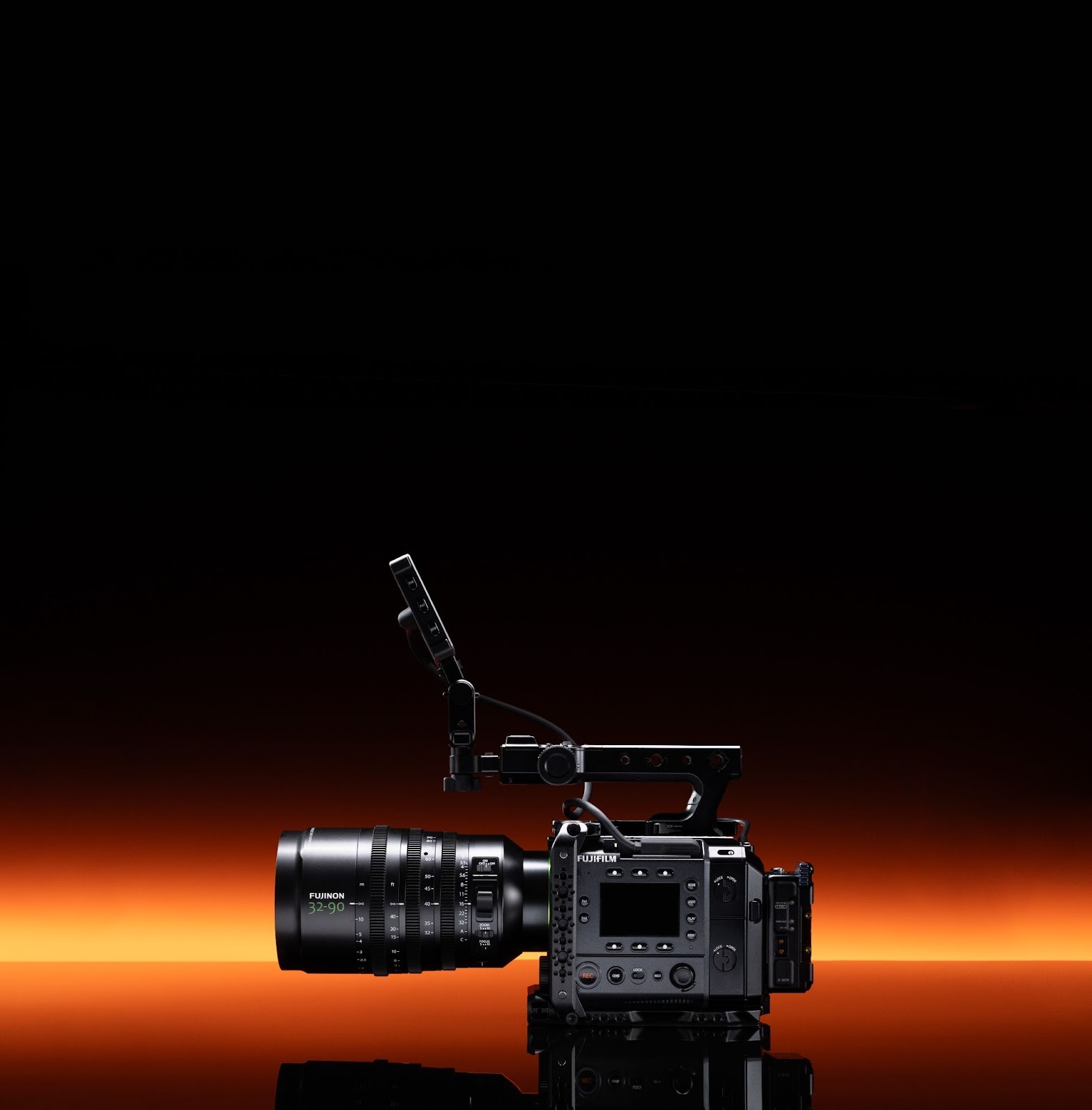
Here’s something that might seem like it has nothing to do with you: Fujifilm’s GFX ETERNA 55 just became IMAX-certified.
If you’re a still photographer – especially a landscape shooter working with the GFX system – your first reaction might be “cool, but so what?” Fair enough. At around $10,000 and purpose-built for professional filmmaking, this camera isn’t designed for you. You’re not going to haul it up a mountain to shoot sunrise over the Tetons.
But here’s why you should care anyway: this certification puts Fujifilm in elite company alongside ARRI ALEXA and Sony VENICE. It validates the imaging technology that also lives in your GFX still camera. And it suggests where Fujifilm’s R&D is headed – with implications that could eventually trickle down to future GFX bodies.
Let’s break down what makes this camera special, what the IMAX certification actually means, and why GFX shooters should be paying attention.
The “55mm Format” – A Sensor Built for Scale
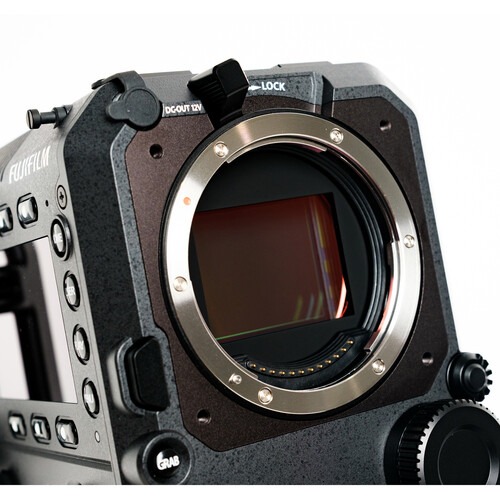
At the heart of the ETERNA 55 sits a 43.8 × 32.9mm CMOS sensor – the same basic silicon found in the GFX100 II, but customized for motion capture. That “55” in the name refers to the roughly 55mm diagonal measurement, making it about 1.7 times larger than full-frame 35mm.
What makes this sensor special for cinema? Height.
The ETERNA 55 offers 32.71mm of vertical image area in its native 4:3 “Open Gate” mode – the tallest digital filmmaking sensor currently available on the open market. That vertical real estate is what IMAX requires for their expanded aspect ratios. While conventional cinema cameras crop down to wide rectangles, the ETERNA can capture those taller 1.90:1 and 1.43:1 frames that fill IMAX screens from floor to ceiling.
IMAX only certifies cameras that meet strict quality standards for resolution, dynamic range, and the ability to shoot their exclusive expanded aspect ratios. Jonathan Fischer, Chief Content Officer at IMAX, put it plainly: the ETERNA 55 gives filmmakers “another world-class tool to design truly immersive, cinematic visuals specifically for IMAX.”
For Fujifilm – a company with deep roots in motion picture film stock (remember, ETERNA was their cinema film line) – this is continuation of their imaging philosophy at the highest professional level.
Cinema Specs for the Curious
If you’re a cinematographer or just technically curious, the ETERNA 55 delivers serious capability in a relatively compact package.
Recording Options:
- Internal Apple ProRes 422 HQ/422/LT (10-bit 4:2:2)
- HEVC (H.265) at 10-bit for efficient compression
- 12-bit RAW output via HDMI to external recorders
- Bitrates up to 720 Mbps
Resolution and Frame Rates:
- 8K (8192 × 4320) in Open Gate at 24fps
- 8K (7680 × 4320) 16:9 up to 29.97fps
- DCI 4K and UHD 4K up to 59.94fps
- 1080p slow-motion up to 120fps
- Multiple crop modes including Super 35 compatibility
Dynamic Range and Color:
- 14+ stops of dynamic range in F-Log2 C
- Dual base ISO at 800 and 3200
- 20 built-in Film Simulation modes
- 10 new 3D LUTs matching those Film Simulations for post-production
Build and Connectivity:
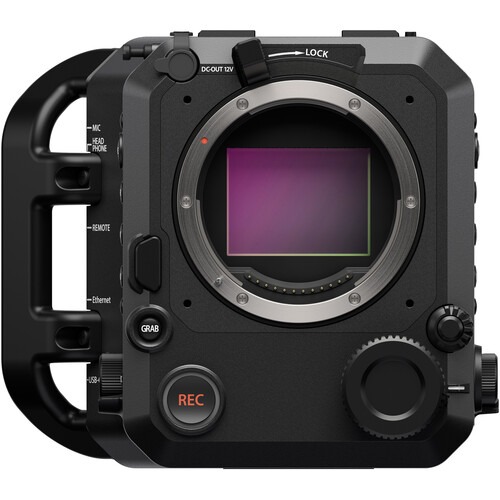
- Native G-mount with included PL Mount Adapter for cinema lenses
- Built-in electronic variable ND filter (2-7 stops, visually stepless)
- 12G-SDI and HDMI outputs
- V-mount battery interface with NP-W235 backup slot for hot-swapping
- Weather-sealed magnesium alloy body
The camera ships production-ready with top handle, PL adapter, and professional I/O. It’s a cinema tool through and through – no viewfinder, no mechanical shutter, no pretense of being a hybrid stills/video body.
Why Still Photographers Should Pay Attention
Let’s be direct (as if I need to say this): if you’re primarily a still photographer, you should not buy this camera. It’s not designed for you, it lacks the ergonomics and features you need, and at $10,000 it’s solving problems you don’t have.
But here’s what matters to you as a GFX system user:
Your Lenses Just Got More Versatile
Every GF lens you own mounts directly on the ETERNA 55. That 23mm f/4 you use for landscapes? It covers the full sensor for cinema work too. The 110mm f/2? Perfect for interviews and narrative work.
If you’re a GFX shooter who occasionally takes on commercial video projects – or wants to – you can rent an ETERNA 55 and bring your own glass. No adapters, no compromises, no learning a new lens lineup. Your investment in GF lenses now spans two professional domains.
Ecosystem Strength Benefits Us All
When Fujifilm earns IMAX certification alongside ARRI and Sony, it signals serious commitment to the medium format space. R&D dollars flowing into cinema development such as sensor improvements, color science refinements, and computational processing are advances that we hope migrate across their product lines.
The F-Log2 C profile and matching Film Simulation LUTs developed for the ETERNA? Those same LUTs are available for download and work beautifully on GFX100 II footage. The color science Fujifilm refined for Hollywood-level shows benefits everyone in the ecosystem.
Trickle-Down Technology
Some features on the ETERNA 55 would be really wonderful and useful on future still cameras. The obvious example is that built-in electronic variable ND filter ( 2 to 7 stops of neutral density), that’s continuously adjustable with no color shift.
Imagine that on a GFX landscape camera. No more fumbling with screw-on filters at golden hour. No more filter systems blocking your view. Just dial in the ND you need and shoot. For long exposures, time-lapses, or simply controlling depth of field in bright conditions, it would be helpful.
Will Fujifilm put this in a still body? Hopefully. But they’ve now proven the technology works in a production environment with their sensor, and that’s the first step toward broader use.
What This Means for Fujifilm’s Future
Fujifilm has always occupied an interesting position in the camera market. They named this camera after their cinema film stock. They built Film Simulation modes that reference specific emulsions. They talk about “memory colors” and tonal response.
Earning IMAX certification validates this philosophy at the highest level. Yuji Igarashi, general manager of Fujifilm’s Professional Imaging Group, spoke about their belief in “the importance of the theatrical moviegoing experience” and creating tools for “filmmakers who dream of creating larger than life stories for the silver screen.”
For GFX users, this certification provides confidence that Fujifilm is investing seriously in the platform’s future. Medium format isn’t a side project or a prestige play – it’s a system they’re building for professional cinema alongside professional photography.
The ETERNA 55 won’t be the last word in this story. The technology developed here, the partnerships forged with IMAX, the color science refined, the faster sensor – all of it feeds back into the broader GFX ecosystem.
The Bottom Line
The Fujifilm GFX ETERNA 55 is not a camera for still photographers. At $10,000, built without a viewfinder or still-oriented features, optimized entirely for motion capture – it exists in a different professional category.
I think it’s pretty cool. It means Fujifilm is playing a long game with medium format and that’s worth paying attention to.
The Fujifilm GFX ETERNA 55 is available now at approximately $10,000. For more information, visit Fujifilm’s website. The Film Simulation 3D LUTs are available as a free download for use with F-Log2 footage from both the ETERNA 55 and GFX still cameras.





Elevate Your Vision


You may also like