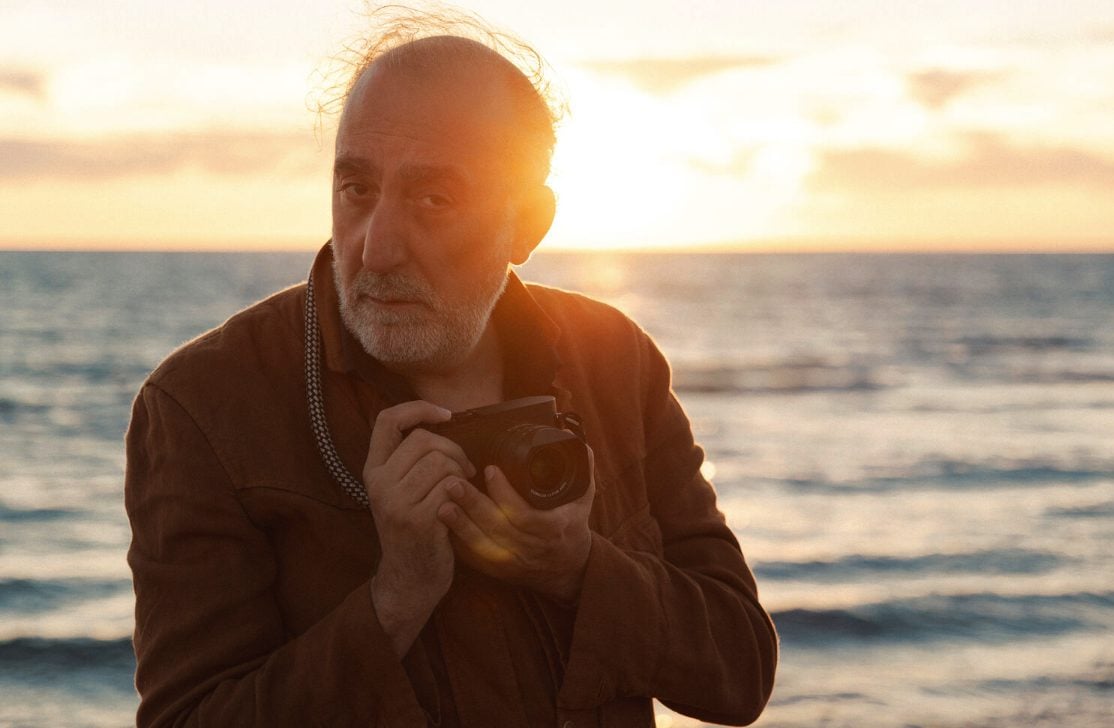






What do you give someone who’s just starting to see the world through a viewfinder?
It’s a question I’ve been wrestling with as the year winds down. Not in some grand philosophical sense – more in the practical, scrolling eBay-at-midnight kind of way. My kids have started showing genuine interest in photography, and I wanted to fan that flame without accidentally smothering them with too much technical, too much expectation, or too much financial risk.
To note: All the images for this post are my son’s photography. Over the Thanksgiving holiday he used my Fuji GFX 100S with the GFX 45-100 zoom lens. I did the post work in Capture One.

The Cameras I’ve Lost
Have you ever had a camera lost or stolen? It’s heartbreaking.
When I went to study photography abroad in Australia, I brought my camera – a Canon AE-1 program. First day there – locked it in a school locker, and the locker got pried apart. The camera was stolen. Luckily, a friendly Aussie classmate let me use an extra identical camera for school until I could get a replacement.
Then…there was the time I parked in front of my own house, left my camera hidden on the backseat for a half hour, and came out to a smashed window and an empty seat.
Or the eighth-grade trip to Washington, DC, where I was on the subway with my uncle’s Nikon 35mm – a camera he’d trusted me with – and I got completely distracted by a little kid who kept making faces at me and giggling every time they looked at me. When my stop came up, I gathered my things and waved by to the kid and hopped off the train. The subway doors closed and the Nikon camera was still on it. I still have some photos from that DC trip, which makes the loss sting a little less. Some images survived.
These memories were at the front of mind when my kid said they wanted to bring a camera as they were traveling to Europe over the holiday break. Their first time overseas. And they wanted to bring a camera. A flood of emotions. Excited and proud…and worried.
My immediate thought: absolutely not my Fuji GFX. Is that selfish? Probably but that’s a HUGE camera and expensive.
But what camera would be best for their journey?

The Psychology of Being Seen
Here’s something I’ve noticed about teenagers “these days”. Everything is about identity – what they wear and their hair. It’s all about identity.
There’s a difference between “someone who takes photos on their phone” and “someone who carries a camera.” One is passive, almost accidental. The other is intentional. It says something about how you see yourself, how you want to be seen, how you see the moment.
Being a photographer is an identity. So what is a camera that would invite conversation, that would feel substantial in the hands, that would signal to them and everyone around them: that I’m here to see things differently, I am a photographer.
But the camera needs to survive the realities of teenage travel – the general chaos of being young and abroad for the first time. It also has to be simple and accessible. It has to be inexpensive.
I thought about sending them out with a film camera – but I thought digital will be a more cost effective way for them to capture on this trip.
Enter the Leica V-Lux Type 114
I know. I know. I know it’s not a true Leica…but a rebranded Panasonic.
Here’s the thing – while doing that late night eBay scroll – I found a Leica V-Lux Typ 114 for $400. And in beautiful shape. Still on Amazon at 1499.99.
And on specs it is NOT the best camera out there – but may be for 400$. It’s got 20mp using a 1” sensor. I thought about getting an older micro 4/3rds camera as I have lenses for the mount but that was just about the same cost. This Leica Type 114 looked like a brand new camera. It looks like it’s been in this unruly case and hardly taken out of its case.
We all know the brand Leica is a conversation starter. It gives a young photographer permission to take themselves seriously. It gives other photographers “in the know” to talk with them about their knowledge of photography as well.
Is that superficial? Maybe. But confidence matters when you’re learning and bopping out into the world. Feeling like you belong in a space – camera in hand, eye to viewfinder – it can be the difference between taking the shot and letting the moment pass.
Let’s talk about what’s actually inside this camera, because despite being nearly a decade old, it’s still remarkably capable for a beginner.

The Lens: 25-400mm of Possibility
The Leica’s 25-400mm equivalent f/2.8-4 zoom is impressive and the reason I’m thinking it would be most fun for a “young-un”. That range covers everything from wide environmental shots to serious telephoto reach. That’s a range for discovery that helps a new photographer experiment with how focal length changes storytelling.
I remember getting a Nikon zoom lens as a high school graduation present. It went all the way to 200mm! The ability to reach out and to pull distant subjects closer to the camera felt like a superpower. Suddenly the butterflies and birds weren’t just things I walked past. They were subjects. They had their own story with rich intricate details. They were beautiful and important.
That zoom range changed how I moved and looked at the world.
The Type 114 should offer that same experience. Wide enough for street scenes and architecture, long enough for wildlife and candid moments from across a plaza. For a young photographer learning what they’re drawn to, this flexibility should be exciting.
The Sensor: Honest Expectations
Let’s be real about limitations. The 1-inch sensor is capable but not great. You’re looking at roughly 10-12 stops of dynamic range – decent, but not the shadow-recovery playground of larger sensors. It’s gonna get noisy.
High ISO performance should be manageable up to about 1600-3200, after which noise becomes noticeable. Push past 3200 and we’re in very noisy territory. We’ll see how it does.
But here’s my take: these limitations are actually useful for learning. When a camera can’t fix everything in post, you start paying attention to light. You examine your approach. You learn to position yourself where the light works for you, not against you. You develop instincts that serve you long after you’ve moved on to more capable gear.
As an aside, I’m sure we can in post-processing with denoising and ”Uprezzing” with several different software solutions.

Autofocus and Handling
The contrast-detect autofocus feels dated compared to modern phase-detect systems. It’s not the camera for fast-moving sports or erratic wildlife. But for travel photography – street scenes, architecture, portraits of friends, landscapes – it should be fine. There’s a switch on the side where it can toggle between zoom and focus. There’s a good feel to it when focusing on a subject.
And the electronic viewfinder is a huge asset. I’m a firm believer in teaching new photographers to use the viewfinder rather than the back screen of the camera. It stabilizes the camera, blocks out distractions, and forces you to find the frame.
The in-body image stabilization helps at longer focal lengths, which matters when you’re handholding at 400mm equivalent. The whole package is light enough that it won’t become a burden during long days of walking. I also got two extra batteries to go along with the camera as I’m guessing the camera will go through batteries quickly.

Why Not Something Newer?
We could spend $1200 on a new Leica Type 114 from Amazon. Or you could get a Sony RX10 IV with its superior autofocus and 24-600mm reach (1700.00) . The Canon G7 X Mark III is more pocketable (879.00). The Panasonic FZ80D (547.00) offers similar specs without the Leica premium.
But at $400 used, the Type 114 hits a sweet spot. It’s capable enough to take good photographs. It’s affordable enough that loss or damage, while painful, won’t be catastrophic. It’ll be a lesson.
And yes – that Leica badge does something for a young person’s confidence that a Panasonic badge simply doesn’t. Call it irrational. Call it a “poser move”. But we all know that the Leica RIZZ* is real.
* RIZZ: a state of being or “flow state” that demonstrates charisma.
The First Lessons: What Do We Want to Look At?
I’m planning to start with a simple question that I advise fellow photographers:
What do we want to look at?
It sounds almost too basic, but this question is the foundation of everything. Before aperture, before shutter speed, before any technical consideration – you have to decide what the photograph is about. What’s the subject? What’s the story? What’s interesting?
Most beginners point the camera at a scene and press the shutter. “Spray and Pray”
The resulting image has everything in it and yet is about nothing. Teaching a new photographer to identify their subject – to make a conscious choice about what they’re including and excluding – gets them in the right frame of mind right away.
The follow-up question is equally important: Where do I need to be to tell this story?
Zoom is useful, but it’s no substitute for physically moving. Step closer. Step back. Go high. Get low. Walk around to the other side. Where’s the best light?
The best photographers are constantly looking around, repositioning, looking for the angle where everything aligns – where the light, the subject, the background, and story all come together.

Bracketing and Shutter Speed
Given the Type 114’s limited dynamic range, one of the first technical lessons will be exposure bracketing. High-contrast scenes – bright sky, shadowed foreground – will challenge this sensor. Teaching my kid to bracket exposures, then blend them later or simply choose the best one, addresses a real limitation while building good habits. The Leica has a nice dial to just rotate the dial to bracketing.
He won’t be traveling with a tripod so he’ll need a solid foundation for his camera – it will be important to remind him.
Along with that…Shutter speed. Understanding that a photograph is a slice of time – and that you control how thick that slice is – opens up creative possibilities. Freeze motion or embrace blur. It’s a choice.
The Book
There’s so many wonderful books out there. I chose National Geographic’s “Photo Basics” by Joel Sartore as a companion to read on the plane. It’s got beautiful images that inspire without overwhelming, and it covers fundamental concepts in an accessible way. Perfect for reading on the flight over, then referencing throughout the trip.
For the Younger Ones: Camp Snap
Recently, I was reviewing old pictures with a friend and noticed how many snapshots they had from college and young adulthood. They said they always had a disposable camera with them and would love to go and get them developed and share them with their friends. They were candid – and wonderfully captured the moment. They were no pressure snaps and were a delight to look through. Technically poor with flash and red-eye – but beautiful capture of the experience.
I was looking for a more simple camera than the Leica for gifts and after talking with Michael Durr. We recorded a YouTube video soon to be out discussing the camera.
It’s something durable enough to survive being dropped, forgotten, rediscovered, and dropped again. Something that won’t devastate anyone if it gets lost at a museum or left on a train.
Enter the Camp Snap.
What Is It?
Camp Snap is a screen-free digital camera designed to feel like a disposable camera. No LCD preview. No fiddling after every shot. Flash or no flash. You look through a simple viewfinder, press the button, and trust that something was captured. Then later – maybe hours later, maybe days later – you plug it into a computer and discover what you made. And they come in different colors.
This delayed gratification is the point. It recreates the anticipation of film photography without the cost and hassle of development. And more importantly, it keeps young photographers in the moment instead of constantly reviewing, deleting, and retaking. We plan on making books of the prints.
The Specs
- 8MP CMOS sensor
- Fixed-focus lens (approximately 35-40mm equivalent)
- Simple optical viewfinder
- Built-in LED flash
- USB-C rechargeable
- Internal storage plus microSD slot
By any technical measure, this is a toy camera. Fixed focus means you can’t control depth of field. 8 megapixels won’t win any resolution contests. The small sensor struggles in low light.
But none of that matters for what this camera is meant to do.
Why Limitations Are Features
When you can’t adjust settings, you stop thinking about settings. You start thinking about what’s in front of you. Is this interesting? Is this the moment? Should I move closer?
The Camp Snap help young photographers to engage with the fundamentals: light, composition, timing, and subject. These are the building blocks that matter even after they’ve graduated to more sophisticated gear.
What About the Fuji X Half?
Some readers might wonder about the Fuji X Half – another camera designed to evoke film-era simplicity. It’s a beautiful option with better image quality than the Camp Snap. But at its price point, the risk calculus changes. 5 camp snaps vs 1 Fuji X Half. A lost or broken Camp Snap is a lesson. A lost or broken X Half is a small tragedy.
For people with more budget flexibility, the X Half does serve a similar purpose – encouraging presence over pixel-peeping, moment over megapixels. But for younger kids, wandering through the world on vacation, the Camp Snap’s combination of capability and expendability feels right.
The Fisherman Photo
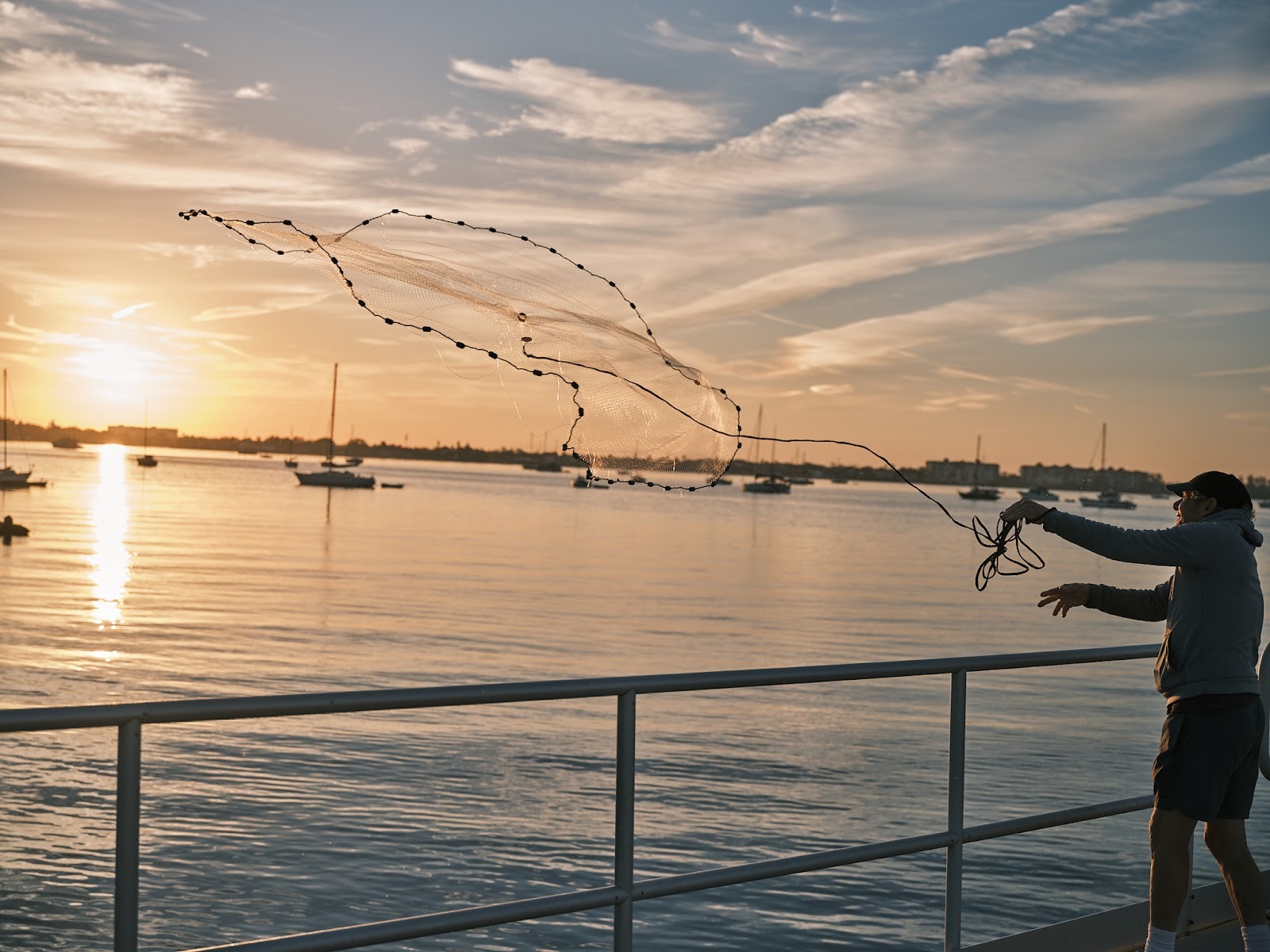
Recently, my kid picked up my GFX 100S with the 45-100mm zoom and wandered outside at the break of dawn. He came back really excited with a shot of fisherman casting a fishing net – silhouetted against the water.
He said: “I wanted to get a picture of him trying to catch the sun.”
That’s photographer thinking. Not “I saw a guy fishing.” But a visual intention: catching the sun.
This is what I hope to nurture. Not technical perfection – that comes with time and practice. But the instinct to look at the world and think: there’s something here. Let me try to capture it.
The Real Gift
At the end of the day, the camera is just a tool. The Leica Typ 114 isn’t a perfect camera. The Camp Snap certainly isn’t. But perfection isn’t the point.
The point is presence. The point is to look – really look – at the world around us.
To notice light and shadow, pattern and disruption, moment and gesture. To ask “what do I want to look at?” and then figure out where they need to stand to see it clearly.
To find beauty around us and meaning in the moment.
That’s the real gift.
What cameras did you start with? What would you give a young photographer just beginning their journey? Share your thoughts in the comments below – we’d love to hear your recommendations and memories: [email protected]
Gear Mentioned:
- Leica V-Lux Typ 114 (approximately $400 used, $1200 new)
- Camp Snap ($60-80)
- Fuji X Half (alternative option, higher price point)
- National Geographic “Photo Basics” by Joel Sartore
The best camera is the one that gets you out there shooting. For young photographers, sometimes that means something simple, something durable, and something that makes them feel like they belong behind the lens. Let us know your thoughts on the forum: https://forum.luminous-landscape.com/index.php?topic=145393.0





Elevate Your Vision


Read this story and all the best stories on The Luminous Landscape
The author has made this story available to Luminous Landscape members only. Upgrade to get instant access to this story and other benefits available only to members.
Why choose us?
Luminous-Landscape is a membership site. Our website contains over 5300 articles on almost every topic, camera, lens and printer you can imagine. Our membership model is simple, just $2 a month ($24.00 USD a year). This $24 gains you access to a wealth of information including all our past and future video tutorials on such topics as Lightroom, Capture One, Printing, file management and dozens of interviews and travel videos.
- New Articles every few days
- All original content found nowhere else on the web
- No Pop Up Google Sense ads – Our advertisers are photo related
- Download/stream video to any device
- NEW videos monthly
- Top well-known photographer contributors
- Posts from industry leaders
- Speciality Photography Workshops
- Mobile device scalable
- Exclusive video interviews
- Special vendor offers for members
- Hands On Product reviews
- FREE – User Forum. One of the most read user forums on the internet
- Access to our community Buy and Sell pages; for members only.
You may also like