




Read the back cover of Paul Bride’s first book and you’ll meet a person built for risk. Cliffs, frozen waterfalls, reef breaks in Tahiti, armed checkpoints in Ethiopia, a cartel shootout in Panama. The press copy talks about him having a “sky-high tolerance for risk” and “an addiction to its rewards.” That’s a good pitch. It sells a certain kind of photographer, the one who runs toward danger or the thing everyone else runs from.
Ask Bride about it and he shrugs the whole framing off.
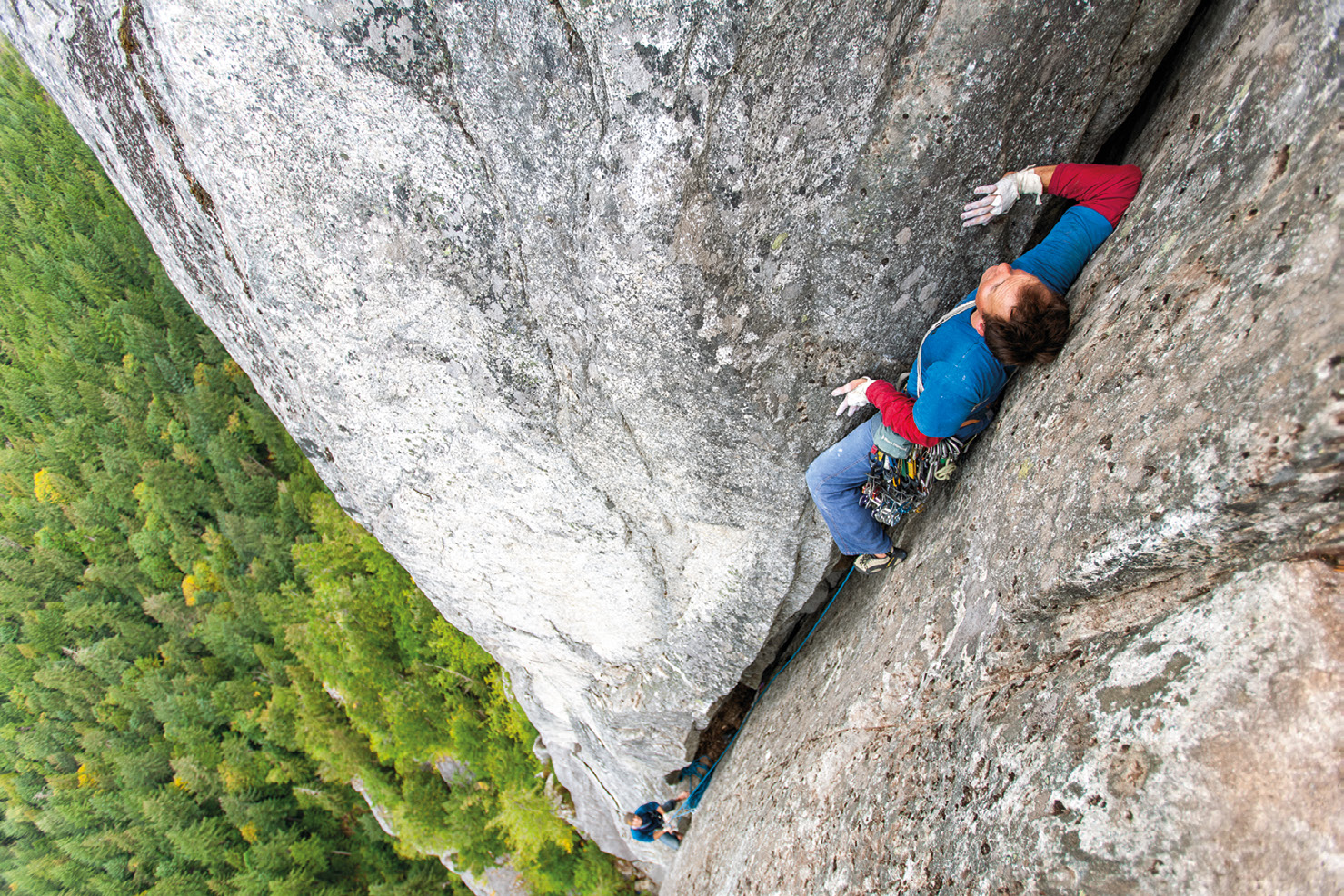
“I never looked at it that way,” he told us. “I was seeking adventures before anyone paid me to take pictures. I loved being in the mountains. I loved climbing, I wanted to push myself, and I wanted to get better at being in the mountains and climbing.”
The camera, in his telling, was a passenger. “At first the camera came along for the ride, it wasn’t the reason I went into those places.”
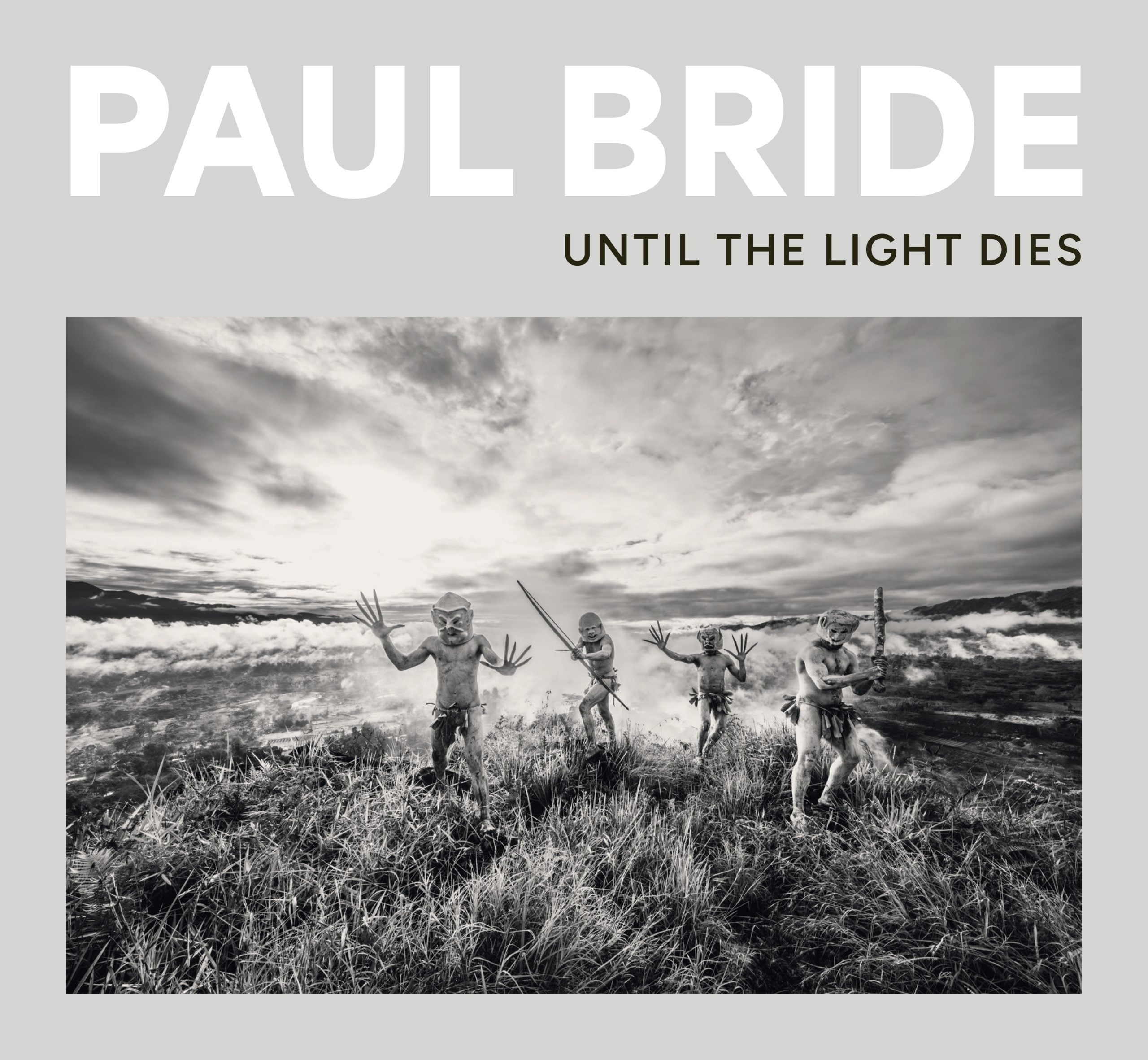
That adventure runs through the whole of Paul Bride: Until the Light Dies, out October 27 from Figure 1 Publishing. More than 200 photographs, most of them never published anywhere, sorted into five sections with a double-page foldout in each. Sonnie Trotter wrote the foreword. From what we’ve gathered, we’d say the book is a record of curiosity followed to its logical end.
The how
Bride is a professional. Sixty-plus magazine covers. Clients like Patagonia, Arc’teryx, Red Bull and National Geographic Adventure. A Banff Mountain Film Festival win for Best Short Film, two Red Bull Illume finalist nods, an International Photography Award. He lives in Britannia Beach, British Columbia, about as close to big granite and cold water as a person can put a mailbox.
He didn’t start there though.
“As I got better at photography and started selling images, I was able to get some sponsorship, that’s when I started getting paid to do the things I already loved and was doing,” he said. “The camera became my way of paying for plane tickets, getting me on expeditions and taking me to parts of the world I never thought possible.”
The backbone of the entire book: “I never just sought out danger for a photograph, it was the experience I really wanted, the camera gave me a way to turn that obsession into a life.”
Excerpted from Paul Bride: Until the Light Dies By Paul Bride. Foreword by Sonnie Trotter. Copyright © 2026, Paul Bride. Republished with the permission of Figure 1 Publishing.
“If there is a common thread it’s curiosity, imagination and wanting to see for myself what’s actually out there. I want to see as much as I can. I think I’ve always been drawn to places where you don’t quite know how the story is going to end.”
He’s clear about the motive behind that. “I just don’t really want to spend my time standing on the sidelines. I want to meet the people, actually feel what it’s like to be in that place, be scared, laugh, experience and see for myself.”
Photography, he says, “gave me an excuse to keep going, and eventually a career that allowed me to go farther but the curiosity was always there. And after all these years I still want to go see more.”
Agreed.
Twenty-five years in a hard drive
The book almost never got made, and the reason is the same one that made his career. Paul was never home.
“The idea of a book had always been somewhere in the back of my mind, but for most of those 25 years I was never home. I was on the road shooting, working, gathering content.”
Then 2020 arrived. The road was closed. An illness put him in bed and forced him to slow down in a way nothing else had.
“That’s when the book really began. I started going through images I hadn’t seen in years, it became a process of rediscovery and I knew that if I was ever going to make this book, then this was the time.”
Anyone who’s opened a box of old negatives or scrolled back a decade in Lightroom knows the feeling. You go in looking for a specific frame and get a glimpse of what your younger self saw.
With Bride the scale of the archive is huge and how much of it hasn’t been seen. He shot for clients, delivered the selects, and moved on. The rest sat unseen – a treasure trove of adventure.
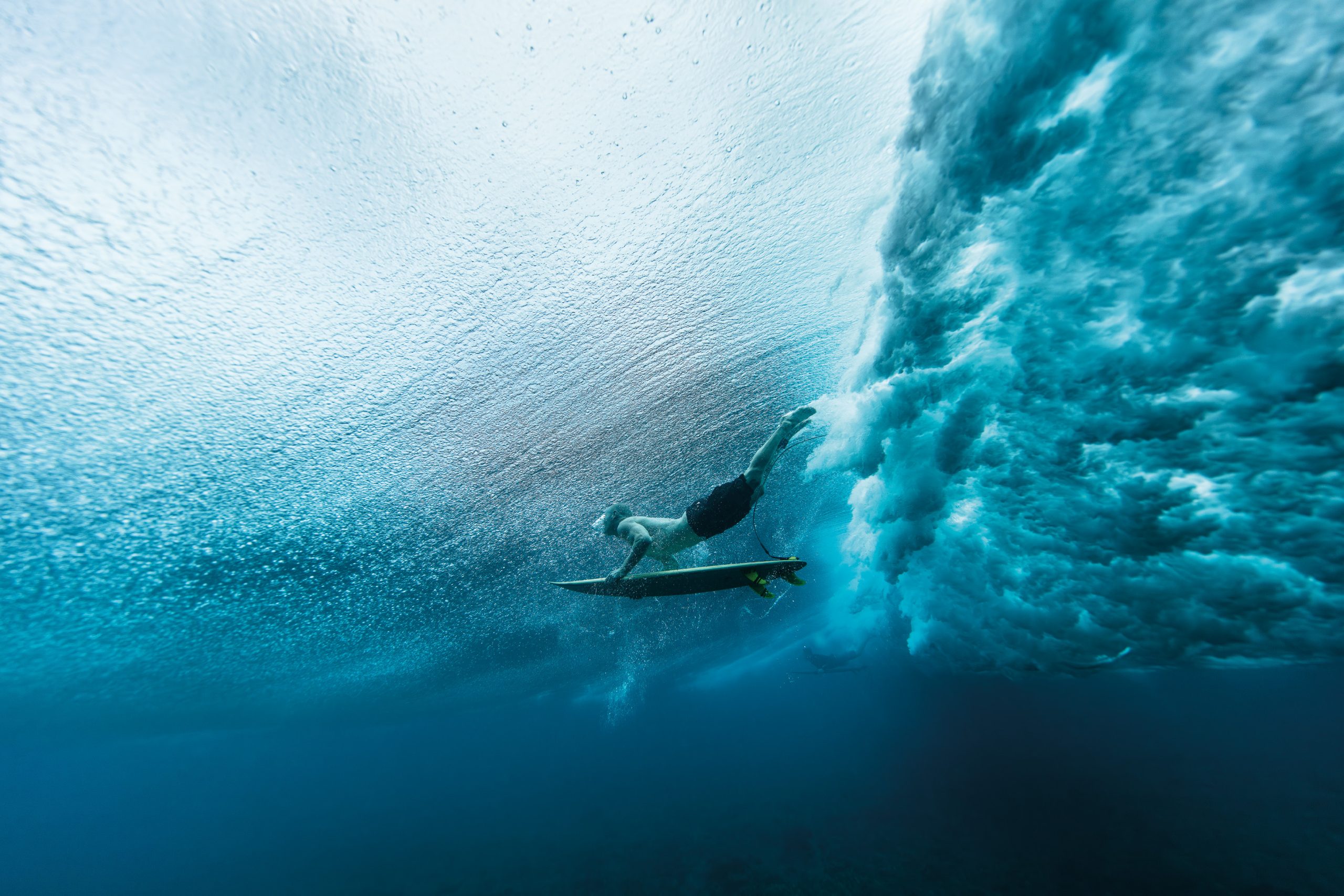
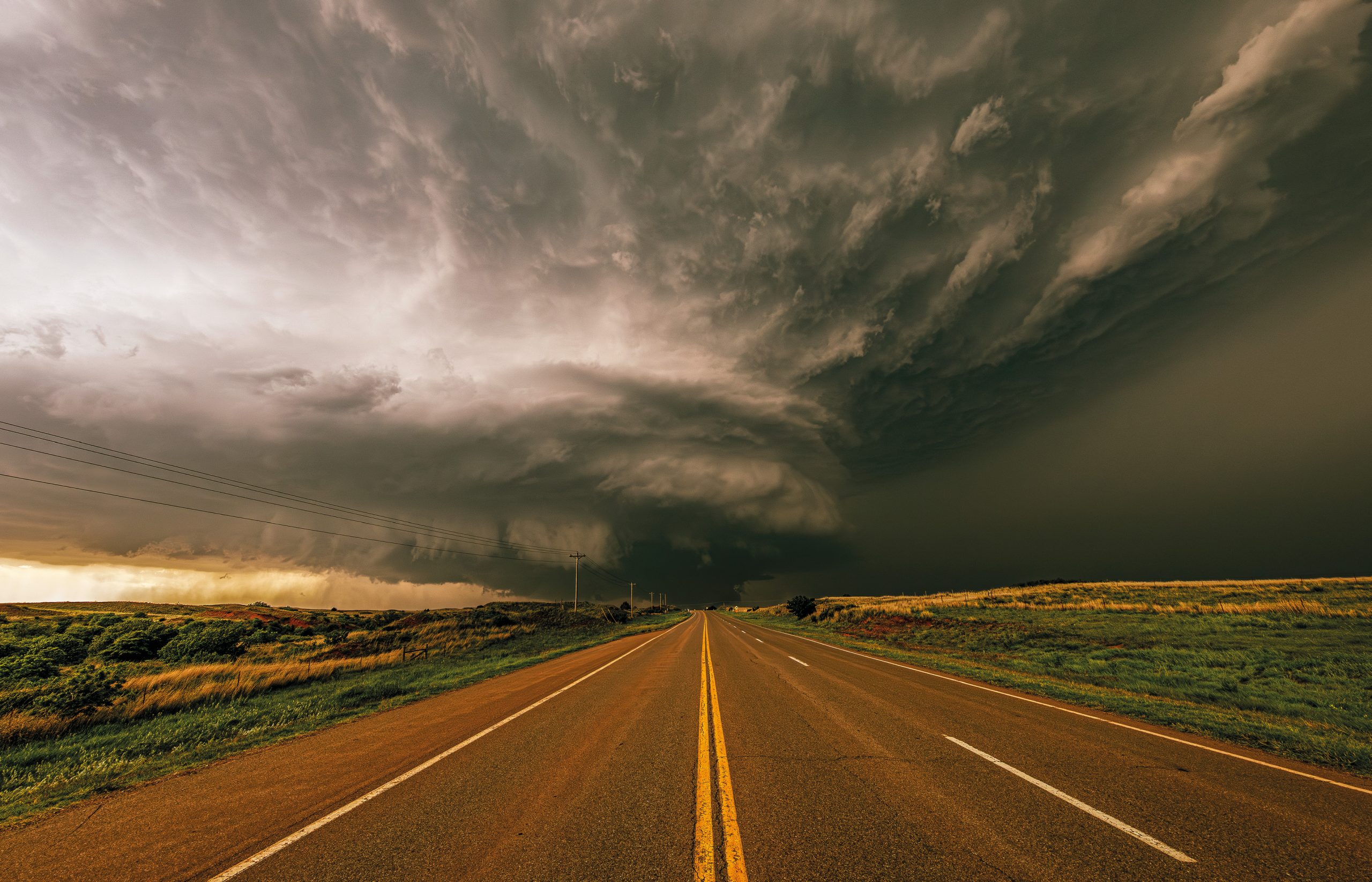
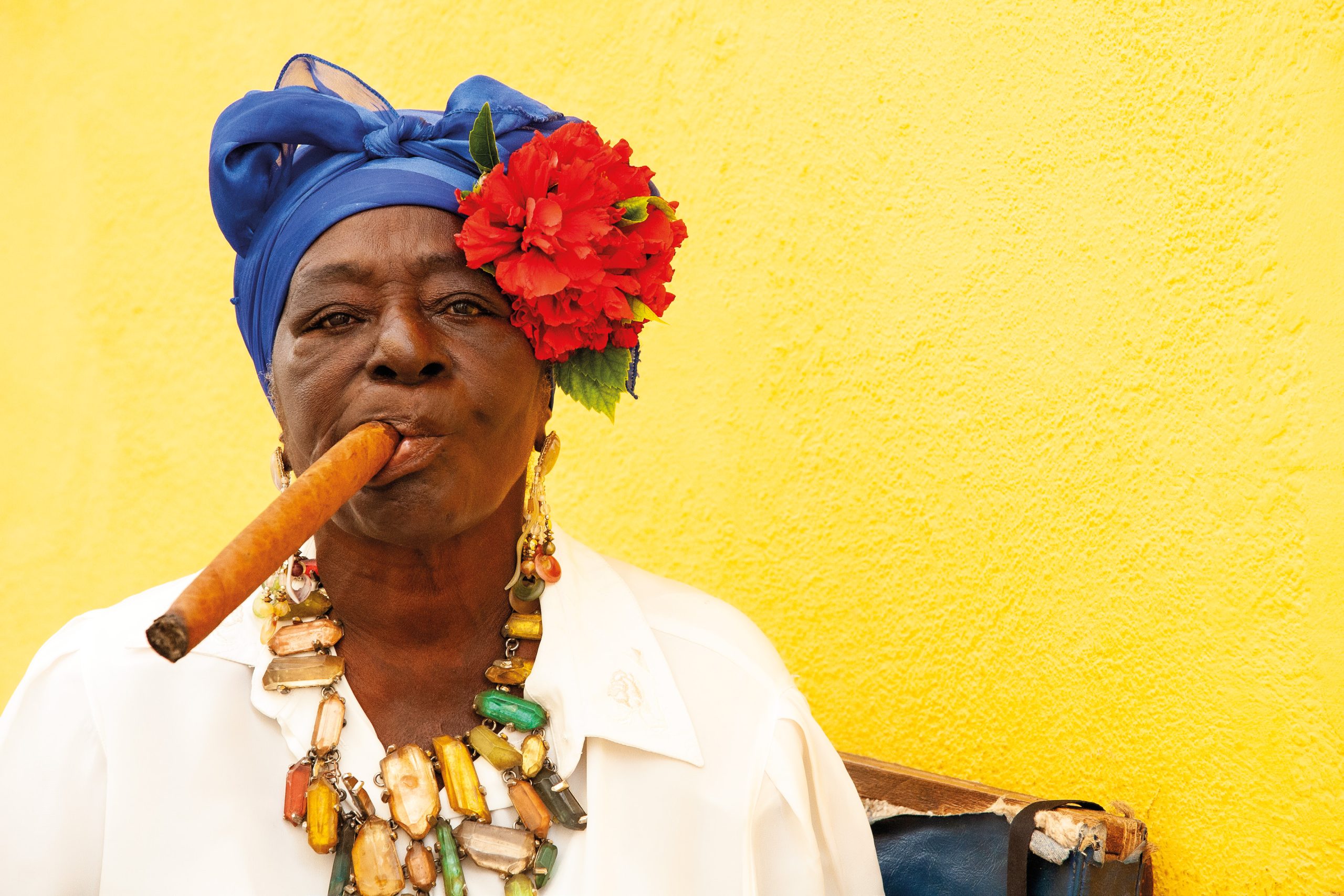
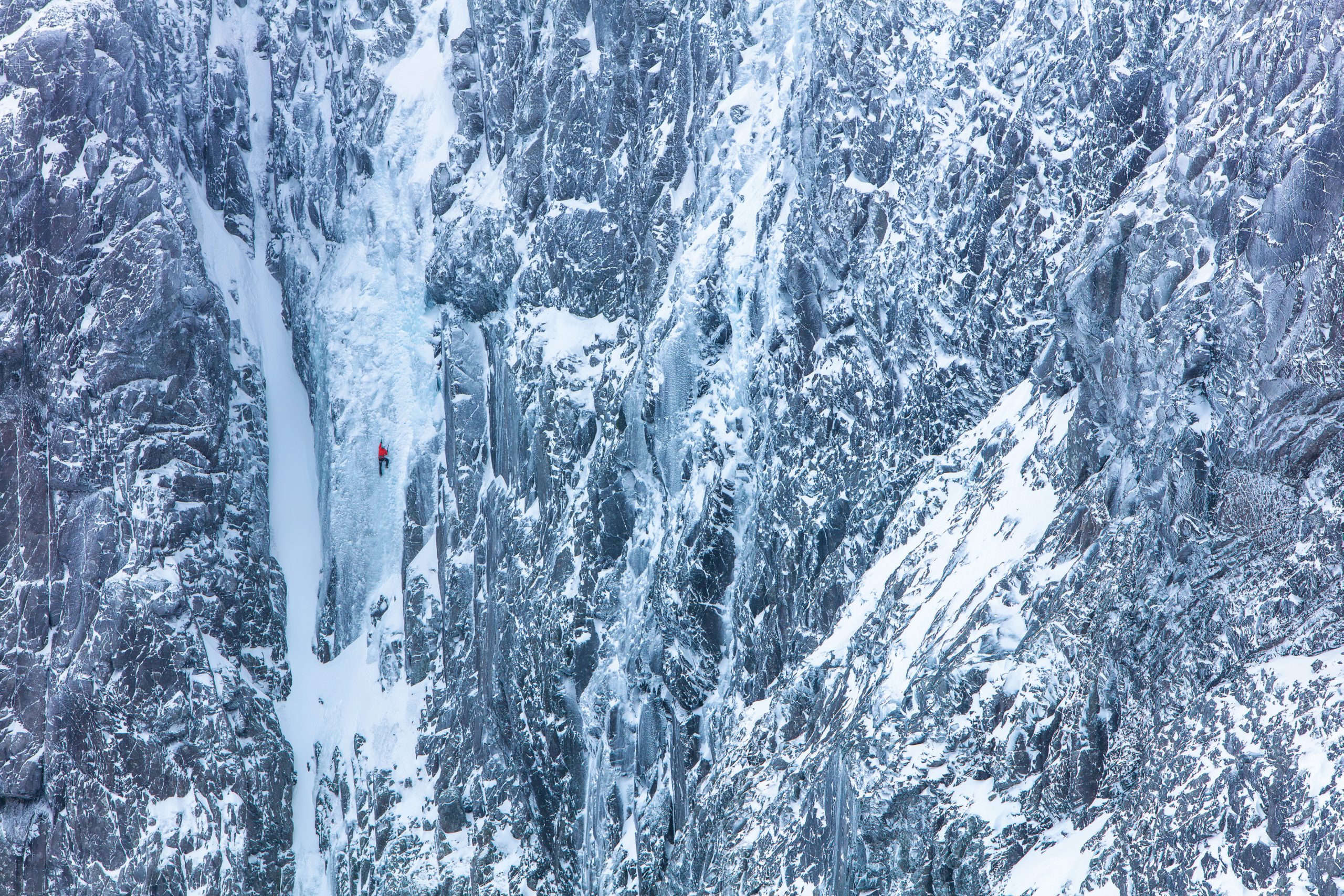
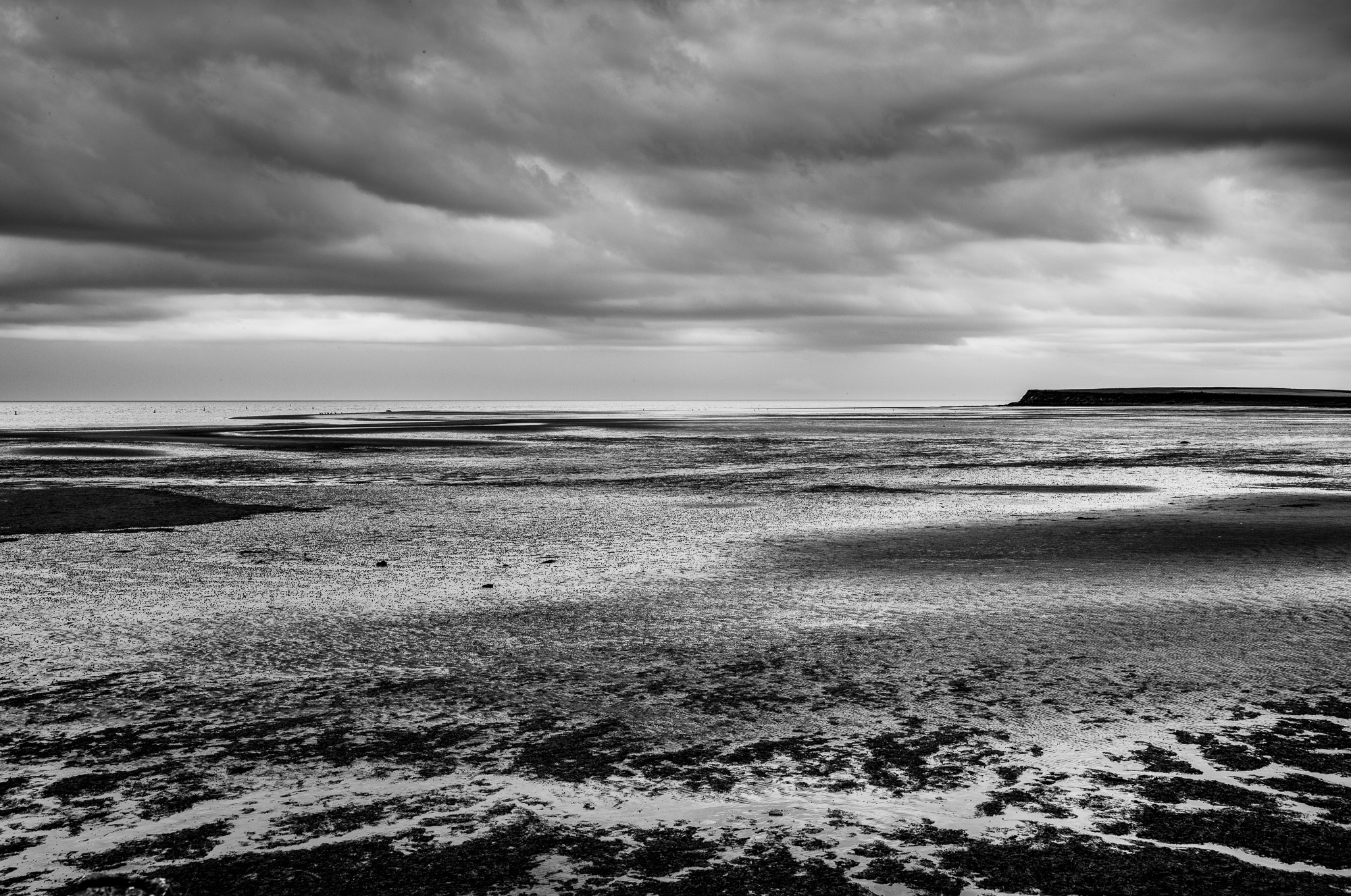
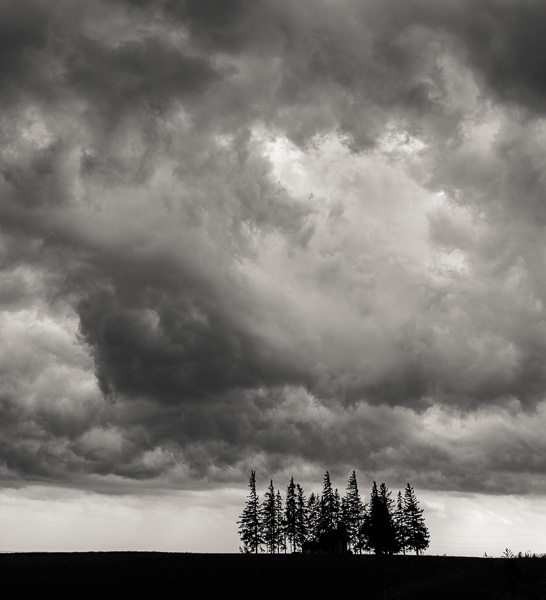
The five sections, he says, sorted themselves out. “Climbing, people, water and travel emerged quite naturally because they represent what I’ve spent most of my life shooting.” The fifth was the outlier. “Storms were the exception. That’s a much newer obsession, something I’ve become completely addicted to over the last handful of years. But it felt like it belonged in the book because it represents where my photography has taken me more recently.”
He resisted the temptation to design the structure first and shoot to fill it. “Once I began pulling favorite images the structure began to develop, I didn’t set out trying to fill the five categories with photographs. Ultimately, I wanted the book to reflect the different worlds I’ve had the honour to photograph and the things I’ve been drawn to.”
Excerpted from Paul Bride: Until the Light Dies By Paul Bride. Foreword by Sonnie Trotter. Copyright © 2026, Paul Bride. Republished with the permission of Figure 1 Publishing.
Going big
Each section gets a gatefold. That’s a serious production choice for any photobook as it costs more to produce. Bride took this seriously and thought it was important.
“Choosing the gatefold images wasn’t easy. Obviously there were technical considerations, the images had to hold up at a larger scale in terms of sharpness and composition. But ultimately I chose photographs that I felt became more powerful the bigger they were.”
He describes the effect the way a printer would. “Some images just need that kind of space. When you open the gatefold and suddenly the photograph is huge in front of you it changes the experience of it. I wanted those images to pull the viewer in, make them look a little longer.”
The dirtbag who kept working
Sonnie Trotter’s foreword goes back to the beginning, to the “dirtbag” years when Bride and the climbers he photographed were living out of vehicles and chasing routes. We asked how much of that scrappy, plan-as-you-go mentality survived the transition to a career with clients and call sheets.
“I’d say it still shapes the way I shoot, quite a bit. The subject isn’t climbing anymore but that same mentality is still there, the fleeting moments, rolling the dice and travelling a long way without knowing what I’m coming back with. That’s still the foundation of my work.”
He describes his method as showing up and dealing with it. “My style is heavily based on being there, putting myself in that particular place or environment and seeing what I can make of it. You can do all the planning in the world but once you’re there you have to work with whatever the place, the people, the weather or the moment gives you. And that’s where the creative part really begins for me.”
Then a line that should go in the LuLa newsletter: “Most of the time photographs don’t just appear in front of you. I still have to look for them, react to what’s happening and figure out how to turn what’s in front of me into something that feels worth taking.”
He sums it up plainly. “I think the mentality from those early dirtbag days never went away; it just found its way into everything else I now shoot.”
The commercial work, he says, came out of the same well. “The personal obsession came first. Photography was emotional for me, it became an expression. That obsession is what led me to commercial work. I never changed the way I saw things because it was a company I was shooting for. They hired me because of the way I already saw things.”
He allows that a paying job is still a job. “Obviously when you’re working for a paying client there’s a job to do but I was still using that same emotion, that same energy to capture the moment. The commercial work and the book might have very different purposes but they came from the same place.”
There’s a lesson in there for anyone trying to turn a passion into paying work. The clients came for the vision.
Excerpted from Paul Bride: Until the Light Dies By Paul Bride. Foreword by Sonnie Trotter. Copyright © 2026, Paul Bride. Republished with the permission of Figure 1 Publishing.
Writing it down
The photographs would have carried a book on their own. Bride chose to write anyway, an introduction and long captions that go into his own doubts and motivations. We asked if that was hard.
“That was hard. A book feels so permanent. It might actually still be on someone’s shelf twenty years from now, and that was always on my mind. I found myself constantly going back, questioning every sentence, trying to make it better without losing the truth.”
He wanted the writing to sound like him, and that meant putting things on the page that few people knew about.
“When I started writing about my own demons, I quickly realized a part of myself was out there that only a handful of people knew before I wrote it. It felt vulnerable but I felt like it had to go in the book.”
His reasoning is simple. “The photographs tell a story but if I wanted people to better understand me and what was going on behind the scenes, I had to be willing to expose some of myself as well.”
Close calls and the one that got away
We asked the obvious question. Was there an image he almost didn’t survive getting?
He declined to pick one, and his answer is understandable. “There isn’t one specific moment that jumps out as something I almost didn’t survive getting, but there have been plenty of moments where things got real, rockfall, falling ice, avalanche exposure, crevasses, sketchy plane rides, guns, massive waves, storms. When you spend enough time putting yourself in those environments the danger is simply part of the day. Maybe I’ve just become a little blind to it?”
The regret he’s willing to name is a different kind. It’s about hesitation, and it happened on a street in Hanoi. A monk, praying.
“I saw an incredible photo moment unfold before me and my initial action still haunts me.” He tells the full story in the book and stops himself from telling us more. “Photography can be like that. It is possible to screw up a truly special frame right in front of you.”
The instinct
Twenty-five years is long enough for the definition of a great photograph to shift. We asked if his idea had changed.
“I would say my definition of a great photograph hasn’t changed. My personal photography has broadened and over the years I think I’ve become more aware of composition, how to work with light, colour and different elements that can help make a great image.”
Craft, he says, gets you to good. Something else gets you to great.
“Ultimately I think anyone can get lucky and create a great photograph but to do it consistently comes down to something more instinctive. A kind of creative magic, regardless of whether it’s climbing, fashion, travel, architecture, or anything else, something makes you stop and stay with the photograph.”
His test is the same one most of us secretly use. “A great photograph makes me stop and say wow. My eyes and knowledge have evolved over 25 years, but my instinct hasn’t.”
The eyes got better. And – instinct and curiosity have been there all along.
Paul Bride: Until the Light Dies (Figure 1 Publishing) is available October 27, 2026. Order link
Elevate Your Vision


You may also like