



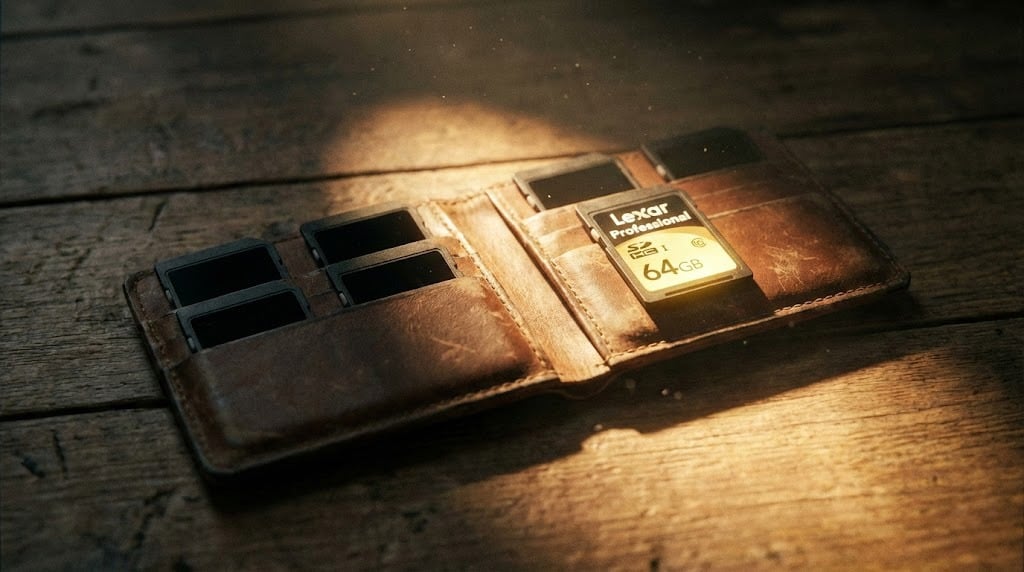


If you haven’t noticed yet, something strange is happening in the memory market. Those SD cards and CFexpress cards you’ve been meaning to stock up on? They’re about to get a lot more expensive – and a lot harder to find.
This isn’t speculation. It’s already happening.
What’s Going On?
The global flash memory market is experiencing what Silicon Motion CEO Wallace C. Kou calls something the industry has “never [seen] before.” In a recent earnings call, he stated plainly: “HDD, DRAM, HBM, NAND – all in severe shortage in 2026. Most of our capacity [is] sold out.”
Let that sink in. The companies that make our memory cards have already sold their entire 2026 production capacity.
And the buyers aren’t photographers – they’re AI data centers with bottomless budgets.
Here’s what we’re seeing right now:
- NAND flash prices have doubled in the past six months. A 1TB TLC chip that cost $4.80 in July 2025 now costs $10.70.
- SanDisk raised their contract prices by 50% in November alone – their third major increase this year.
- High-capacity microSD cards (512GB and up) are already experiencing regular stockouts in Japan.
- Weekly price increases of 14-25% have become routine. Historically, 5-10% was considered severe.
One bulk memory distributor put it bluntly: “This rapid escalation makes it extremely difficult for anyone who buys memory in bulk to maintain predictable margins.”
Why AI Is Eating Our Storage
The culprit is straightforward: artificial intelligence requires staggering amounts of storage. AI data centers need fast, reliable memory not just for training models, but for storing the massive outputs those models generate – text, images, video, audio – plus the enormous datasets required for retrieval systems.
Here’s the ripple effect that’s hitting photographers:
Enterprise SSDs are in extreme demand. Cloud providers are shifting from traditional hard drives to SSDs because AI workloads need faster data retrieval. This is consuming NAND flash at huge rates.
Manufacturers are prioritizing AI customers. When you can sell your entire production run to enterprise buyers at large premium margins, why bother with consumer SD cards?
Phison’s CEO confirmed they’re “deliberately prioritizing server markets over retail consumers due to better margins.”
New production capacity won’t arrive until late 2027. Even if manufacturers wanted to ramp up, building new fabrication facilities takes years.
We’re looking at a structural shortage and not a temporary blip.

What This Means for Our Camera Bags
The photography-specific impact is already happening. Camera media prices are expected to rise a lot throughout 2026 because the NAND flash that goes into CFexpress, SDXC, and portable SSDs uses higher-grade parts with stricter thermal and endurance requirements.
If memory suppliers keep prioritizing AI products – and there’s every indication they will – camera card manufacturers will struggle to secure the volumes they need.
The result: higher prices and reduced availability, especially for high-capacity cards. Supply and demand.
A camera card manufacturer recently warned CineD directly about NAND scarcity.
This isn’t industry rumor – it’s coming straight from the supply chain.
Here’s the math: A 128GB SD card that cost $25-30 in early 2025 could approach $50-60 by mid-2026.
A 512GB CFexpress Type B card currently running $200-250? Potentially $400-500.
Those 1TB portable SSDs we use for field backup? Double what we pay today.
The Holiday Deals Are a Warning Sign
Here’s something interesting: retailers are currently running aggressive holiday deals on memory cards. PetaPixel recently highlighted “screaming deals” on CFexpress and SD cards from Sony, Lexar, ProGrade, and others.
Why would retailers discount products heading into a shortage?
Simple: they’re clearing current inventory before they have to restock at dramatically higher prices. A Sony 1920GB CFexpress Type B TOUGH card currently discounted to $898 from $1,998 might seem like a steal.
But it’s also a signal – retailers know what’s coming and are adjusting accordingly.
What You Should Do Before January
I’m personally adding to my card collection before the end of December, and I’d suggest you consider the same. Here’s a practical approach:
Calculate your actual 2026 needs. Think about your typical shooting volume. How many cards do you burn through on a busy wedding weekend? A multi-day wildlife trip? A commercial shoot? Add 30-40% buffer for unexpected work or card failures.
Focus on mid-capacity cards. The 128-512GB range offers the best balance of value and versatility. You’re less likely to lose an entire shoot if a card fails, and you’ll have flexibility across different camera bodies.
Don’t forget backup storage. Portable SSDs and external drives use the same NAND flash. If you’ve been putting off upgrading your field backup system, now’s the time.
Consider your cloud backup strategy. With physical storage becoming expensive, services like Backblaze ($99/year for unlimited backup) or Amazon Photos (unlimited photo storage including RAW files with Prime) become even more valuable.
Recommended Brands
Based on reliability rather than current pricing:
- SanDisk Extreme PRO (SD/CFexpress) – The industry workhorse
- ProGrade Digital (SD UHS-II V90, CFexpress) – Professional-grade with data recovery features
- Sony TOUGH (CFexpress Type B) – Premium durability for harsh conditions
- Lexar Professional – Solid mid-tier option across formats
Protecting What You Have
With replacement costs potentially doubling, card longevity matters more than ever.
Handle cards by their edges – don’t touch the contacts. Store them in protective cases, not loose in your bag. Avoid extreme temperatures (don’t leave cards in hot cars). Format in-camera, not on your computer. Replace batteries before they’re depleted during shoots – low power can cause write errors.
Consider retiring cards after 1,000-1,500 format cycles, any time you see read/write errors, or when they’re over five years old regardless of visible condition.
The Realistic Outlook
Industry analysts suggest no meaningful relief until late 2026 at the earliest, possibly 2027. Some warn the shortage could persist longer depending on how AI adoption develops.
Could the AI bubble burst and ease demand? Possibly. Could breakthrough technologies enable rapid capacity expansion? Eventually. But betting your 2026 shooting season on maybes isn’t a strategy.
The window to act at reasonable prices is closing. By mid-2026, we’re looking at prices potentially 80-100% higher than early 2025 levels. And that’s assuming you can find stock at all.
The Bottom Line
I realize this article reads like an alarm bell – because it is one. The memory industry has entered a new era where AI demand takes up all our supply.
If you’ve been meaning to expand your card collection, upgrade your backup drives, or finally set up that cloud backup system you’ve been putting off – December 2025 is your window.
The prices will not improve before they get significantly worse.
Sources:
- PC Gamer – Silicon Motion CEO “never happened before” quote on 2026 shortage
- Tom’s Hardware – Phison CEO confirms NAND prices doubled, 2026 sold out
- Tom’s Hardware – SanDisk 50% price increase report
- CineD – Camera-specific impact and manufacturer warnings
- BulkMemoryCards – Wholesale pricing volatility (25% weekly increases)
- PetaPixel – Holiday deals on memory cards (inventory clearing signal)
I’m stocking up on a few extra cards this month. Might be worth considering the same.
– Swindy





Elevate Your Vision


You may also like