



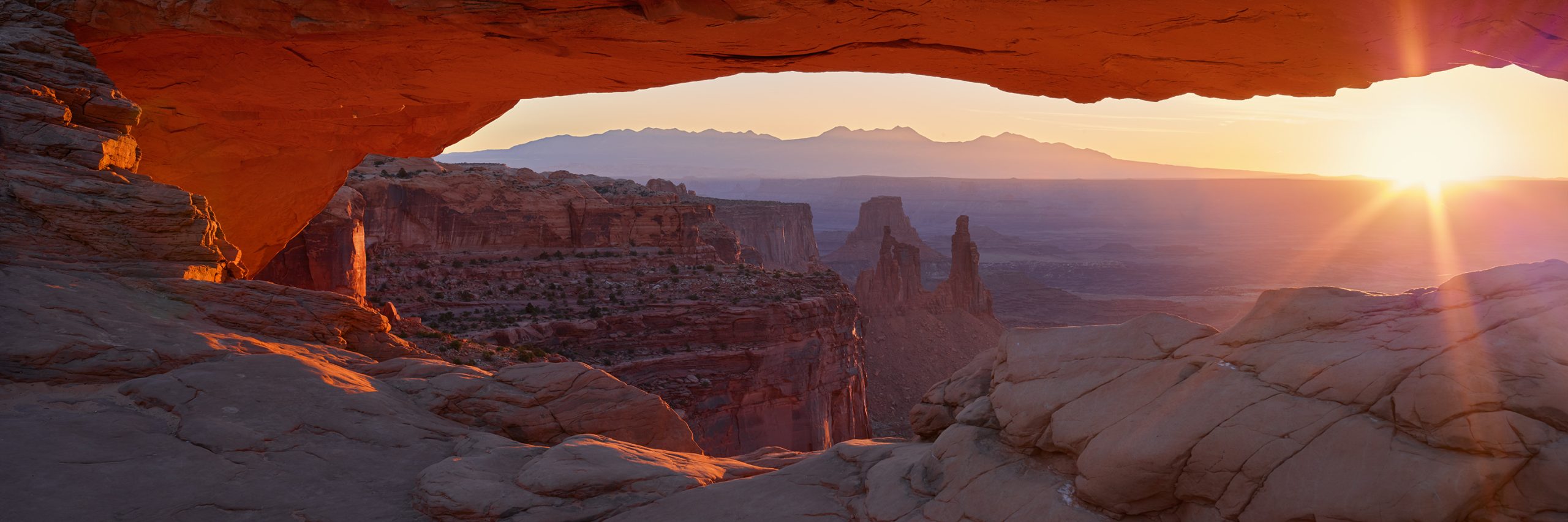
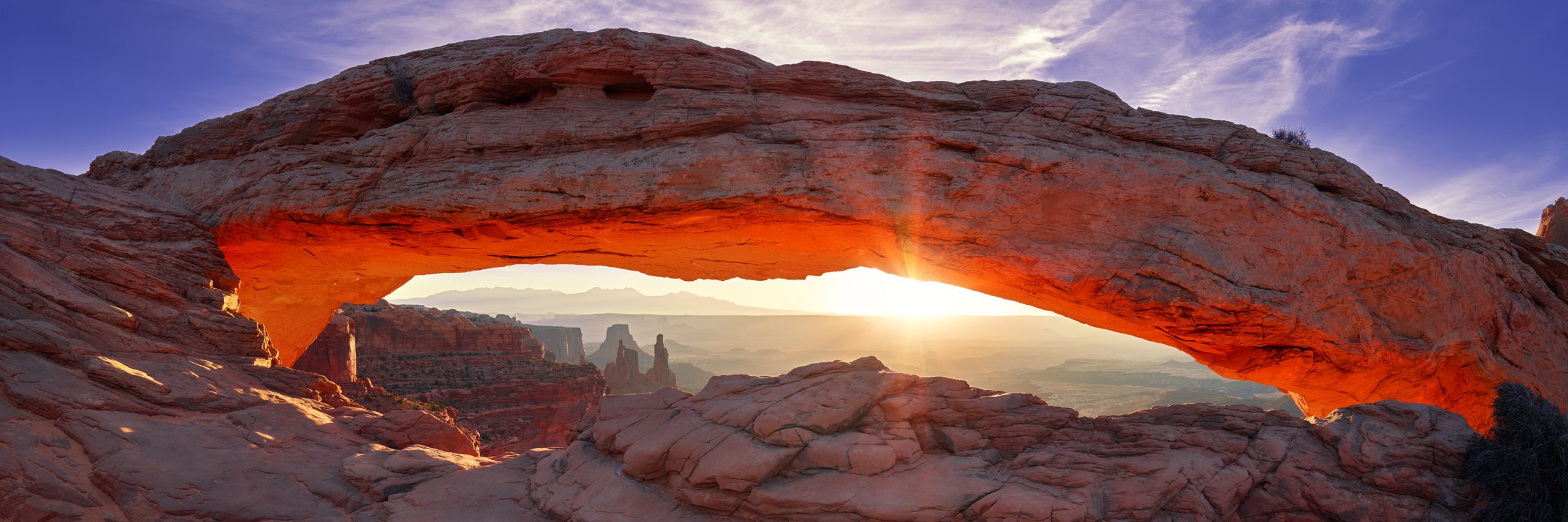
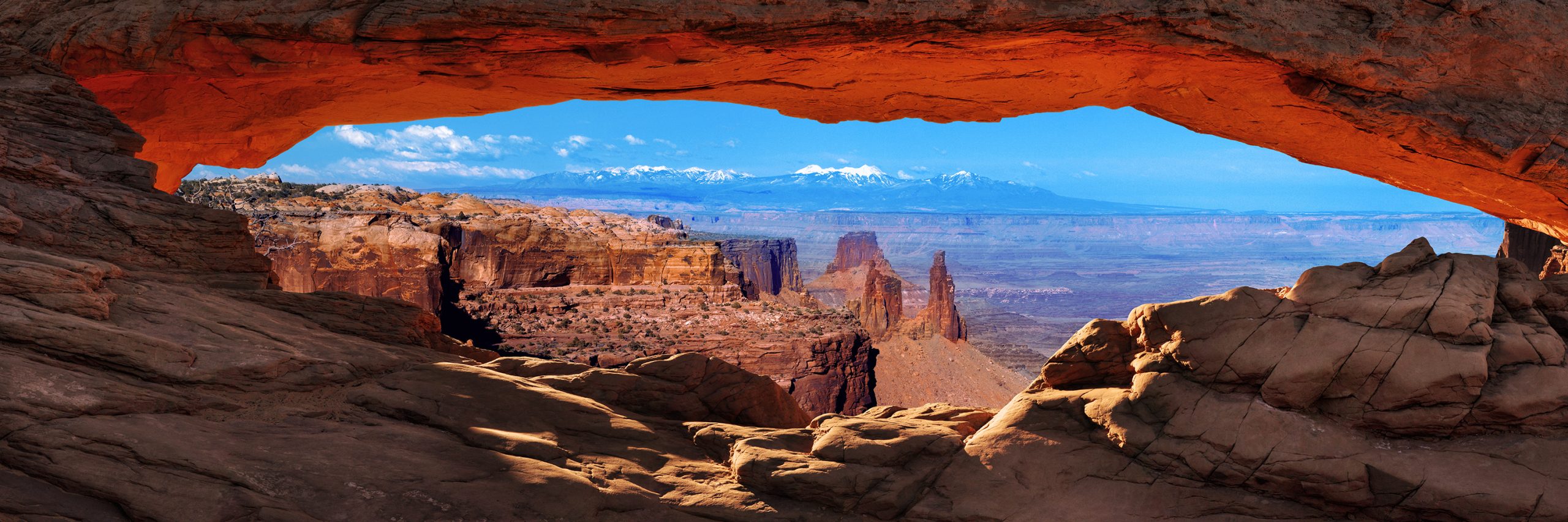
Mesa Arch is one of the most photographed natural arches in the world. Every photographer has seen the picture: the orange glow flaring under the rock, the canyon and distant formations beyond. I have photographed the arch in every season I could, and I love it precisely because it never repeats itself. But the frame I am best known for there is the one I almost didn’t take, on a winter morning when there was no sunrise at all.
A location that rewards returning
Mesa Arch sits in the Island in the Sky district of Canyonlands National Park. Some mornings the glow under the arch is a soft amber; on others it flares into a hard, almost electric orange and is gone in minutes. A different spot along the rim, a different sky or a different angle of light, and the arch reads as a new subject. It is not a one-and-done location. It rewards showing up again and again, across years, in sun, snow and fog.
The tripod lottery
If you are planning a sunrise at Mesa Arch, know this: arriving a few hours before dawn does not guarantee a place in the first two rows. Many photographers set up their tripods the evening before and wait inside the park overnight to hold their position. By the time you arrive at 4 or 5 a.m. thinking you are early, the best positions directly in front of the opening may already be taken. If a clean, unobstructed view through the arch matters to you, be there well before first light, and accept that on a crowded morning you may be shooting from the second or third row.
Winter changes the equation, mostly
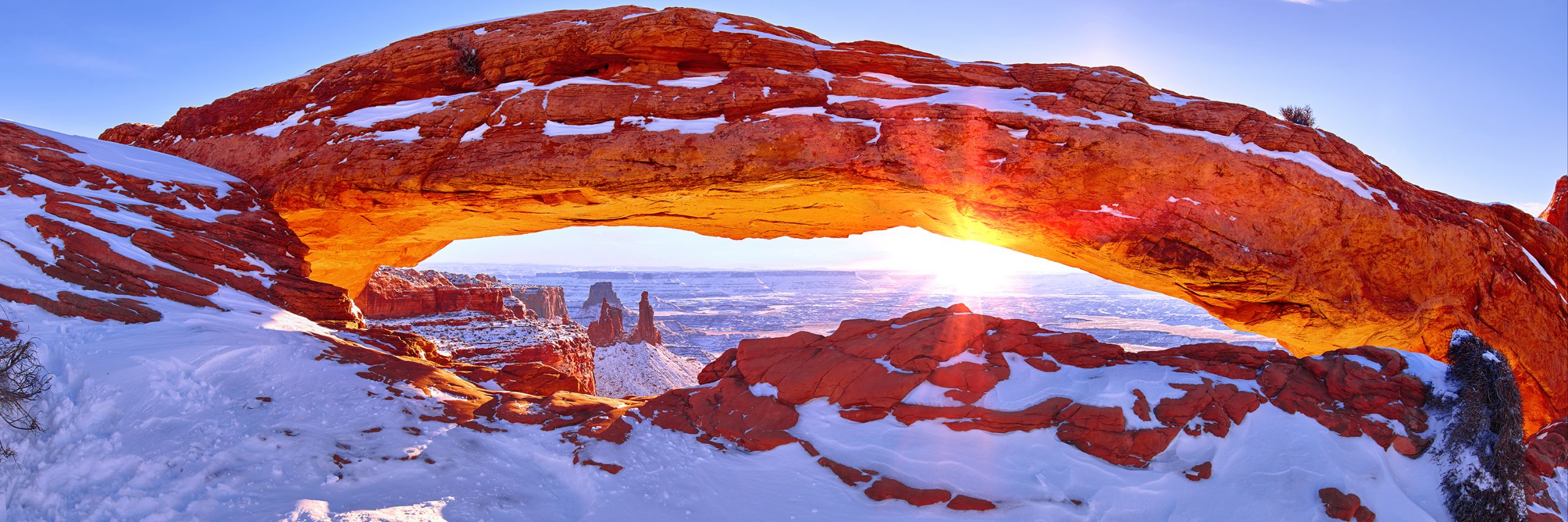
Winter thins the crowds, and a much smaller group means a real chance at a good position without an overnight vigil. The risk is weather. After heavy snow the park’s access road stays closed until it has been cleared, and on a bad morning that can stretch past 11 a.m. or toward noon, long after sunrise. If you are chasing a winter sunrise here, build in extra mornings, because at least one may be lost to road clearing.
Once the road opens, the walk from the parking area to the arch is through deep, unbroken snow, nothing like the short, easy stroll of summer. Allow much more time than you think you need and dress for real winter. One point of etiquette: near the arch, avoid walking through the clean snow in front of it. Every photographer is framing the same stretch, and a single line of boot prints can ruin the shot for everyone who comes after you, sometimes for the rest of the day.
The morning nobody else bothered to shoot
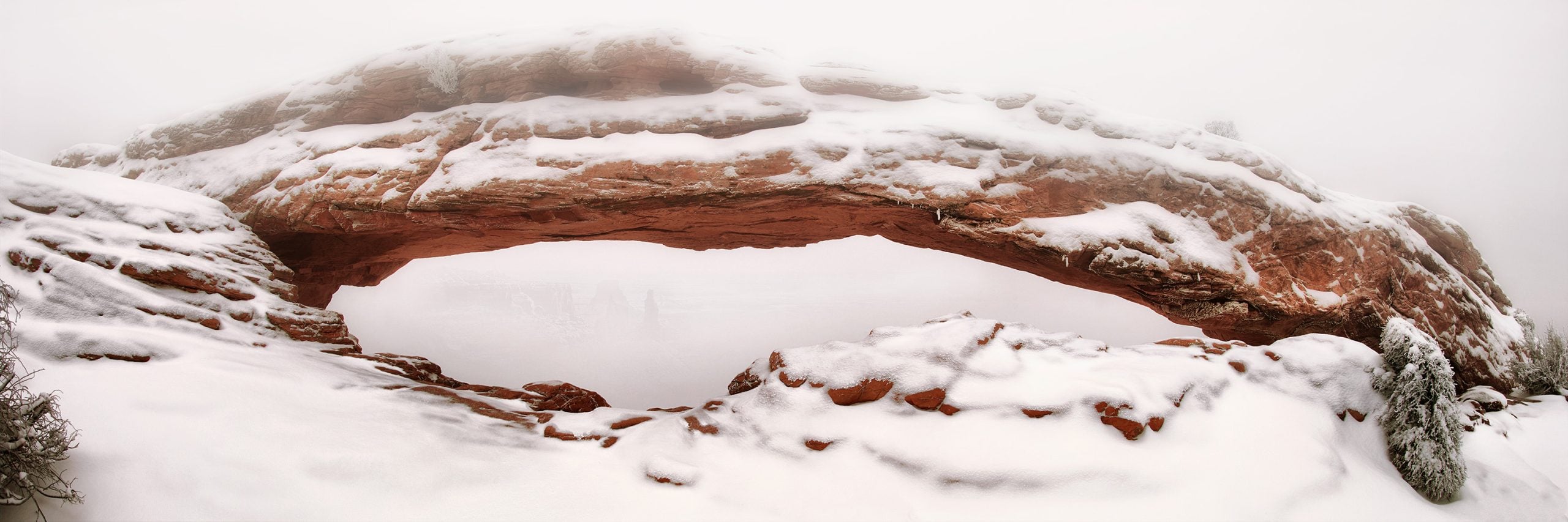
One February morning the weather turned genuinely awful. Heavy snow was falling and the fog was so thick that I could barely see the arch from five meters away. There was no view of the canyon through the opening, no glow under the rock, no sunrise: just white on white in every direction. I was the only photographer who set up a camera that morning. Everyone else had either given up on the forecast the night before or turned back when they saw the conditions.
I made a handful of frames anyway, with a Phase One IQ180 and a Mamiya 14mm lens, more out of stubbornness than expectation. Then I went back to the hotel in a low mood, convinced the trip had been wasted.
The receptionist
At the hotel the receptionist asked what was wrong. I told him I had hoped for a classic Mesa Arch sunrise and got only fog and snow. He asked me a simple question: had I ever seen photographs of Mesa Arch looking like that? I hadn’t. Nobody had shown me anything like it. “So why be upset?” he said. “You just made unique shots that nobody else has.”
That reframing stuck. What I had treated as a failed sunrise was the rarest version of a heavily photographed subject: a view that conditions alone had made, and that almost nobody else would ever have, simply because almost nobody else was willing to stand out there and shoot it.
Why the frame works
Fog is a genuinely unusual condition at Mesa Arch. The high desert air is normally so dry that visible moisture of any kind is rare, let alone a layer thick enough to fill the space beneath the arch. In the final image, which I titled “Skyfall”, the canyon floor and distant formations that usually fill the arch’s frame are replaced by an even bank of white. The arch reads almost as if it were floating over open space rather than perched on a rim. It is a different Mesa Arch from the sunrise-glow or clear-sky versions most pictures show, and it depends on a weather condition the location almost never produces.
What I took from it
“Skyfall” went on to become one of my best-selling Canyonlands prints, and it hangs in collections that also own more conventional sunrise pictures of the same arch. The lesson, for Mesa Arch or any heavily photographed landmark, is simple: don’t pack up the moment the weather stops looking like the postcard. The conditions everyone else drives away from are often the ones worth staying for.
Location details
Mesa Arch, Island in the Sky district, Canyonlands National Park, Utah, USA
Coordinates: 38.38803, -109.86366
Season: February (winter)
Conditions: heavy snow and dense fog, arch barely visible from about 5 meters
Equipment: Phase One IQ180, Mamiya 14mm lens
Join the discussion in the forum.
About the author
Alexander Vershinin is a fine art landscape photographer who has photographed on several continents for more than 20 years. His work is sold as signed, limited-edition prints worldwide. Website: https://www.vershinin.biz/
Elevate Your Vision


Read this story and all the best stories on The Luminous Landscape
The author has made this story available to Luminous Landscape members only. Upgrade to get instant access to this story and other benefits available only to members.
Why choose us?
Luminous-Landscape is a membership site. Our website contains over 5300 articles on almost every topic, camera, lens and printer you can imagine. Our membership model is simple, just $2 a month ($24.00 USD a year). This $24 gains you access to a wealth of information including all our past and future video tutorials on such topics as Lightroom, Capture One, Printing, file management and dozens of interviews and travel videos.
- New Articles every few days
- All original content found nowhere else on the web
- No Pop Up Google Sense ads – Our advertisers are photo related
- Download/stream video to any device
- NEW videos monthly
- Top well-known photographer contributors
- Posts from industry leaders
- Speciality Photography Workshops
- Mobile device scalable
- Exclusive video interviews
- Special vendor offers for members
- Hands On Product reviews
- FREE – User Forum. One of the most read user forums on the internet
- Access to our community Buy and Sell pages; for members only.
You may also like