



By Terry A. McDonald – luxBorealis.com
For a number of years during the film era, I photographed with a Pentax 6×7 and a Zone VI 4×5” cherry wood field camera, designed for what I would call “intentional” photography. The image quality from each was outstanding and they were of a size I could still hike with. But digital changed all that.
Up until recently, sensors that matched the quality of 6×7 and 4×5 were simply too expensive, and not very portable. For me, medium and large format digital gear became financially inaccessible. That, combined with living overseas for a number of years meant that my photography morphed into a more casual, spontaneous, and opportunistic style. Four Thirds fit the bill, followed by 35mm sensor gear.
The desire for a lightweight, fast, innovative and versatile system continued with a switch to MFT. My current OM-1 body and three zooms covering 16mm to 800mm (efov) plus a macro lens, all fit into a small LowePro AW sling bag proving its status as the sweet spot in modern photography, as I wrote in 2025.
However, the medium format landscape has changed. Big time.
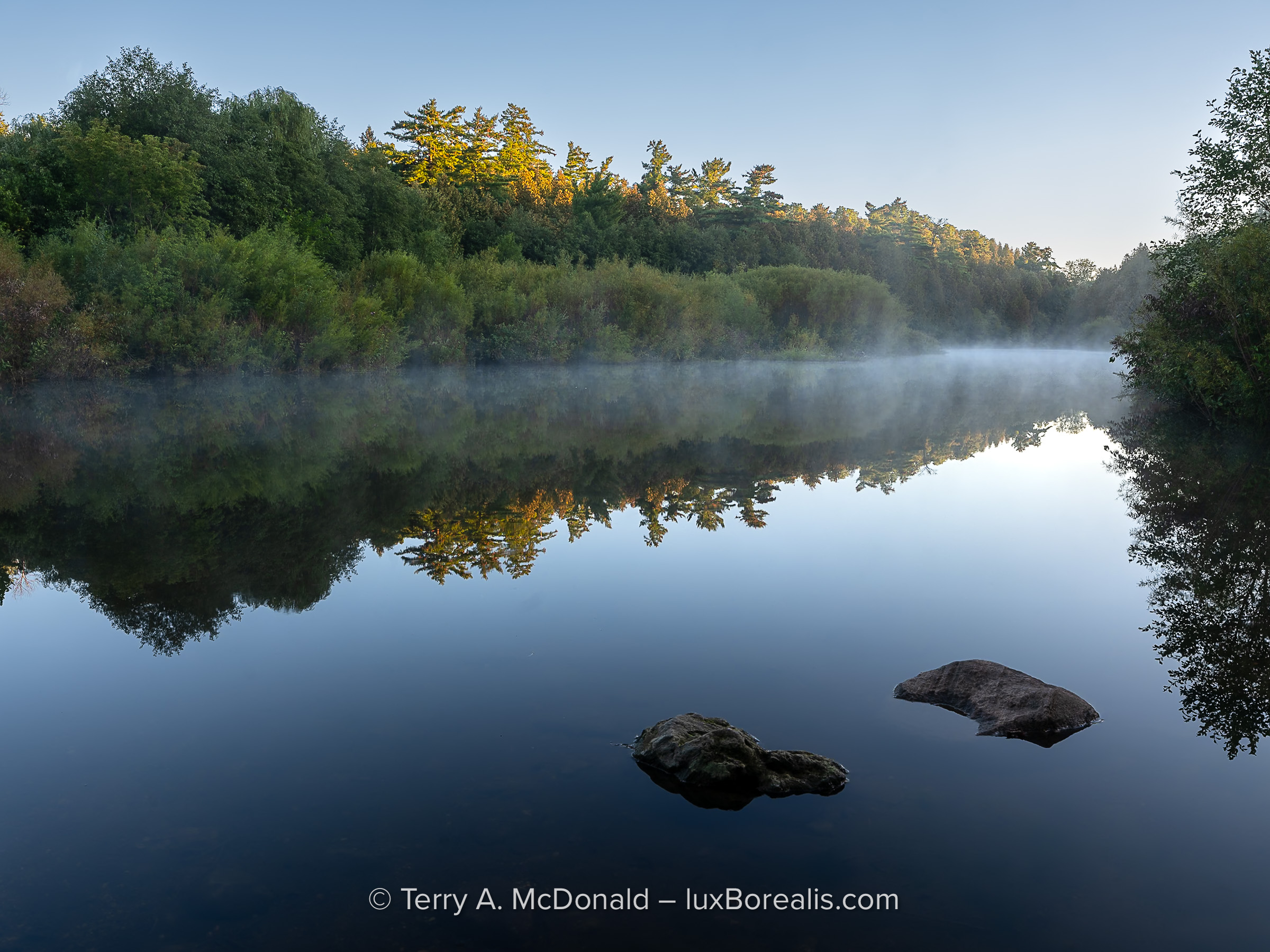
Fujifilm GFX 100SII w/ GF 20-35mm ƒ4 R WR lens at 35mm (28mm efov); ƒ16 @ ¼ sec., ISO 40; tripod; raw file processed in Lightroom
Using ISO 40 is an error on my part as it should have been ISO 80, the base ISO of the GFX. The detail and dynamic range from deep shadows to bright highlights is insane.
White balance is unchanged from the AWB set by the GFX.
Enter Fujifilm
Modern technology has reduced the weight and bulk of medium format cameras, as well as their cost. The Fujifilm GFX 100SII body comes in at CA $7600, around the same cost as flagship bodies from Sony, Canon or Nikon. While it weighs less than the R1 and Z9 (even the Z8!), it’s only 100 grams heavier than the A1 II.
And, don’t let the name “Fujifilm” fool you. While film was a huge part of their business back in the day, Fuji also produced cameras and stunning Fujinon lenses for large format photography, along with photocopiers, automated photographic printers, medical imaging equipment and supplies, and they continue to do so today.
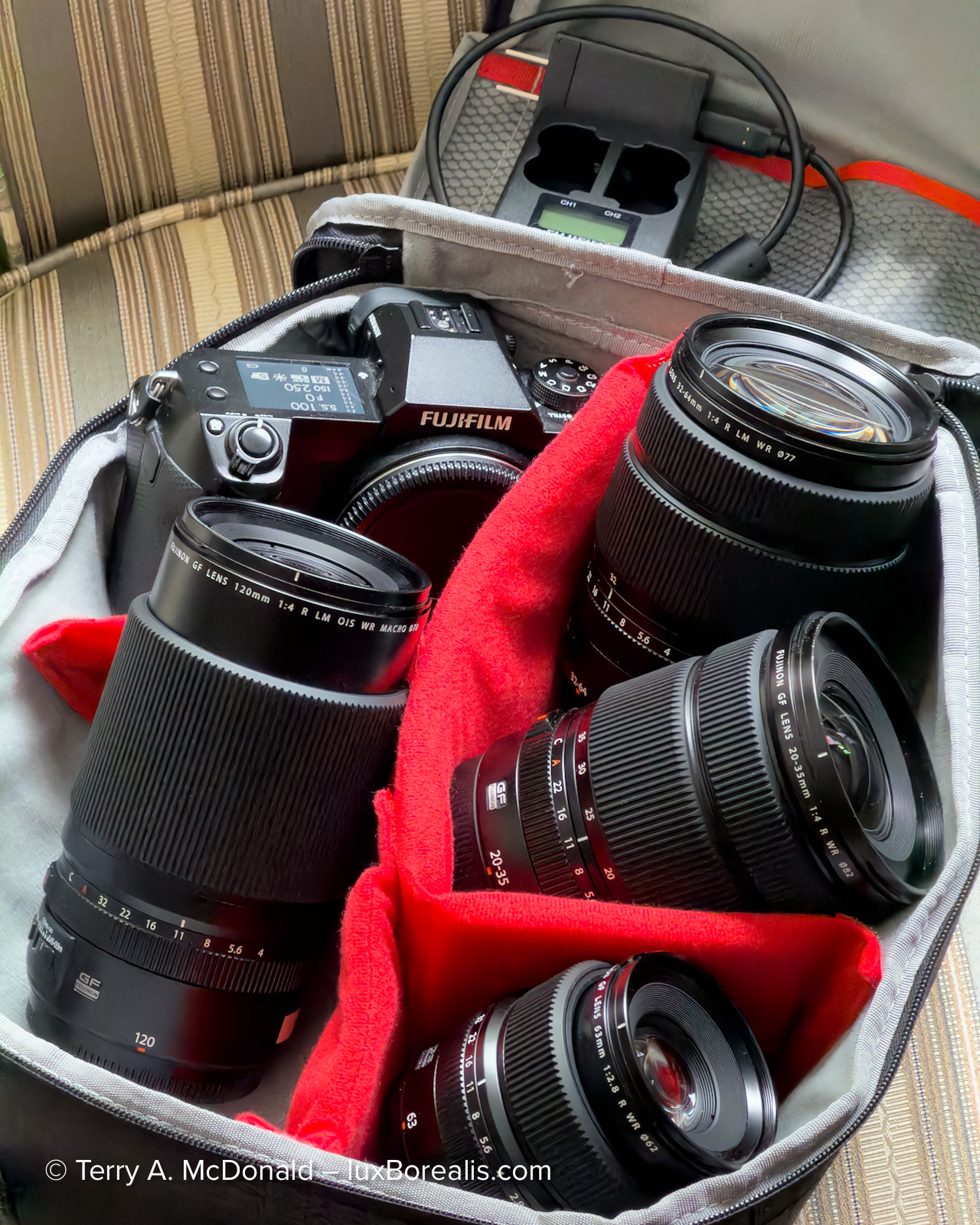
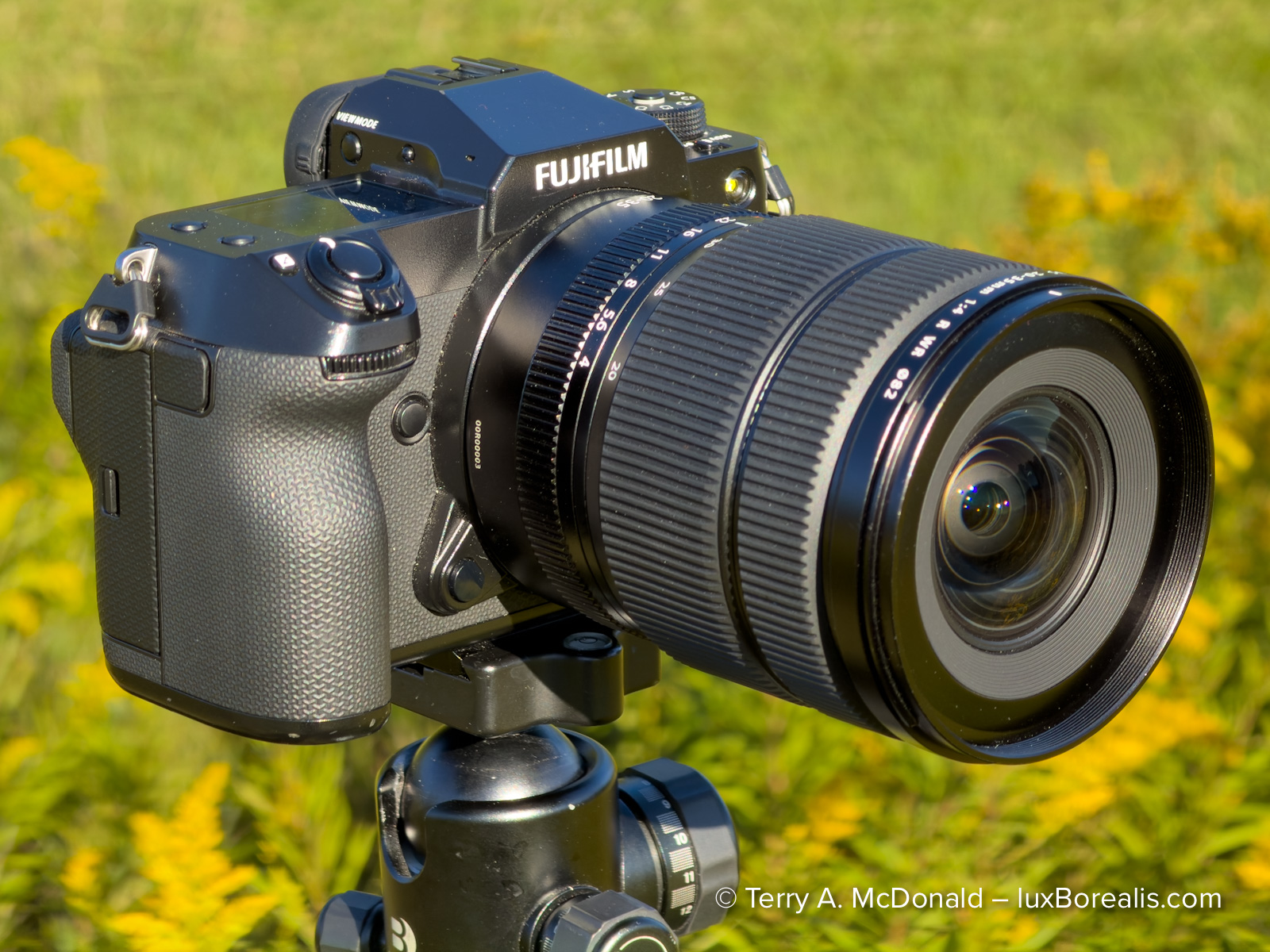
I owe a big Thank You! to Fujifilm Canada who loaned me their latest (2024) camera, the GFX 100SII, with an assortment of lenses, for a week in September. I’ve been contemplating putting the 102 MP to use in landscape photography, so a 20-25mm/4 lens was amongst the lenses on loan.
Intention meets spontaneity
The GFX 100SII is the ideal camera for planned, purposeful, intentional photography by photographers not afraid of using a tripod. If you’re a landscape photographer up at dark o’clock to catch the dramatic light of dawn, there might not be a better camera out there to capture your vision.
Its 102-megapixel sensor, 16-bit RAW files and ISO 80 base sensitivity deliver extraordinary detail and tonal flexibility, while its relatively compact body makes it practical in the field. Phase One may offer still greater technical image quality, and Hasselblad offers a distinctly refined alternative, but few cameras match Fujifilm’s balance of performance, portability and price.
At the same time, given its excellent IBIS, great feel, and ergonomics, the GFX 100SII handles spontaneous situations like street, travel and nature exceptionally well. Despite the perceived formality of using a larger system, it has a creative side as well with excellent implementation of multi-exposure and focus bracketing.
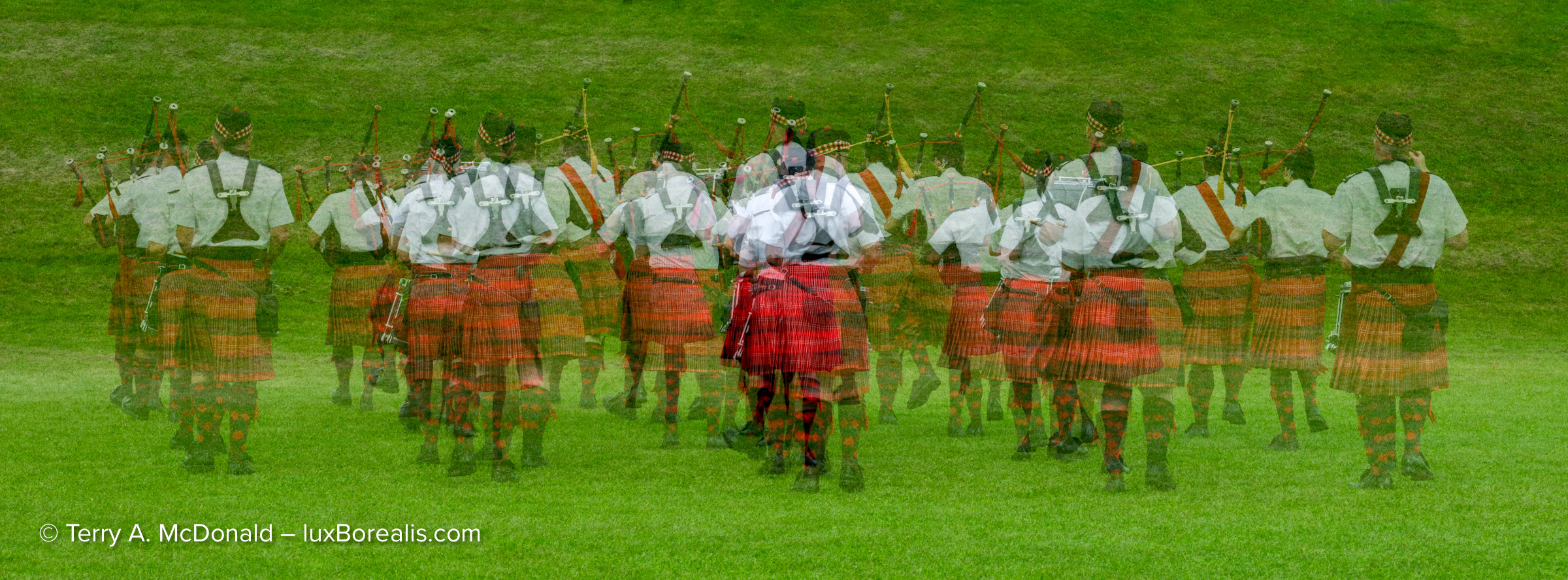
GFX 100SII w/ GF 120mm/4 Macro OIS lens (95mm efov); multiple exposure JPEG from 3 raw files, composed and assembled in-camera; ƒ16 @ 1/150, ISO 400; hand held; processed in Lightroom; 2400px JPEG exported from 10884×4022 file.
The GFX sensor is a whopping 33mm x 44mm, 1.7x larger than what is commonly known as full frame (FF) or 35mm sensors. That means the 20-35mm is an equivalent field of view (0.79x) of a 16-28mm on the smaller 35mm sensor, making the 20-35 ideal for wide landscapes. With a file resolution of 11648x8736px, it is a dream for detail.
The other lenses on loan included the excellent 120mm/4 Macro lens (95mm efov), the 32-64mm standard zoom (25-50mm) and the 63mm/2.8 prime lens. I would have liked to try the 45-100, the 100-200, and ultimately, the 500/5.6 as each of them would round out an ideal outdoor and nature photography kit.
But, 102 MP? Really?
For years I’ve argued that bigger is not, by default, better, and that the camera does not a photographer make. Even phones create stunningly great photographs in the hands of someone who knows what they’re doing. So, if bigger isn’t better, why the mega-sensor?
Most people with a camera are pretty casual about its use, snapping family events and documenting vacations. Some go beyond the casual and become serious about capturing scenes and moments with more intention. They assemble a bundle of lenses, and head out for early mornings, often staying out well past dark, dedicating the time needed to capture the ultimate photograph. Sharing online becomes a regular thing with, perhaps, some competition entries.
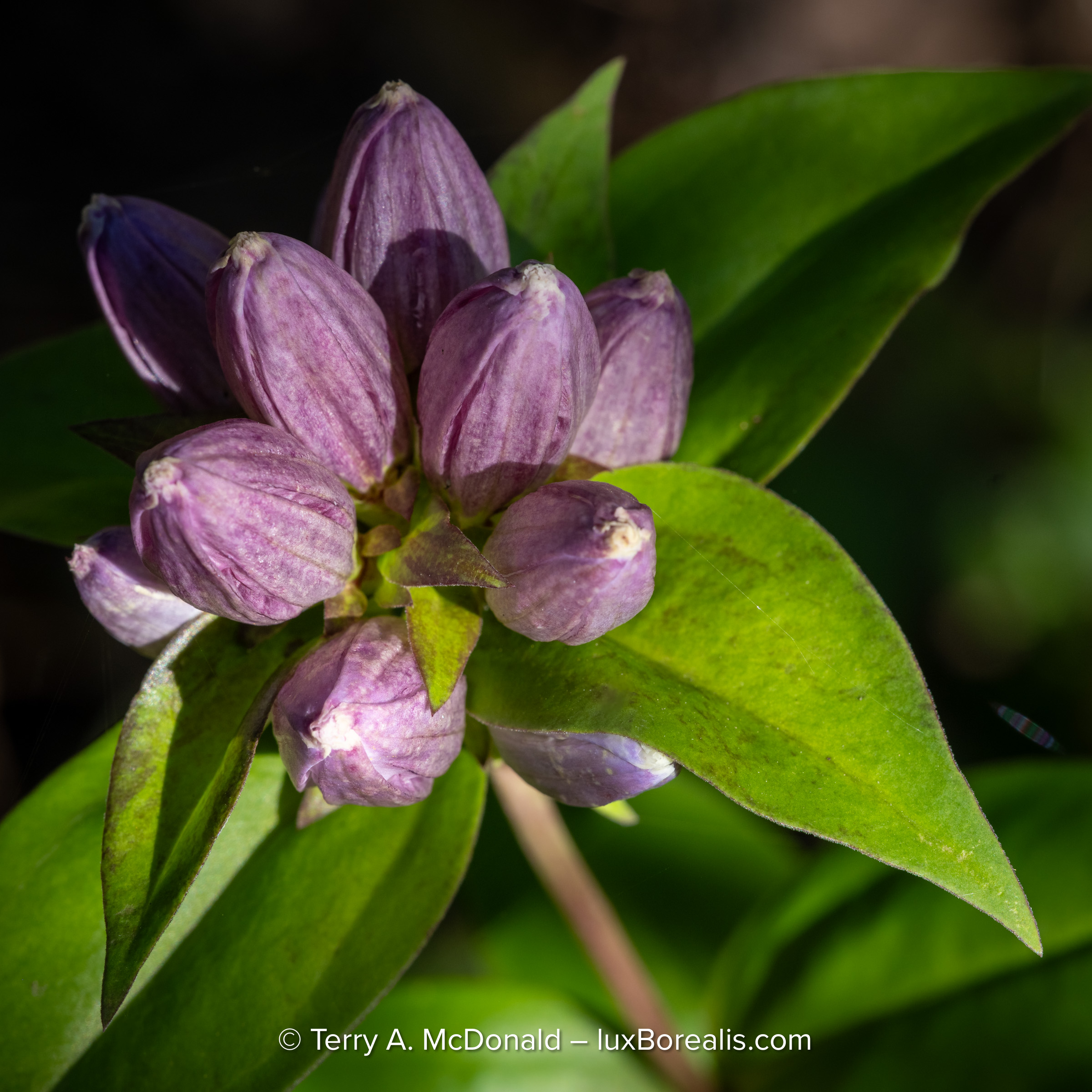
GFX 100SII w/GF 120mm/4 Macro lens (95mm efov); ƒ16 @ 1/150, ISO 800; hand held; raw file processed in Lightroom without Denoise applied
I wish I had trusted ƒ32 for greater depth of field, and I’ve learned that I could have, as diffraction is not as severe as I thought it might be.
The Print Factor
The great thing about photography today is that an 11×14” print or 24” canvas, made using a local or online printing service can originate from almost any sensor size from phones on up. However, fine prints made on art paper are a different story.
Dedicated printing gives photographers a different perspective on their files, and begins noticing small details that others don’t.
For example, highlight gradations are slightly more abrupt; shadows are not quite as open and lively; and the blend from one hue to another seems to jump a step or two. Upon closer examination, edges are on the “crunchy” side rather than smooth, and the fine details you know were there in the scene, are not quite resolved.
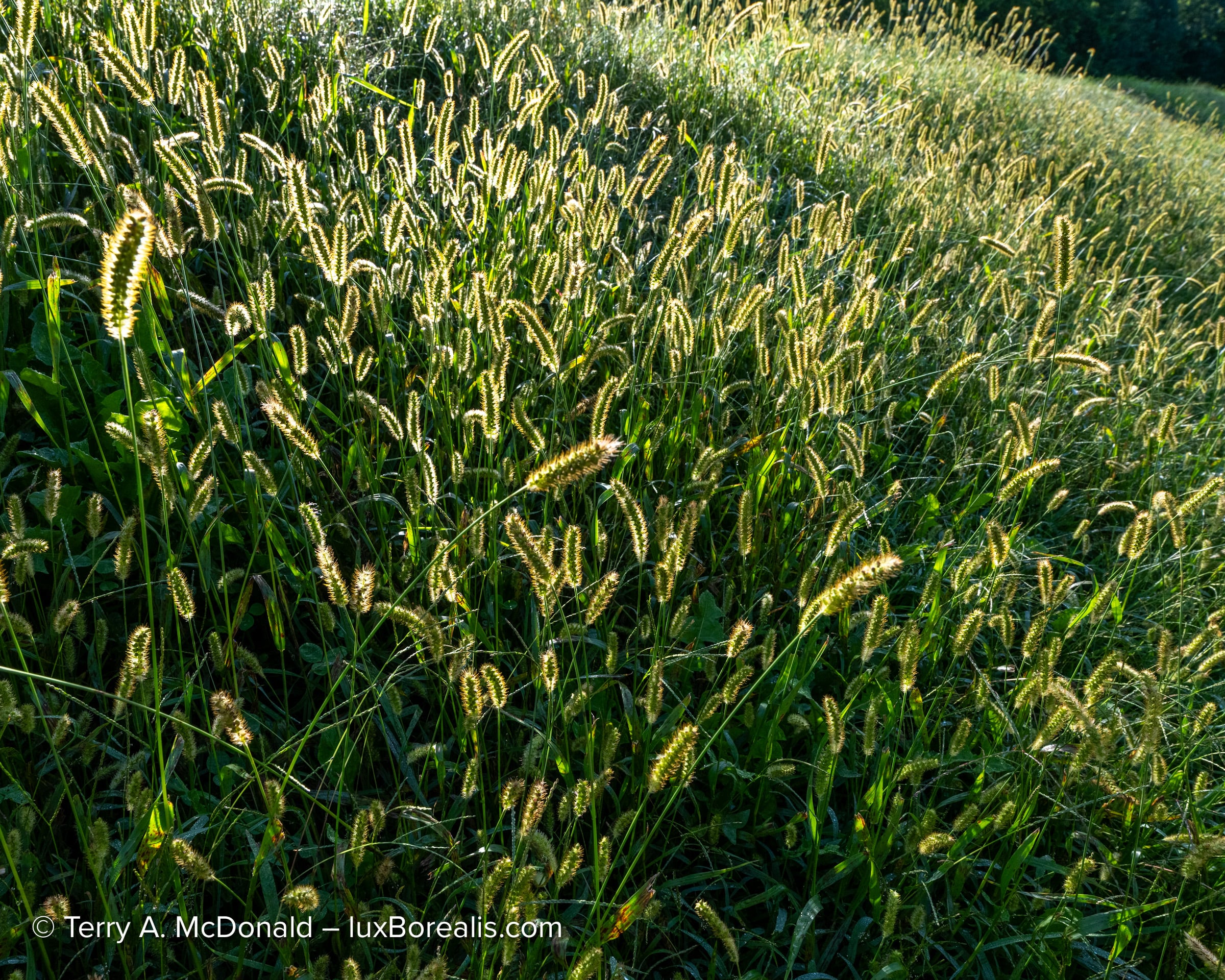
GFX 100SII w/GF 20-35mm/4 @ 25mm (20mm efov); ƒ16 @ 1/250, ISO 1600; hand held; raw file processed in Lightroom.
These are the kinds of details photographers begin to notice after years of examining photographs beyond their initial emotional impact. It’s not even pixel peeping, but rather an aesthetic that is discernible in fine prints using files larger than we typically see when sharing online or on screen, files prepared by carefully matching processing decisions to paper and ink.
This is what a large sensor is made for. Nowadays, with Topaz Gigapixel, any file can be upscaled to any print size. The difference is in the details, printed at 300ppi or 360ppi, the edges, the gradations and transitions and details of a large sensor that upscaling cannot replicate.
Handling & Ergonomics
In hand, the GFX feels like a serious camera, well-built and weather-sealed. The rubberized exterior with a more than adequate grip are designed for comfortable hand-holding. This “S” model is a slightly smaller, more outdoor and active version of the GFX 100II, which is more studio-oriented with a larger buffer, faster readout and higher price (CA $ 11,400).
The “S” version is an ideal walkabout camera. With the 20-35mm zoom, it weighs in at 1608g. On a shoulder harness, it carries well tucked under my arm, yet is always ready for action. For perspective, the Pentax 67 I used back in the film days — the ultimate MF street camera, renowned for its portability — weighed in at 2400g with the 55mm/4 lens!
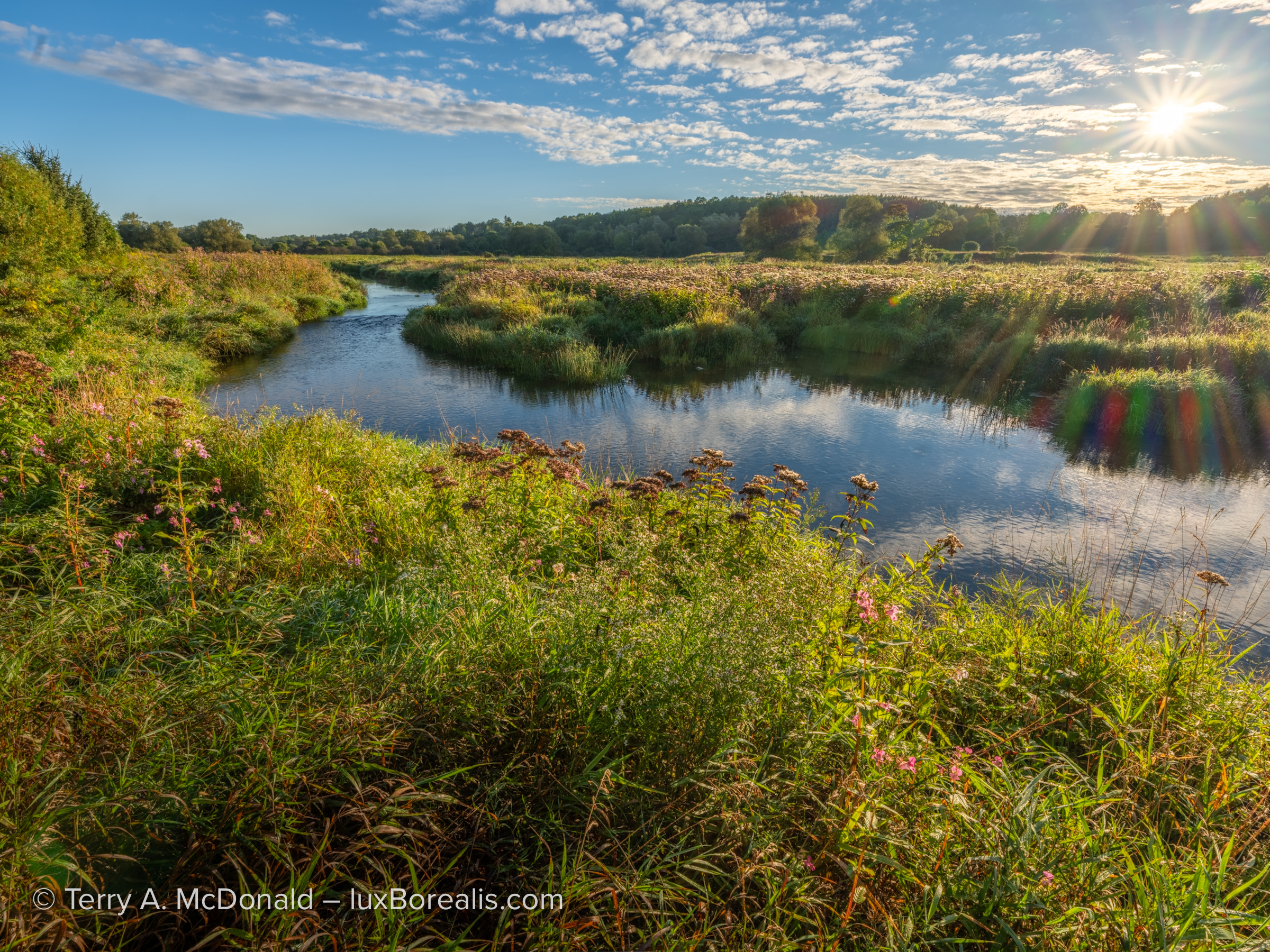
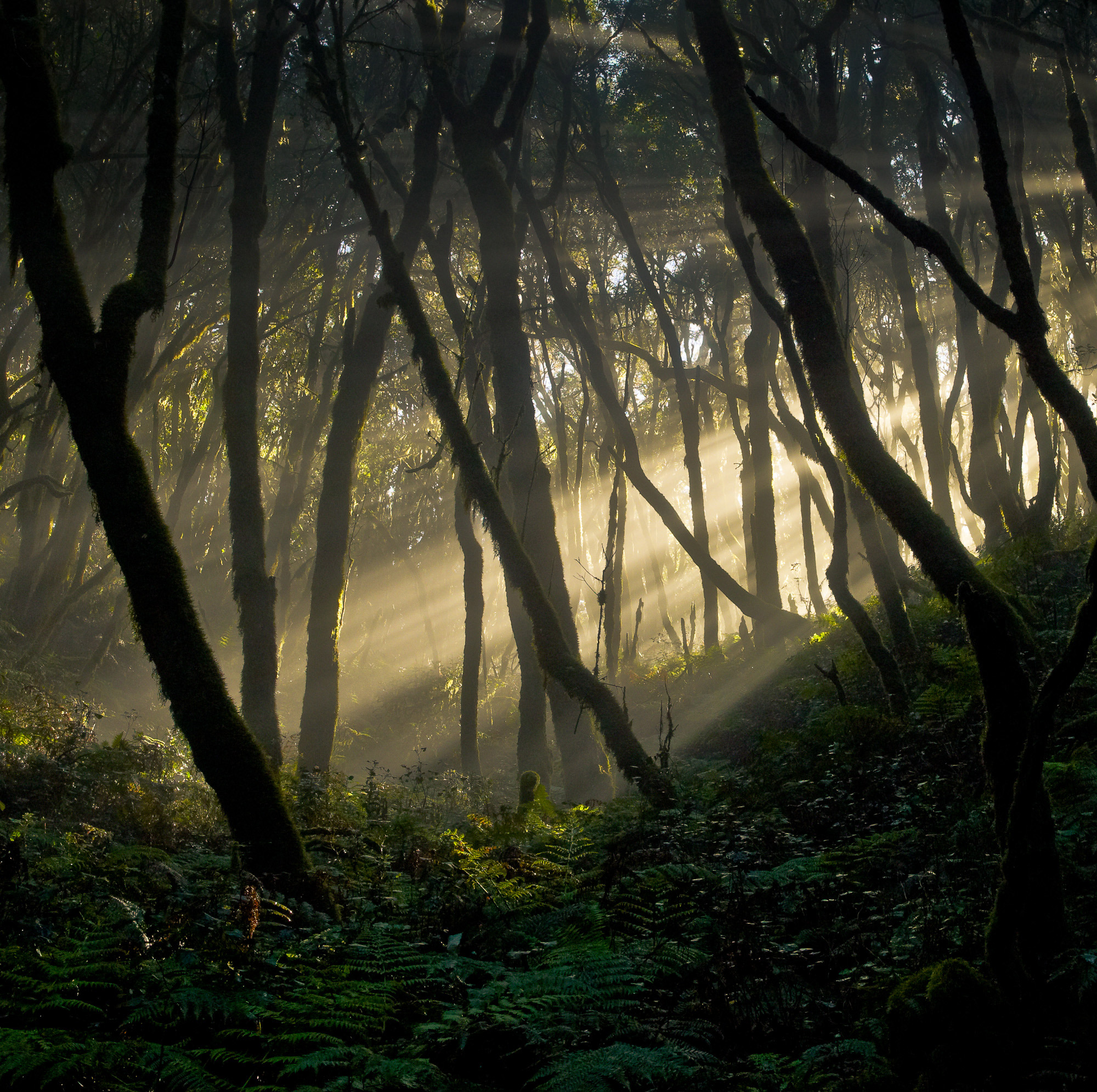
GFX 100SII w/ GF 20-35mm at 20mm; HDR blend from a series of 3 frames made at ƒ16 @ 1/340, 1/70, and 1/10, ISO 80; tripod; raw files processed and blended in Lightroom.
Despite the unparalleled dynamic range, I used HDR blending of ±2.6 EV to maintain shadow details. Raising the shadows by 4 EV is possible, but 5 EV leaves the darkest shadows mushy. Blending was done in Lightroom on my M4 MacBook Air with 16 GB of ram. While it took a few minutes with three files of 210 MB each, the process was flawless.
Carrying the body+20-35 along with the 120 Macro and 32-64 zoom in a Cotton Carrier Hyker Sling (the original, 12L version) was no hardship, with and without a tripod over my shoulder. Exchanging the 32-64 and adding a 45-100mm zoom (35-80mm efov) would create an ideal travel photography kit.
One thing you’ll notice is that in a world of 12-100, 24-129 and 24-200mm zooms, the range of each zoom lens is short: 20-35, 32-64, 45-100, 100-200. Think purposefully. Think IQ. Convenience means trade-offs. The narrow range of each zoom ensures every focal length does justice to the 102 MP sensor. And they do.
But, this is where discipline and foresight come in, the same kind of thinking that develops from using prime lenses. Choose the lens for the scene and adapt the composition to the focal lengths available — good practice no matter what lens you’re using.
About the only concern I really have is with the battery. I was surprised that the battery is physically smaller than my OM-1 battery, yet it’s driving a much larger system. While it never ran out (and I always had a spare), it was down to a third after a few hundred shots.
Again, some perspective is needed. When photography becomes more intentional, you make fewer exposures. In a morning, I may have half a dozen set-ups with, maybe, 4 to 6 exposures each — and that’s because I’m testing and learning the camera. Maybe it’s my 4×5 training that tells me more is not better.
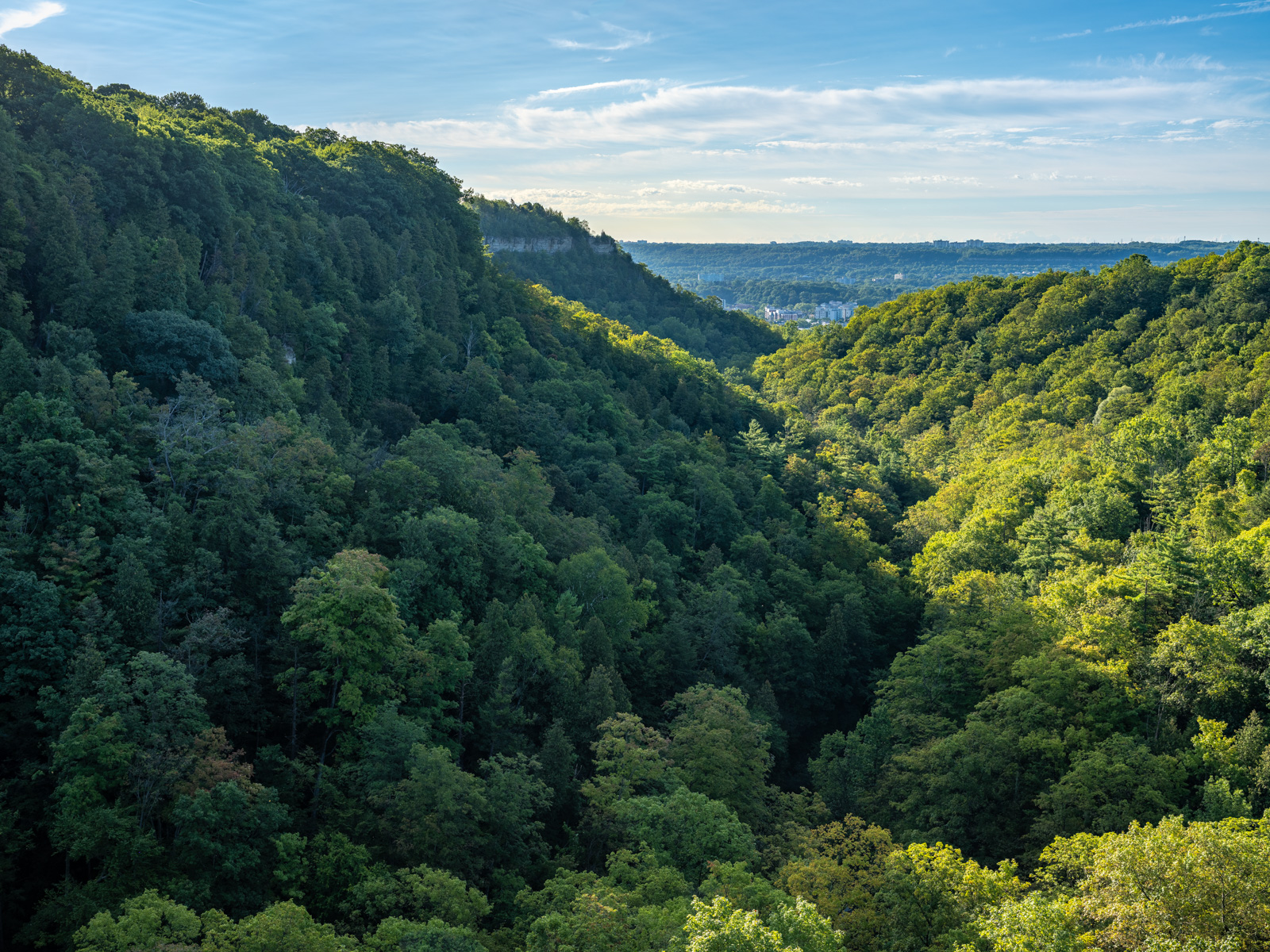
GFX 100SII w/GF 32-64mm/4 at 46mm (36mm efov); ƒ8 @ 1/210, ISO 80; tripod; raw file processed in Lightroom.
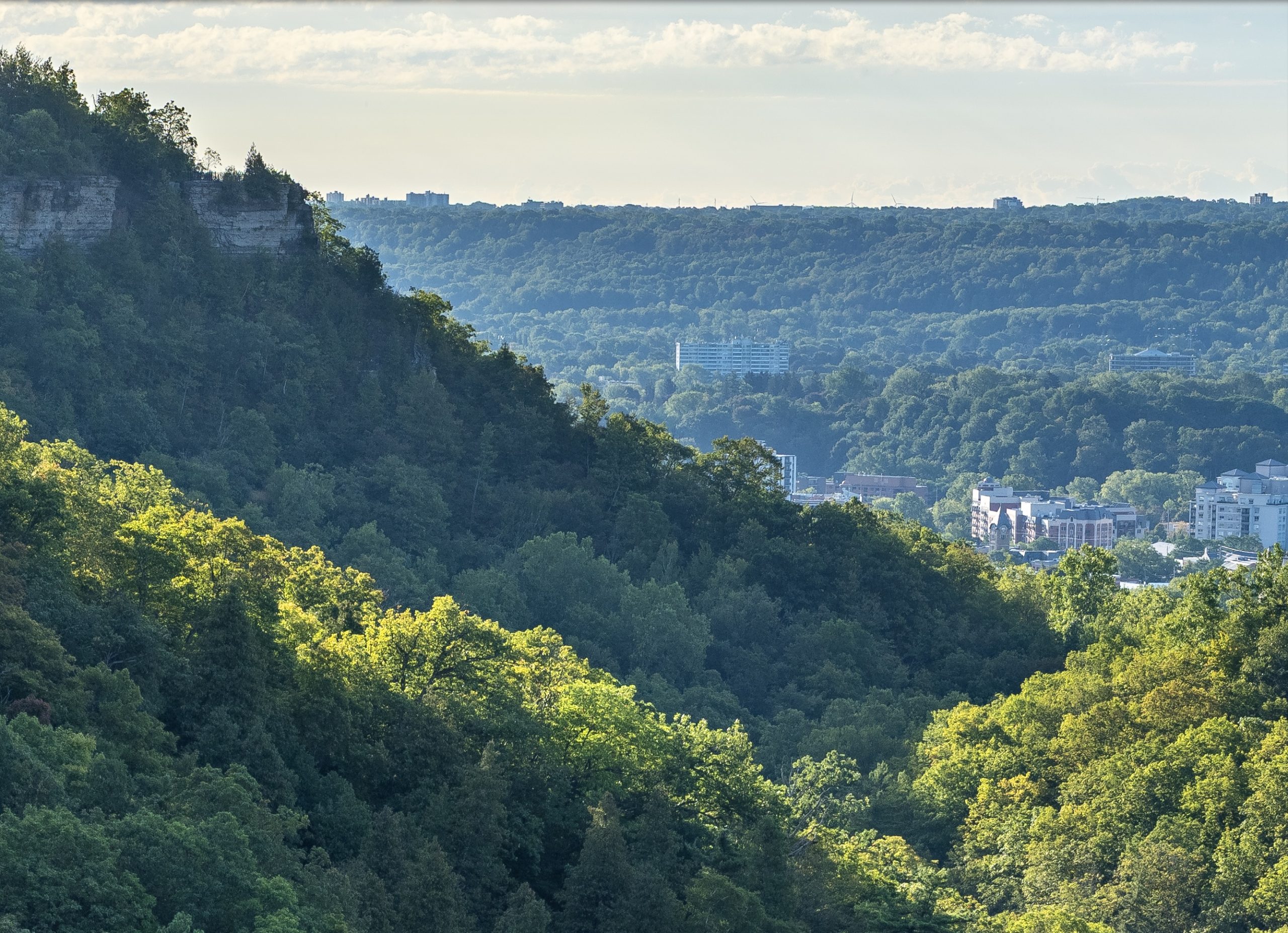
Set-up: Menus & Buttons
Everyone has slightly different strategies and approaches to photography, but one article I found particularly helpful was from Todd Dominey, Custom Fujifilm GFX settings for landscape photography. Francesco Gola also had some helpful suggestions.
I wanted to easily switch between shooting styles, so I set up the custom buttons (C1, C2, etc.), something I’m familiar with from my OM-1. Switching between tripod mode, B&W and handheld was easy. Changing the focus area was equally easy with a push and toggle of the joystick/multi-selector.
Like other reviewers, I missed the “arrow pad” around an OK button, but quickly got used to its absence. Having a separate Drive button was helpful, but any of the buttons can be programmed for any of the 50 or so functions. Additionally, there is a customizable My Menu for access to other functions.
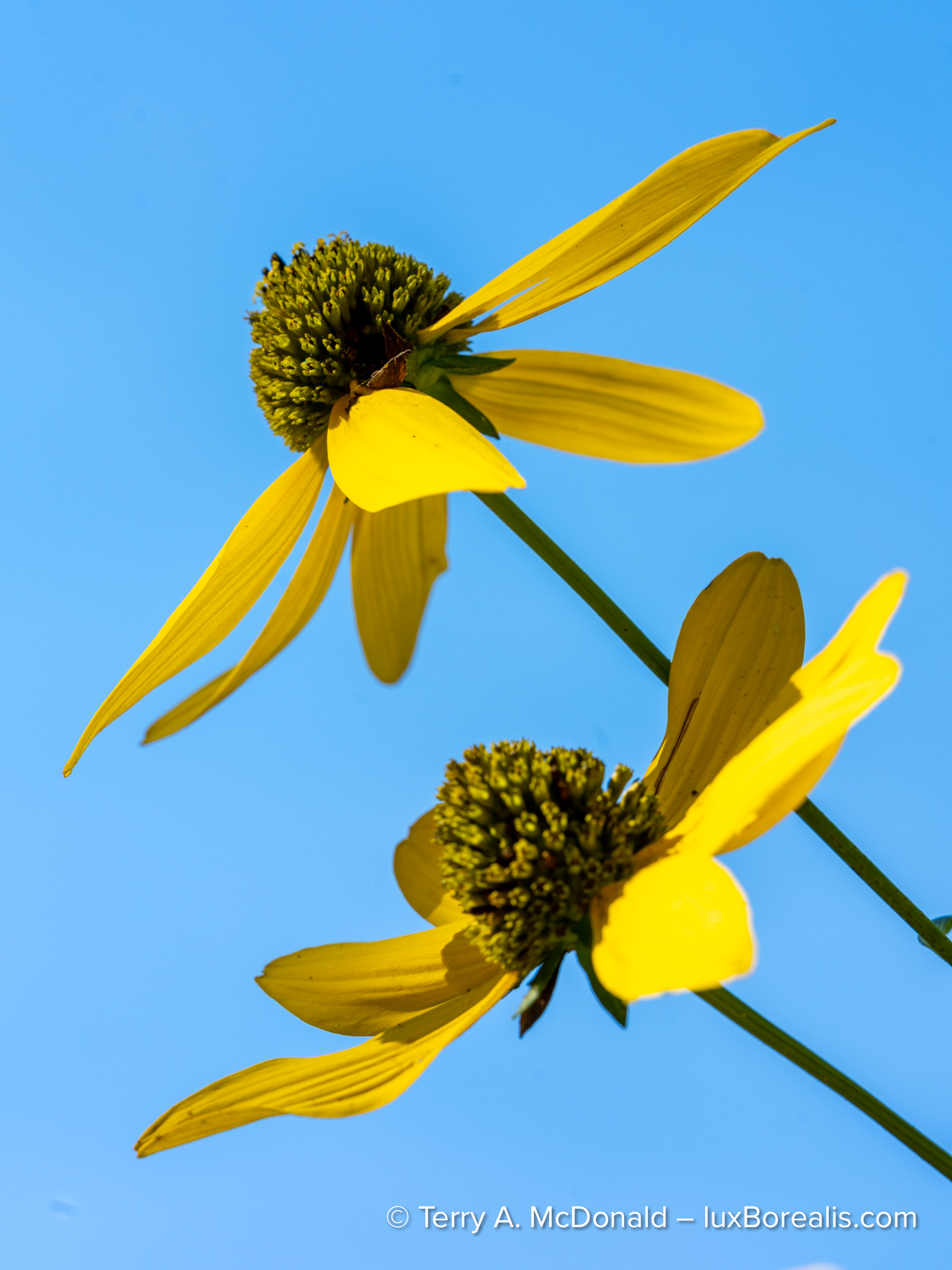
GFX 100SII w/ GF 120mm/4 Macro OIS; ƒ16 @ 1/280, ISO 800; raw file processed in Lightroom; no Denoise applied.
IQ to die for
Not only does the GFX 100S II feel like a serious camera, it is a serious camera: 102 megapixels, 11648x8736px raw files with 16-bit colour depth. It really is the ultimate machine for capturing detailed, true-colour photographs. On that note, I set the White Balance to Auto and the colour you see here is exactly as the camera recorded it.
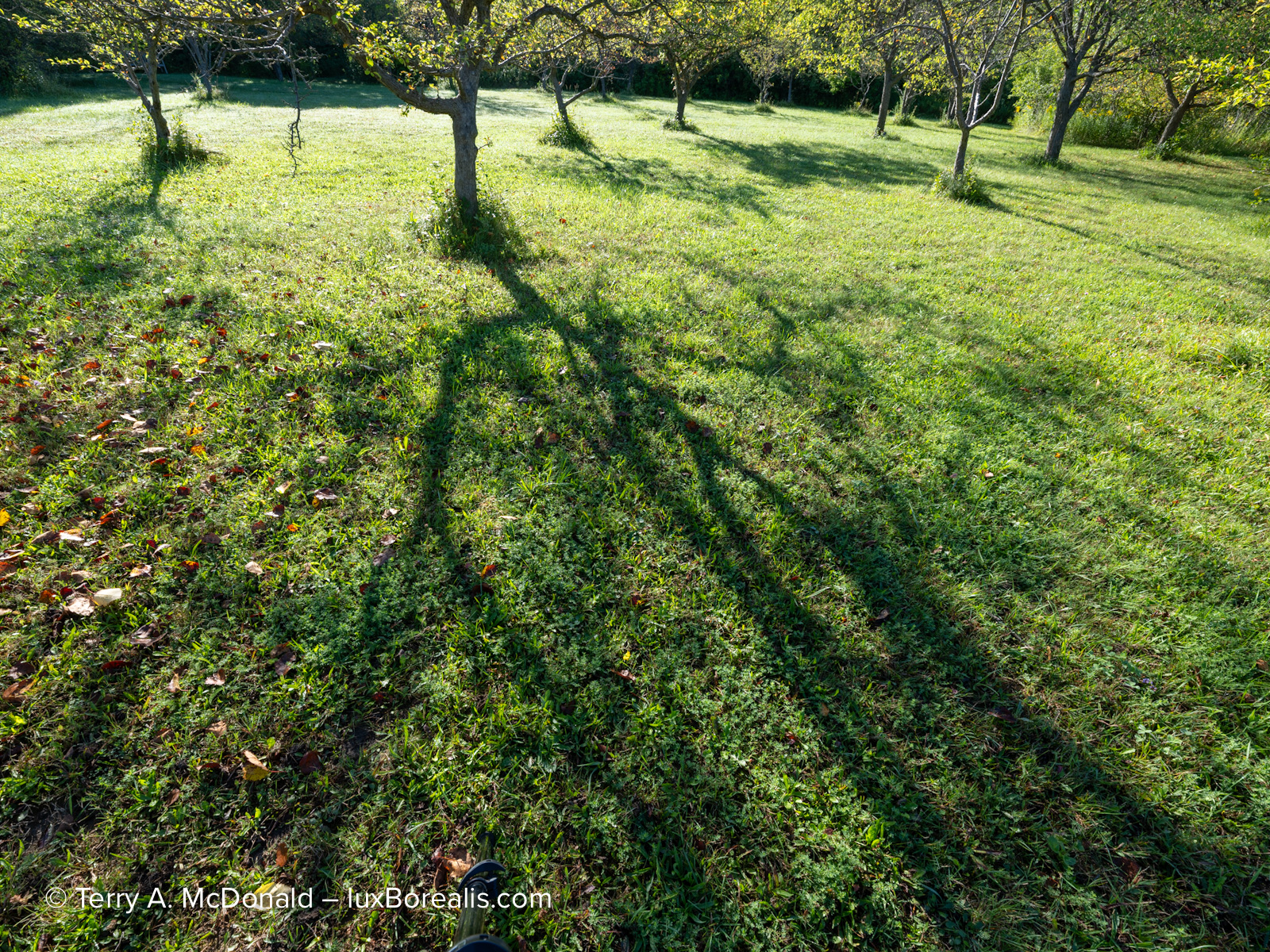
GFX 100SII w/GF 20-35mm/4 at 20mm (16mm efov); ƒ16 @ 1/10, ISO 80; tripod; raw file processed in Lightroom.
In testing, I wanted to make sure I made best use of the sensor. I only ever photograph using raw, so this was a no-brainer. For tripod work, IBIS was turned off, ISO was set to the camera’s base of 80, Colour Space to Adobe RGB, with full raw capture at a bit-depth of 16. The resulting RAF files were huge at 210 MB, over 10x the size of the 20 MB ORF raw files I’m used to.
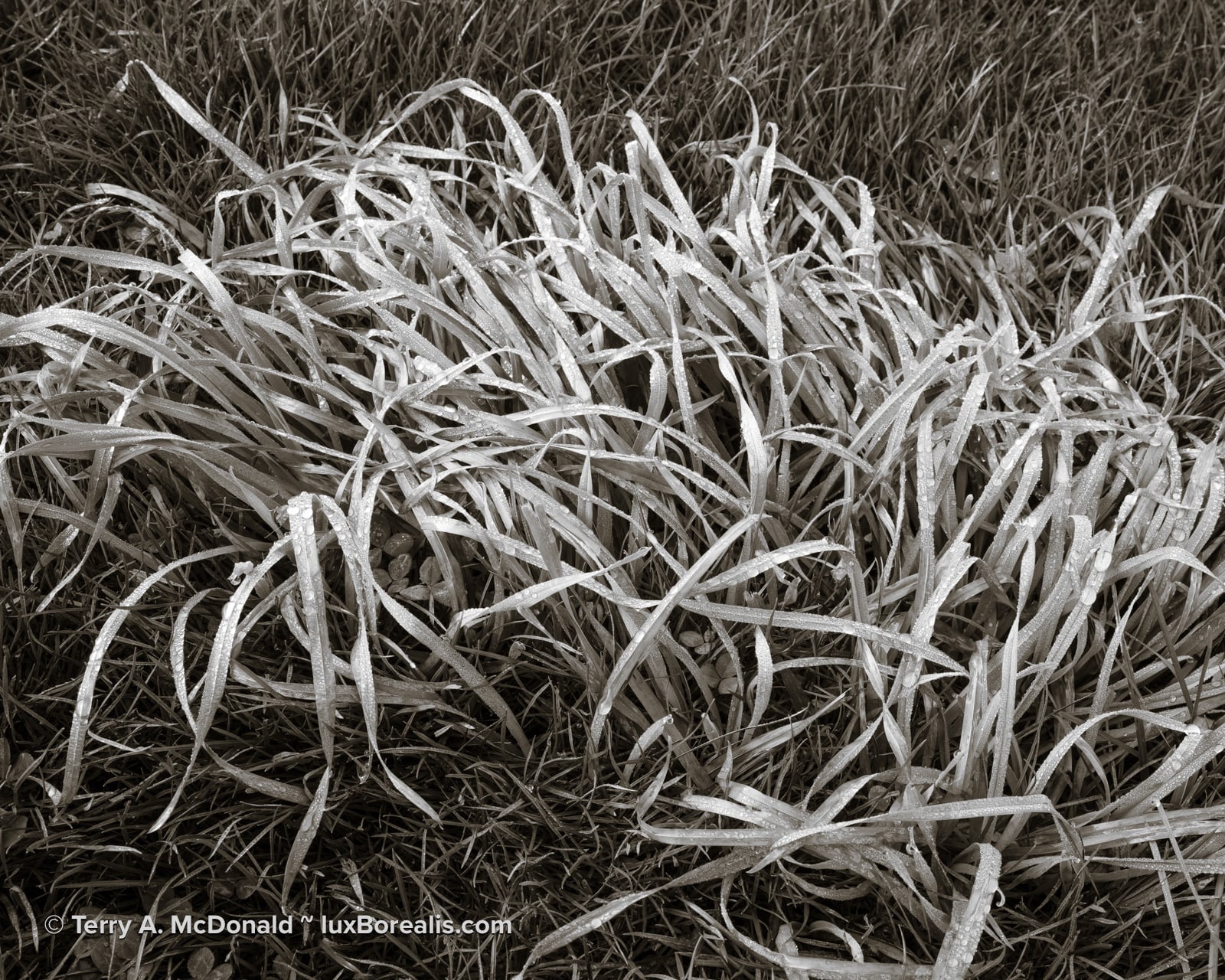
GFX 100SII w/GF 32-64mm/4 at 44mm (35mm); ƒ22 @ ⅔ sec., ISO 80; hand held; raw file processed in Lightroom.
After a couple of days of use, I scaled things down to 14-bit, lossless, which brought the file size down to 92 MB. The sensor had already clearly proven its capabilities, and even at this ‘scaled-down’ file size, every detail of tone and colour were exquisite. When 102 MP is overkill, the GFX will also capture 50 MP files, and also has a 35mm Mode which crops to 60 MP when 35mm lenses are used with an adapter. Perfect for the lenses you may already have.
For handheld photography, I changed the ISO to 200 as 80 was simply too low to get reasonable shutter speeds. Perhaps unsurprisingly, noise is of no issue with the GFX. Anything up to 800 is still excellent and anything above that is easily tamed using any of the denoise controls in apps such as Lightroom, DxO, ON1, etc.
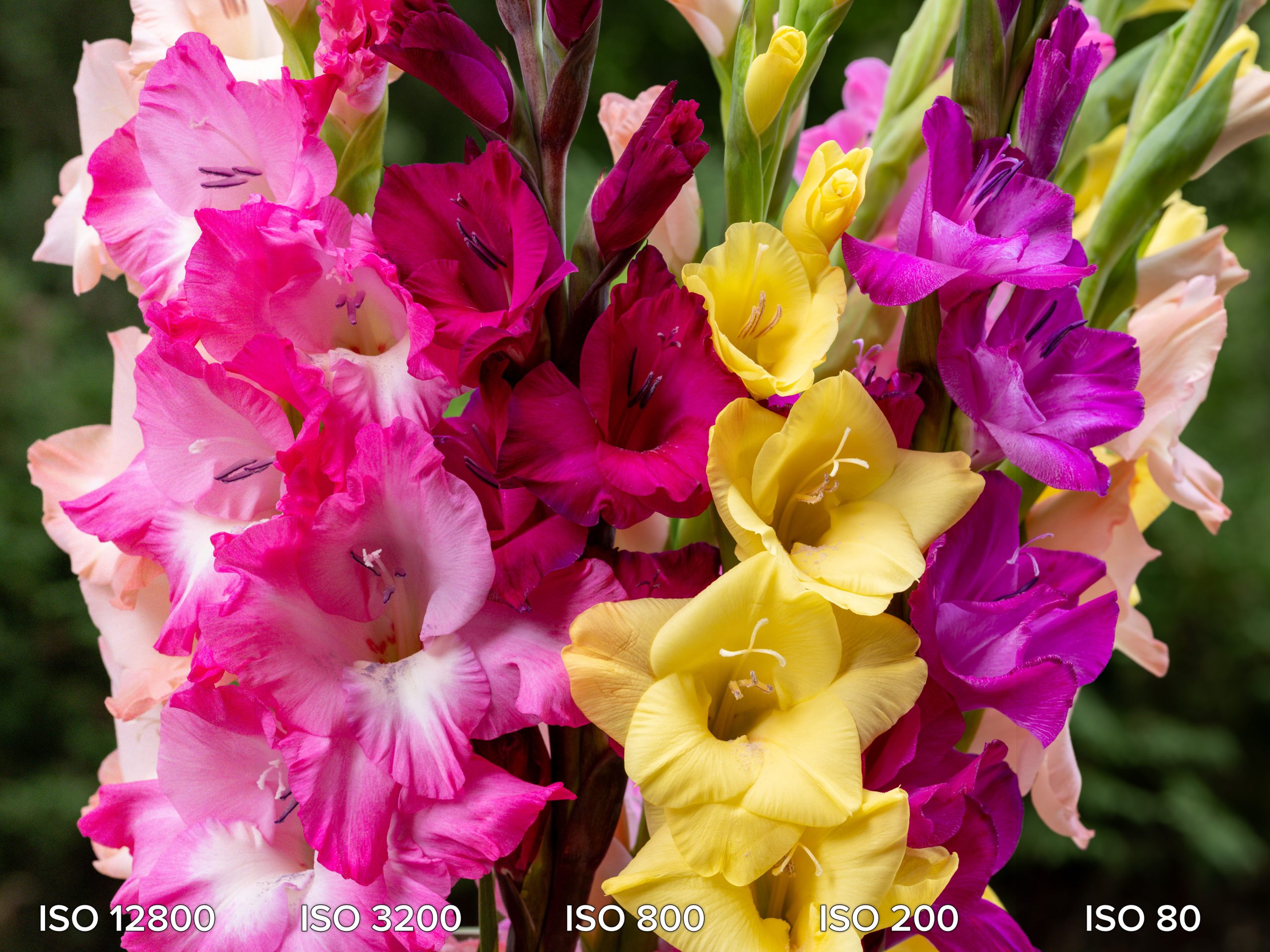
The colour of these glads is accurately captured with smooth subtle tonal and hue transitions.
Note: Selecting this photo will open up a 4000x3000px JPEG for closer viewing, though remember, it is downsized from the original 11,648x8736px file.
The GFX for Landscape Photography
Clearly, this camera was made with landscape photographers in mind. We don’t mind using a tripod, so a low base ISO of 80 is of little issue, well, at least not until the morning breeze begins. But again, raising the ISO when needed is simply not an issue.
The detail captured with a 102 MP sensor is spectacular and unparalleled and the colour is not just accurate, but exquisite. These qualities cannot be overstated, especially because it didn’t take a monster camera to achieve this. There is no added burden when hiking into a location with the GFX.
Of the dozens of user-customizable settings I found the highlight clipping and focus peaking indicators most helpful. Interestingly, I haven’t found a shadow clipping indicator. Another small feature that stood out is how the lens stops down when the shutter is half depressed. At the same time, the EVF brightens to compensate. This provides a helpful visual check of depth-of-field. Even better would be to combine this with EVF or LCD magnification for a more accurate look. The camera may do so, but I didn’t pursue it.
Suffice it to say, with the GFX, everything is possible when it comes to capturing landscapes, anywhere and at anytime under every lighting condition imaginable. I would love to be using this on one of those frigidly cold but bright, sunny winter days with a fresh blanket of snow!
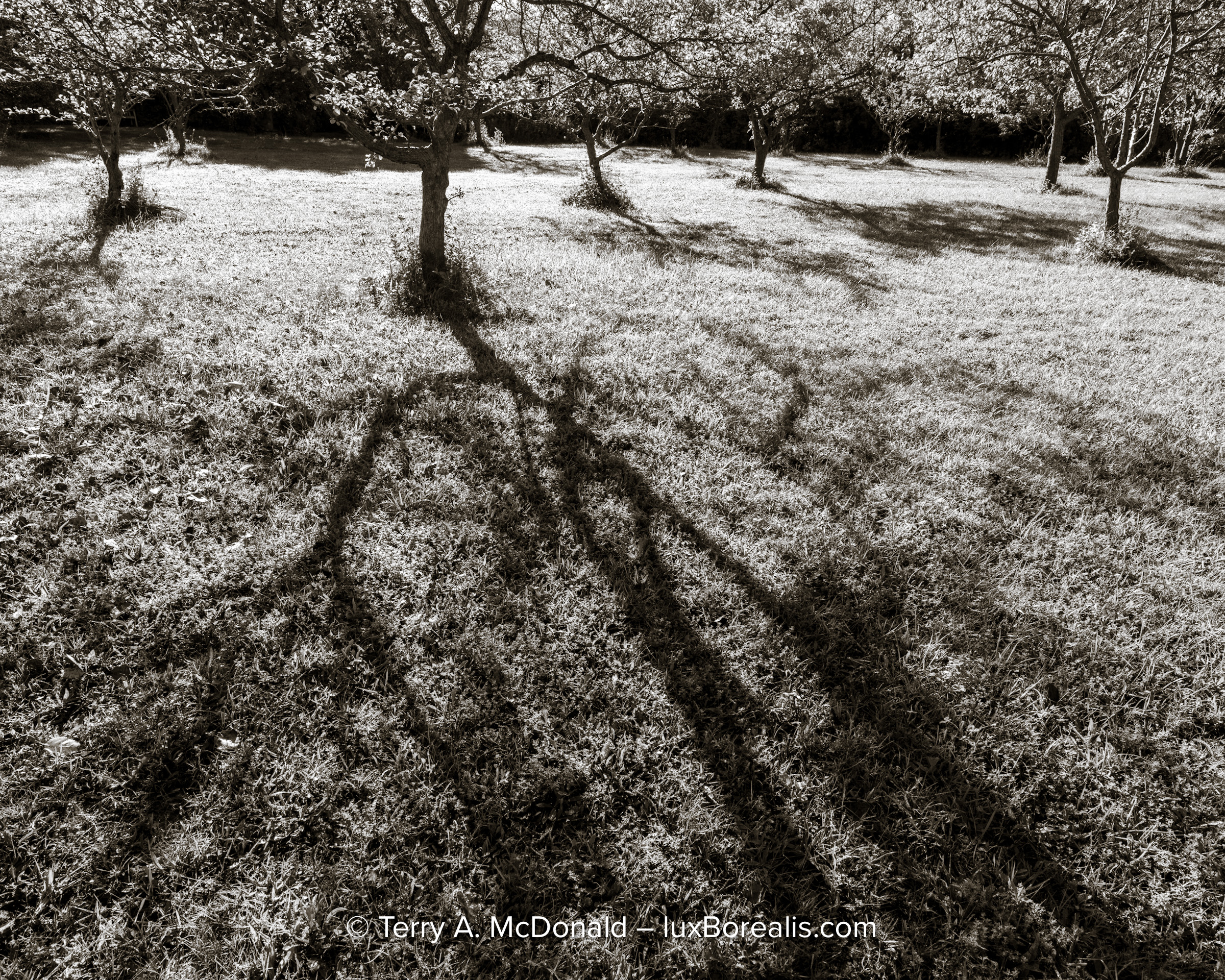
GFX 100SII w/GF 20-35mm at 35mm (28mm efov); ƒ16 @ 1/13, ISO 80; raw files processed in Lightroom.
Every highlight and shadow detail is captured in this high contrast scene without resorting to HDR.
The Depth of Field Challenge
Larger sensors mean less depth of field at the same field of view. With the GFX sensor, it’s about one stop less than with a 35mm sensor. As I regularly photograph with MFT, it was a three-stop difference. This translates to slower shutter speeds.
But it’s what you get used to. Using a Pentax 67 for years, with ISO 50 and ISO 100 Fujichrome Velvia and Provia, taught me patience and perception. The camera is on a tripod, so it’s not going anywhere. I stand there and enjoy the view while waiting for a break in the wind. As a last resort, I’ll raise the ISO, confident that noise is not an issue and knowing there is still plenty of DR to go around.
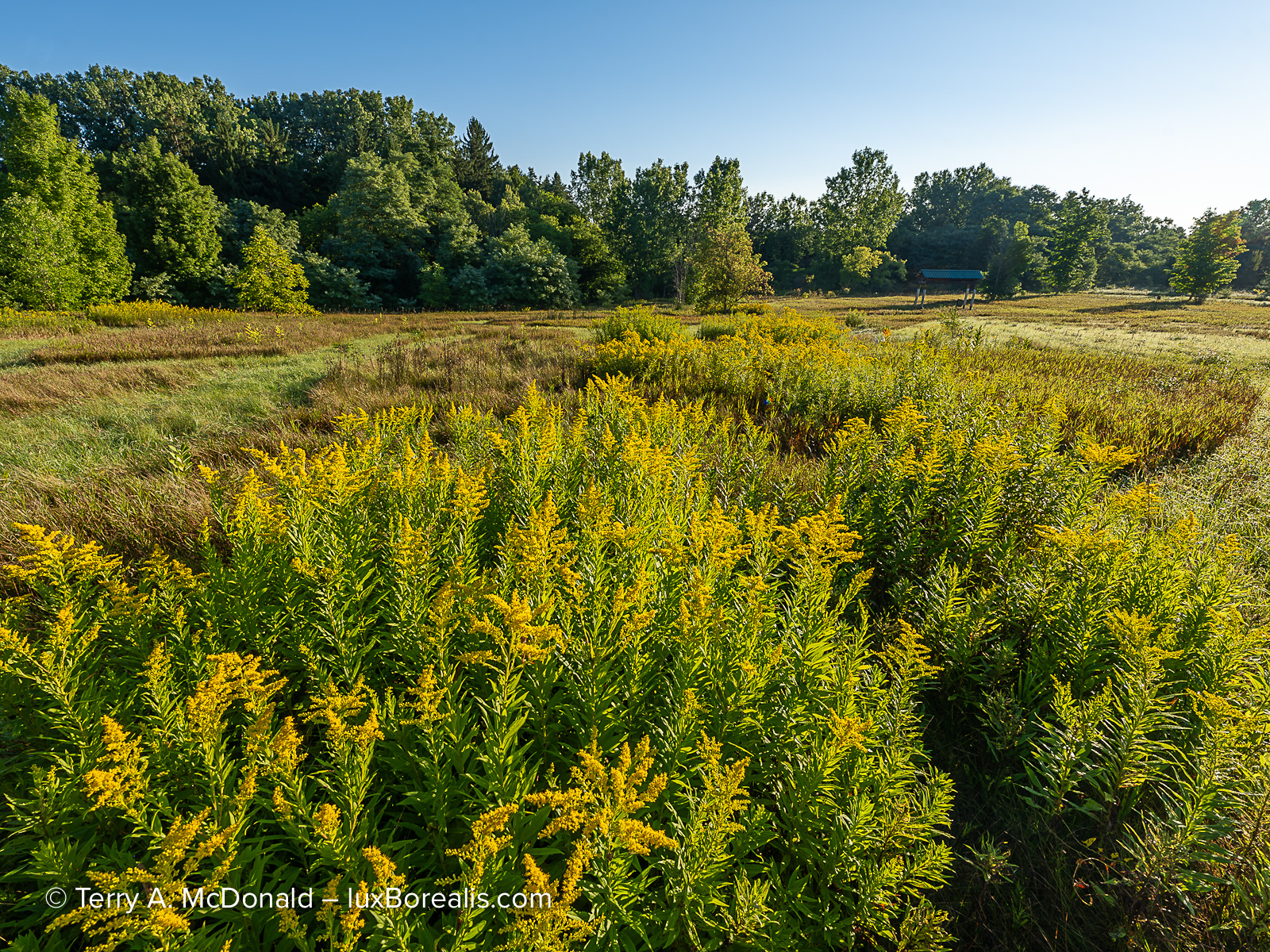
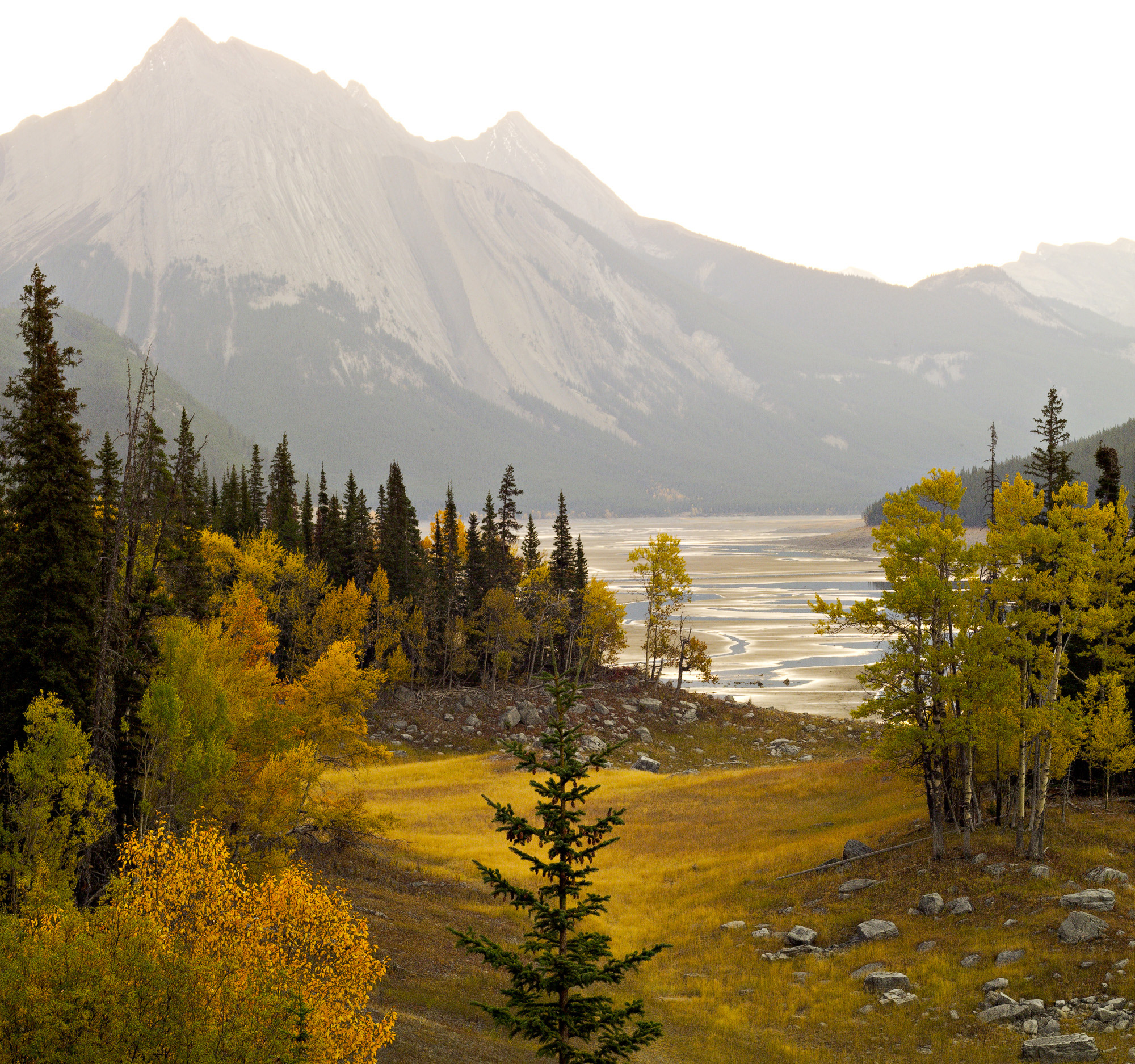
GFX 100SII w/GF 20-35mm at 20mm (16mm efov); ƒ16 @ 1/40, ISO 200; tripod; raw file processed in Lightroom
While ISO 80 is the base ISO, providing maximum dynamic range, ISO 200 was needed to get a shutter speed fast enough to counter the ever-slight breeze. The brightest white in the top right is not actually white. The blue of the sky gradually pales, but is held from clipping by careful metering and processing. This can be toned down further in post-capture processing, but I left it to show how gradual the gradient is.
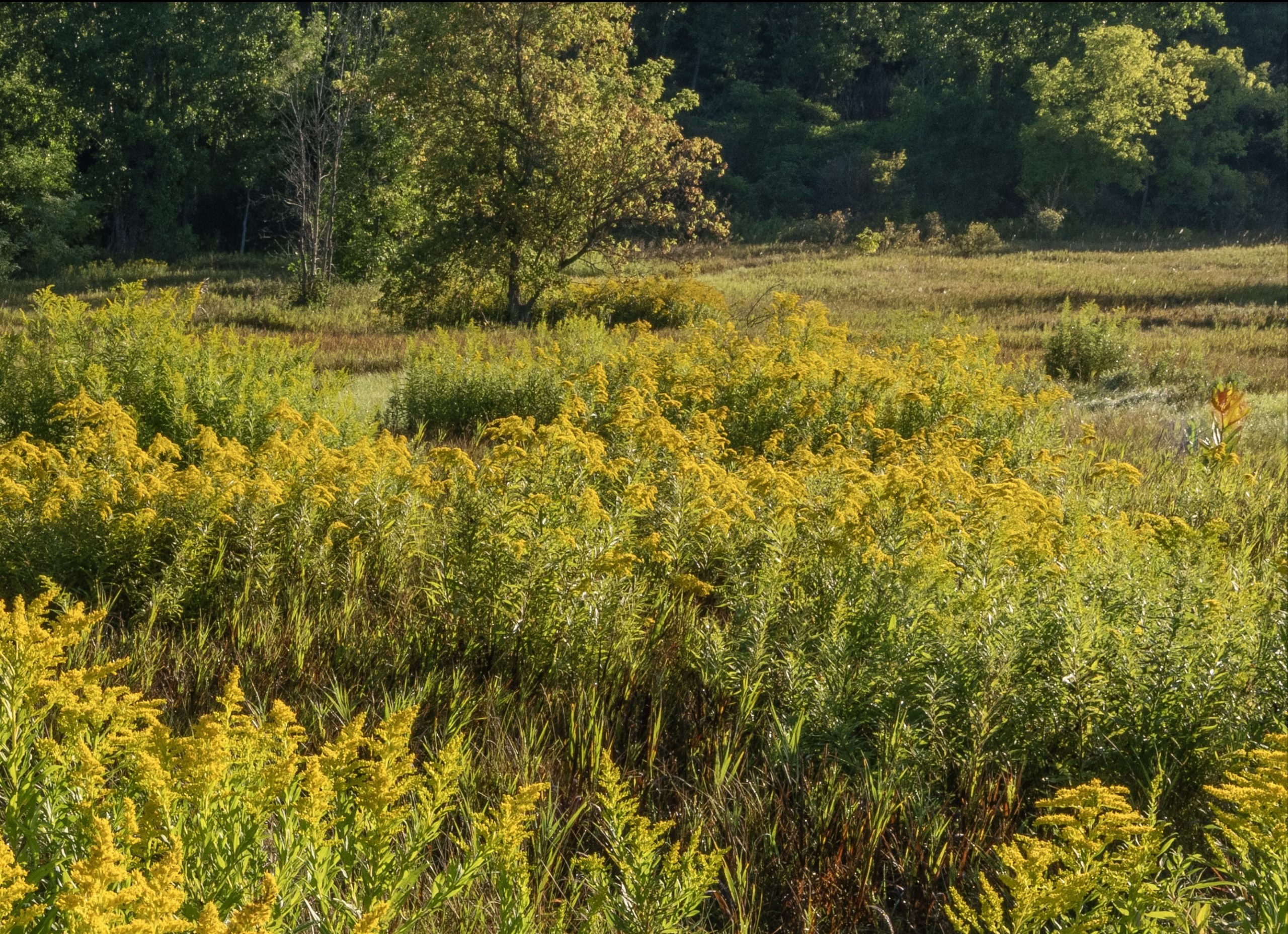
The other option for increased depth-of-field is to use Focus Bracketing, offered in both Manual and Auto modes in the GFX. But that introduces its own challenges given the slightest breeze.
Nature, wildlife and birds
This is a genre I so enjoy working in. However, I wasn’t really able to put to the test as I did not have access to lenses longer than 120mm. I would have liked to test out the AF Tracking. AF itself is fast, though not blazing. Others who have tested the Tracking have found it ideal for portraiture and limited movement, but lacking form fast-moving subjects, compared to the pro tracking of an OM-1, a Z8 or an A1. Also, the 7fps frame rate doesn’t compare to the 50fps of the OM-1 or 30fps of the Canon R5 Mk II. However, it is only very recently that 35mm sensor cameras went beyond 10fps. If you’re a full-on bird photographer, used to the top specs, the GFX may not be for you. It largely depends on your style, as there are wildlife photographers using the GFX. Perhaps the best review of the GFX for bird and wildlife photography is this one. For action photography, check out this very honest review from Michael Clark.
Interestingly, I put the GFX 100SII head-to-head with my Olympus OM-1, photographing the same subject at the same focal length from the same distance. I can see you shaking your head — a 20.4 MP crop sensor against the largest mirrorless sensor available. I used the M.Zuiko 100-400/5-6.3 IS at 120mm at ƒ8 and the Fujinon GF 120mm/4 Macro OIS, also at ƒ8. Have a look:
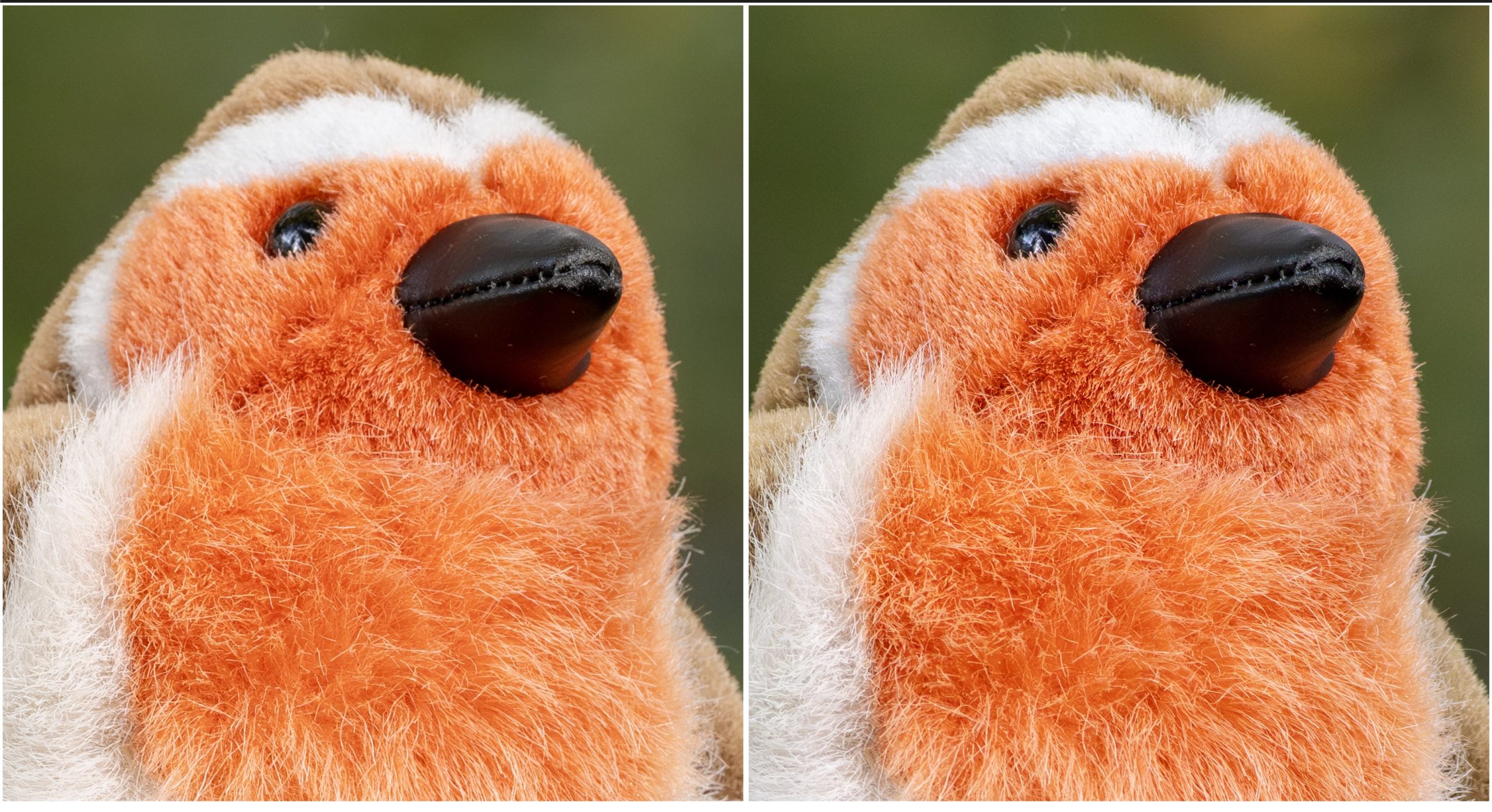
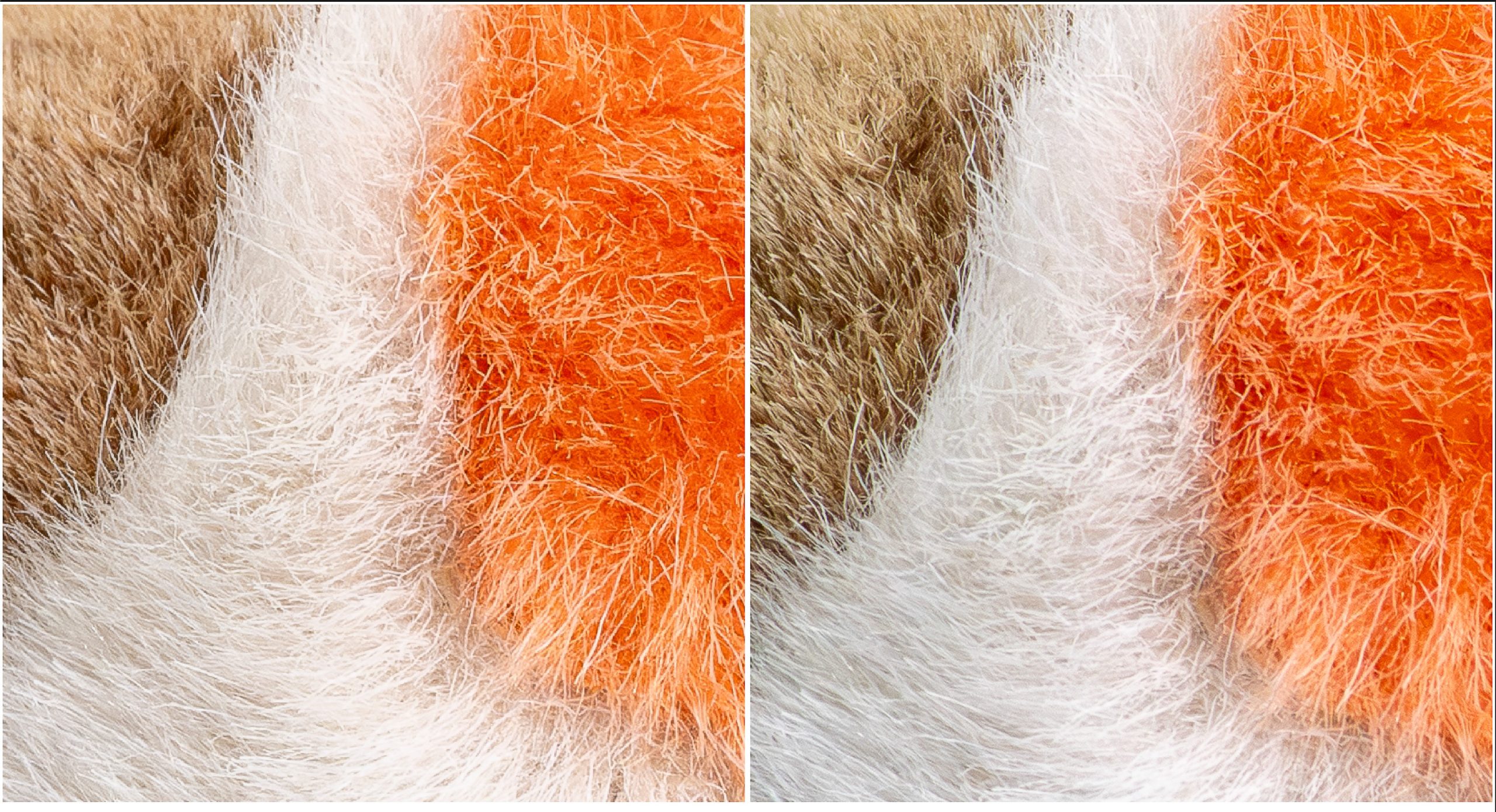
Have you figured out which is which? Pixel peeping helps, but think about it — the difference is so slight that it tells me that for birding, I will be staying with the OM System (though that GF 500/5.6 is sure attractive!)
Did you determine that the GFX is on the left; OM-1 on the right?
Travel & Street
Okay, so the GFX is not your typical travel camera, so keep using your phone for the family pics and casual travel snaps. But for those fine art photographs, the GFX is supreme. The IBIS and ergonomics are designed for hand held photography allowing the GFX to perform well in quickly developing situations that travel photographers often face. The 8-stops of IBIS is on par with the best of 35mm sensor cameras, but at 1.7x the sensor size.
To be honest, I only had the camera for a week and I wasn’t allowed to leave the country with it, so “travel” took the shape of a Vintage Car Show and the Guelph Scottish Festival, plus a few favourite landscape locations.
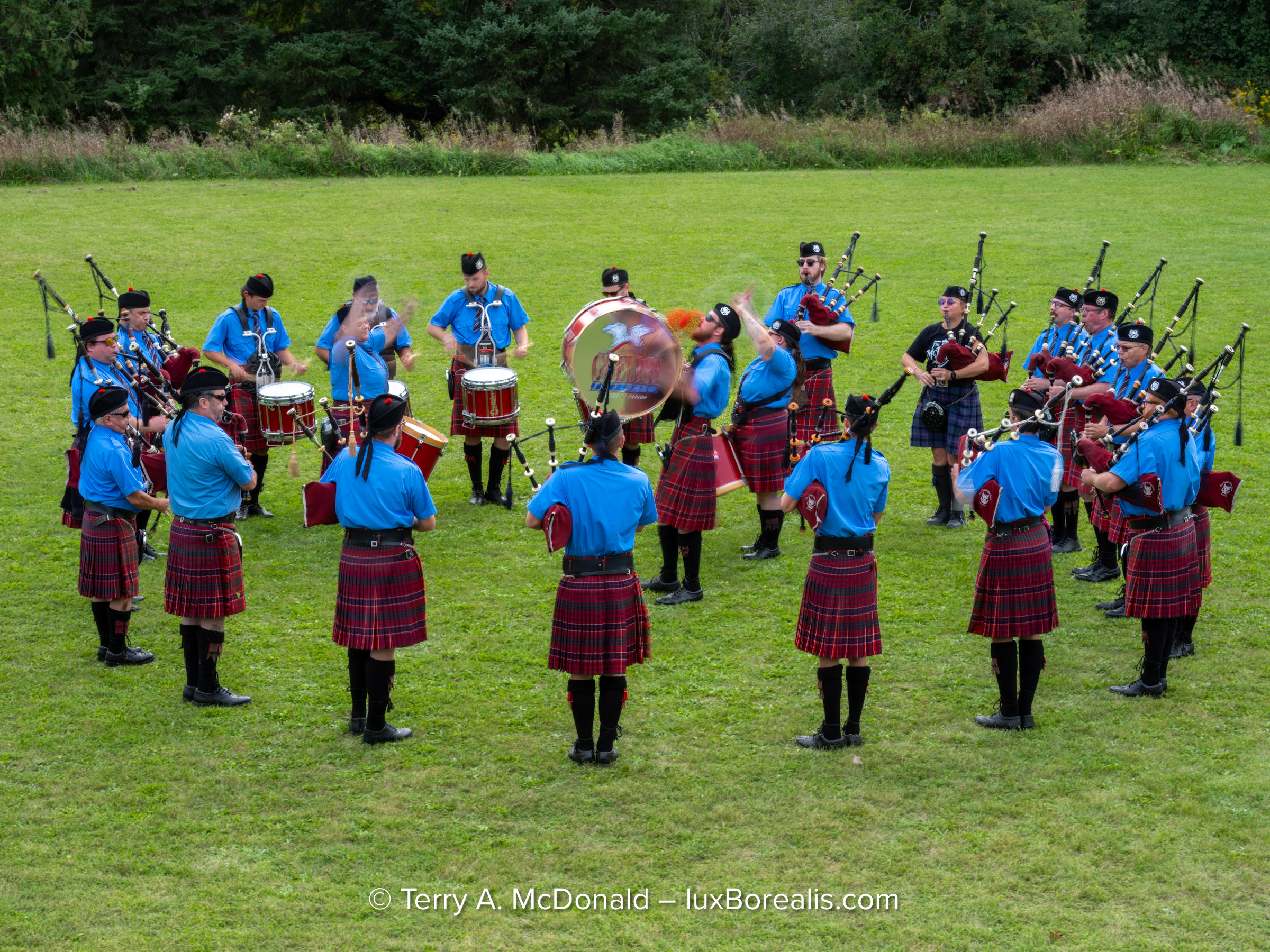
GFX 100SII w/ GF 120mm/4 Macro OIS; ƒ32 @ ⅓ sec., ISO 80; hand held; raw file processed in Lightroom; slight motion blur corrected in Topaz Photo
The goal here was to catch some movement without having ND filters. Mission accomplished.
As mentioned above, ISO is no issue, so ramping up to 3200 or 6400, even 12800 for interiors or fast-moving subjects in low light is also a non-issue.
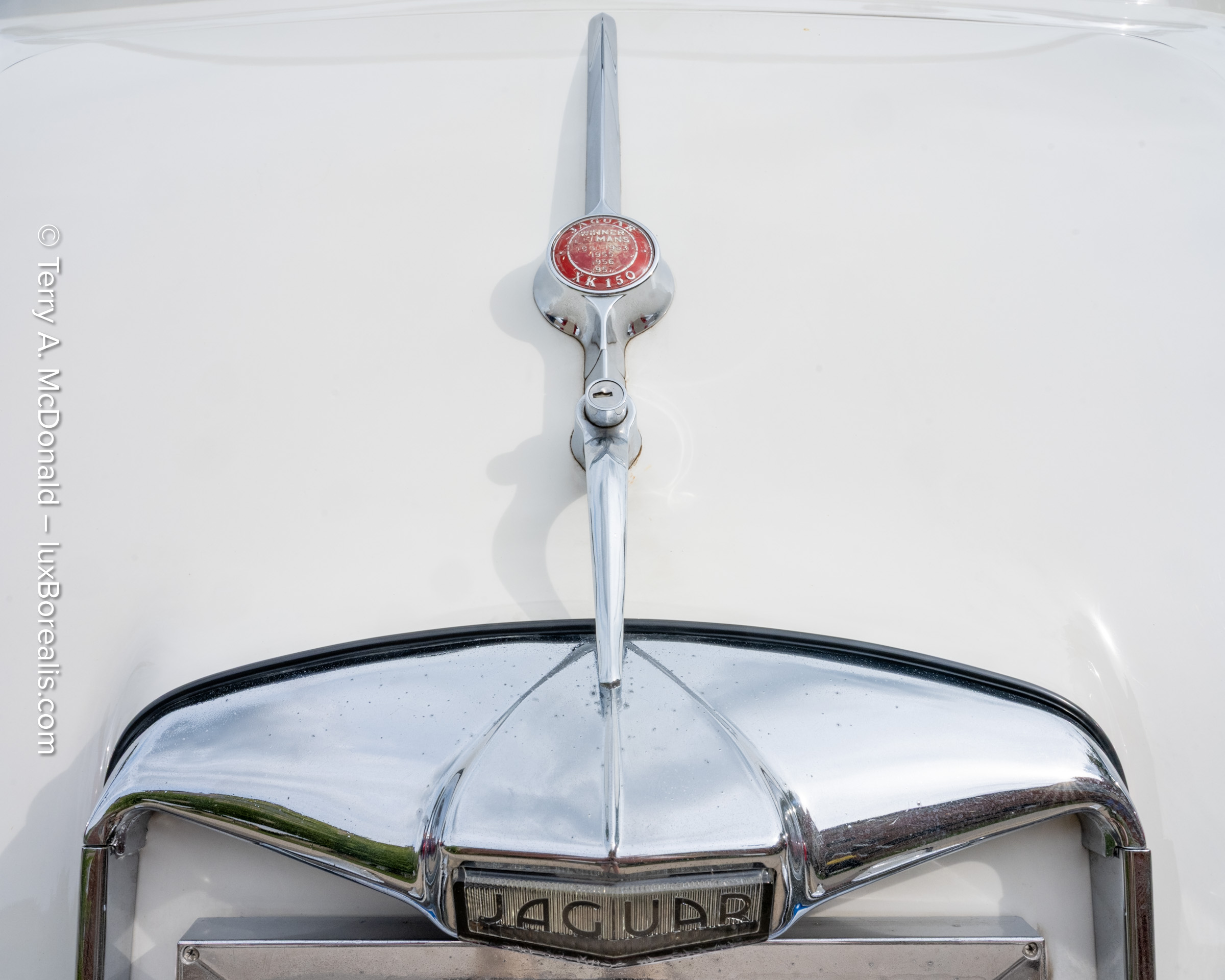
GFX 100SII w/GF 32-64mm at 32mm (25mm efov); ƒ32 @ 1/250, ISO 1600; hand held; processed in Lightroom.
There are 3 things to point out with this photograph:
1. The problem with a 102 MP sensor is that every detail, every flaw in the subject, is picked up, including minute dust spots, that need to be spotted out in post.
2. Though photographed at ISO 1600, no denoising was performed on this file, nor was it needed.
3. I chose an aperture of ƒ32 to maintain sharpness from front to back, focussing ⅓ into the scene. Every detail is tack sharp, as if diffraction doesn’t exist!
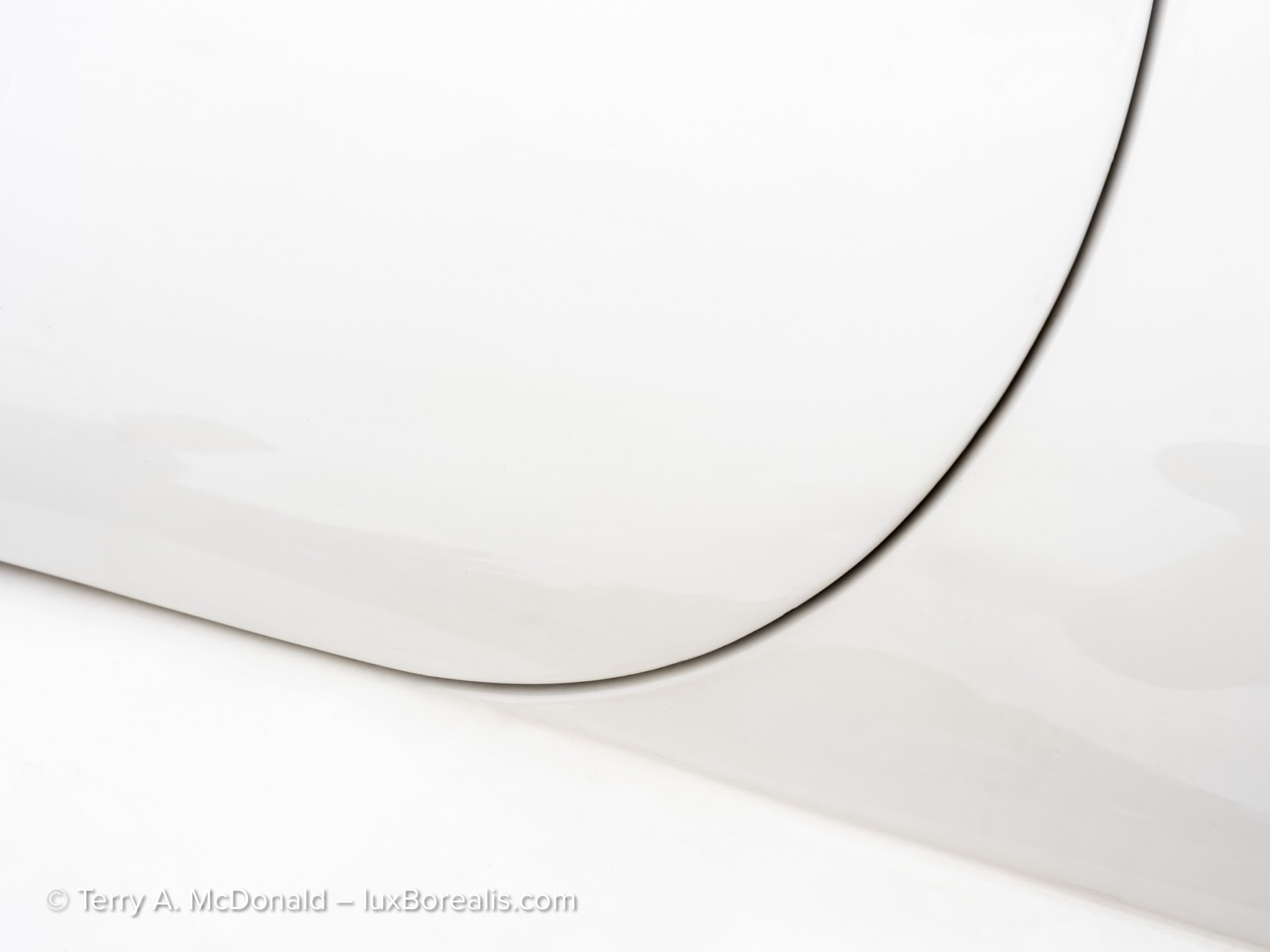
GFX 100SII w/GF 32-64mm at 64mm (50mm efov); ƒ11 @ 1/105, ISO 200; hand held; processed in Lightroom
This is a colour photograph. On my computer screen, the subtle cream colour is perfectly rendered, which the 8-bit JPEG has trouble with.
The GFX for Macro Photography
Macro photography has evolved significantly over the decades. More and more lenses, particularly telephoto lenses, are able to focus closer and closer, reducing the need for a dedicated macro lens. Macro lenses themselves are greatly improved and are often the sharpest optics available. The Fujinon GF 120mm/4 Macro is no slouch.
The lens focusses to a 1:2 ratio, not 1:1 ratio, meaning the image size is ½ the actual size at closest focus; so it is not a true macro lens. Full 1:1 macro can be achieved by adding the Fujifilm GF extension tube.
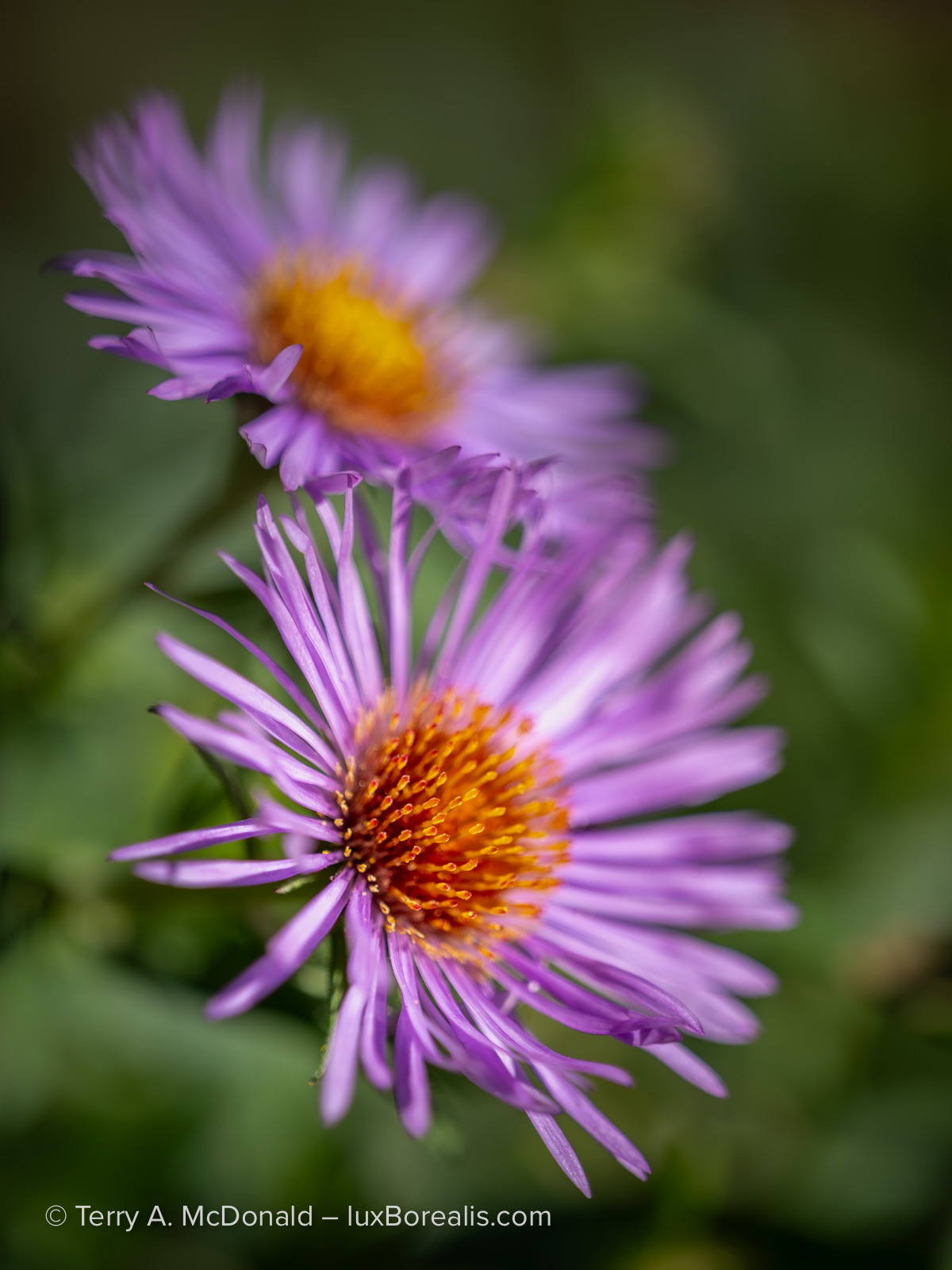
GFX 100S II w/GF 120mm/4 Macro lens (95mm efov); ƒ4 @ 1/900, ISO 80; raw file processed in Lightroom
The lens has OIS built into it (you can hear the whirring motors!) which, combined with the camera’s IBIS, creates an excellent stabilization. Again, the detail captured by the sensor with this lens is exquisite.
The downside of using medium format for macro work is the lack of depth of field. The lens aperture closes to ƒ32, but that is severely limiting in natural light.
Enter focus bracketing. Choose a larger aperture for faster shutter speeds and make a series of frames at different focus points, then blend them in post. The GFX has an Auto mode and Manual. Visually setting the closest and furthest focus distances using the EVF/LCD makes it easy. Focus bracketing typically requires a tripod, though it is possible with a very steady hand and no wind.
While it works for a variety of subjects in nature, the set-up is much better suited to studio work where lighting and motion are controlled. Using a macro diffuser and flash would also help. Overall, though, I think macro with the GFX is best suited to product photography, high-end watches, jewelry, and other small items. For hand held macro photography, I’ll stick to my OM-1 with its 3-stop advantage in depth-of-field, excellent focus bracketing plus in-camera focus stacking when needed.
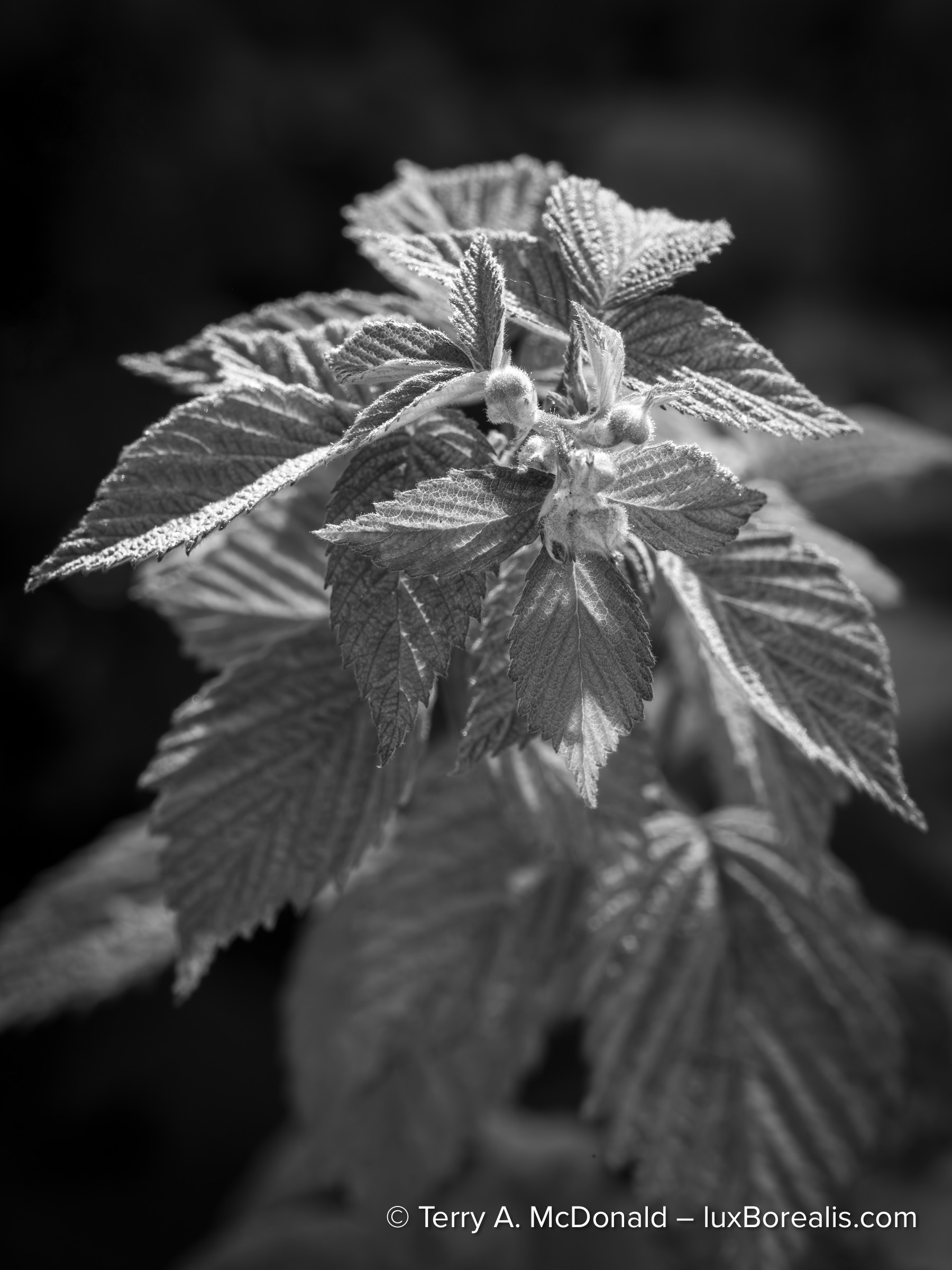
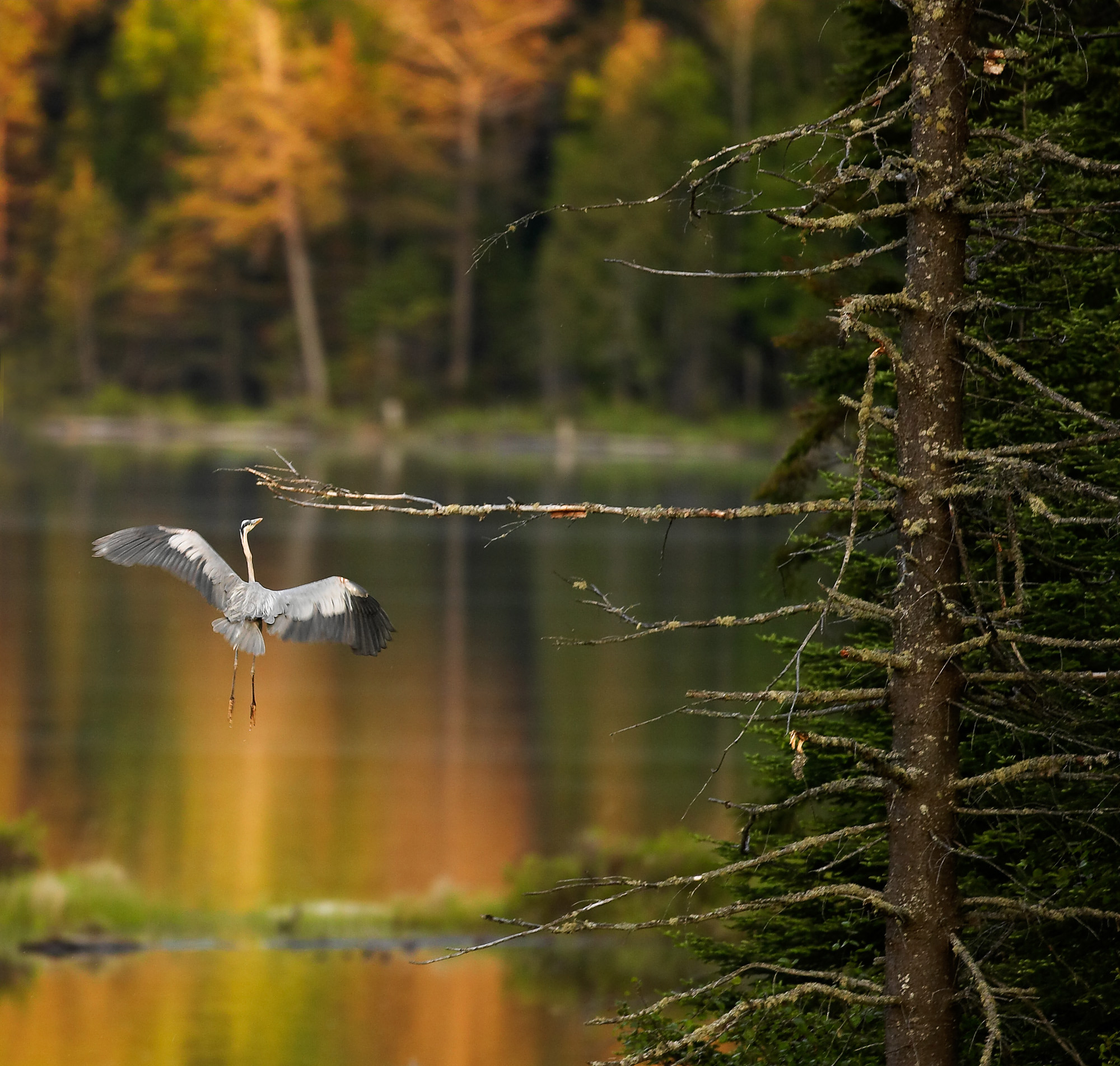
GFX 100SII w/GF 120mm/4 Macro OIS lens (95mm efov); ƒ16 @ 1/220, ISO 800; raw file processed in Lightroom.
Processing
I did all my processing in Lightroom, on a 15” M4 MacBook Pro with 16 GB ram. “Huh?” You’re thinking that for 210 MB files, it’s underpowered. Actually, it was no problem at all. Everything worked as it always does with virtually no lag until it came to processor-heavy functions such as denoise, but that was rarely needed.
The first thing I noticed was how accurate exposure and colour are. With the GFX, I purposely left the WB in Auto as I always do, allowing the scene to speak its mind. The WB in Lr hardly needed adjustment. The same with sharpness. The raw files are natively sharp and clean. The most sharpening I added was 20 to 40 with a Sharpening Mask of 15 to 20.
When exposing, I was careful not to clip the highlights, as always, and the files were perfect. In fact, with all that dynamic range, raising the shadows was a dream — always clean, minimal to no noise. These files rock!
Even when working on the files using Lightroom CC on the iPad (11” M1 Pro), there were no hiccups and no lag other than the processor-heavy functions mentioned above. The only real drawback of working with the Creative Cloud is how slowly the original download when a file is being exported. Using the iPad with the photos stored locally or on an SSD drive would solve that issue.
Overall Versatility
But it doesn’t end there. I focused on landscape and nature photography. The GFX 100S II offers so much more. For example, given the lens selection I had and my style of excluding people from photos, I didn’t have an opportunity to really test the AF Tracking. I would have also loved to really put the IBIS to the test with the GF 500mm/5.6 (see 5050Travelog).
I would have liked to spend some time wandering the streets of Paris or Hanoi with the GFX, photographing at the edge of day and into the night, switching to the electronic shutter to silently capture life lived on the streets.
Can all of this be done with a smaller camera? Hell, yes. Even with an iPhone, but there is a level of dedication, of purposefulness that comes with using a medium format camera. Photography becomes more intentional, more “make” rather than “take”. For me, using the GFX took me further away from the current FOMO-driven trend of shoot-fast-with-instant-results into more contemplative photography.
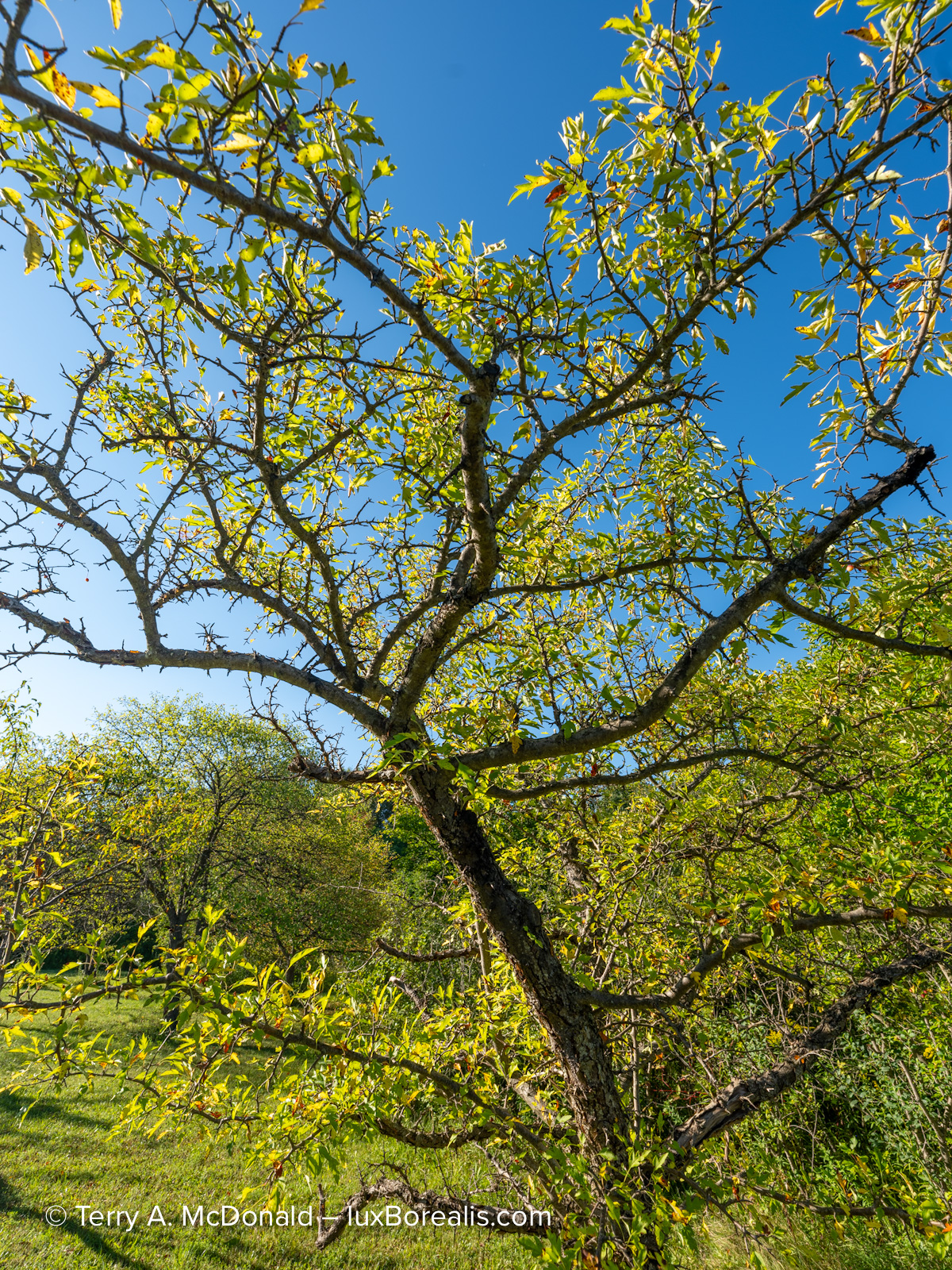
GFX 100SII w/GF 20-35mm/4; ƒ11 @ 1/35, ISO 80; hand held; raw file processed in Lightroom.
Performance
Another way to look at it is performance. Cameras are a bit like cars: you can drive any car; some are faster, some more comfortable, and some simply perform better than others.
If I was a working professional, requiring high quality photos on a daily basis, I would adopt a Fujifilm camera system in a heartbeat, especially if large prints are an expectation of the job.
Think about 40 × 60-inch statement photographs hanging in boardrooms, offices and homes. These are the kinds of photographs many photographers are capable of making, yet may not have the opportunity to produce at the highest level. Have a look at the work of Francesco Gola, Todd Dominey, Andy Mumford, and Peter Delaney and you’ll understand.
This is what camera systems like the Fujifilm GFX line were created for: discerning photographers making intentional photographs for discerning clients with the confidence in a system that helps to realize our vision.
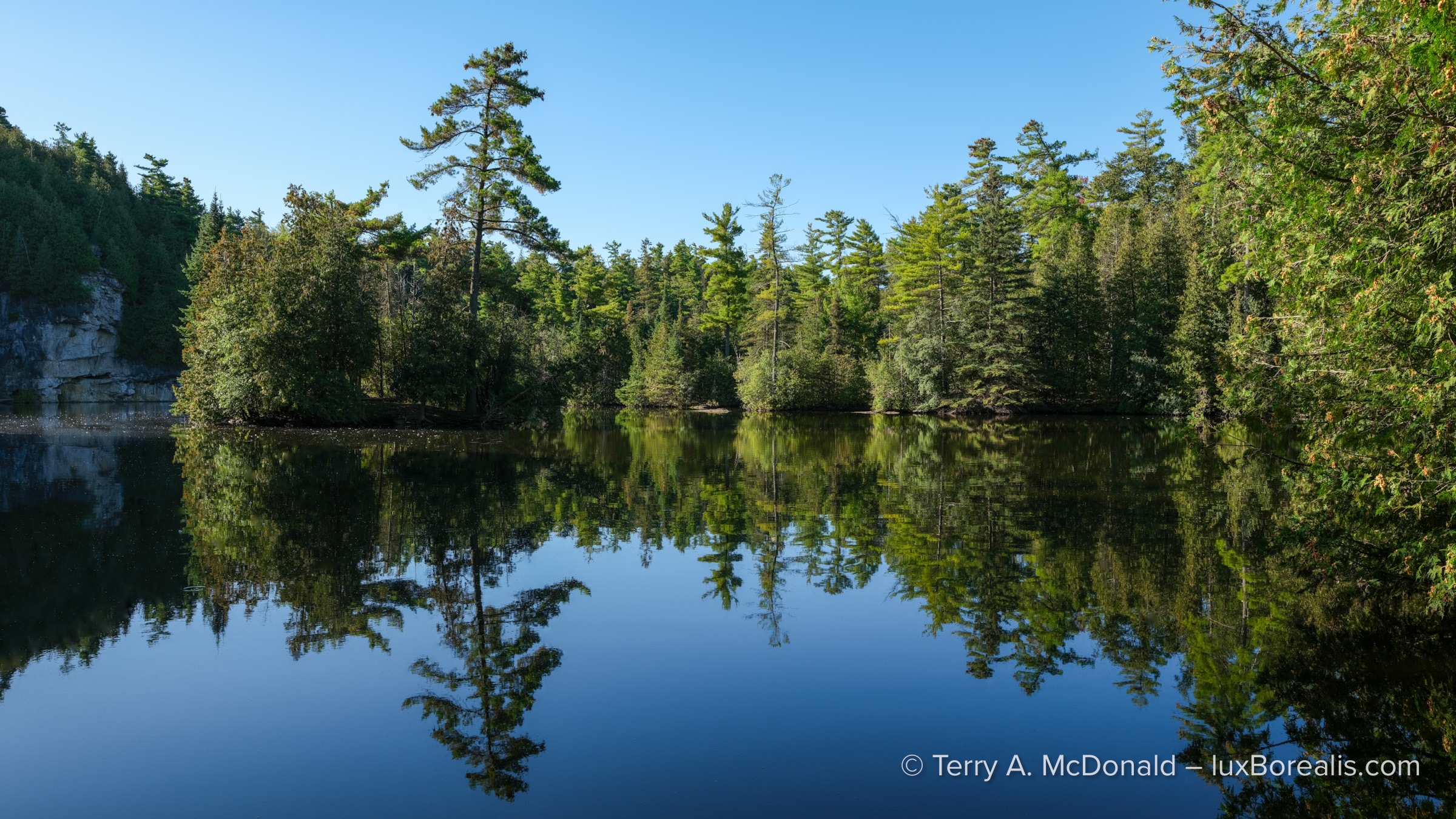
GFX 100SII w/GF 20-35mm/4 @ 33mm (26mm efov); ƒ 11 @ 1/40, ISO 80; tripod; processed in Lightroom from an in-camera JPEG captured using the 16:9 crop

Elevate Your Vision


Read this story and all the best stories on The Luminous Landscape
The author has made this story available to Luminous Landscape members only. Upgrade to get instant access to this story and other benefits available only to members.
Why choose us?
Luminous-Landscape is a membership site. Our website contains over 5300 articles on almost every topic, camera, lens and printer you can imagine. Our membership model is simple, just $2 a month ($24.00 USD a year). This $24 gains you access to a wealth of information including all our past and future video tutorials on such topics as Lightroom, Capture One, Printing, file management and dozens of interviews and travel videos.
- New Articles every few days
- All original content found nowhere else on the web
- No Pop Up Google Sense ads – Our advertisers are photo related
- Download/stream video to any device
- NEW videos monthly
- Top well-known photographer contributors
- Posts from industry leaders
- Speciality Photography Workshops
- Mobile device scalable
- Exclusive video interviews
- Special vendor offers for members
- Hands On Product reviews
- FREE – User Forum. One of the most read user forums on the internet
- Access to our community Buy and Sell pages; for members only.
You may also like