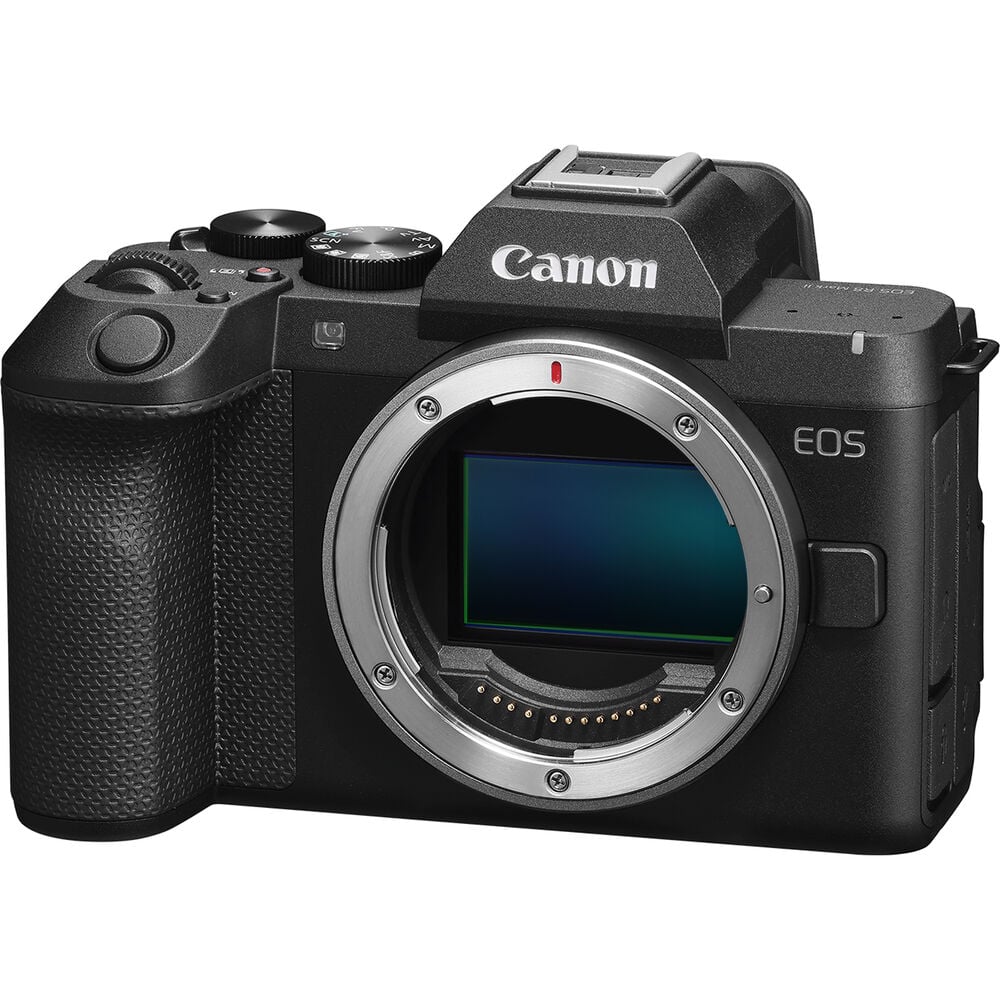





What would you rather have, more megapixels or more keepers?
Canon made a choice with the EOS R8 Mark II, and we think they picked right. Canon kept the same 24.2 megapixel full-frame sensor from the original R8 and spent its engineering time on the things that help get a sharp picture. The big news is the 5-axis in-body image stabilization. Right behind it, a rear joystick for moving your focus point, the feature R8 owners really wanted.
Canon announced the camera on September 15, 2026. Body only runs $1,899, or $2,099 with the RF 24-50mm F4.5-6.3 IS STM kit lens, and it ships in late October. At about 546 grams with battery and card, Canon calls it the lightest EOS body with IBIS yet.
The original R8 skipped IBIS to stay small and affordable, and plenty of shooters felt they missed some shots because of this.
Three and a half years later, Canon found the room for the upgrade.
But “upgrade” means different things to a weekend traveler and a wedding shooter with the client’s special day on only one memory card. So let’s explore this together.
The Short Version
- What’s new: 5-axis IBIS rated up to 7.5 stops, rear AF joystick, updated subject tracking, Register People Priority, true pre-capture, a bigger buffer, side-door SD slot, Full HD 180p, a tally lamp and a redesigned grip
- What stays the same: 24.2MP sensor, 40 fps electronic burst, 6 fps electronic first curtain, uncropped 6K-oversampled 4K60, EVF, rear LCD, single card slot and the small LP-E17 battery
- Who it’s for: Travel, documentary and hybrid shooters, owners of unstabilized primes, first-time full-frame buyers, and pros who want a light second body
- Who should look elsewhere: Wedding and event shooters who need in-camera backup, all-day assignment shooters, and anyone yearning for more resolution
What Canon Changed
IBIS has Arrived
In-body image stabilization (IBIS) floats the sensor on a small motorized platform. Gyro sensors read your hand shake, and the platform moves the opposite way to cancel it. Five axis means it corrects up-down tilt, left-right pan, roll, and small vertical and horizontal shifts.
Canon rates the system at up to 7.5 stops at the center of the frame and 7 stops at the edges. Stabilization systems struggle at the corners of wide lenses, where the geometry of the lens stretches small movements into visible blur.
Canon’s “Coordinated Control” pairs the body’s IBIS with optical stabilization in compatible RF lenses so both systems work from the same motion data, and that partnership keeps the edges sharp on ultra-wide glass.
What does that mean? One stop doubles your usable shutter time. Seven stops takes you from 1/100 second to roughly 1 second in theory.
Nobody hits that every time, and those CIPA numbers (the Camera and Imaging Products Association’s standardized lab test) come from controlled conditions with specific lenses. In the field, we expect less. Still, even three or four reliable stops changes your handheld success rate.
Think about it this way:
- A 50mm prime at 1/50 second becomes a comfortable 1/6 or 1/4 second shot handheld
- That drop can take you from ISO 6400 to ISO 800 for the same exposure
- Cleaner shadows, more latitude in the edit, and fewer frames lost to “almost sharp”
IBIS has one firm limit. It steadies the camera, and your subject still moves. A kid on a swing at 1/15 second will blur no matter how stable the sensor sits. Stabilization shines on static or slow subjects: interiors, cityscapes, blue-hour streets, environmental portraits, details and handheld video.
The biggest winners are owners of unstabilized lenses. The RF 50mm F1.8, the RF 16mm F2.8, and every adapted EF prime without IS just gained a capability they wasn’t on the original R8.

The Joystick Brings Joy
A joystick sounds like a minor addition, but it’s kind of a big deal.
On the original R8, moving your focus point meant tapping the screen or pressing the directional pad. Both work.
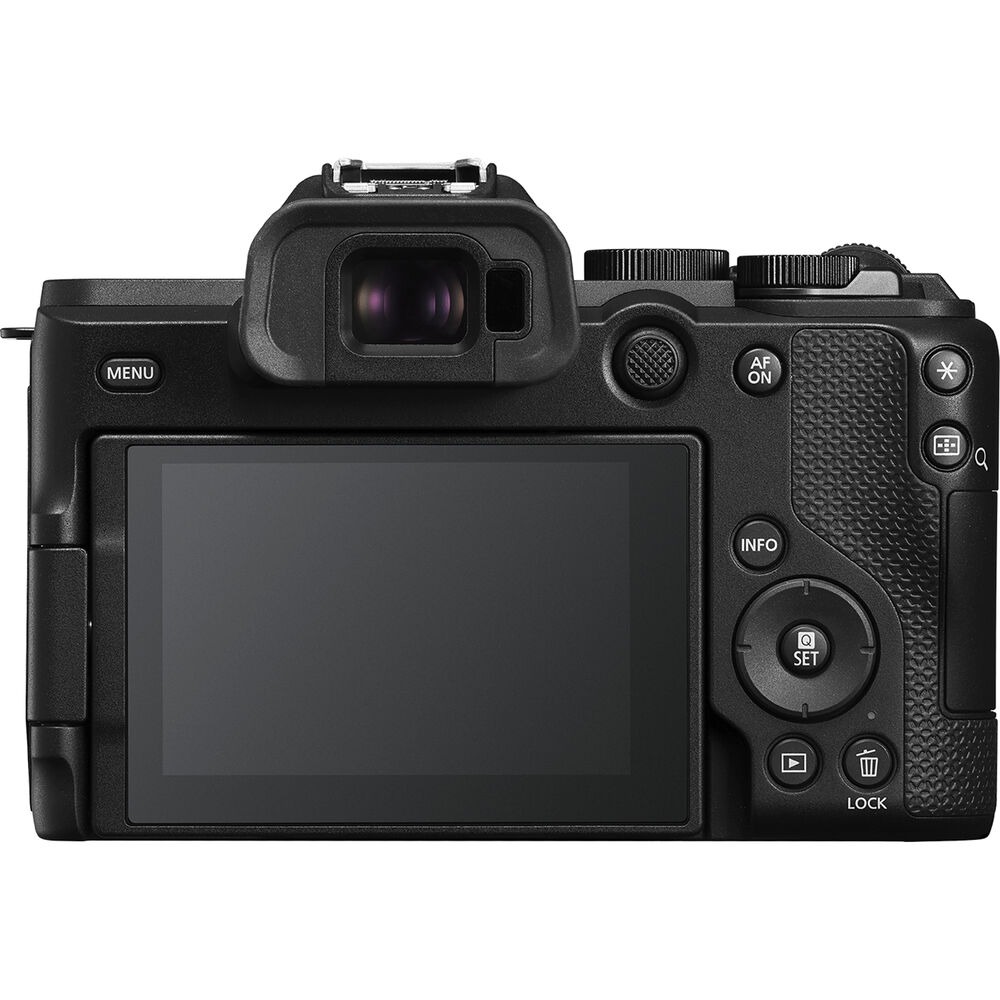
Both cost you a half second and your eye position. The Mark II adds a rear multi-controller, so your thumb moves the AF point while your eye stays glued to the viewfinder and your composition stays intact.
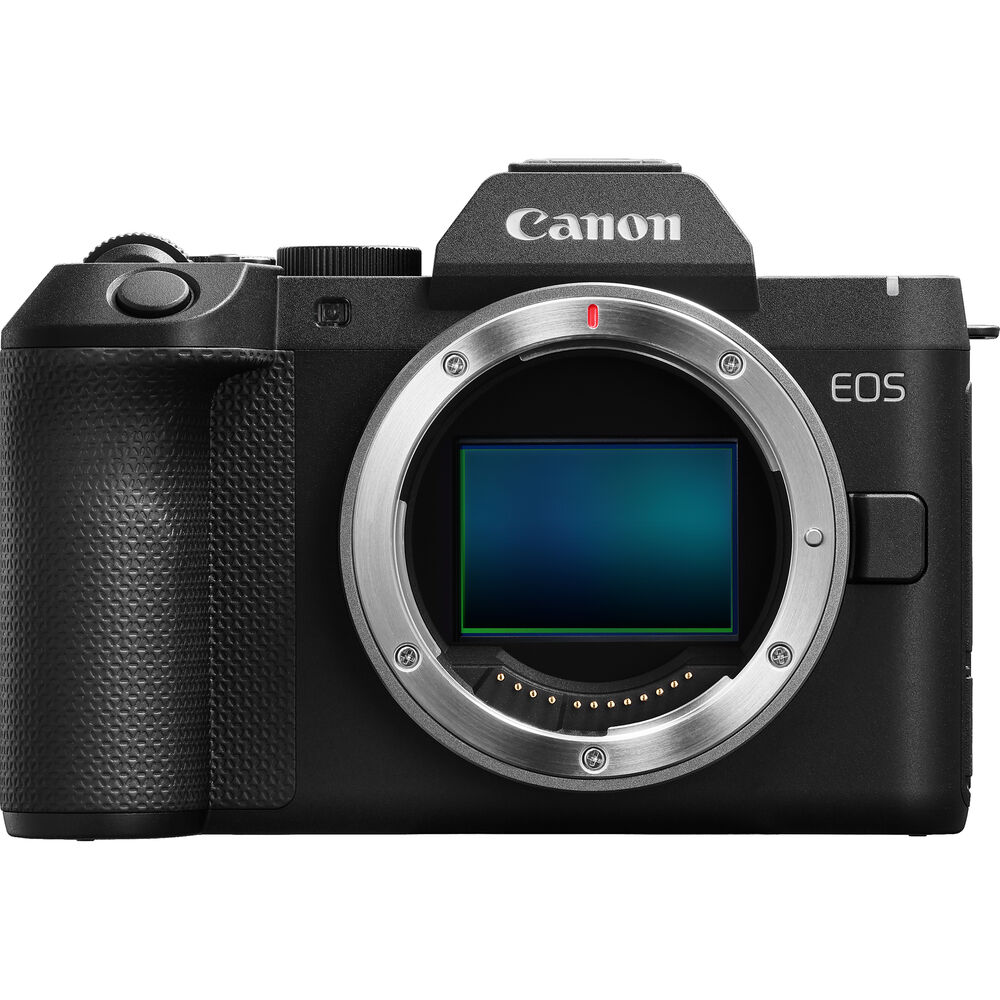
This means that the camera now handles like a pro body. Early hands-on reviewers consistently praised the revised grip and control layout.
The new angular body shape has become the most debated part of the launch. Some reviewers love the modern grip and with a bit of a retro nod. Others feel Canon stopped halfway to a heritage camera. It’s a matter of taste.
If you want more to hold, Canon’s $99.99 EG-E2 extension grip adds support. It adds no battery capacity, so it’s just a comfort thing.
Smarter Autofocus
The Mark II keeps Dual Pixel CMOS AF II, Canon’s system that splits every pixel into two photodiodes so the whole sensor can measure focus. Coverage spans the full frame.
Canon says the updated tracking holds people, animals and vehicles better than the original, and early reviews found the AF quick, reliable and easy to set up. One hands-on account noted animal-eye detection still has room to improve.
The standout new tool is Register People Priority. You can register up to 10 faces, and the camera favors them in a crowd.
Picture a bride and groom in a packed reception, a keynote speaker surrounded by panelists, or your kid in a school play with 30 other kids in matching costumes. The camera knows who matters to you.
This is a cool feature if it works, but it may be too gimmicky and get in the way of where the focus needs to be
Pre-Capture and a Bigger Buffer
The original R8 already shot 40 fps with its electronic shutter. The Mark II keeps that speed and makes it far more usable.
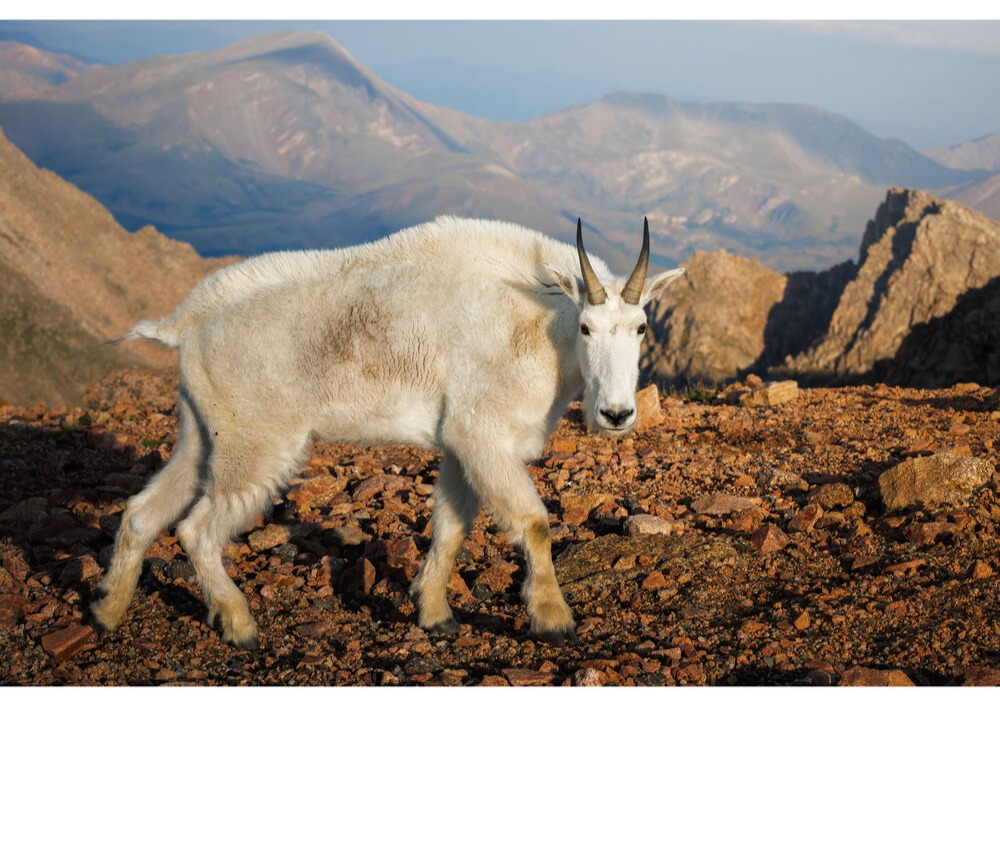
- Pre-continuous capture: Half-press the shutter and the camera starts recording into memory. When you fully press, it saves up to 20 frames from the half second before. Your reaction time won’t be the bottleneck. So if the bird leaves the branch and you press late – you’ll still have the takeoff.
- Deeper buffer: The buffer is the camera’s short-term memory, where frames wait before writing to the card. Canon claims 30% more RAW and 58% more JPEG frames, with official figures of 73 RAW or 190 JPEG at 40 fps. That turns 40 fps from a two-second burst into a usable action tool.
The original R8 offered a Raw Burst mode with a similar idea, but it wrote a special file you had to unpack later. The Mark II’s conventional pre-capture fits your normal workflow.

Video Gets Steadier and More Creative
The core video spec carries over from the R8, and it was already strong:
- Uncropped 4K up to 60p, oversampled from 6K (the camera reads more pixels than it needs and downsizes, which gives you finer detail and less noise)
- 10-bit recording with Canon Log 3, a flat profile that preserves highlight and shadow detail for color grading
The Mark II adds some new video tools:
- IBIS for handheld B-roll without cropping into your frame for digital stabilization
- Full HD up to 180p with audio for slow motion
- Slow & Fast mode and expanded Custom Picture profiles
- A front tally lamp so on-camera talent knows you’re rolling
- Mic and headphone jacks, plus USB-C streaming
Canon estimates about 40 minutes of 4K60 recording per fresh LP-E17 at 23°C. Keep in mind that figure measures battery life. Independent tests for heat limits on a production body haven’t been seen yet.
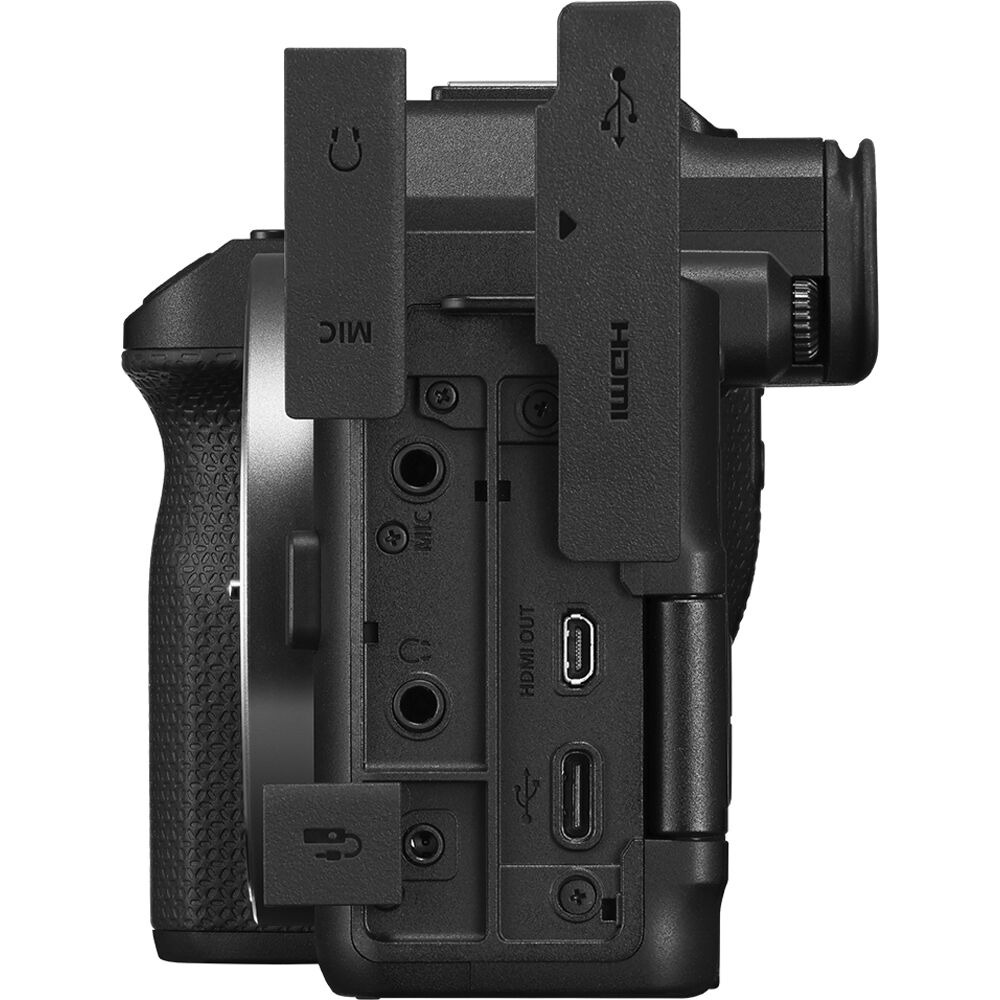
The Card Slot in a Different Spot
The SD card now sits behind a side door instead of inside the battery compartment. Tripod plates, cages and grips no longer block your card swaps. A small but very helpful change.
What Stays the Same
The Sensor
Same 24.2MP sensor class, same broad image pipeline. That’s a proven, capable sensor with clean high-ISO files and excellent color. But – it also means for current R8 owners there’s no extra detail, cropping room or base RAW quality by switching to the Mark II.
The Mark II improves how reliably you get the picture. The picture itself looks the same. IBIS will raise your keeper rate but files stay 24.2 megapixels.
The Shutter
Here’s a spec that trips up a lot of buyers. The R8 Mark II has no fully mechanical shutter. It offers two modes:
- Electronic first curtain (EFCS): The sensor starts the exposure electronically and a physical curtain ends it. Tops out at 6 fps. Flash works here. At very fast shutter speeds, EFCS can slightly change the shape of out-of-focus highlights.
- Full electronic: Reaches 40 fps and is silent. It reads the sensor line by line from top to bottom, called a rolling shutter. Fast motion, quick pans and some LED or fluorescent lights can show skewing or banding. Flash is unavailable in this mode.
This means that a studio shooter firing strobes gets 6 fps at most. A sports shooter gets 40 fps, along with rolling-shutter risk with fast lateral motion. Both are usable, but both need a quick test before a paid job.
Displays
The EVF stays at 2.36 million dots with 0.70x magnification, and the 3-inch vari-angle LCD stays at 1.62 million dots. They work fine. At $1,899, they feel modest next to competitors with 3.68-million-dot finders.
Battery
The small LP-E17 returns. Official CIPA ratings:
- Smooth mode: 150 shots with the EVF, 270 with the LCD
- Power Saving mode: 220 shots with the EVF, 340 with the LCD
Our advice: budget for two or three spares and a USB-C PD power bank from day one. Treat them as part of the camera.
One Card Slot
The side door helps. The single UHS-II SD slot remains. That means no in-camera backup, where the camera writes every frame to two cards at once. For weddings, corporate events, live performances and any job you can’t repeat, that backup protects your client and your reputation.
Build
TechRadar reports the body lacks weather resistance, and several reviewers describe the feel as entry-level. Check Canon’s final manual for exact wording, and bring a rain cover for wet days. But for an “entry level” full frame it’s pretty complete.
Price and the Canon Lineup Problem
At launch, the numbers are interesting:
- EOS R8 Mark II: $1,899 body
- Original EOS R8: $1,349 on Canon USA’s September 2026 promotion
- EOS R6 Mark II: $1,999 on the same promotion
That $550 over the original R8 buys you IBIS, the joystick, updated AF, pre-capture and a bigger buffer. It buys the same resolution, the same displays, the same battery and the same single slot.
And the R6 Mark II sits just $100 above it right now. For that $100, you get dual card slots, the larger LP-E6NH battery, a sturdier weather-resistant body and a mechanical shutter. Street prices shift fast, so check them the week you buy.
How It Stacks Up Outside Canon
Nikon Z5 II
The most direct rival. Both run roughly 24MP full-frame sensors with IBIS rated up to 7.5 stops.
- Nikon wins on: Dual UHS-II SD slots, a sharper 3.68M-dot 0.8x EVF, a bigger battery and a weather-resistant body
- Canon wins on: Lower weight, 40 fps electronic bursts, RAW pre-capture and uncropped oversampled 4K60
If your work leans toward assignments and backup security, the Nikon makes a strong case. If you prize a light kit, fast action and full-width video, the Canon pulls ahead.
Sony a7 IV
Still relevant, especially when discounted.
- Sony wins on: A 32.7MP sensor, dual slots, a 3.68M-dot EVF and far better battery life
- Canon wins on: Lower weight, faster electronic bursts and full-width 4K60 (the a7 IV crops 4K60 by 1.5x)
For all-day stills work, the a7 IV holds up well. For a compact hybrid kit, the R8 Mark II feels more up to date.
And If You Want More
The R6 Mark III moves to 32.5MP, 7K open gate video, 4K120, dual card slots (CFexpress Type B and UHS-II SD) and the bigger LP-E6P battery. It’s larger and costs more, and it’s the camera body to think about when resolution and advanced video is at the top of your list.
Who Should Buy the R8 Mark II
Great Fits
- First-time full-frame buyers: Light, capable, and the joystick means the camera grows with your skills instead of holding them back – it’s got what you need
- Travel, editorial and documentary shooters: Low weight plus IBIS is this camera’s clearest win. Pack a rain cover and back up your cards each night
- Hybrid creators: 4K60, C-Log 3, IBIS, a tally lamp and audio ports make a compact stills-and-video kit
- Owners of unstabilized primes: Your RF 50mm F1.8 and adapted EF glass just got a new life
- Working pros wanting a second body: Familiar Canon color and controls in a package that barely registers on your shoulder
- Portrait and event shooters on controlled jobs: Register People Priority and the joystick when a single-slot workflow is okay
Poor Fits
- Wedding and event pros needing backup: One card slot is the deal-breaker
- All-day shooters: The LP-E17 means constant battery management (bring a bunch)
- Flash-driven action and studio work: 6 fps with EFCS, and no flash with the electronic shutter
- Resolution hunters: Same 24.2MP as before
- Harsh-weather specialists: seems to be no weather resistance
- Long-form 4K60 operators: Short battery life and unconfirmed heat limits
Should R8 Owners Upgrade?
You might be wondering whether your R8 just became obsolete. It didn’t. It still makes the same beautiful files.
Upgrade When
- You shoot handheld in low light with non-IS lenses often
- Handheld video is a regular paid deliverable
- Moving your AF point on the R8 feels slow every single time
- Weddings, conferences or performances would benefit from face priority and easy pre-capture
- You already use 40 fps and keep hitting the buffer wall
- You want a stabilized travel or second body without R6 size and weight
Keep Your R8 When
- Your lenses have optical IS, or you work from tripods, monopods and gimbals
- Your image quality and AF already satisfy your clients
- You rarely need pre-capture or long bursts
- Money : the $550 gap, plus resale loss, won’t earn back its cost in your work
Move to an R6 When
- Your clients depend on dual-card backup
- You want a bigger battery, better displays, weather protection and a sturdier body more than the lightest possible kit
- Mechanical-shutter action or flash work fills your calendar
- You want more resolution and advanced video, which points to the R6 Mark III
Quick Decision Guide
- Natural-light portraits with RF primes: Likely yes
- Primary wedding body: No, look at the R6 line
- Lightweight wedding backup: Maybe, with a deliberate backup plan
- Daylight sports: Maybe, pre-capture helps and rolling shutter limits
- Studio headshots: Usually no, IBIS adds little under strobes
- Travel and editorial: Yes, if the budget fits
- Video, BTS and social content: Likely yes
- Long interviews and full-day events: Wait for battery and heat tests
The R8 Mark II is Nice!
Canon built the R8 Mark II around a simple idea: help more photographers take home sharp pictures.
It kept everything that made the first R8 a favorite (lovely 24.2MP files, excellent autofocus, fast electronic capture, full-width 4K60) and added the stabilization and the joy of joystick control.
It’s an excellent travel camera, a standout compact hybrid, and a smart second body.
Further Reading
- Canon U.S.A. official announcement: EOS R8 Mark II – Canon’s press release with full specs and accessories
- Canon EOS R8 II review: new design, major fixes but frustrations remain – DPReview, with comparisons to the Nikon Z5 II and Sony a7 IV
- Steady progress: shooting with the Canon EOS R8 Mark II – DPReview sample gallery with downloadable RAW files
- Canon EOS R8 Mark II Review: A Great Camera in a Polarizing Package – PetaPixel
- Canon EOS R8 Mark II hands-on review – Digital Camera World on the redesign and battery life
- Hands on: Canon EOS R8 Mark II – TechRadar, including the Nikon competition angle
- Canon EOS R8 Mark II review – Amateur Photographer’s first look
- Canon EOS R8 Mark II announced – CineD, with a video shooter’s perspective
- Canon announces EOS R8 Mark II – Newsshooter’s spec breakdown
- Canon EOS R8 review (original) – DPReview’s 2023 review, for a side-by-side look at what changed





Elevate Your Vision


Read this story and all the best stories on The Luminous Landscape
The author has made this story available to Luminous Landscape members only. Upgrade to get instant access to this story and other benefits available only to members.
Why choose us?
Luminous-Landscape is a membership site. Our website contains over 5300 articles on almost every topic, camera, lens and printer you can imagine. Our membership model is simple, just $2 a month ($24.00 USD a year). This $24 gains you access to a wealth of information including all our past and future video tutorials on such topics as Lightroom, Capture One, Printing, file management and dozens of interviews and travel videos.
- New Articles every few days
- All original content found nowhere else on the web
- No Pop Up Google Sense ads – Our advertisers are photo related
- Download/stream video to any device
- NEW videos monthly
- Top well-known photographer contributors
- Posts from industry leaders
- Speciality Photography Workshops
- Mobile device scalable
- Exclusive video interviews
- Special vendor offers for members
- Hands On Product reviews
- FREE – User Forum. One of the most read user forums on the internet
- Access to our community Buy and Sell pages; for members only.
You may also like