




A Luminous Landscape Year-Beginning Reflection
A new year is upon us.
As we’ve closed out 2025, I find myself thinking less about megapixel counts and frame rates – though we will get to those – and more about something harder to quantify: the feeling of standing in front of a scene with a camera in hand, wrestling with light and composition, trying to make something that matters. That essential experience remains unchanged even as everything around it changes at a pace that can make our head spin.
This year last brought us stacked sensors and AI-powered autofocus, generative fill tools and content credentials. brought a film resurgence and mirrorless systems so mature that the DSLR debate finally might be done.
But more than anything, 2025 felt like a year where the photography community collectively asked itself: What is a photograph?
In a world where AI can generate photorealistic images from text prompts, what makes an image captured through a lens special? The answer, I think, lies in something the Japanese call wabi-sabi – the beauty of imperfection, the authenticity of the real.
Let’s talk about what happened this last year, what it means, and where we might be heading in 2026. Grab a coffee while I ramble a bit..
The Cameras That Earned Our Attention
Mirrorless has won. I say this as a simple observation. Canon, Nikon, and Sony have all but stopped DSLR development, focusing their engineering resources on electronic viewfinder systems. Pentax remains the noble exception, championing optical viewfinders and they even announced a new 35mm film SLR that’s in development – a decision looks appropriate considering the analog resurgence we are seeing
Canon’s Steady Hand
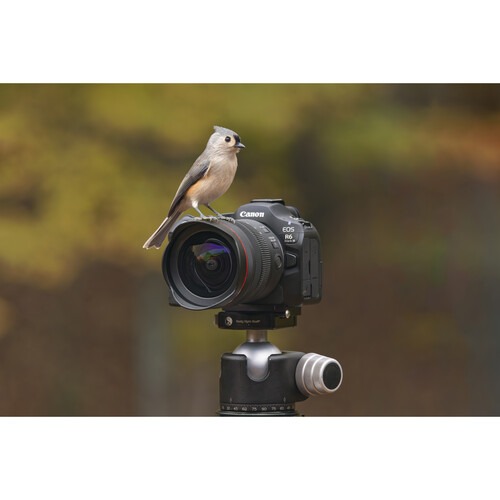
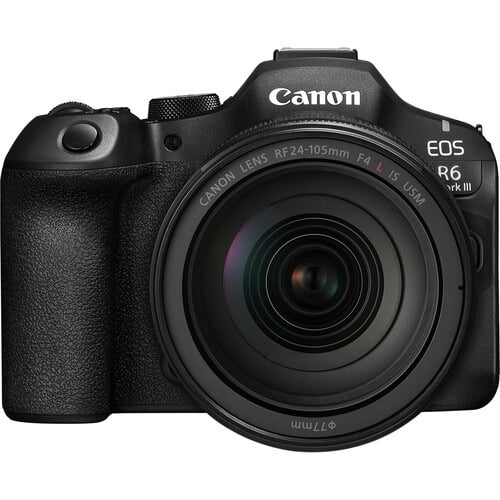
Canon refined their offerings this year. The EOS R6 Mark III arrived with improvements that matter in the field: better in-body stabilization, uncropped 4K60 video, and reliability. At roughly $2,500, it represents perhaps the best value in full-frame mirrorless for photographers who need a camera that simply works, day after day, in many different conditions.
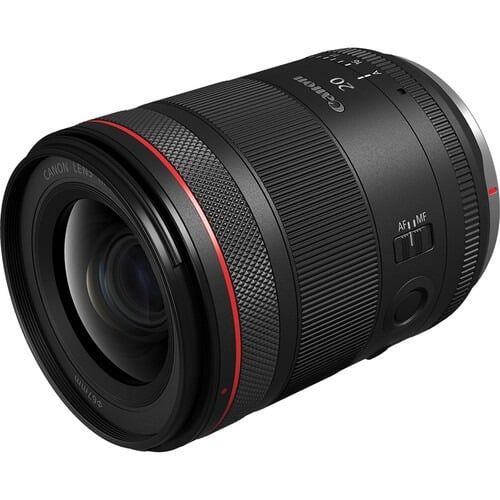
Canon also expanded its lens lineup with the RF 20mm f/1.4L VCM – an ultra-wide prime that performs beautifully for astrophotography and environmental portraits – and the RF 45mm f/1.2L USM, which offers shallow depth of field at a focal length that feels natural and real. The fact that Sigma and Tamron finally gained RF mount licensing in late 2025 means Canon shooters will soon have even more options, which is great for everyone.
Nikon’s Quiet Confidence
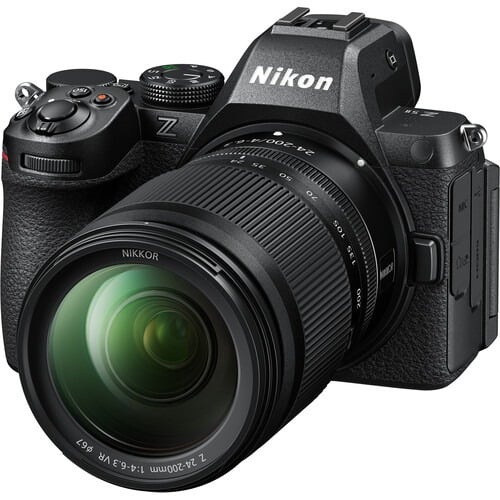
Nikon had a STRONG year, anchored by the Z5 II – an entry full-frame camera with upgraded hybrid features that won Product of the Year recognition from multiple outlets. For landscape photographers on a budget, it represents an exceptional value proposition: a capable 24MP sensor, 5-axis stabilization, and access to Nikon’s growing Z-mount lens ecosystem.
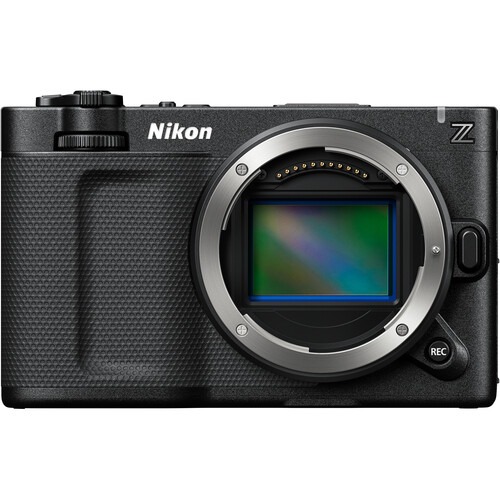
More interesting for the video folks was the Nikon ZR, developed in partnership with RED Digital Cinema. This cinema-focused camera brings RED’s color science and internal RAW video capabilities to a Z-mount body – a move that shows how Nikon is serious about the hybrid creator market.
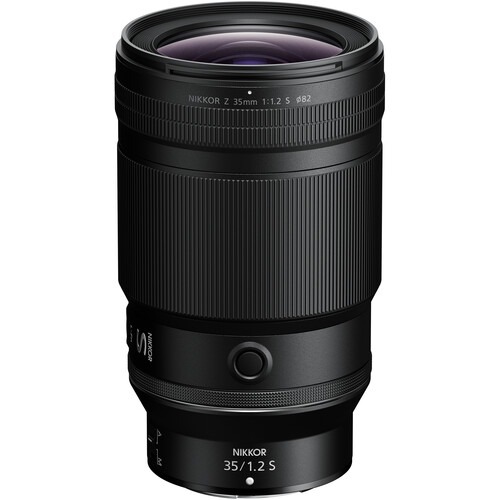
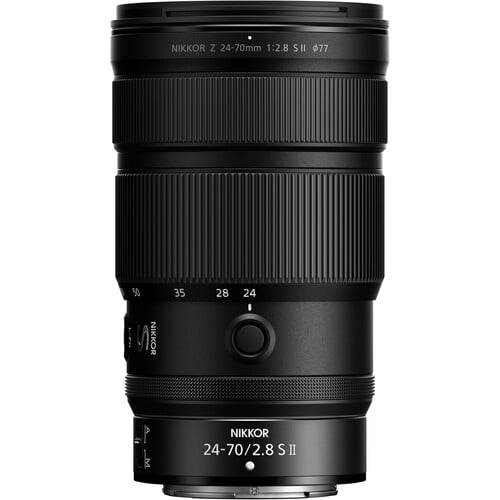
For landscape videographers creating 6K stock footage or those making documentary work, the color and dynamic range opens beautiful possibilities that would have required far more expensive gear just a few years ago. Nikon also completed its professional f/1.2 prime trilogy with the Z 35mm f/1.2 S, a solid and fast lens at a great price. Combined with their newly refreshed Z 24-70mm f/2.8 S II, Nikon’s system now feels like it’s complete for demanding landscape and environmental work.
Sony’s Relentless Innovation
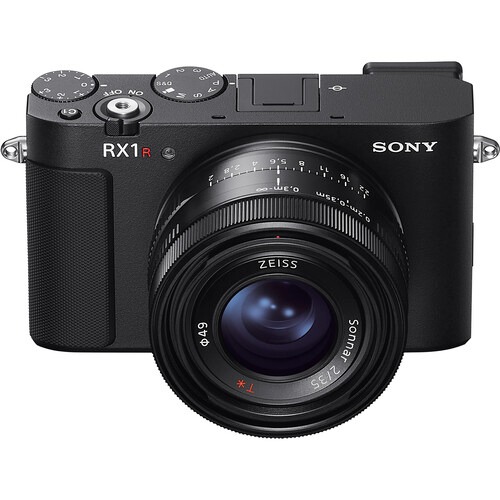
Sony never rests, and 2025 was no exception. The company surprised everyone by reviving the RX1R III – a premium fixed-lens compact with a 61MP full-frame sensor behind a 35mm f/2 Zeiss lens. For street and travel photographers who want medium-format-level detail in a very small package, it represents something unique.
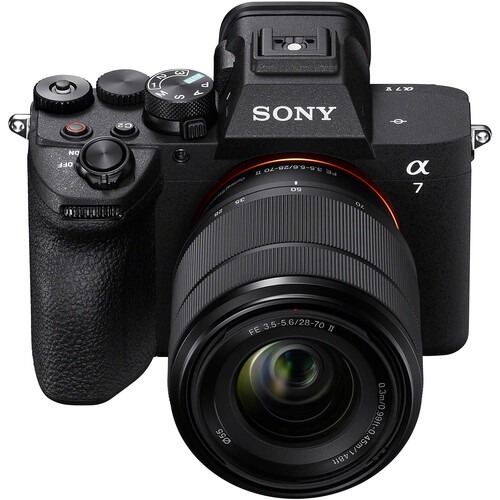
The Alpha A7 V arrived in December as Sony’s new workhorse – a 33MP hybrid with a partially stacked sensor and integrated AI processing for subject recognition. What strikes me about this camera is not any single specification but the overall intelligence of the system. It anticipates what you are trying to do and helps you do it. The autofocus tracks subjects – animals, vehicles, people – with amazing accuracy.
Sony’s lens releases were really impressive: the FE 50-150mm f/2.0 GM defies physics by offering constant f/2 aperture in a telephoto zoom, while the FE 100mm f/2.8 STF G Master macro uses apodization elements to create bokeh that photographers are calling the best they have ever seen. These are not small improvements – they are lenses that simply were not possible a few years ago. That 50-150mm is very versatile and sharp.
The Cameras That Surprised Us
Some of the year’s most interesting releases came from unexpected directions.
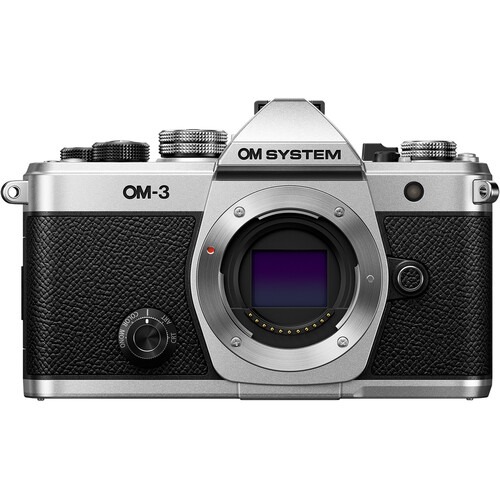
The OM System OM-3 brought a stacked sensor to Micro Four Thirds in a retro-styled body that nods to the classic OM film cameras. For photographers who value style, portability and weather-sealing over full-frame, the OM system offers some compelling features. This camera is smart. The class-leading stabilization – up to 7.5 stops – means handheld shots in conditions that would require a tripod with larger systems. It has a built in digital ND system which is helpful. It’s a fun camera – I suggest using the high resolution mode when possible.
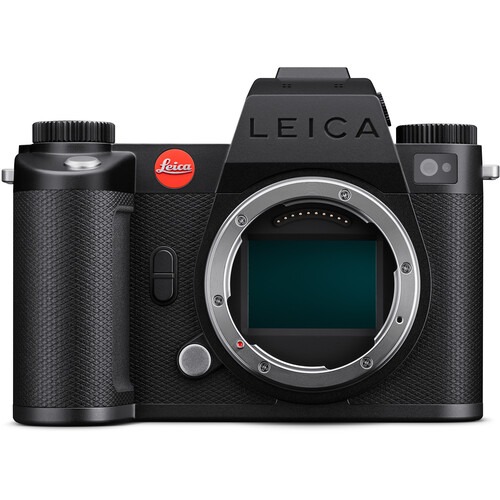
The Leica SL3-S deserves special mention for its beautiful industrial design and the intangible quality that Leica brings to the shooting experience. Yes, it costs more than competitors with similar specifications. But there is something about holding it, about the deliberate way it encourages you to slow down and consider each frame, that cannot be captured on a spec sheet. For photographers who can afford it and appreciate that ineffable Leica quality, it is a genuine pleasure to use. If I wasn’t doing video, I would really consider the SL3 for ease of use and resolution.
Sigma astonished everyone with the Sigma BF – a radically minimalist full-frame mirrorless camera with no rear screen and purely analog controls. It is designed to recreate the pure shooting experience of film-era cameras in a digital body. The beautiful design and new user interface generated immediate cult interest. Not everyone will want a camera this stripped-down, but for those who do, there’s nothing else quite like it.
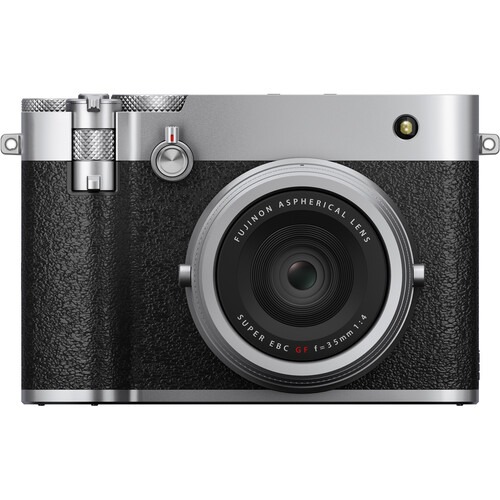
Fujifilm expanded its medium format line in two bold directions: the GFX100 Eterna for cinema work, and the groundbreaking GFX 100RF – the world’s first fixed-lens medium format camera. Inspired by Fuji’s own beloved X100 series, it puts a 102MP medium format sensor behind a fixed 55mm-equivalent lens in a rangefinder-style body. For street and travel photographers who want medium format image quality without the bulk of interchangeable lenses, it opens new creative territory.

Software: AI Became Integrated
The software story of 2025 was less about flashy new features and more about AI becoming so integrated into workflows that we stopped noticing it.
Adobe Lightroom introduced AI Select Landscape Masking – a single click now detects and separately masks sky, mountains, water, and natural ground. For landscape photographers, this eliminates what used to be tedious manual work. You click once, and the software understands the structural elements of your scene. The time savings are substantial, but more importantly, it lets us focus on creative decisions and playing around with the image rather than the technical execution of masking.
Generative Remove arrived in Lightroom, using Firefly AI to intelligently fill in content when you remove distracting elements. Remove a person from a landscape, and the software synthesizes believable background detail. I approach this feature with some ambivalence – more on that later – but for cleaning up sensor dust spots or removing genuinely distracting elements, it works remarkably well.
Capture One Pro reached version 16.7 with seven new features focused on editing efficiency. The Combine Masks feature lets you add, subtract, and intersect masks in a single layer – workflow logic that Photoshop users have long enjoyed, now available in a RAW processor. For photographers who have resisted Capture One, this might be the year to take another look.
DxO PhotoLab 9 introduced AI Masking with one-click selection of subjects, sky, and backgrounds. DxO’s legendary noise reduction with DeepPRIME XD became faster and – finally – added support for Fujifilm X-Trans RAW files. For Fuji shooters who have waited years for this, this is a significant moment.
The Nik Collection added 30 high-quality scans of classic photographic papers to Analog Efex – subtle grain, tone, and physical character that can make a digital image feel like a 1970s fiber print. This speaks to the broader tension of 2025: even as AI capabilities expand, many photographers actively seek the imperfect authenticity of analog aesthetics.
Topaz Labs consolidated their noise reduction, sharpening, and upscaling tools into Photo AI version 4, though their move to a subscription model caused a grumble. The AI models are genuinely excellent – they can rescue images that were previously unusable – but the pricing shift reflects broader industry trends that not everyone welcomes or wants.


The Authenticity Question
Here is the conversation we need to have.
AI image generation tools have become remarkably sophisticated. Midjourney and similar platforms can now create photorealistic landscapes that are difficult to distinguish from photographs. This raises uncomfortable questions for our community: If a computer can generate a stunning sunset over mountains, what is the value of actually standing on that mountain with a camera?
I believe the answer lies in authenticity – and this is where the Japanese concept of wabi-sabi becomes relevant. Wabi-sabi celebrates imperfection, impermanence, and incompleteness. A photograph made by a human standing in a real place contains something that generated imagery cannot replicate: the trace of genuine experience, the small imperfections that reveal a human presence, the authenticity of having actually been there.
The photography community responded to this challenge in 2025. The Content Authenticity Initiative – supported by Sony, Nikon, Fujifilm, and others – began integrating secure metadata into cameras that can verify when and how an image was created. Adobe’s tools can append edit logs to this certificate of origin. The goal is allowing viewers to verify an image’s integrity in a post-deepfake world.
More importantly, we saw cultural shifts. Contest organizers created separate categories for AI-assisted images or banned AI composites entirely. Photographers began explicitly labeling their work as “100% genuine – no pixels added or removed.” Behind-the-scenes content became popular as proof of authenticity. There is renewed appreciation for straight-out-of-camera images that show the world as it actually appeared.
This does not mean AI tools are bad or that using them makes you a lesser photographer. Removing sensor dust spots with AI is hardly different from cloning them out manually. The question is one of intent and disclosure. Are you using technology to better represent what you actually experienced, or are you using it to fabricate an experience you never had?
The 2025 Natural Landscape Photography Awards spelled out that they celebrated “real experiences we have in nature,” distancing themselves from synthetic AI-generated landscapes.
This emphasis on the authentic, the imperfect, the genuinely experienced – this feels like the right direction for us and our craft.
The Analog Renaissance
While digital technology raced forward, something remarkable happened in the other direction: film photography is experiencing its most significant resurgence in decades.
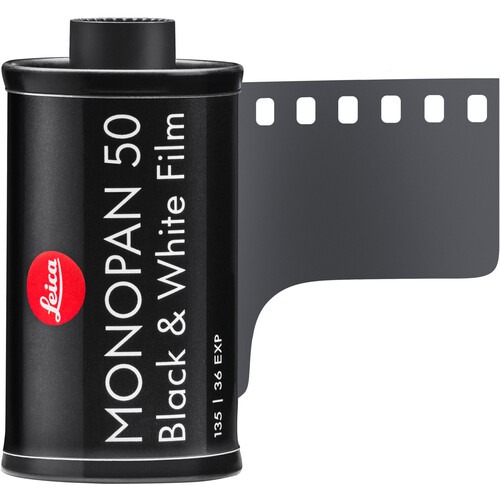
We saw an unprecedented number of new color films launch in 2025. Small brands like Lomography and Film Ferrania released fresh emulsions. ORWO introduced a new color cine film that photographers began bulk-loading for stills. Kodak and Ilford reported increased sales. Even Leica got in on the act, releasing their first-ever 35mm film stock – Leica MONOPAN 50 black and white film – a symbolic acknowledgment that analog is not merely surviving but thriving.
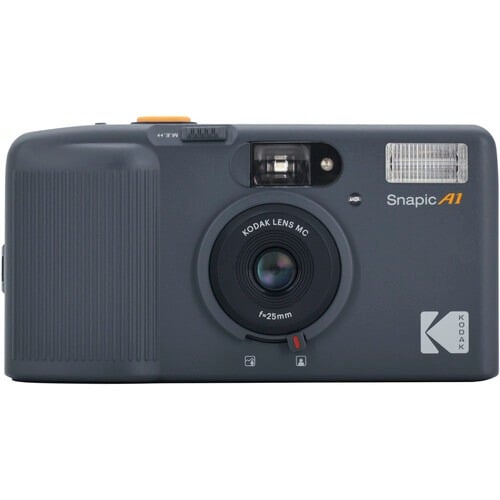
New film cameras appeared too. The Kodak Snapic A1 by RETO is a modern 35mm point-and-shoot with automated features at an accessible price point. Pentax announced development of a new film SLR. Fujifilm’s Instax instant photography remained enormously popular, with the Instax Mini Evo hybrid camera – which prints credit-card sized instant photos – becoming a hit at events and among artists.
Why is this happening? I think it is partly a reaction to digital overload. Shooting film forces you to slow down. You have 36 frames, not 36,000. Each exposure costs money and time. This constraint changes how we see and what we choose to photograph. The tactile satisfaction of a physical negative or print offers something that scrolling through files on a screen simply cannot provide.
There is also the aesthetic dimension. Film has a look – grain structure, color response, tonal transitions – that digital sensors do not naturally replicate. The popularity of “film look” presets in digital editing speaks to this; many photographers want that character. Hot take: shoot film if you want a “film look”.
Alternative processes gained interest too. Infrared photography, cyanotypes, tintypes – these historical techniques attract photographers seeking unique results that cannot be algorithmically generated. Community darkrooms opened in cities, teaching young photographers to develop and print. In an age of the infinite scroll and digital reproduction, the singular handmade object becomes special and precious again.
The analog resurgence and the authenticity movement are related phenomena. Both push back against the idea that new technology automatically means better photography. Both celebrate the human element – the imperfection, the physical presence, the genuine experience.
Minimalism, Maximalism, and Everything Between
Two opposing aesthetic movements defined 2025, and both have something to teach us.
The Minimalist Photography Awards showcased landscapes “stripped to raw essentials: space, light, silence, and emotion.” The winning images proved that simplicity is not emptiness – it is power. Martin Rak’s “Art of Winter” captured a quiet snowfall in a Czech forest with just subtle textures of white and a few dark tree trunks, conveying profound calm. Another winner used intentional camera movement to turn a forest edge into an abstract blur of green, demonstrating that emotional impact does not require tack-sharp detail.
These minimalist images stood out in social media feeds precisely because they offered visual relief. In a sea of oversaturated HDR landscapes, a quiet, breathing photograph invites viewers to pause. The engagement metrics confirmed what many suspected: simplicity grabs attention by calming our overstimulated eyes.
Meanwhile, maximalist photographers went the opposite direction – creating images packed with detail, color, and complexity. Composite images of the Milky Way over vibrant sunset landscapes with light-painted foregrounds. Cityscapes layering multiple long exposures for light trails, starbursts, and clouds all in one frame. These images embrace abundance, inviting everything in rather than simplifying.
Neither approach is inherently better. The choice depends on what you are trying to communicate. Minimalism suits contemplative subjects and viewers seeking respite. Maximalism works for drama, wonder, and visual adventure. The mistake is assuming one style fits all situations or all photographers.
What strikes me about 2025 is the freedom photographers now feel to pursue whichever aesthetic serves their vision. The gatekeeping around “proper” photography has lessened. Heavily processed composites exist alongside straight documentary work, and both find appreciative audiences. Our job is not to please everyone – it is to make work that matters to us and connect with those who share our sensibility.
Aerial Photography Comes of Age
The proliferation of high-quality, easy-to-fly drones has firmly established aerial photography as a legitimate landscape tool. Perspectives that once required chartered helicopters are now accessible to anyone willing to learn the regulations and practice responsible flying.
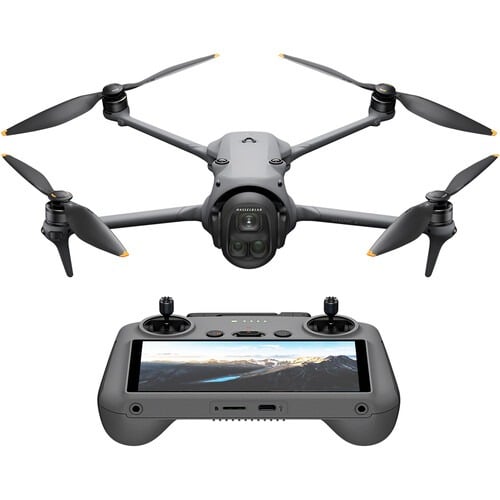
The DJI Mavic Pro 4 set the standard with a 100MP Hasselblad co-engineered camera and 51-minute battery life. Its dual-camera system includes a telephoto option for isolating distant details without repositioning the aircraft. For serious landscape work, this is a remarkable capability in a portable package.
The DJI Mini 5 Pro addressed a different need: travelers and hobbyists who want aerial capability without registration hassles. At under 249 grams, it avoids many regulatory requirements while still delivering a 1-inch sensor and intelligent obstacle avoidance. More people carrying capable drones means more aerial perspectives entering our visual vocabulary.
What interests me is not just the technology but how photographers are using it. Bird’s-eye-view images – looking straight down at forests, fields, and coastlines – and they transform familiar landscapes into mesmerizing abstract patterns.
A winding road through autumn forest becomes a serpent-like ribbon amid orange tapestry. The perspective tells a different story than ground level, revealing patterns invisible from human height.
Photographers are experimenting with long exposures from drones using ND filters, creating ethereal motion blur in rivers and roads seen from above. Night photography with drones, while technically demanding, yields beautiful results. The tool has matured beyond toy and into a flying creative tool.
The responsibility dimension matters here. Drones can disturb wildlife and annoy other visitors in natural areas. Regulations exist for good reasons. The upcoming year should be interesting with what U.S. companies come out of the wood work for US users to partake in. The DJI Ban in the United States stands that the drones that DJI has out now of this moment are allowed to be purchased and used in the United States. So…we can purchase and fly the Mavic 4.
Environmental Urgency and Ethical Practice
The environmental story of 2025 cannot be separated from the photography story. Climate change is reshaping the landscapes we photograph, and our community is responding with both documentation and responsibility.
The Natural Landscape Photography Awards 2025 explicitly celebrated authentic environmental documentation over idealized representation. This represents a significant shift in how we think about landscape photography – not just capturing beauty but bearing witness to changes.
Ethical field practice has become standard expectation. The motto “Leave No Trace” is now widely promoted – photographers taking care not to trample delicate areas, disturb wildlife, or create damage for the sake of an image. Some professionals avoid sharing exact GPS coordinates of fragile locations to prevent overtourism damage. Photography groups include conservation messages in their programming.
There is also growing awareness of photography’s own environmental footprint. Rather than traveling globally to photograph distant locations, more photographers pursue “local” work – often within an hour’s travel, using ebikes or by foot. The 2025 Natural Landscape Awards featured winning projects shot entirely within local or regional boundaries, celebrating reduced travel impact and proximity-based storytelling.
This challenges the tourism-dependent model of landscape photography and suggests something valuable: discovering extraordinary beauty in overlooked local landscapes rather than perpetually chasing distant icons. The photographer who deeply knows a nearby forest may produce more meaningful work than one who helicopters into Patagonia for three days.
2026?
Where does all this leave us as we head into the new year?
The equipment trajectory is clear: mirrorless systems will continue improving, AI will become even more integrated and invisible, and resolution will matter less than sensor intelligence and system integration. A modern 24MP camera with excellent autofocus and stabilization often out-performs older high-megapixel bodies in real-world use. Buy for the system, the handling, and the results – not necessarily the spec sheet.
Global shutters are the next technical frontier – sensors that capture the entire frame simultaneously, eliminating rolling shutter artifacts and enabling flash sync at any speed. We did not see production of global shutter mirrorless cameras in 2025, but they are coming, probably soon.
Content credentials and image authentication will become more important as AI-generated imagery floods the internet. The ability to prove that an image was actually captured through a lens, in a real place, at a specific time will become more valuable.
The analog resurgence will continue. This is not nostalgia for its own sake but a genuine movement toward intentionality, texture, and physical craft in an increasingly virtual world. Film and alternative processes offer something digital cannot easily replicate: constraint that has variability, surprise, and material presence.
Environmental documentation will continue as a leading landscape photography genre, distinct from scenic tourism.
And the authenticity question will persist. In a world where anything can be generated, what is the value of the real?
I believe the answer is: everything. The traces of genuine experience, the imperfect beauty of actual presence, the honesty of showing what you saw rather than what you wished you had seen – these things matter more in an age of synthetic imagery. How can we incorporate these new tools to express our human selves?
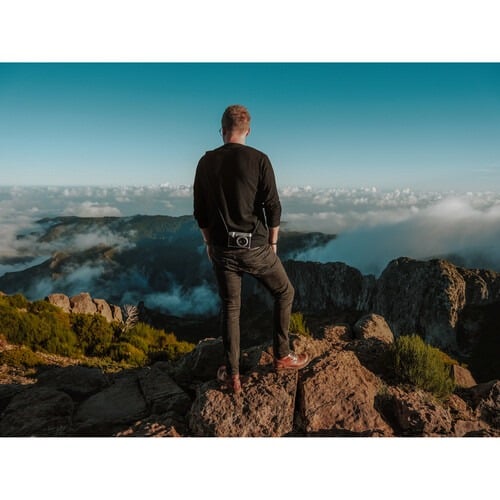
Thank You
To everyone who has been part of the Luminous Landscape community this year – readers, members, contributors, and fellow travelers on this photographic journey – thank you. Your engagement, your questions, your images, and your passion for this craft make this work meaningful.
We have been doing this for 30 years now. Michael Reichmann founded this publication on the belief that photographers could learn from each other, that sharing knowledge and experience would elevate everyone’s work. That belief remains as true today as it was in 1995. Technology changes. Cameras come and go. But the community of photographers helping each other make better images – that carries on.
As we open up to 2026, I want to encourage you to do something simple: go make photographs.
Go for the experience of standing somewhere with a camera, wrestling with light and composition, trying to capture something that matters to you.
What matters is the looking. The megapixels don’t matter as much as the seeing.
That is the gift of photography. It teaches us to see. It rewards attention. It gives us reasons to be in beautiful places and to look more carefully at ordinary ones. It connects us to each other through shared visual language.
May 2026 give you many reasons to pick up your camera and go looking for light.
Stay Luminous.

Elevate Your Vision


Read this story and all the best stories on The Luminous Landscape
The author has made this story available to Luminous Landscape members only. Upgrade to get instant access to this story and other benefits available only to members.
Why choose us?
Luminous-Landscape is a membership site. Our website contains over 5300 articles on almost every topic, camera, lens and printer you can imagine. Our membership model is simple, just $2 a month ($24.00 USD a year). This $24 gains you access to a wealth of information including all our past and future video tutorials on such topics as Lightroom, Capture One, Printing, file management and dozens of interviews and travel videos.
- New Articles every few days
- All original content found nowhere else on the web
- No Pop Up Google Sense ads – Our advertisers are photo related
- Download/stream video to any device
- NEW videos monthly
- Top well-known photographer contributors
- Posts from industry leaders
- Speciality Photography Workshops
- Mobile device scalable
- Exclusive video interviews
- Special vendor offers for members
- Hands On Product reviews
- FREE – User Forum. One of the most read user forums on the internet
- Access to our community Buy and Sell pages; for members only.
You may also like