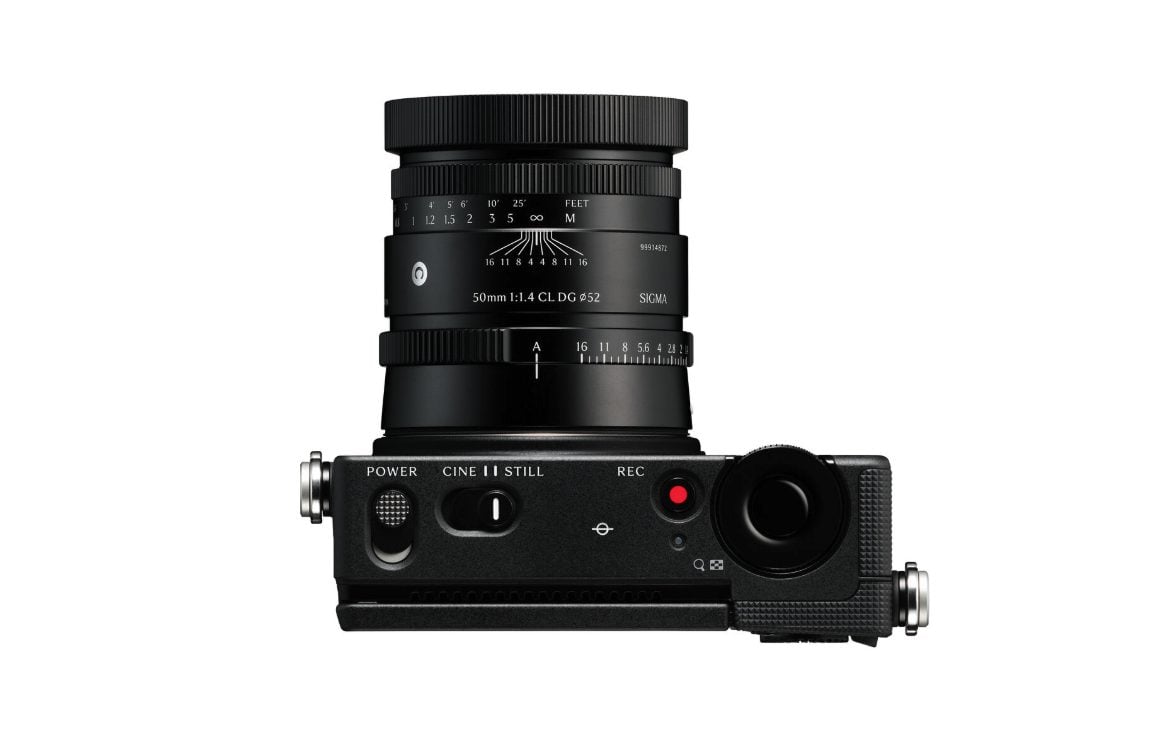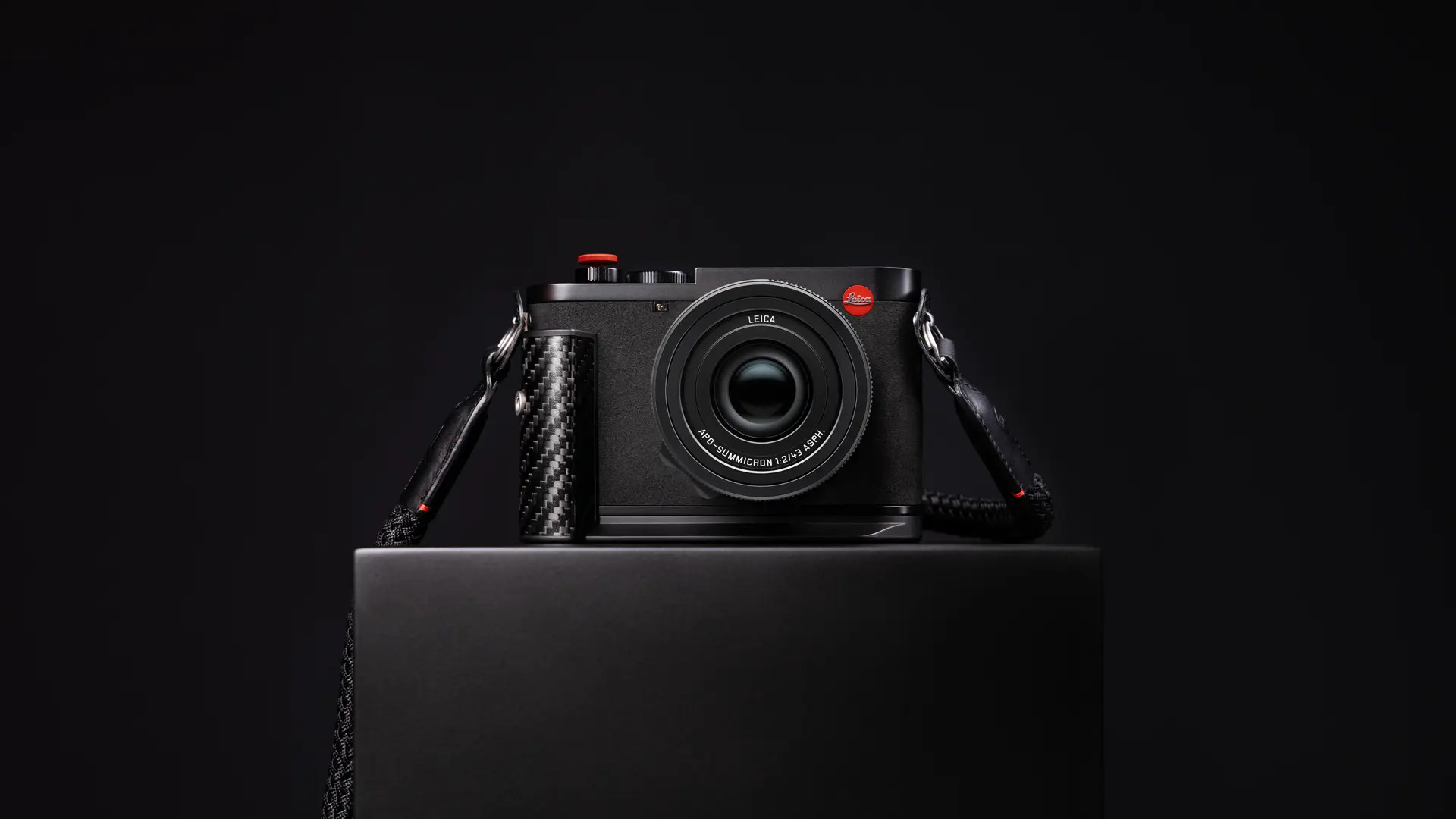




For more than a decade, Sigma’s thing has been all about sharpness. The Art line made its name on lenses that were so corrected and so clinical.
Then what is this?
“We deliberately left aberrations in.”
That’s Sigma CEO Kazuto Yamaki, talking about the company’s new 50mm F1.4 CL at the Tokyo launch this week, as reported by Japan’s DC Watch. The company that built its reputation on removing flaws just designed a lens with a few flaws…on purpose.
It launched alongside the FP2, the second generation of Sigma’s tiny full-frame camera. On paper they’re two very different products. One is a cinema rig that fits in a sling bag. The other is a small metal prime with a depth-of-field scale
Same story, though. Sigma is going all in on how your pictures feel.
Let’s start with the camera.
The FP2: Same Idea, New Engine
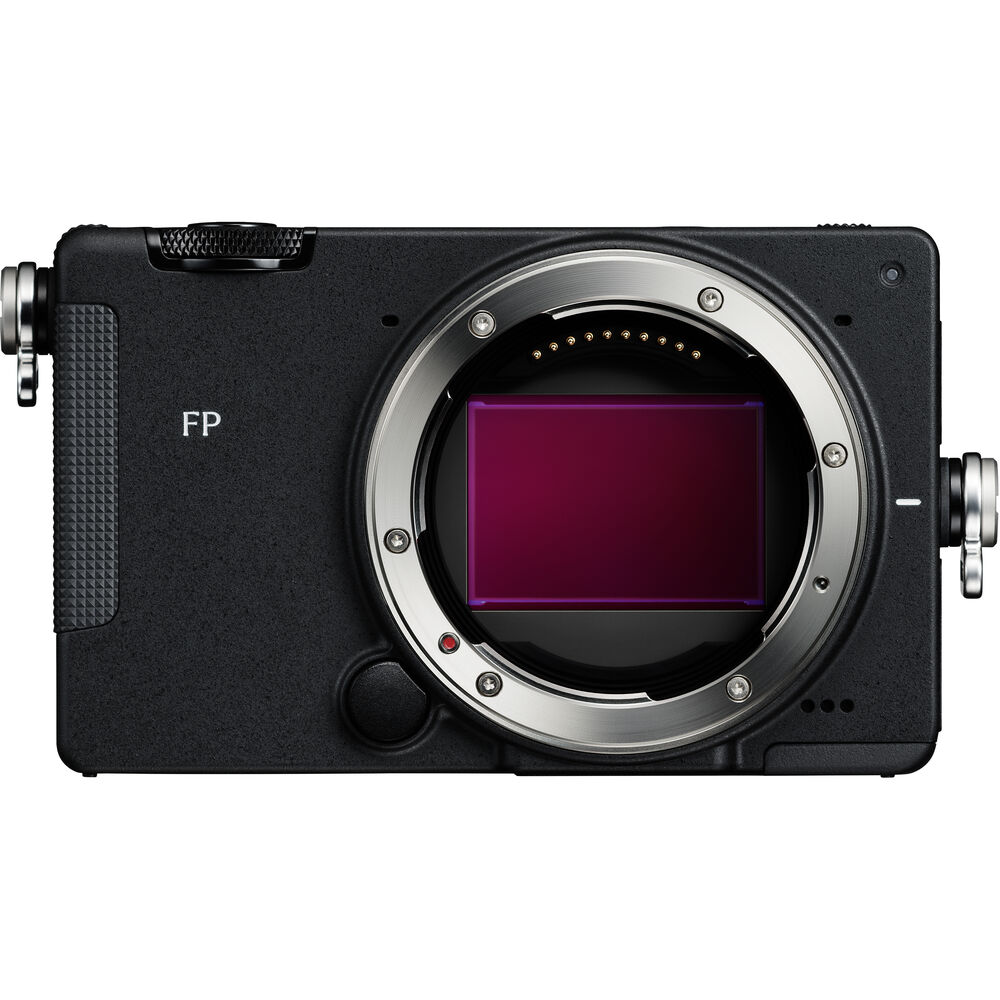
The original FP came out in 2019, and it was a strange, wonderful little brick. A full-frame sensor in a bare metal box, with flat sides, an electronic shutter, and the rear screen as your viewfinder.
Sigma called it the world’s smallest and lightest full-frame mirrorless camera, and a lot of people spent years trying to figure out who and what it was for.
Sigma included.
At the launch, Yamaki admitted that when people asked him who the FP was for, he “found it difficult to answer.” His best description was “bricolage,” the French idea of building something out of whatever’s on hand.
The FP2 keeps that idea and improves the engine.
The big change is the sensor. Some early coverage said the FP2 keeps the old one, but it’s new. It’s a 24.5-megapixel partially stacked sensor. Partially stacked means extra readout circuitry runs along the sensor’s edges, so it pulls data off much faster than the old one, without the cost of a fully stacked design.
It looks closely related to the sensors in Nikon’s Z6III and Panasonic’s S1II. Sigma hasn’t named a supplier.
Almost every other upgrade flows from that faster sensor.
- Autofocus moves to phase detection, with subject recognition for people, dogs, cats, and birds
- Burst shooting sits around 20fps, and the buffer jumps from 12 frames to about 180 raw files
- Flash sync climbs to 1/50 second, up from 1/30 on the fp
- Video goes up to 6K open gate, with ProRes RAW up to 6K 30p
That flash sync number is worth a second look. The FP2 still runs on an electronic shutter only, so flash sync tells you about how fast the sensor reads out. 1/50 is a real step up. Amateur Photographer points out it’s still several times slower than a mechanical shutter or a fully stacked sensor, so fast-moving subjects can still bend a little.
Sigma claims up to 14.1 stops of dynamic range in its 4K full-frame L-Log mode. That’s Sigma’s number, so I’d wait for independent testing. And most reports say ProRes RAW records to an external USB SSD, so plan on a drive if that’s the reason you’re buying.
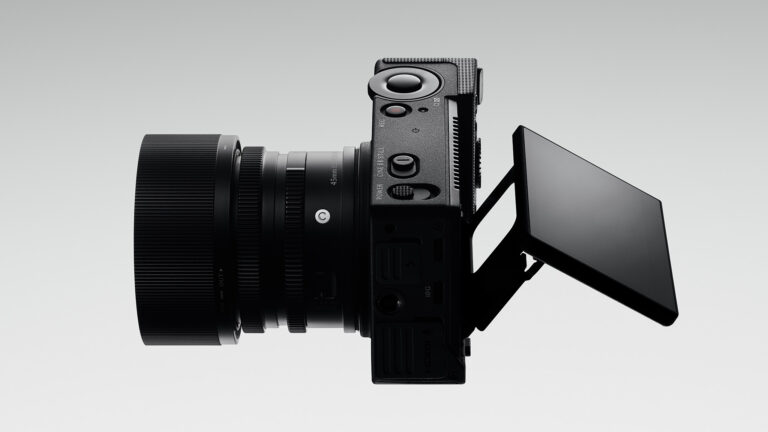
Smaller, A Little Heavier
Sigma still calls the FP2 the “world’s smallest” full-frame mirrorless camera. The word “lightest” is gone.
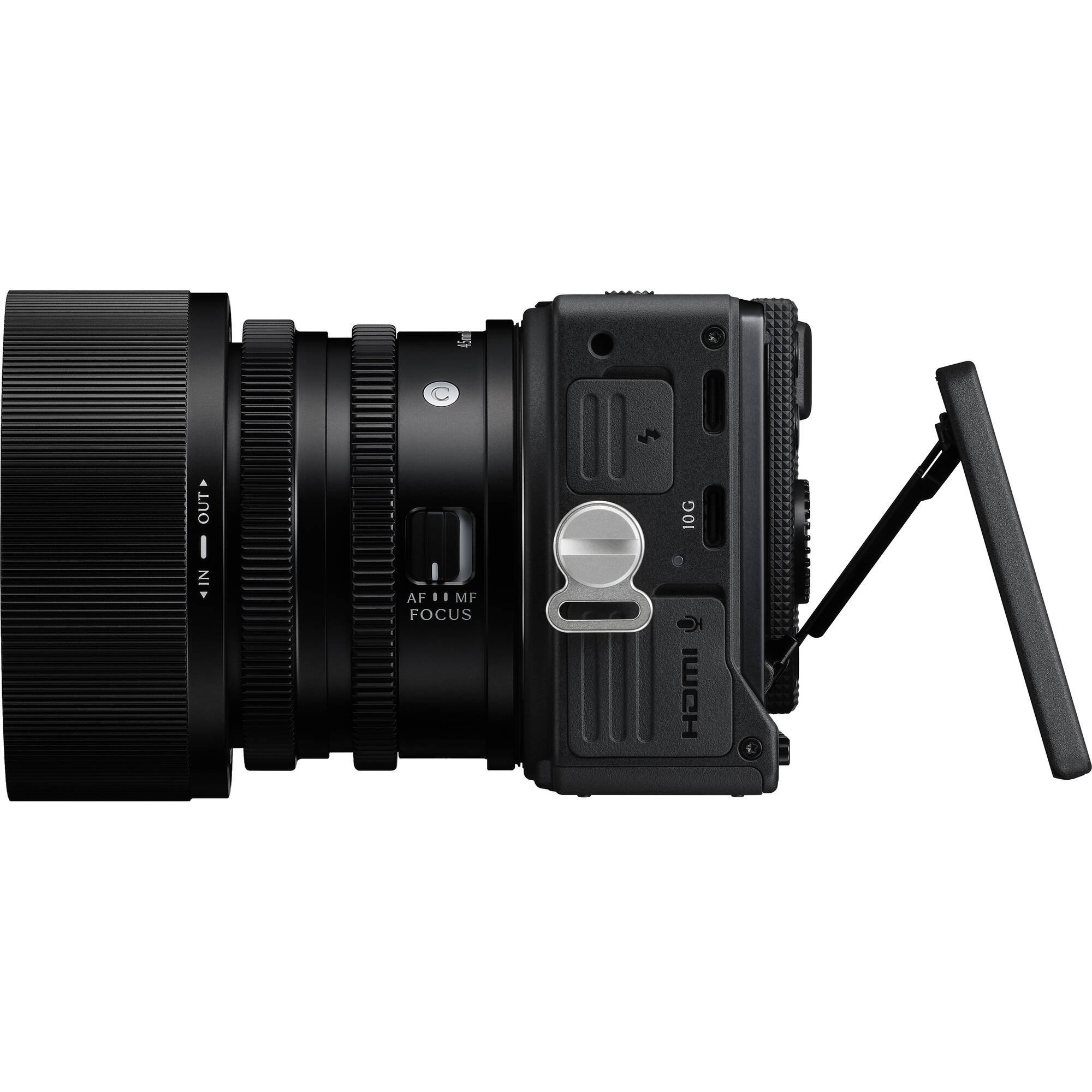
It’s 3.5mm slimmer than the Fp, but 6 grams heavier body-only and about 38 grams heavier with battery and card. Blame a bigger battery, cooling fins behind the new tilting screen, and the new sensor. The battery holds almost twice the energy, and Sigma rates it for 370 shots.
The screen tilts up 90 degrees and down 45. It stays rear-facing, so vloggers will want a workaround.
The viewfinder is still an add-on.
The EVF-21 gives you a 5.76-million-dot finder and takes the kit to $2,749.
Stabilization is electronic only, with a 1.25x crop. And “pocketable” is Sigma’s word. Digital Camera World paired it with a compact 40mm for its hands-on and still ended up carrying it in a sling bag.
Old Colors On A New Sensor
Of the FP2’s 13 color modes, two recreate Sigma’s old Foveon cameras. FOV Classic Blue is modeled on the deep blues of the 2002 SD9, and FOV Classic Yellow takes its cue from the SD14.
If you never shot Foveon, those sensors stacked three layers of silicon so every pixel captured full color, and the top layer gathered the blue light. It was known for its color. The cameras were also famously slow, and strictly stills.
Now you can put that look on 6K footage. Meanwhile, Sigma’s full-frame Foveon sensor is still a prototype. Yamaki told DPReview this spring it’s “too early to go to mass production.” So Sigma is shipping the look of a sensor it hasn’t finished yet.
You can tweak opacity, contrast, shadows, highlights, fade, and vignette. Custom LUT loading is still missing.
The 50mm F1.4 CL: Built Like They Used To Be
Now the lens, and this is the part that got me excited.
The 50mm F1.4 CL DG Contemporary is the first of a new lineage in Sigma’s I series. It’s all metal, with a magnetic metal cap, a distance scale, and a depth-of-field scale.
A depth-of-field scale is what makes zone focusing work. You set a range, say 2 to 5 meters, and everything in it is sharp, so you shoot the moment without waiting on autofocus. Street shooters have done it for decades, and this lens is built for it.
It’s also tiny for an f/1.4. On L-Mount, the CL is 54mm long and 375 grams. Sigma’s own 50mm F1.4 Art is 109.5mm and 670 grams. So it’s half the length and a little bit more than half the weight.
Why make it? Yamaki said people felt “resolution has become so high that the softness and richness of the film era can no longer be felt,” and that a lot of shooters chase that look with vintage glass. He wanted a lens that gives you “softness and smooth bokeh” right out of the box.
So the CL starts from a classic double-Gauss design, the same basic recipe behind most 50mm lenses from the film era. Sigma says it kept certain aberrations on purpose for “a gentle softness within the in-focus plane,” while still cleaning up ghosting and flare.
The whole optical unit moves to focus, the way old manual 50s did. It has a distinct quality to it.
With three aspherical elements on board, think modern lens with some personality, rather than a vintage clone. Autofocus is the trade.
In Yamaki’s words, “It isn’t the fastest AF suited to video, but it achieves practical AF.”
It’s a development announcement, so specs could still shift. Sigma says early spring 2027, in L-Mount and Sony E, with price to be announced. Silver is L-Mount only, and Sony shooters get black.
One more fun note. Yamaki said part of the motivation was “wanting to put a silver lens on a silver BF,” Sigma’s minimalist aluminum camera. Then he added, “I’m one of the people eagerly awaiting its release.”
A CEO who wants his own product. Nice.
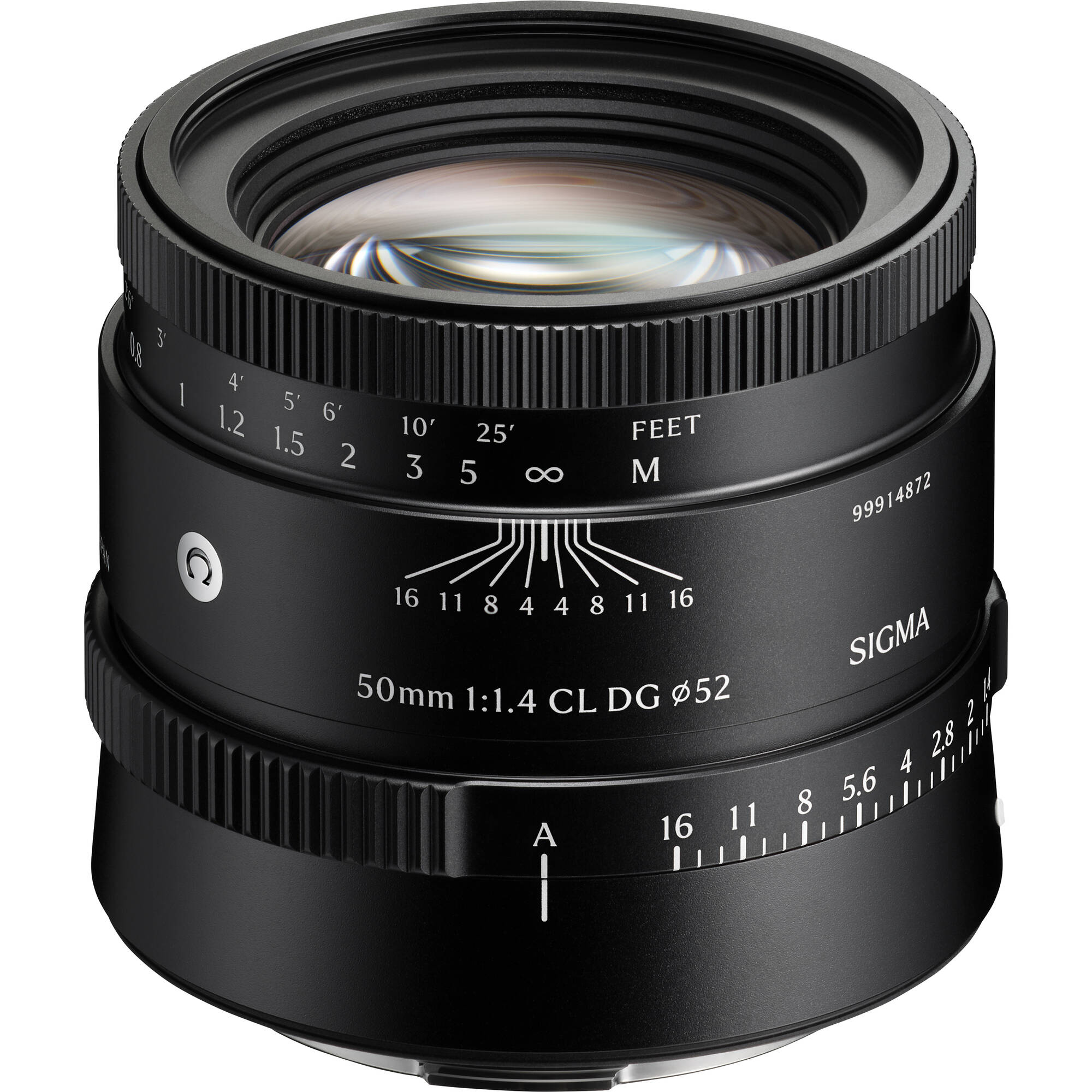
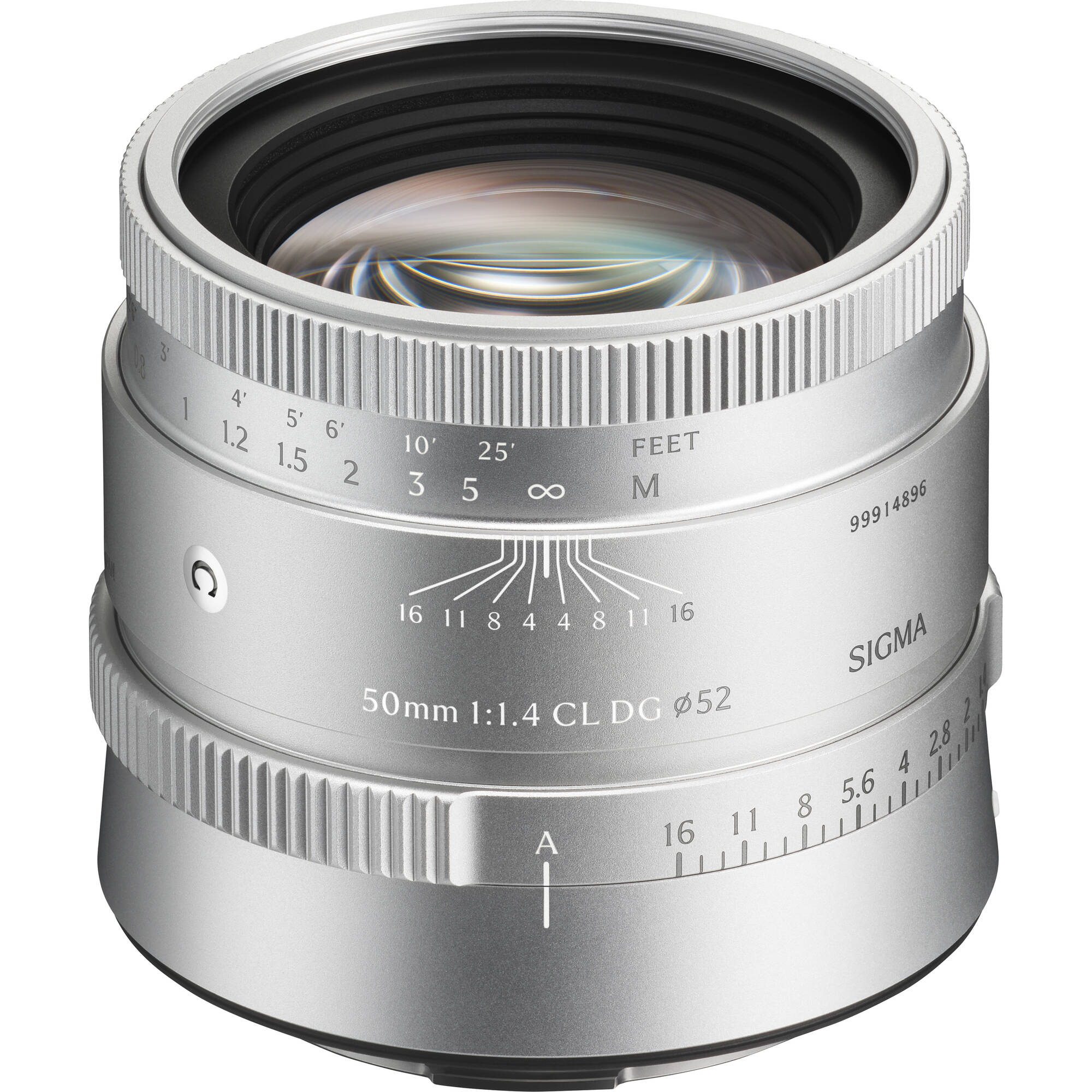
Image credit: Sigma
The Details
- Sigma FP2: $2,199 body-only, shipping November 11
- FP2 with EVF-21 viewfinder: $2,749
- FP2 with 50mm F2 DG Contemporary: $2,749
- 50mm F1.4 CL DG Contemporary: early spring 2027, L-Mount and Sony E, price TBA
What Sigma Is Telling Us
At CP+ this spring, Yamaki told DPReview “there is a demand if we offer something interesting, something unique.”
Sigma is certainly offering something interesting, something unique.
Join the discussion in the forum.
Sources
- Sigma Announces FP2 Camera, Sigma Press Center
- Sigma FP2 launch event report, DC Watch (Japanese)
- Sigma FP2 review, Amateur Photographer
- Sigma FP2 Review: The Brick with a Heart of Gold, PetaPixel
- Sigma FP2 hands-on review, Digital Camera World
- The world’s smallest full-frame mirrorless camera is back, Digital Camera World
- Sigma FP2 review, TechRadar
- Sigma FP2 Review: This Wasn’t Made for Photographers, The Phoblographer
- Sigma launches a new line of compact, vintage-style lenses, DPReview
- The Sigma 50mm f/1.4 CL DG Blends Vintage Aesthetics With Innovative Design, PetaPixel
- Why Sigma is less optimistic about the camera market, DPReview



Elevate Your Vision


Read this story and all the best stories on The Luminous Landscape
The author has made this story available to Luminous Landscape members only. Upgrade to get instant access to this story and other benefits available only to members.
Why choose us?
Luminous-Landscape is a membership site. Our website contains over 5300 articles on almost every topic, camera, lens and printer you can imagine. Our membership model is simple, just $2 a month ($24.00 USD a year). This $24 gains you access to a wealth of information including all our past and future video tutorials on such topics as Lightroom, Capture One, Printing, file management and dozens of interviews and travel videos.
- New Articles every few days
- All original content found nowhere else on the web
- No Pop Up Google Sense ads – Our advertisers are photo related
- Download/stream video to any device
- NEW videos monthly
- Top well-known photographer contributors
- Posts from industry leaders
- Speciality Photography Workshops
- Mobile device scalable
- Exclusive video interviews
- Special vendor offers for members
- Hands On Product reviews
- FREE – User Forum. One of the most read user forums on the internet
- Access to our community Buy and Sell pages; for members only.
You may also like