




The Camera That Gets You Hooked
What was the camera that got you hooked?
Maybe yours was a Pentax K1000 or a hand-me-down Olympus.
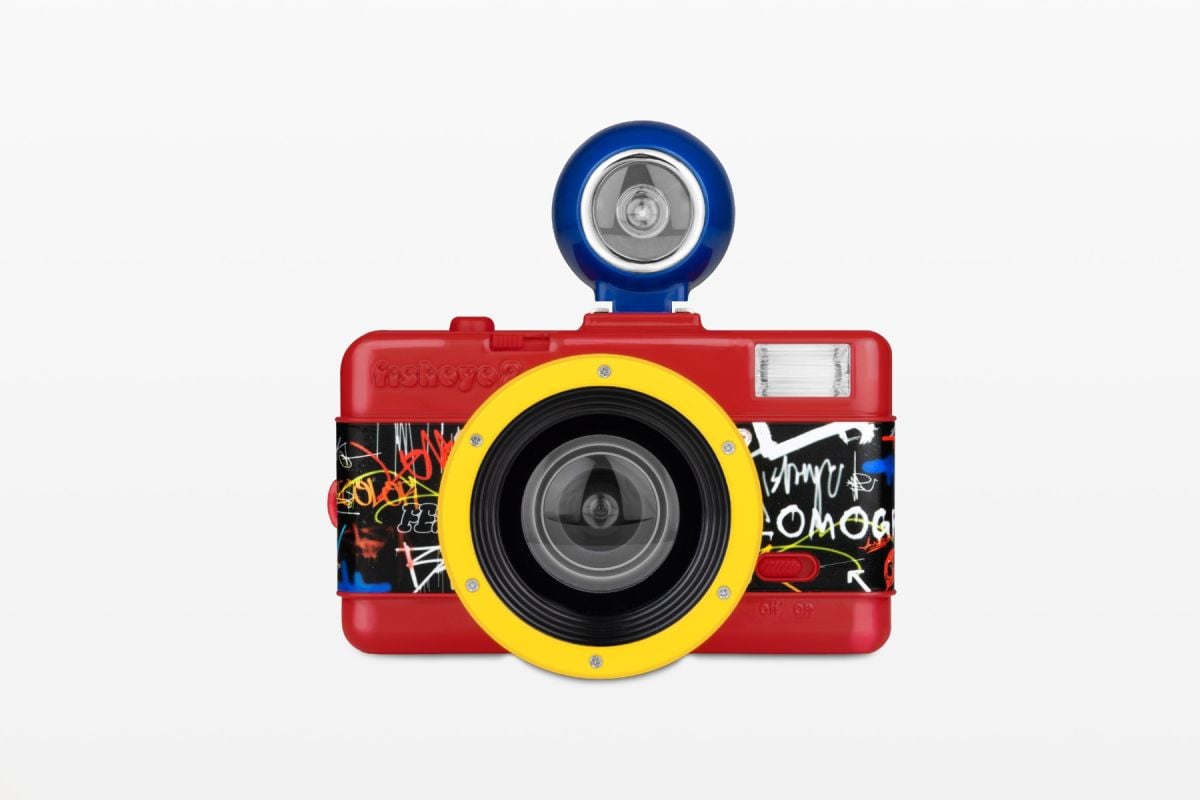
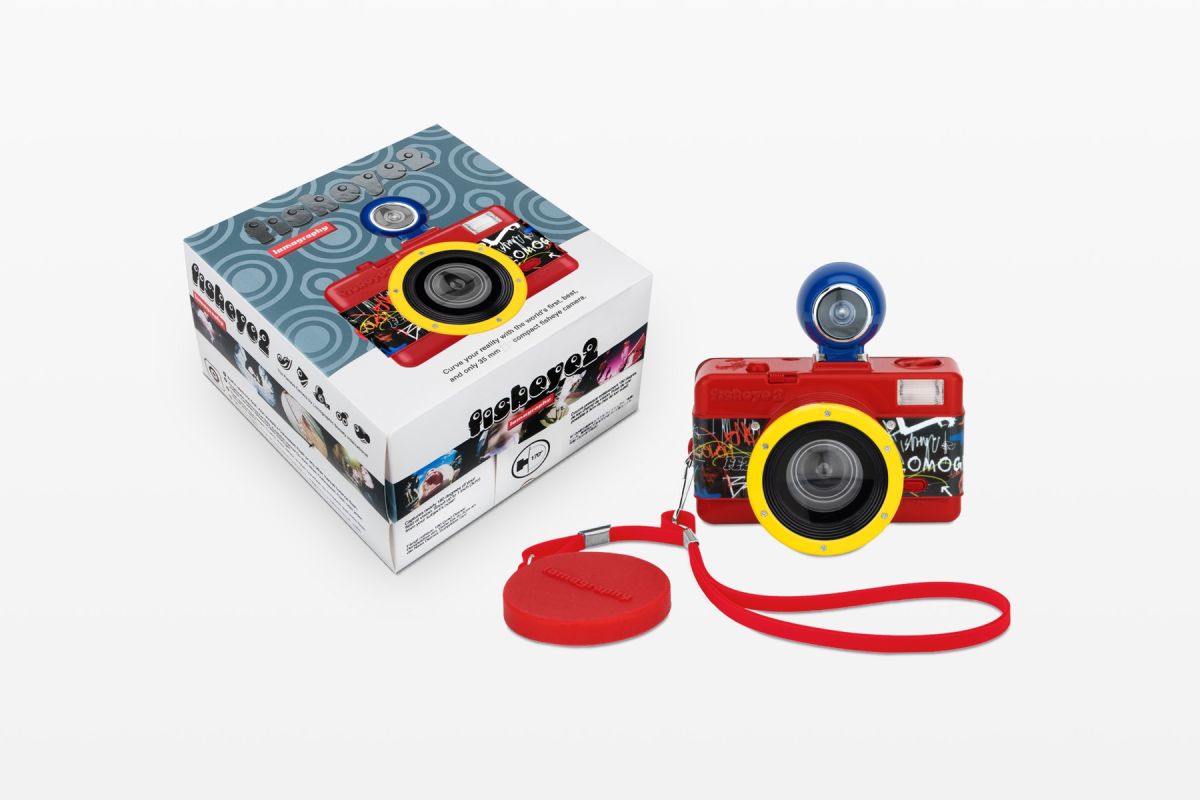
Lomography just released the Fisheye No. 2 Graffiti, a 35mm film camera built around a fixed 170-degree fisheye lens. This camera surely should get the “young-uns” hooked on film for $69.
The specs are super simple. Fixed f/8 aperture. A single 1/100-second shutter speed. A 10cm minimum focus distance. Bulb mode, multiple exposures, and a built-in flash to round it out.
Lomography calls the heavy vignetting and distortion “features, not flaws.”
That’s the whole pitch of shooting film in 2026. Give up control and let the camera surprise you.
This camera gives you a fun way to make weird pictures.
What’s New (and What Stays the Same)
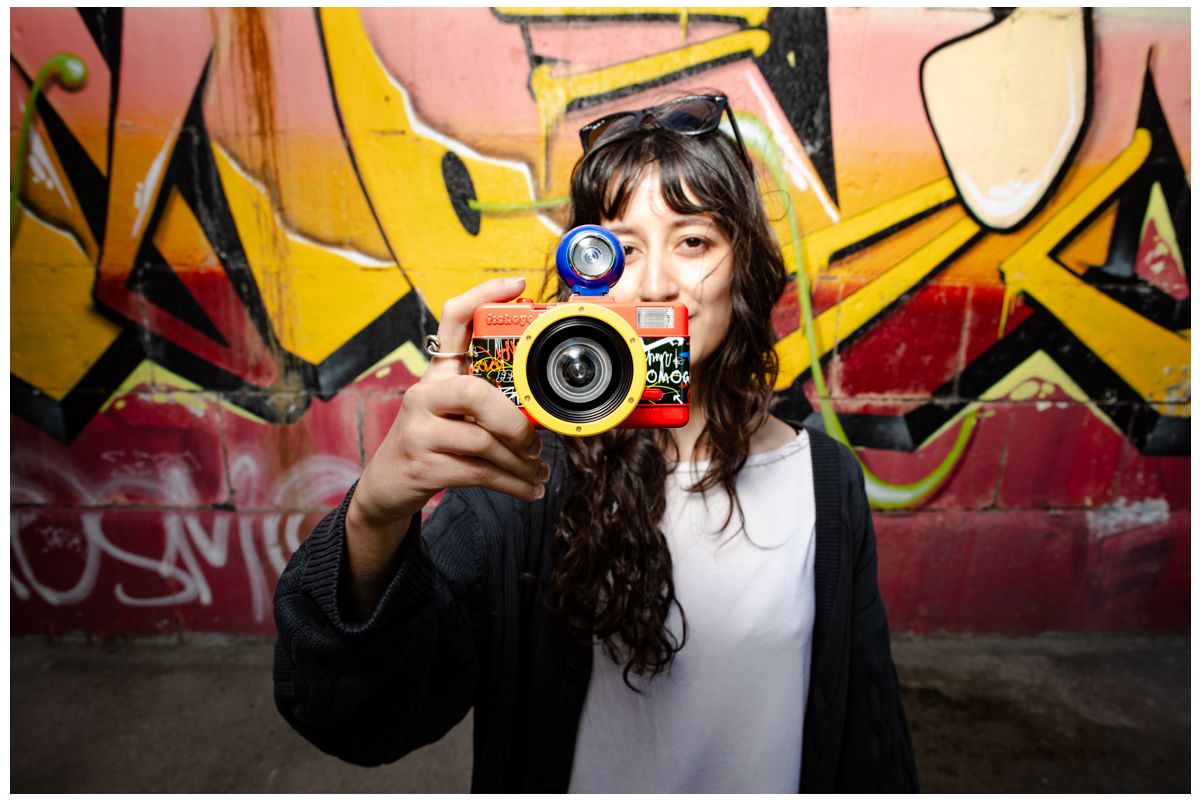
Lomography wrapped the standard Fisheye No. 2 in red, blue, and yellow graffiti graphics and aimed it at “rule-breakers and boundary pushers.”
The lens, shutter, flash, and inside all carry over from a camera that’s been on shelves since the 2000s.
It’s a proven toy camera wearing some style. The quieter black version still exists if you’d rather blend in, and it takes the same pictures.
The Specs
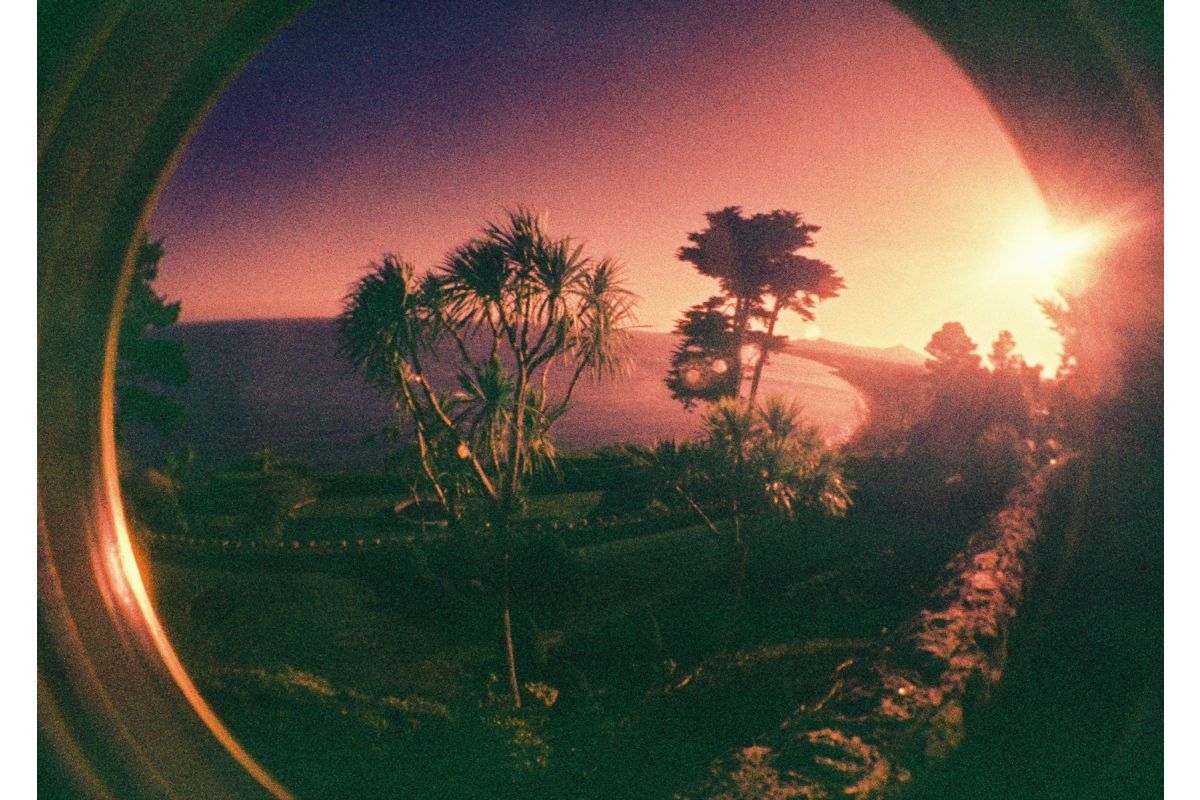
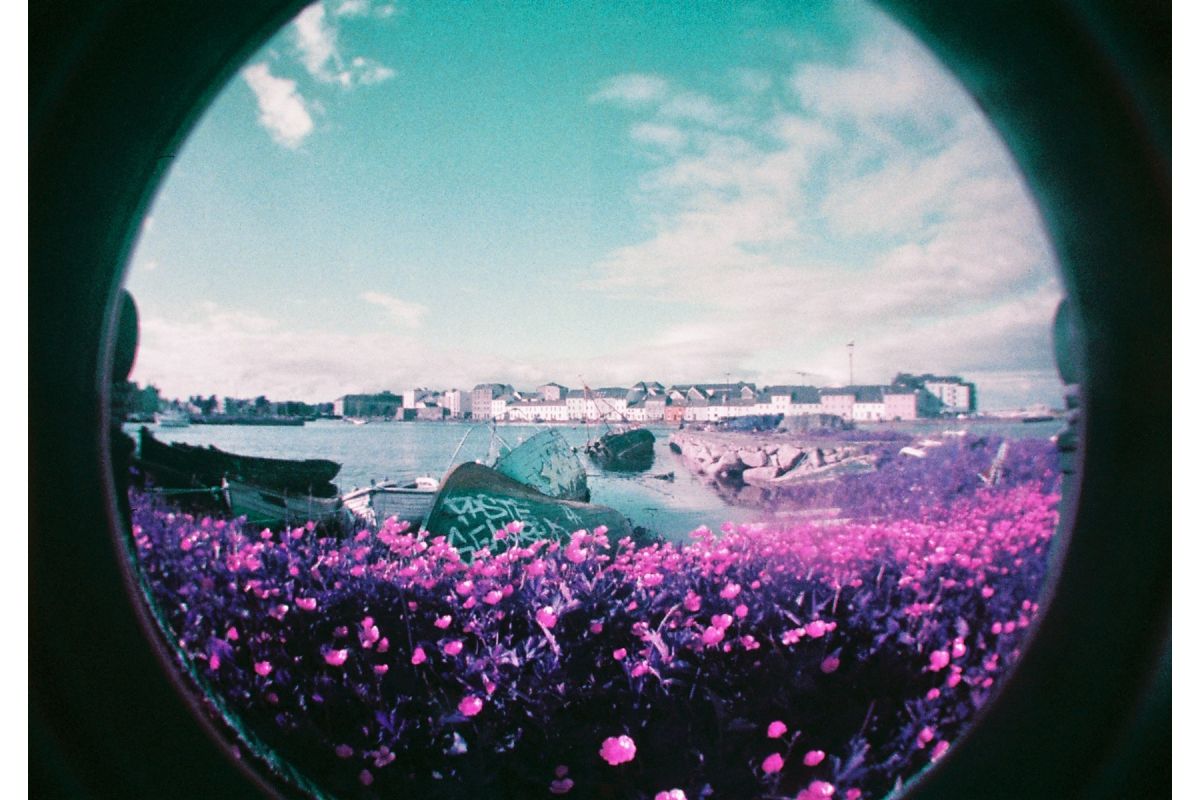
- 10mm fisheye lens, 170-degree angle of view. A fisheye is an ultra-wide lens that keeps its distortion instead of correcting it. At 170 degrees, you’re seeing almost a full hemisphere, rendered as a circle floating in black on the negative.
- Fixed f/8 aperture. At 10mm, f/8 gives you enormous depth of field, so nearly everything from arm’s length to the horizon lands in acceptable focus. That’s why the camera can skip a focus ring entirely.
- Single 1/100 second shutter. f/8 at 1/100 is a correct exposure for ISO 100 to 200 film on a bright overcast day. In full sun you’ll run two to three stops over, which color negative film handles with ease.
- 10cm minimum focus. You can put the lens four inches from a face, a sneaker, or a skateboard truck and still get it sharp enough to read.
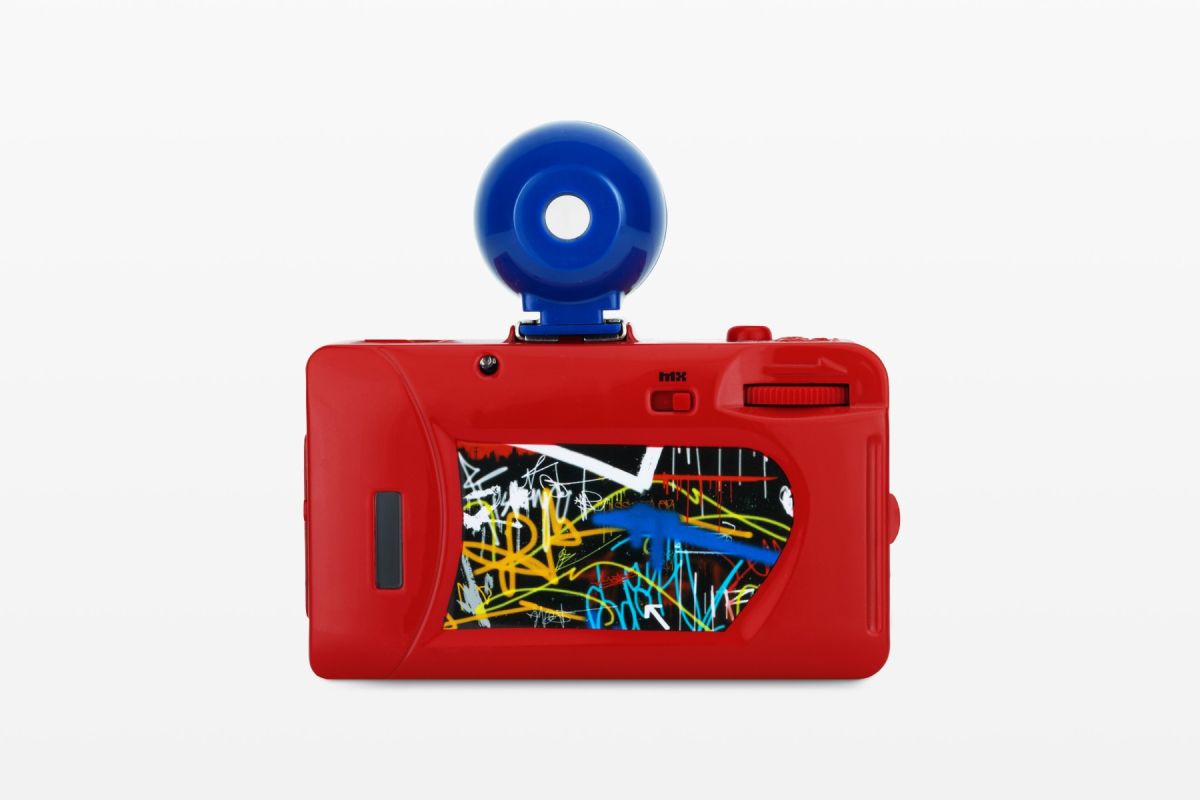
- Bulb mode. The shutter stays open as long as you hold the button, which opens the door to light trails and night experiments. Brace it on a wall or a table, since the body lacks a tripod socket.
- Multiple exposure switch. Stack as many shots on one frame as you dare.
- Built-in flash. Direct, hard, and perfect for parties, dark rooms, and fill in harsh shade.
- Removable “bug-eye” viewfinder. It clips onto the top plate and shows a ROUGH idea of your frame.
Why It’s So Much Fun
It turns your block into a tiny planet
A fisheye does more than fit extra stuff in the frame. Straight lines bow. Power lines swoop. The foreground swells and the edges stretch.
The payoff when the negatives come back. Beginners see it right away, and that instant “whoa” is what keeps people loading the next roll.
It rewards getting closer than feels polite
With 10cm close focus, this camera wants you in the middle of the action. Longtime owners describe it as a one-handed, in-your-face camera, and their best advice boils down to this: when you think you’re close enough, get closer.
That changes how you shoot. You stop observing from across the room and start participating.
The flaws become the signature
Heavy vignetting, soft corners, grain, flare – oh my! On a $2,000 lens, those are problems – here it’s for a unique look.
The surprise comes later
No rear screen. No instant review. Add a multiple exposure and you have no idea what’s on that frame until the lab sends you the scans.
That delay is part of the fun.
How to Shoot It
A camera with one setting still rewards a little know-how. Here’s what we’d tell a friend before their first roll.
- Pick your film for the light. ISO 200 color negative, like Kodak Gold 200, handles sunny days with plenty of latitude. Go to ISO 400, like Portra 400 or Ilford HP5 Plus, for overcast days, open shade, and flash indoors.
- Take the lens cap off. The viewfinder sits apart from the lens, so it can’t warn you. Reviewers mention a loose cap, and a forgotten one means a full roll of black circles.
- Put the horizon through the center. A horizon line that crosses the middle of the frame stays straight. Tilt the camera up or down and it curves. Use that on purpose.
- Watch your feet and fingers. At 170 degrees, the lens sees your shoes when you point it slightly down and your thumb when you grip it wrong.
- Stack exposures dark over light. For multiple exposures, layer a dark subject over a bright background, or a silhouette over texture. Two bright scenes turn to mush.
- Brace for Bulb. Set it on a railing or car roof for light trails and night traffic. Count your seconds and bracket.
- Tell the lab to scan the full frame. You want the whole circle and its black surround. An auto-crop will slice off the best part.
Who Will Love It
- First-time film shooters. Load a roll, set the shutter to normal, decide on flash, and go. The learning curve is about as shallow as film gets, and the results look far more distinctive than a generic reusable point-and-shoot.
- Skate, BMX, and street creators. Boards, bikes, sneakers, and murals were made for this lens. It feels like a music video. Get low and close and the 170-degree view keeps the rider and the whole spot in one frame.
- Party and nightlife shooters. Built-in flash, wide coverage, and fixed focus make tight rooms easy. Direct flash plus grain plus distortion reads like a tour diary or a punk magazine.
- Musicians, stylists, and content creators. The camera doubles as a prop, and multiple exposures make great raw material for album art and layered portraits. Think of it as a texture camera riding alongside your main kit.
- Families and travelers. It’s light and low-stakes enough to toss in a bag. Kids and relatives also loosen up around a goofy toy camera in ways they rarely do in front of a big pro body.
- Experienced photographers in a rut. Sometimes a one-trick camera is exactly the jolt you need. One lens, one look, and suddenly you’re seeing your own street again.
Who Should Skip It
- Photographers who want consistency. Framing is approximate and exposure control is minimal. Unpredictability is baked in.
- Sharpness hunters. Reviewers see softness even in bright light. You’re buying character here.
- Low-light shooters who hate flash. f/8 at 1/100 needs good light, and Bulb mode gets tricky without a tripod socket.
- Minimalists. The Graffiti finish is loud by design. Grab the standard black model for the same pictures in a quieter body.
- Anyone after an everyday camera. The fisheye look can get repetitive.
- High-volume shooters on a budget. The body is the entry fee. Every roll still needs buying, developing, and scanning.
The Value Argument
At $69, this is a fraction of what an interchangeable-lens fisheye setup costs. It still costs real money, though.
And if you only want wide pictures, your phone does that for free. So what are you buying?
A whole experience. A camera people notice across the room. Controls that are simple. The exciting wait from the lab. And a stack of circular negatives that look like nothing else you’ve done. For the right person, that’s a bargain.
A For Fun Camera
Load a roll of Gold. Walk your block. Get closer than feels polite. Then wait for the scans and see what the world looks like. We’d love to see what you make with it.
Lomography Fisheye No. 2 at B&H – Graffiti Edition Coming Soon!
Sources
- DPReview: Lomography’s Fisheye No. 2 Graffiti Is a Budget Gateway to Analog Fisheye
- Kosmo Foto: Graffiti edition announcement
- PetaPixel: Lomography’s New Fisheye No. 2 Film Camera Has a Punk Attitude
- Kosmo Foto: Fisheye No. 2 review
- 35mmc: Fisheye No. 2 review
- TechRadar: Lomography Fisheye No. 2 review
- Wired: The World Through a Fisheye Lens
- Analogue Wonderland: Gen Z and Film Photography
Join the discussion in the forum.


Elevate Your Vision


You may also like