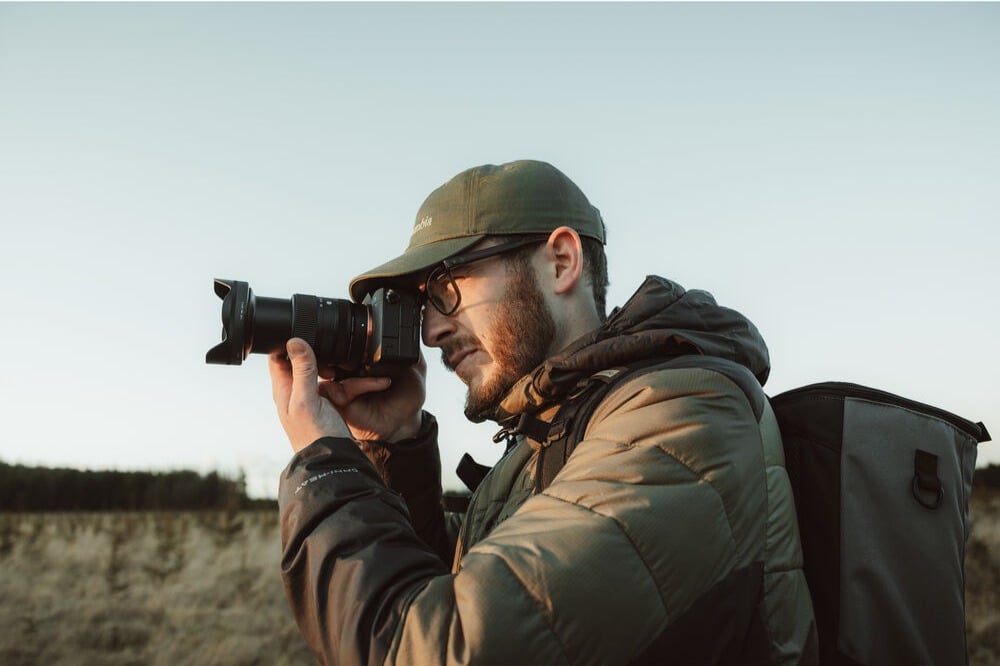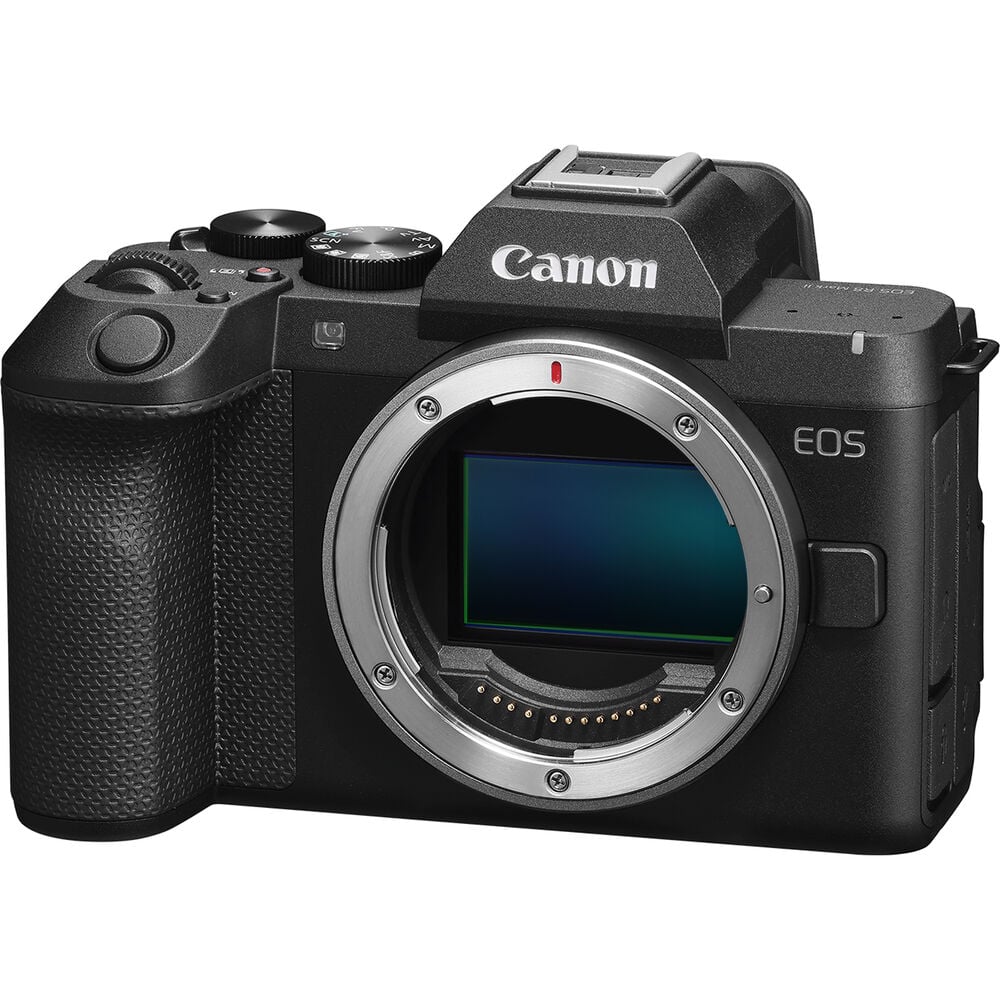



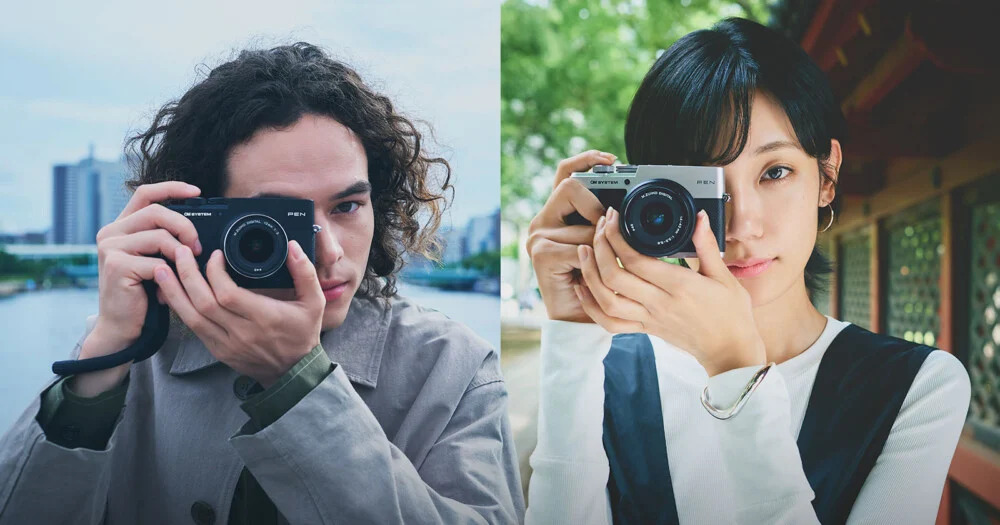


Here it is. The fun-for-everyone camera.
The new OM SYSTEM PEN arrived on September 9, 2026 and ships in late October at Nine-ninety-nine for the body.
It is as simple as you want it to be. Press the button, get a good picture. It is as complex as you want it to be. Dig in and you find a menu toolbox deep enough to keep a thirty-year veteran busy for a while. It’s smart and compact.
We’ve been waiting for this one for a long time. The PEN name carries sixty-seven years of history, and the last top-tier digital PEN arrived five years ago. Lots of rumors fueled by desire. And now it’s here – at nine-ninety-nine!
Here’s our take up front. The PEN is a joy machine. It’s small, it’s beautiful, and it’s stuffed with clever tools, and it costs less than most of the cameras it competes against.
The pictures look good. You look good taking them. And if someone photographed you photographing with it, that picture would also look great too.
It does have limits, but how would we look while taking pictures with it?
The Short Version
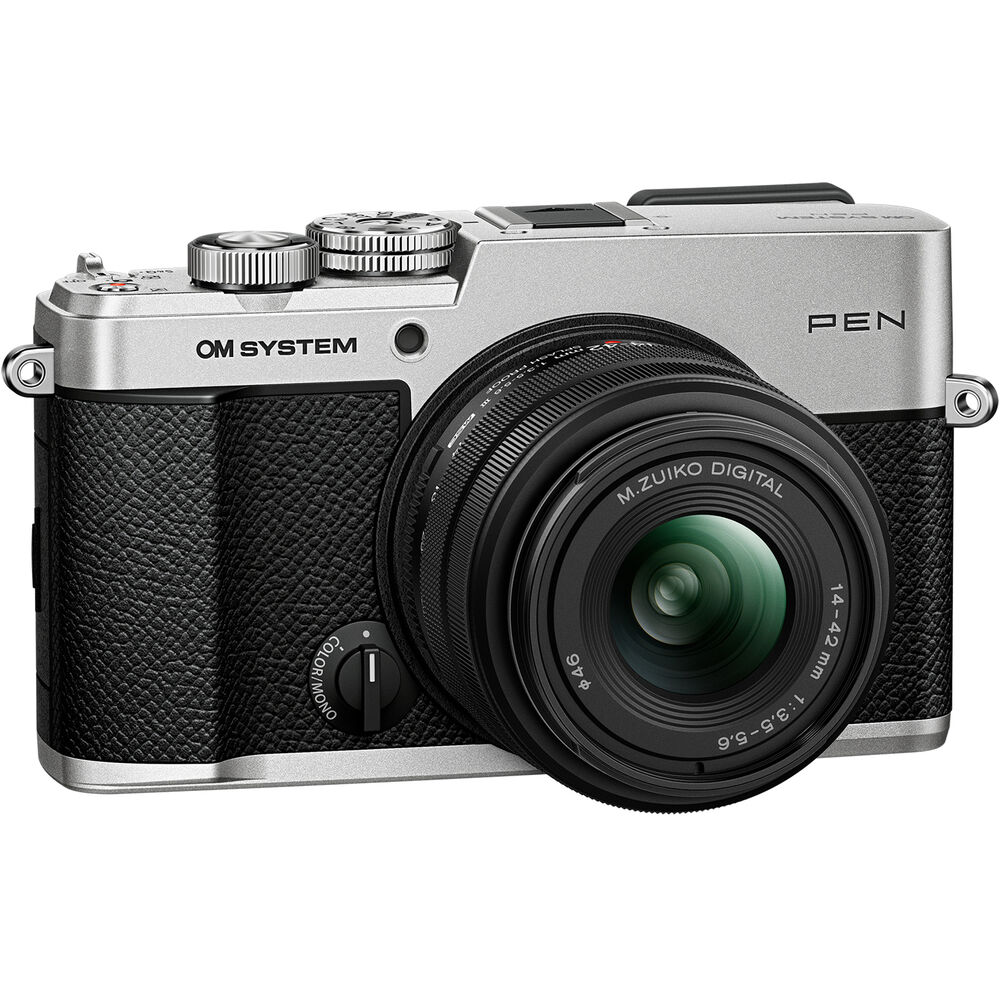
What it is: A compact, rangefinder-styled Micro Four Thirds camera with a built-in electronic viewfinder, five-axis stabilization, weather sealing, phase-detection autofocus, and the deepest set of in-camera computational tools you can buy at this price point at nine-ninety-nine
Who should buy it: Travel photographers, street photographers, family documentarians, close-up shooters, night shooters, and anyone building the smallest complete kit that still feels like a real camera at nine-ninety-nine.
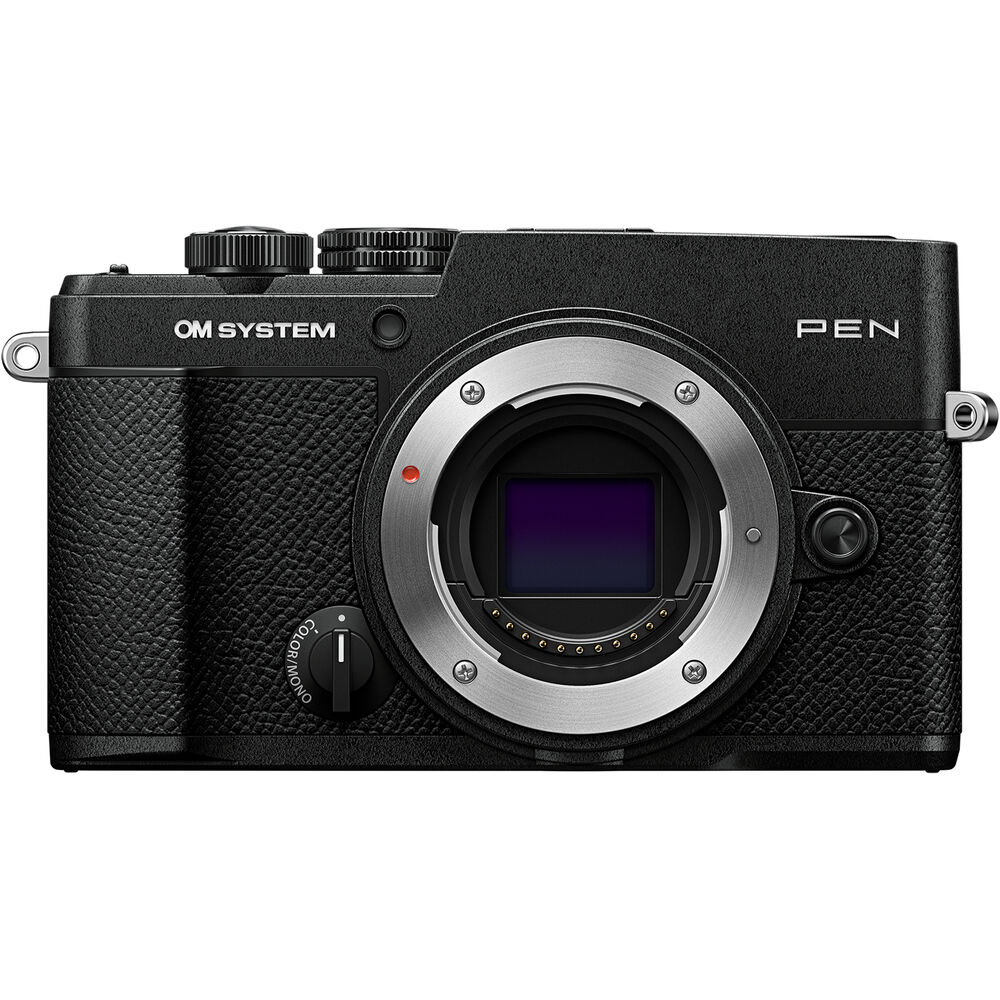
Key Specifications
| Item | OM SYSTEM PEN |
|---|---|
| Format | Micro Four Thirds interchangeable lens |
| Sensor | 20.37 MP Live MOS, 17.3 x 13 mm |
| Processor | TruePic IX |
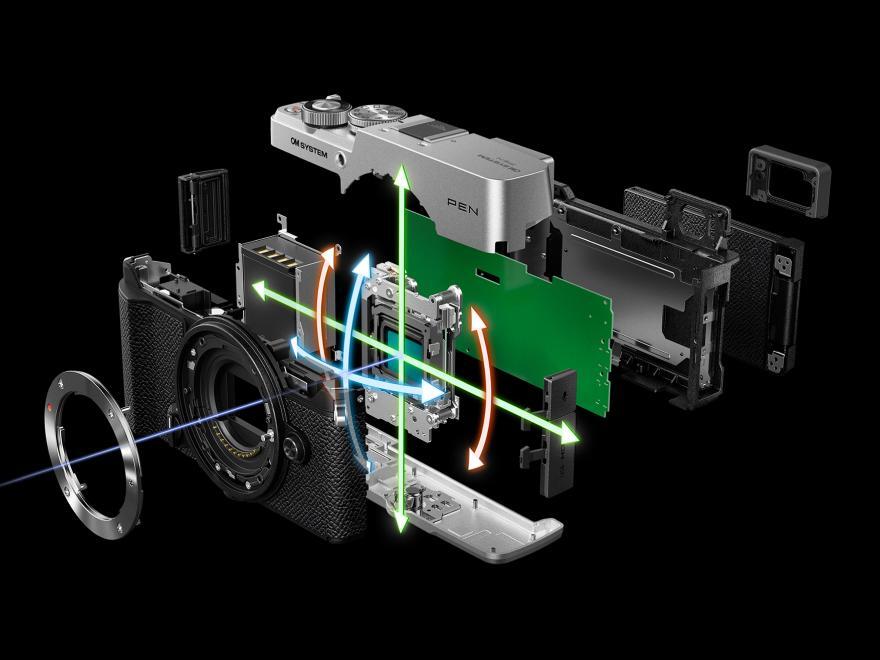
| Stabilization | Five-axis IBIS, 5.5 stops center, 4.5 stops edges |
| Autofocus | 121 cross-type phase-detection points plus contrast detection |
| Subject recognition | People, cats, dogs (stills) |
| Viewfinder | 2.36M-dot OLED, 0.62x equivalent magnification |
| Screen | 3-inch, 1.04M-dot fully articulating touchscreen |
| Burst | Up to 30 fps with focus and exposure locked |
| Video | C4K 24p, UHD 4K to 30p, 8-bit, Full HD to 120p S&Q |
| Storage | One UHS-I SD slot |
| Ports | USB-C (USB 2.0 speed), micro HDMI, 3.5 mm mic |
| Battery | BLS-7, 1,285 mAh, 410 shots CIPA |
| Weather rating | Dust resistant, IPX1 splash with a sealed lens |
| Size and weight | 126 x 75 x 43 mm, 393 g with battery and card |
| Price | $999.99 body, $1,099.99 one-lens kit, $1,299.99 two-lens kit |
| Availability | Late October 2026, black or silver |
What OM System Added
The VIEWFINDER came back
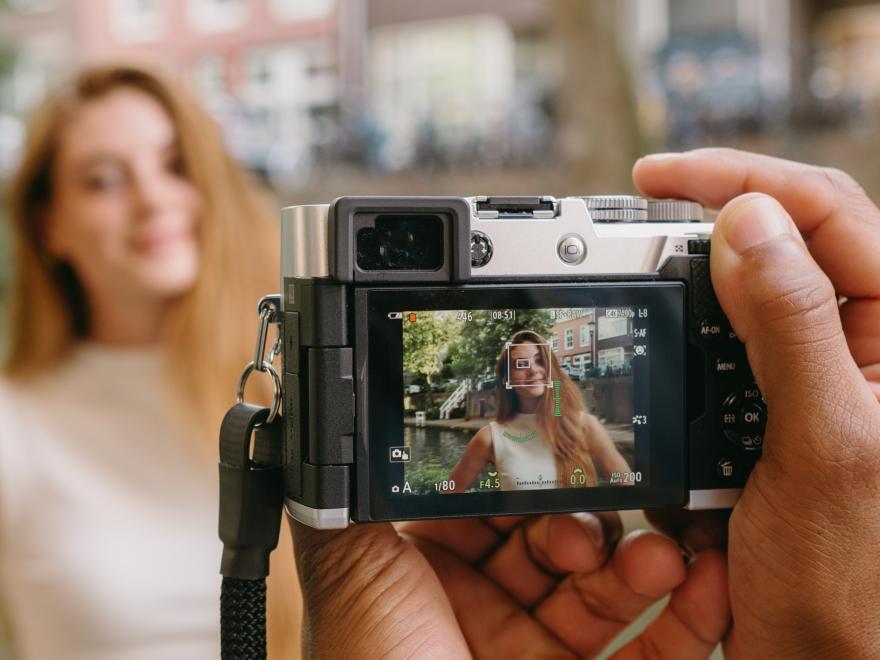
This is good news. The E-P7 asked you to compose on the rear screen or buy an accessory finder. The new PEN builds a 2.36-million-dot OLED viewfinder into the corner of the body at 0.62x equivalent magnification. Only the 2016 PEN-F offered that in the digital PEN line before now.
Here’s the fun part – when you bring the camera up to your face – people know you’re a real photographer.
Weather sealing arrives in the PEN line
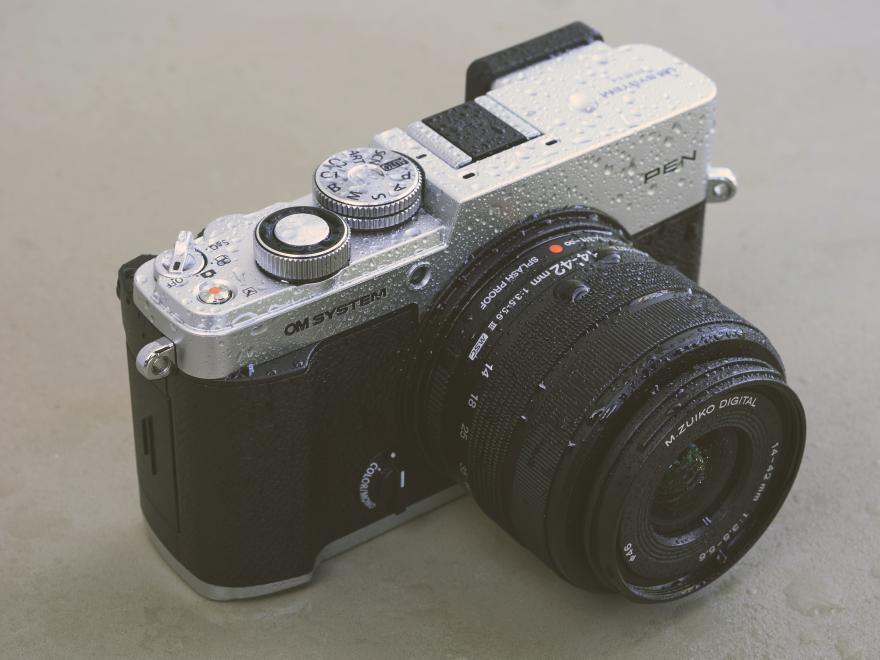
The PEN carries a published IPX1 splash rating and dust-resistant construction, a first for the series. IPX1 covers vertically falling water when you mount a sealed lens.
Set your expectations though. IPX1 sits below the IP53 rating on the OM-5 Mark II and the OM-3. It’s rain insurance for a drizzly walkabout in Lisbon or an afternoon at the coast with spray in the air. Photographers heading into a storm on a ridgeline should reach for the OM-5 Mark II.
Still, a published IPX1 rating at this nine-ninety-nine price point deserves applause.
Phase detection replaces the old system
The PEN uses 121 cross-type on-sensor phase-detection points working alongside contrast detection. Compared to the contrast-only systems in the E-P7 and the original PEN-F, this is an improvement. Eye detection covers people. Subject recognition adds cats and dogs. Starry Sky AF arrives for night skies, which is awesome.
Single-shot focus works well. Controlled continuous focus handles a walking subject. There are some limitations that we’ll get into.
Computational photography gets its own button
Press and hold the front CP button, turn a dial, and the PEN opens the toolbox:
- Handheld High Res Shot builds a 25 or 50-megapixel file from a short burst
- Tripod High Res Shot delivers the highest-quality composite for static scenes
- Live ND simulates ND2 through ND16 for silky water and motion blur
- Focus Stacking shoots a focus bracket and combines it in camera
- HDR and Multiple Exposure round out the set
- Live Composite builds long exposures while protecting the parts of the frame that stay unchanged
- Pro Capture saves up to 12 frames from before you fully press the shutter, at up to 30 frames per second
These modes give OM System’s a clear advantage. So many creative tools! It’s fun,simple and smart.

Color moves to the front of the camera
The front Profile Control switch opens four color profiles and four monochrome profiles. Color adjustment covers 12 hues across 11 saturation levels. Monochrome gives you color filters, grain, tone curves, shading, and highlight and shadow response.
OI.Share version 1.5 adds a Profile Library. Point it at an image on your phone, and the app reads compatible settings and writes a profile back into the camera. You can register looks across up to ten OM System bodies. Scary smart.
In the viewfinder – you see the look before you press the shutter. S.O.O.C. Baby.
The RAW file waits alongside the JPEG in case you change your mind.
A new kit lens worth having
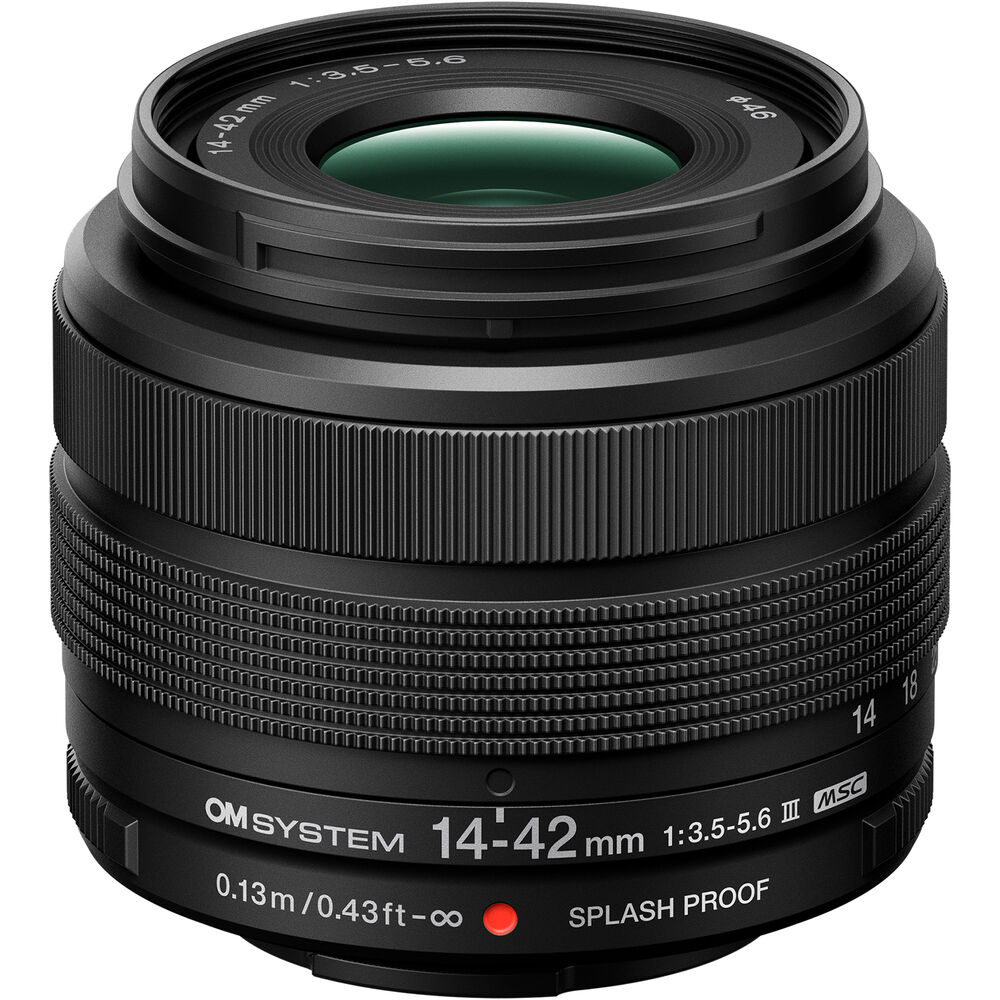
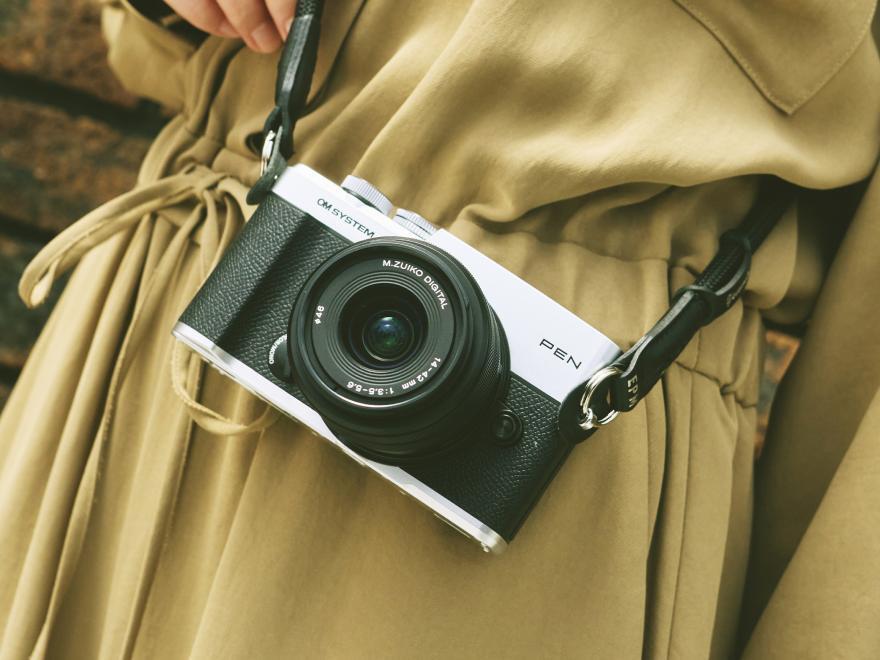
The M.Zuiko Digital 14-42mm F3.5-5.6 III covers a 28-84mm equivalent range. It adds IPX1 protection, dust resistance, focus-stacking support, a retracting barrel, and 0.53x equivalent maximum magnification for close-up work. It sells separately for $349.99, which makes the $100 kit premium a good move for anyone starting fresh.
Why This Camera Is Going to Be Fun
It stays small after you add lenses
Here is where Micro Four Thirds still wins, and it is a bigger deal than most give credit for.
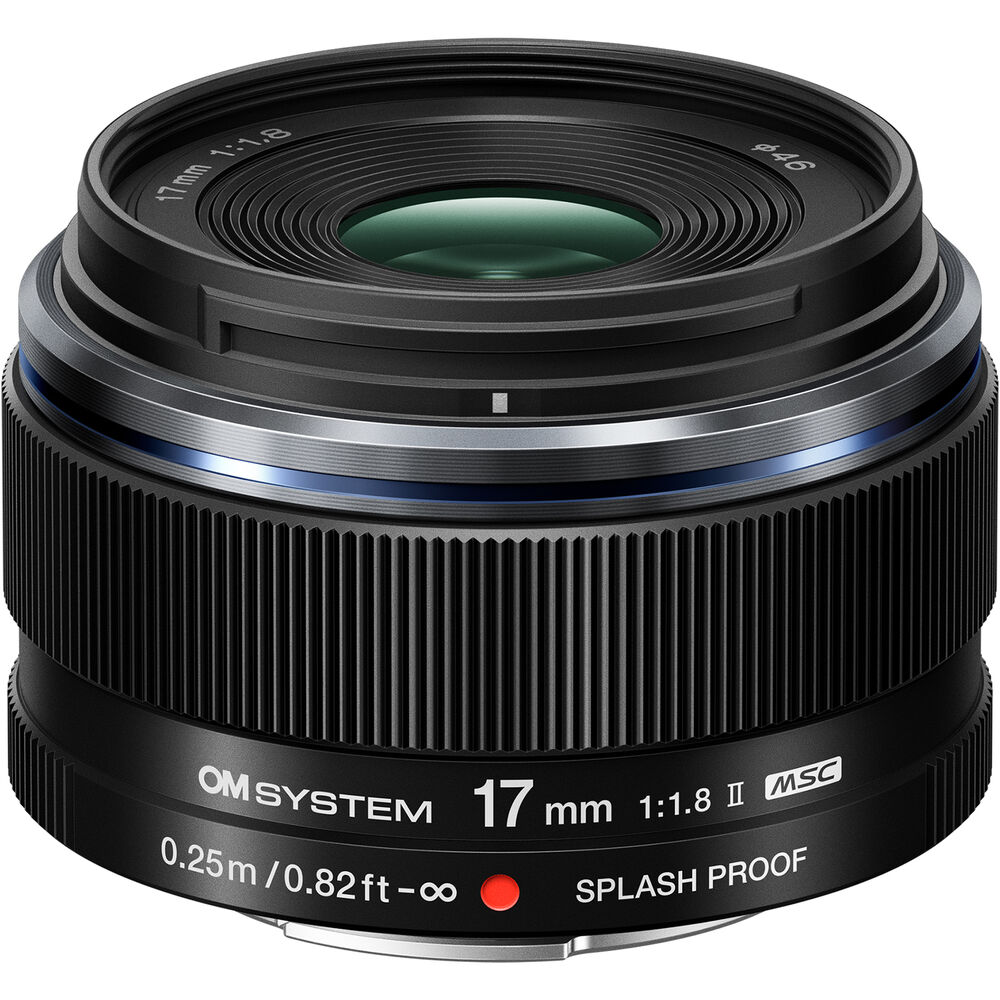
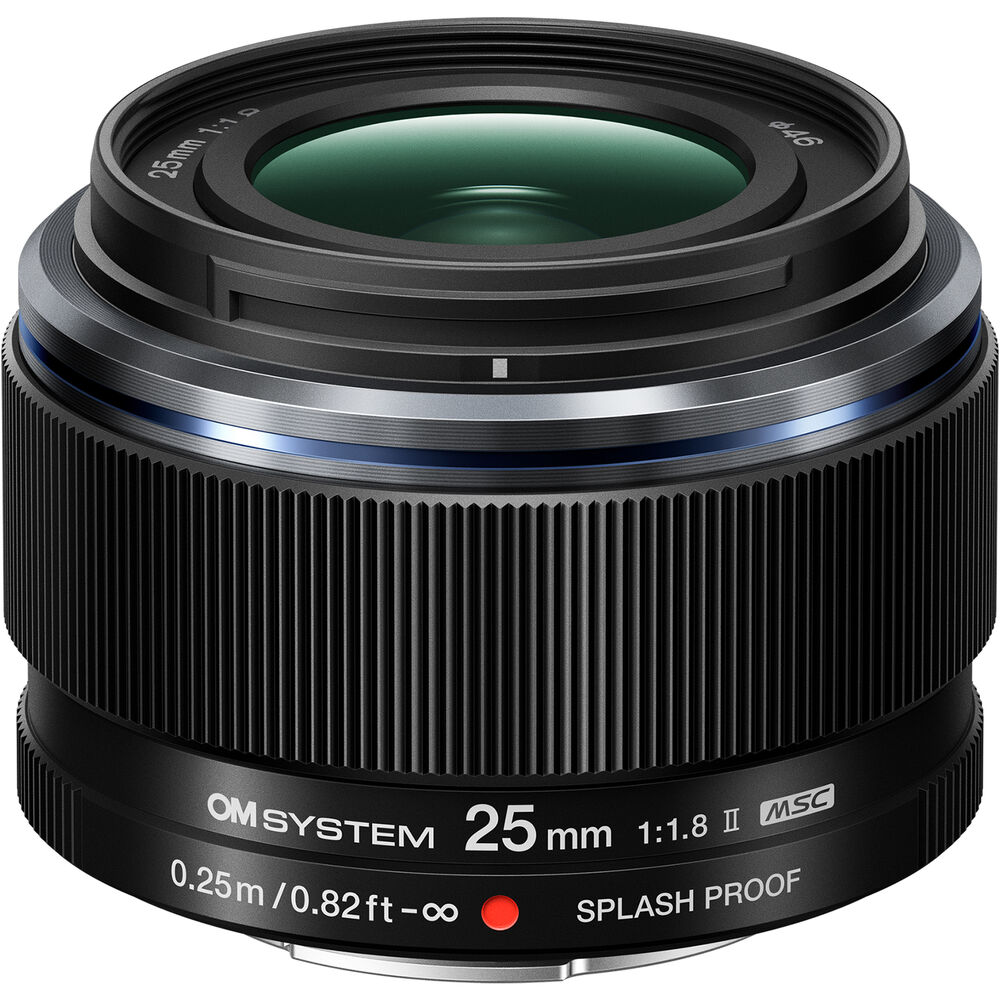
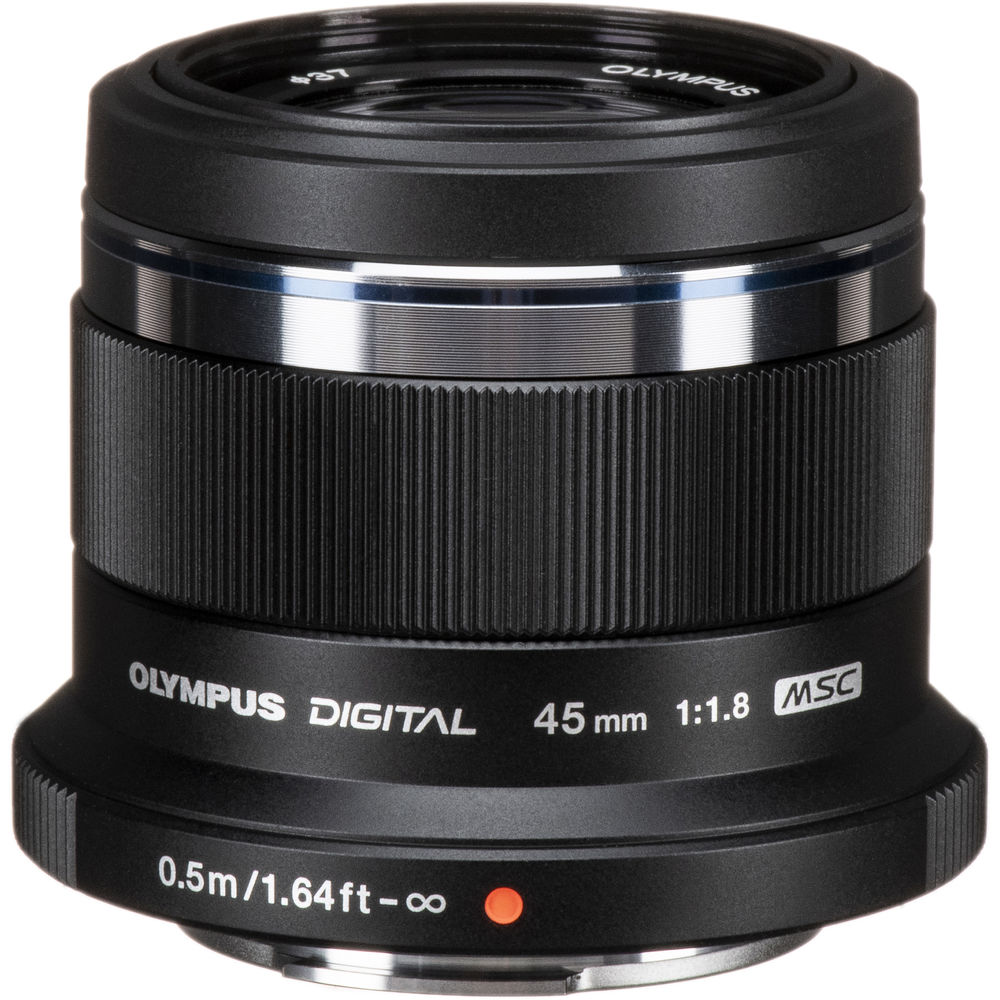
A compact body solves half the problem. The other half arrives when you attach glass. Mount the M.Zuiko 17mm F1.8 II and you have a 34mm-equivalent walk-around package that disappears into a jacket pocket. Add the 25mm F1.8 II and the 45mm F1.8, and your three-prime kit still weighs less than many APS-C bodies with a single fast zoom.
That’s the whole pitch. You carry it because you can.
Steady Stabilization
The 5.5-stop rating applies to every lens you mount, including old manual glass on an adapter. Early testing has produced sharp frames at 1/6 second with the kit zoom at 42mm.
You get to look good doing it
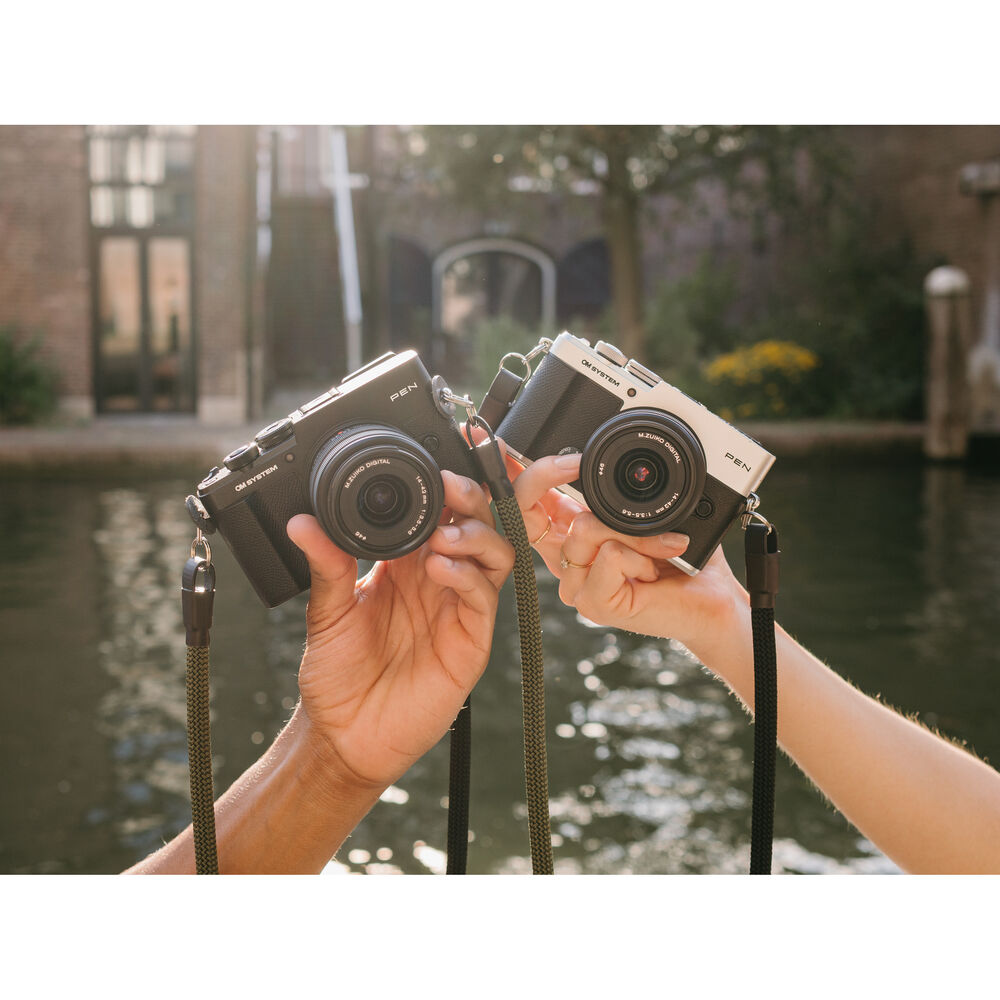
Let us say the quiet part out loud. Part of the appeal of the X100VI, the Ricoh GR, and the Leica D-Lux is how they look on a strap. Photography is a public act. The tool you carry says something about you, and cameras that feel special get carried more often.
The PEN has that quality. The flat top plate, the rangefinder silhouette, the front control switch, the silver-and-black option. It photographs well.
We are being honest about this because it matters to real behavior. The camera you love is the camera you bring. The camera you bring is the camera that makes pictures.
It cuts down your editing night
Live ND replaces a filter for moving water at moderate settings. Handheld High Res adds detail on a still subject. Focus Stacking finishes close-up work in the field. Live Composite handles light trails without a calculator. The color profiles hand you a finished look.
The result is a camera that sends you home with photographs ready to share.
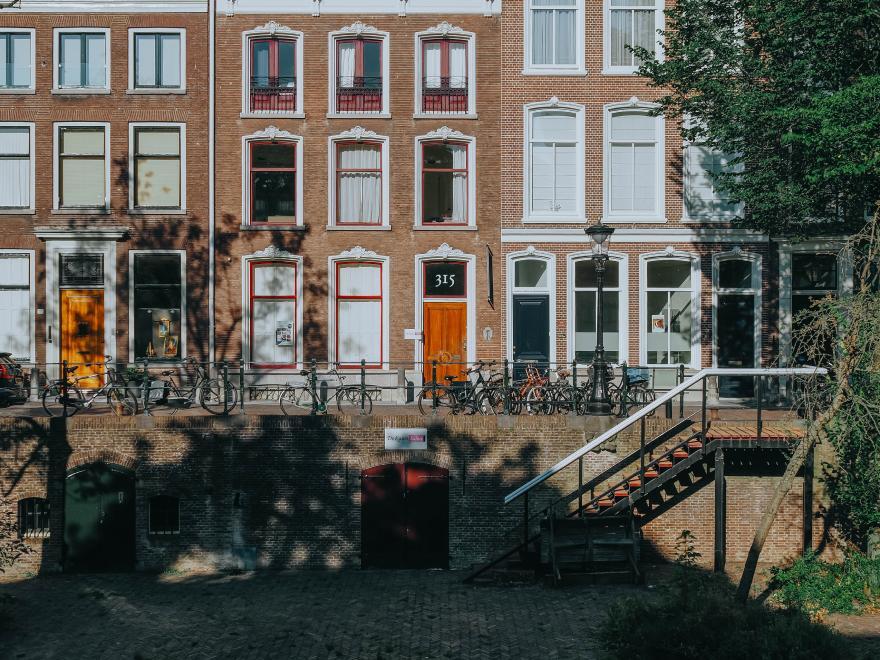
The controls respect experience
Two command dials. Six customizable buttons. Two custom modes. The Super Control Panel. A dedicated CP button. The front Profile Control switch. The card slot lives on the side, which keeps it reachable when the camera sits on a tripod plate.
Early reviewers found one-handed operation secure and the dial placement sensible. This is a camera built by people who shoot.
The lens catalog is enormous and affordable
Micro Four Thirds gives you OM System, Panasonic, Sigma, Laowa, Voigtländer, and a deep used market of Olympus glass going back to 2008. Compact APS-C systems still ask you to wait for small primes that may never come. Here the primes already exist, in every focal length, at prices that leave room in the budget for travel.
The X100VI Question
Every conversation about a stylish compact eventually lands with the FUJI
The Fujifilm X100VI gives you a 40-megapixel APS-C sensor, a fixed 35mm-equivalent f/2 lens, a hybrid optical and electronic viewfinder, a metal body, and a waiting list. It costs around $1,599 and weighs 521 grams.
The PEN gives you a 20-megapixel Four Thirds sensor, any lens you want, an electronic finder, a plastic body, and immediate availability. It costs $nine-ninety-nine and weighs 393 grams.
Here is how we see the choice:
The X100VI wins on image quality at high ISO, resolution for cropping and printing, the optical viewfinder experience, build materials, and the leaf shutter with its flash sync advantages.
The PEN wins on price, weight, lens flexibility, weather rating, computational tools, close-focus ability, and repairability. Drop a Fuji and you send the whole camera away. Drop the PEN and you may only replace a lens.
The real deal: photographers who want one perfect focal length and the best file quality in a small package should buy the Fuji. Photographers who want a complete small system, with a wide, a normal, a portrait lens, and a telephoto that all fit in one bag, should look hard at the PEN. Both are up to you and what you want.
The PEN entering this conversation at $600 less is a good thing for everyone. Competition here has been thin for years.
The Limits
We love this camera. We also owe you the full picture. Early reviews from DPReview, PetaPixel, Digital Camera World, Amateur Photographer, and a wave of YouTube first looks have raised consistent concerns, and they make sense.
The sensor stays at 20 megapixels
The native file is 20.37 megapixels. High Res Shot raises that number when your subject holds still, and it degrades when leaves move or water flows through the frame.
APS-C rivals offer 24, 26, or 40 megapixels along with roughly 1.6 times the sensor area. That gives them more cropping room, shallower depth of field at matched framing and aperture, and cleaner files at high ISO. Panasonic has already moved to a 25-megapixel Micro Four Thirds sensor, which makes OM System’s choice here look conservative.
For sharing online, for prints up to 16×24, and for daylight work, 20 megapixels does the job. Landscape photographers making 40-inch prints will want more.
Autofocus wants a supervisor
This is the most consistent criticism across every review we have read.
- Subject recognition produces false positives. It sees faces in patterns and pets in shadows.
- A recognized subject can override the AF point you selected, which is frustrating when you framed a certain way deliberately.
- General tracking lags behind current Canon, Nikon, Sony, and Fujifilm systems.
- Subject detection works for stills only. Video gets the older slower system.
- There is no AF joystick. Moving your focus point means the four-way controller or the touchscreen.
The PEN handles single-shot autofocus with confidence and manages controlled continuous focus on a predictable subject. Fast, unpredictable action is not great. Plan on turning subject detection off for deliberate work and back on when you photograph your kids.
Video is a generation behind
The PEN records 8-bit 4K up to 30p and C4K at 24p. You get a microphone input, OM-Log400, OM-Cinema1 and OM-Cinema2 picture modes, vertical video support, a tally light, and Full HD slow motion to 120fps.
What arrives on the wish list: 10-bit recording, 4K/60p, open-gate capture, and a headphone jack. Reviewers have described the 8-bit 4K as looking a touch soft. Video autofocus proved less dependable than stills autofocus.
The Fujifilm X-T30 III and the Nikon Z50II both deliver 10-bit and 4K/60p near this price. Hybrid creators have stronger options. Treat the PEN’s video as a capable bonus for social clips and behind-the-scenes footage rather than a reason to buy. It is capable though.
Several components show their age
- The viewfinder and rear screen resolutions match parts used a decade ago
- One card slot, UHS-I speed rather than UHS-II
- USB-C connector running at USB 2.0 data speed
- Mechanical shutter tops out at 1/4000 second
- No built-in flash, and none included in the box
- The new BLS-7 battery works with this camera alone at launch and costs $99.99
None of these ruin the camera. Together they explain why the OM System could hit nine-ninety-nine.
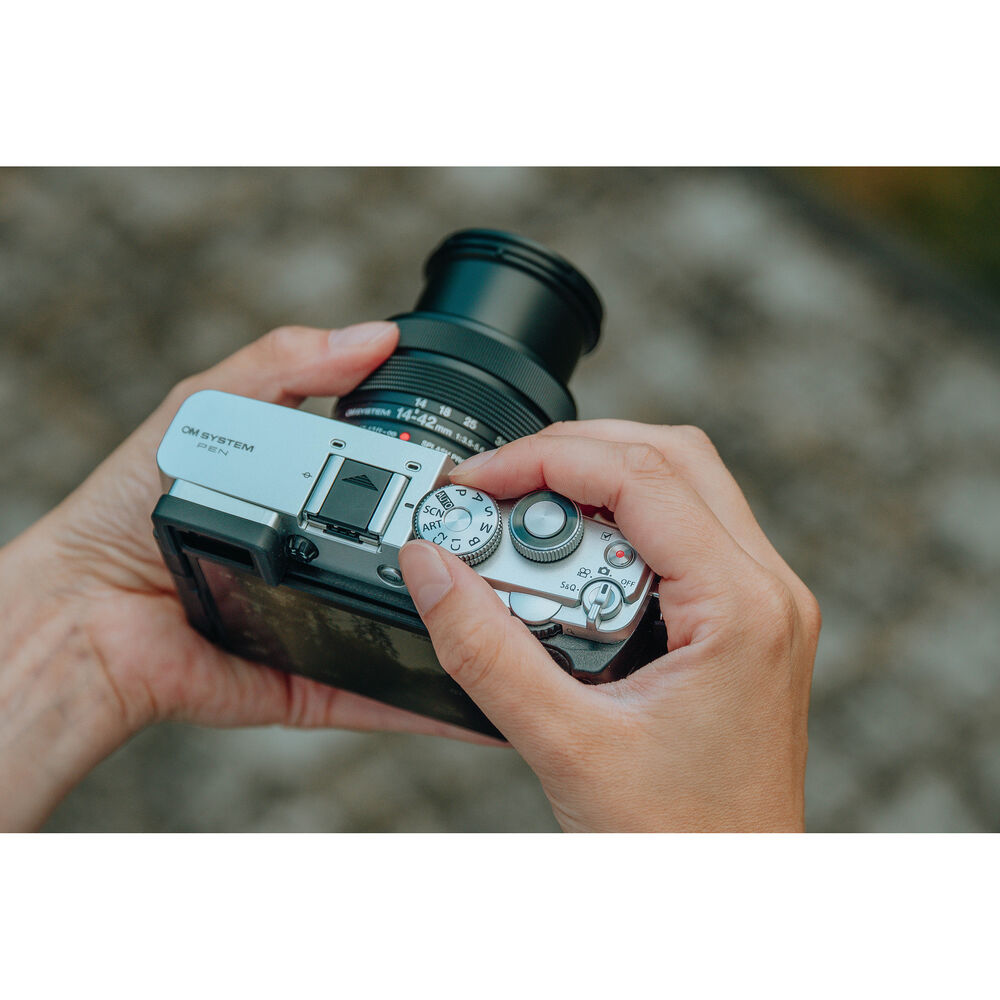
The body is plastic
The shell uses engineering plastic. Early hands-on reports describe it as solid and well assembled, with the note that the battery door feels light.
Photographers who spent five years hoping for a metal PEN-F II will feel this one. PetaPixel called the design more basic and less stylish than the older PEN-F. That’s a good read. The PEN-F remains a cult object because of how it felt in the hand, and this camera aims at a different buyer.
Set the expectation correctly and the disappointment fades. This is an E-P7-class body that gained a viewfinder, weather sealing, phase-detection autofocus, and computational tools.
Anyone who wants OM System’s premium retro body should buy the OM-3.
A few ergonomic quirks
- The grip runs shallow. Reviewers report pinching harder than they would like for a secure hold. A thumb grip accessory or a small L-bracket will help.
- The rear controls sit close together, which slows fast adjustments.
- The three-position power switch runs Off / Stills / Video, and it is easy to flick past stills into video. Reviewers still catch themselves doing it after a week.
- Color and monochrome profiles share one dial position instead of getting separate stops.
The interface asks new photographers to learn new tricks
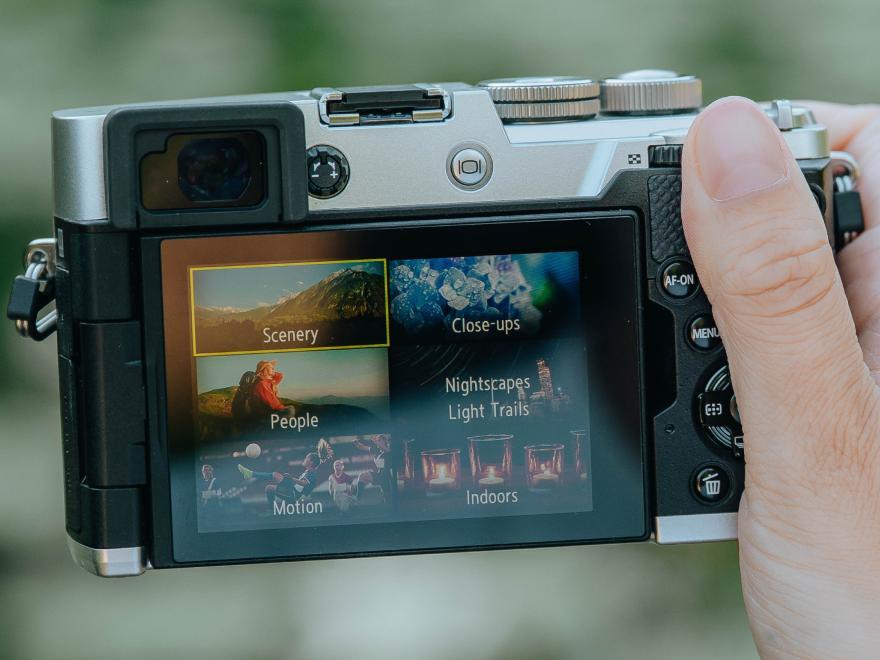
OM System includes Auto plus 24 Scene modes, and the menu system remains one of the deepest in the industry. DPReview found the opening display crowded and the autofocus logic less automatic than its peers.
New photographers will find room to grow here. They will also spend the first week setting things up. Budget an evening with the manual and a beverage.
Live Graduated ND didn’t make the grade
Higher-end OM bodies offer Live Graduated ND, and the PEN goes without it. There is also an odd JPEG limitation: grain applies to monochrome profiles rather than color ones. Photographers chasing a film look in color will notice.
Where the PEN Sits in the Market
| Camera | Launch price | Its advantage over the PEN | The PEN’s advantage |
|---|---|---|---|
| OM SYSTEM PEN | $Nine-ninety-nine body | Reference model | IBIS, IPX1, EVF, small MFT lenses, computational modes |
| Fujifilm X-T30 III | $Nine-ninety-nine body | 26 MP APS-C, broader subject AF, 6.2K and 4K/60p 10-bit | IBIS, rated sealing, rangefinder styling, computational modes |
| Nikon Z50II | $910 | APS-C high-ISO, stronger subject AF, 4K/60p 10-bit, headphone jack | IBIS, rated sealing, smaller lens kits, longer battery rating |
| Canon EOS R10 | $979 class | 24 MP APS-C, strong AF, faster mechanical burst, UHS-II | IBIS, rated sealing, deeper compact-lens catalog, in-camera composites |
| Fujifilm X-E5 | $1,699 body | 40 MP APS-C, 7-stop IBIS, metal body, UHS-II, 10-bit video | $700 lower price, sealing rating, lighter, more computational modes |
| Panasonic Lumix L10 | $1,500 fixed lens | 24-75mm equivalent zoom, 10-bit 5.2K open gate, larger EVF | Interchangeable lenses, lighter body, lower price |
| OM System OM-5 Mark II | $1,199 class | IP53, stronger stabilization, larger grip | Lower price, flat-top design, direct color-profile switch |
Against premium fixed-lens compacts
The PEN goes after the same daily-carry role as the X100VI, the Ricoh GR IV, the Leica D-Lux 8, and the Lumix L10. Fixed-lens cameras win on readiness and on lens-to-body integration. The PEN wins on lens choice, repair flexibility, close-up ability, and the freedom to build a two or three-lens travel kit. At $1,099 with a lens, it undercuts every premium compact on this list.
Against phones
The PEN has to earn its place in your bag through the act of photographing. Auto mode and Scene modes will lose to a phone on speed and sharing. The finder, the dials, the interchangeable lenses, the stabilization, the RAW files, and the control over depth of field make the case.
The Profile Library gives OM System a smart answer to phone convenience. Find a look you like on your phone, send it to the camera, shoot with it. That is a modern workflow built for how people actually work now.
Within OM System’s own lineup
- PEN for everyday photographers who put size, price, and style first
- OM-5 Mark II for hikers who need stronger sealing and stabilization
- OM-3 for photographers who want stacked-sensor speed, better autofocus, metal construction, and 10-bit 4K/60p
The PEN becomes the gateway drug to the system and it feels good.
Who This Camera Is For
- Travel photographers who want an eye-level viewfinder, one small zoom, and protection from light rain
- Street photographers who work with compact primes, single-point autofocus, color profiles, and silent shooting
- Family photographers who value steady stabilization, face and eye detection, pet fido recognition, and JPEGs ready to send
- Existing Olympus and OM System owners looking for a second body that uses the lenses they already own
- Photographers stepping up from a phone who want physical controls and room to grow
- Close-up photographers who benefit from deeper depth of field, compact macro lenses, focus bracketing, and in-camera stacking
- Night and light-painting photographers who use Live Composite, Live Time, Live Bulb, and Starry Sky AF
- JPEG photographers who want deeper control over hue, grain, tone, and monochrome than preset film simulations offer. S.O.O.C you know me.

Who Should Look Elsewhere
- Hybrid shooters who need 10-bit 4K, 4K/60p, dependable video tracking, or headphone monitoring (boo)
- Sports and wildlife photographers who expect automatic subject selection, reliable tracking, deep buffers, and fast card clearing
- Landscape photographers printing large or cropping hard
- Event photographers who need dual card slots, a deeper grip, and stronger flash support
- PEN-F owners waiting for a metal-bodied successor with premium finish
- Photographers chasing the shallowest depth of field or the cleanest high-ISO files
- Buyers who want one fixed lens and true pocket dimensions. A Ricoh GR remains smaller as a complete package.
Best Lens Pairings
| Use | Lens | 35mm equivalent | Why it fits |
|---|---|---|---|
| Daily carry | M.Zuiko 17mm F1.8 II | 34mm | Small, sealed, fast enough for evening streets |
| Natural perspective | M.Zuiko 25mm F1.8 II | 50mm | Compact, sealed, affordable normal prime |
| Portrait | M.Zuiko 45mm F1.8 | 90mm | Small portrait lens with comfortable working distance |
| One-lens travel | M.Zuiko 14-42mm F3.5-5.6 III | 28-84mm | Sealed, close focusing, $100 kit premium |
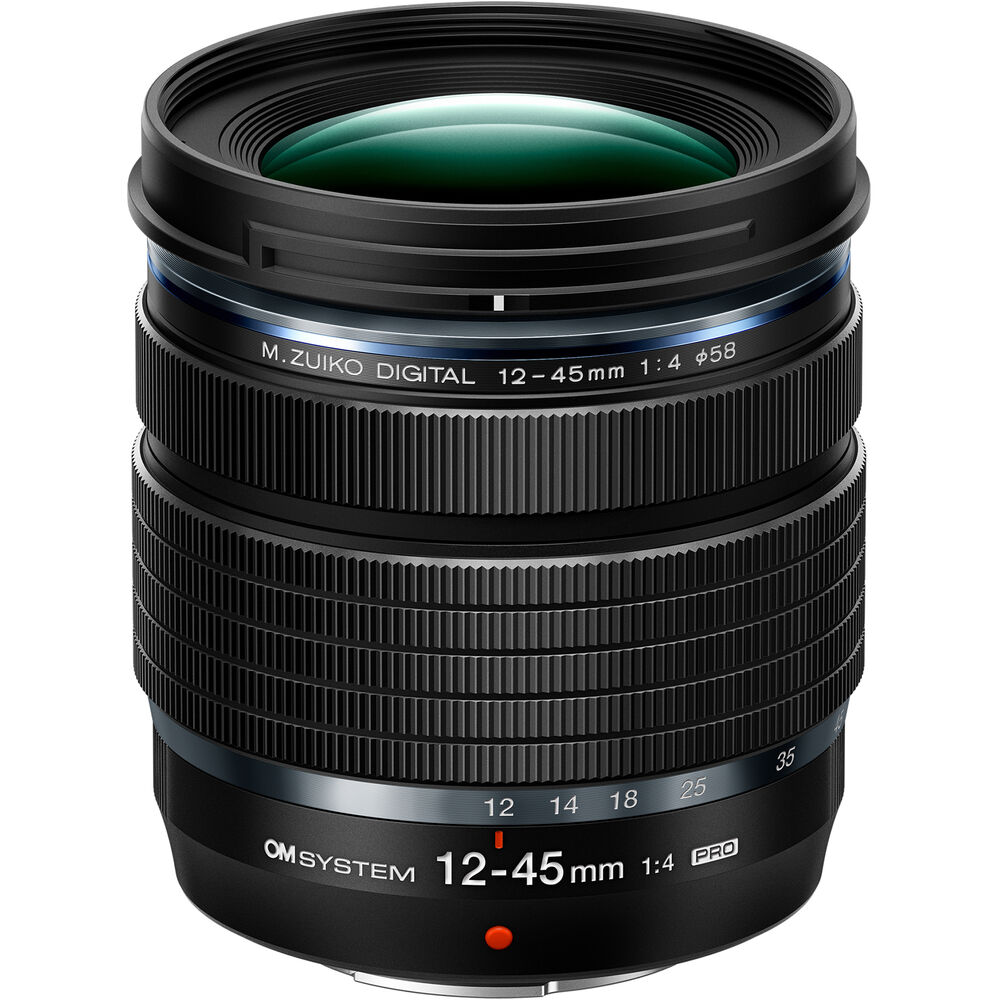
| Outdoor travel | M.Zuiko 12-45mm F4 PRO | 24-90mm | Wider view, sealed, close focus, higher optical grade |
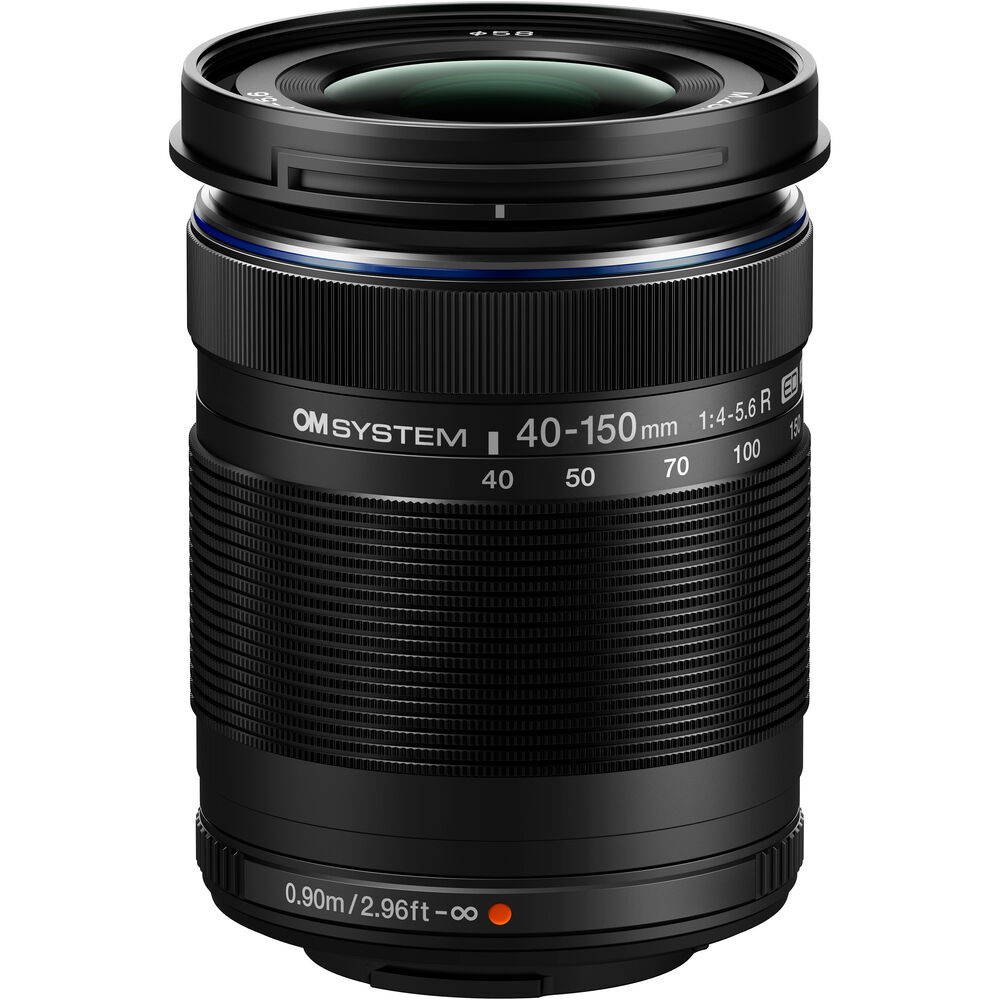
| Small telephoto | M.Zuiko 40-150mm F4-5.6 R | 80-300mm | Light and inexpensive, worth knowing it goes unsealed |
Our pick for the photographer who wants one lens on the camera forever: the 17mm F1.8 II. Our pick for the photographer who wants to travel light and cover everything: the 12-45mm F4 PRO, with the 45mm F1.8 in a pocket.
About Those Computational Tools
We have spent some time with Live ND and Live Graduated ND on the OM-3, and those sessions shaped how we read this camera’s spec sheet. Live ND at ND8 gave us moving water with natural texture, handheld, standing on a rock with no filter thread in sight. Live Graduated ND balanced a bright sky against a dark foreground in a single frame. Both tools changed what we packed for a day of shooting.
The PEN inherits Live ND. Live Graduated ND stays with the higher-end bodies for now, which is worth knowing before you order.
For our full field testing of these modes, including where they hold up and where they fall apart, read our piece on the OM System OM-3 as a street camera.
Questions We Want To Know:
- How often does subject recognition override the focus point you chose?
- Does continuous autofocus hold someone walking toward the camera?
- How clean do ISO 3200 and ISO 6400 files look after current RAW noise reduction?
- Does Live ND produce natural motion at ND8 and ND16?
- How fast does the buffer clear to a quick UHS-I card after a RAW burst?
- How reliably does OI.Share move profiles and full-resolution files?
- Does the silver finish mark faster than the black?
- Which single lens keeps the kit small enough to carry every day?
What do you think? Which of these matters most to you? Anything else you’re wondering?
The Bottom Line
The OM SYSTEM PEN is one of the cleverest stills-first camera releases of 2026, and one of the most enjoyable cameras we have seen at this price in years.
For $Nine-ninety nine – you get an integrated viewfinder, five-axis stabilization, a published weather rating, phase-detection autofocus, direct color control on the front of the body, a computational toolbox that replaces filters and tripods, and access to the deepest catalog of small lenses in photography. That package serves travel, street, family, close-up, and everyday work beautifully.
The limits are clear. Resolution holds at 20.4 megapixels. Autofocus needs your help. Video stops at 8-bit 4K/30p. UHS-I storage and USB 2.0 slow your transfers. The plastic shell will disappoint photographers who spent five years imagining a metal PEN-F II.
Buy the PEN because it makes you want to photograph.
Ready to accelerate your growth as a photographer? Luminous Landscape membership opens up 30 years of tutorials, how-to guides, and interviews with photographers who have mastered their craft. All for $24 a year. Join thousands of photographers improving their work.
Note: Early review units were pre-production, and some publications worked without final RAW support. Burst-rate figures vary between outlets. We use OM System’s official 30 fps maximum with focus and exposure locked.
Primary source
- OM System press release, “Introducing the OM SYSTEM PEN Interchangeable Lens Camera”
- OM SYSTEM official PEN product page
- OM SYSTEM news and press releases
Full reviews
- DPReview, “OM System PEN Review: somewhat throwback, for better and worse”
- Amateur Photographer, “best-in-class features and style at an unbeatable price”
- Digital Camera World, “Get the F out! This camera isn’t a PEN-F II”
- PetaPixel, “Too Familiar But Oh-So-Pretty”
- The Phoblographer, “After 10 Years, a Street Photography King Returns”
- Keith Wee, “The PEN Returns”
- Park Cameras, “OM System PEN Review”
- One Camera One Lens, “A preview of an Exciting New Camera”
Announcement and pre-launch coverage
- PetaPixel, “OM System Revives and Reimagines the Legendary PEN”
- Digital Camera World, “two features rarely found on budget cameras”
- Digital Camera World, preorder news
- Amateur Photographer, “PEN-F reborn?” teaser coverage
- PetaPixel, September 9 launch tease
- Photo Rumors, rumored specifications
Community and context
- DPReview forum, specs, manual, and launch videos
- DPReview forum, “Three Weeks with the PEN”
- SheClicks, OM-3 hands-on review
- Amateur Photographer, Olympus PEN E-P7 review (useful for the E-P7 comparison)





Elevate Your Vision


You may also like