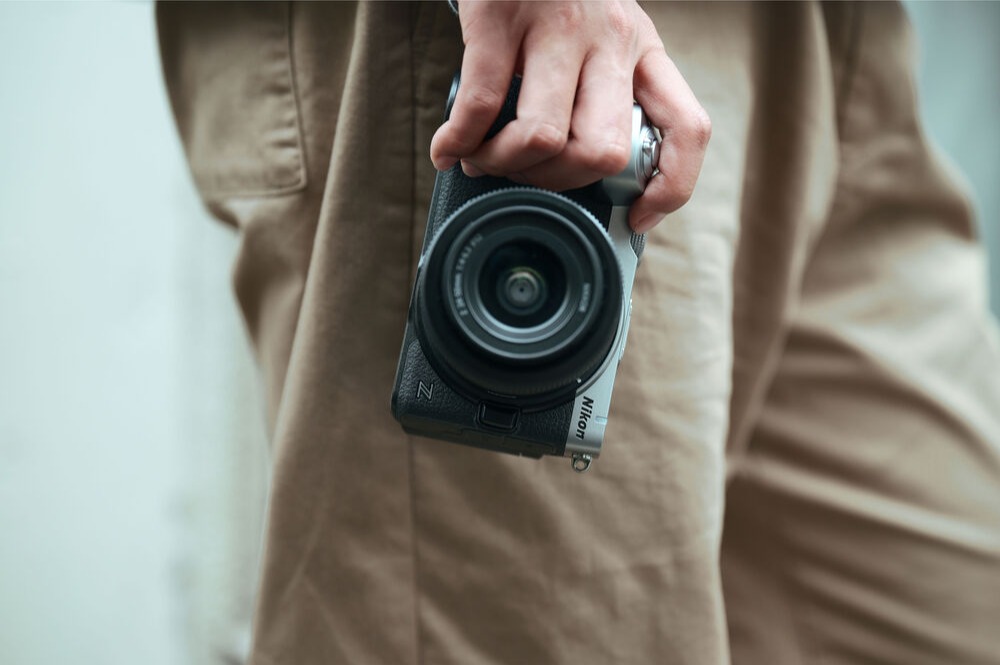



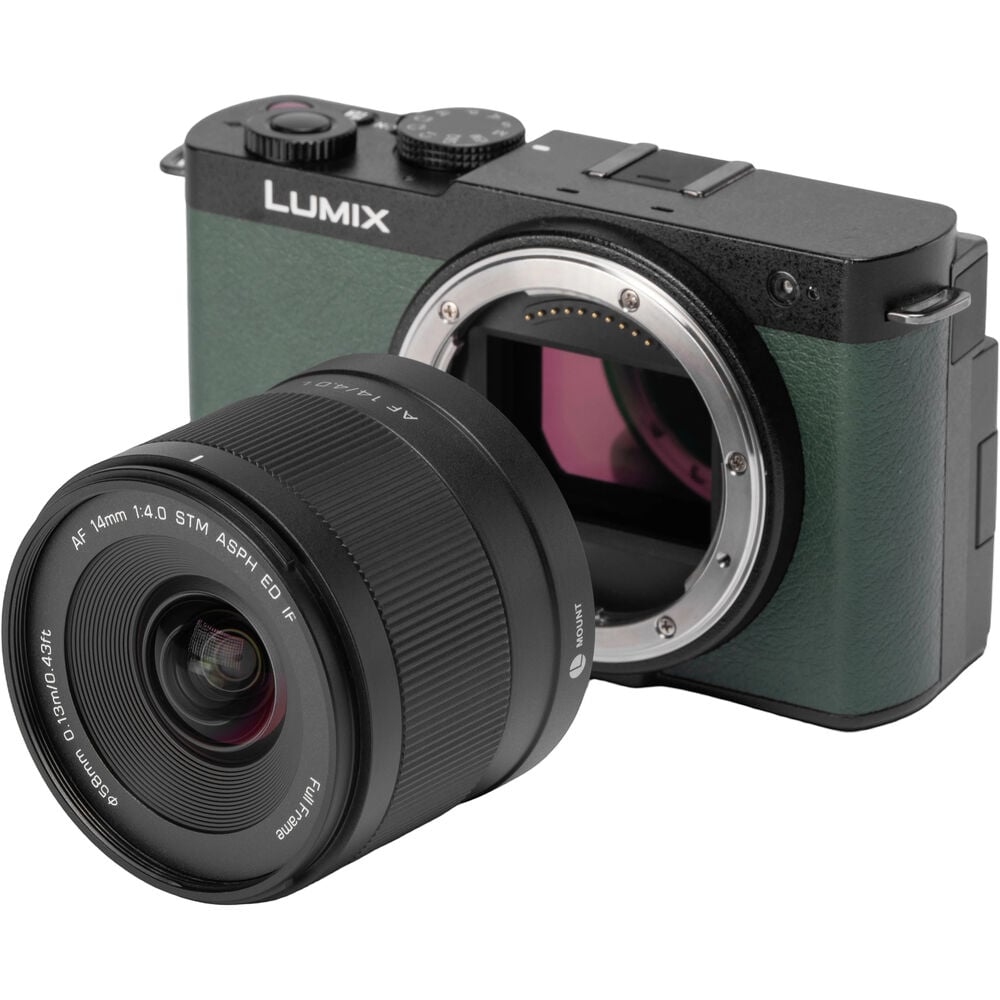


Can a $168 lens earn a spot in a serious photographer’s bag?
Ten years ago, that would be a “no”. Cheap glass meant mushy corners, manual focus, and a lot of squinting at the LCD hoping you nailed it. Viltrox’s new Air primes for L-mount could make it to your bag.
The lens quartet covers 14mm, 20mm, 40mm, and 50mm. Each lens weighs between 159g and 205g, about the same as your phone. The whole set comes in around 705g, and at launch pricing all four cost $742 combined.
Here’s our take. The gap between budget and premium glass is still there. It just moved. Sharpness is no longer where you pay the price. Aperture speed, build, controls, and autofocus refinement are.
The Short Version
- Sharpness runs from competent to excellent, with the 50mm and 14mm leading the pack
- Native autofocus on all four, with correction profiles built in
- Prices of $168 to $199
- Trade-offs include modest apertures, stripped-down controls, lightweight construction, visible vignetting, and a few lens-specific quirks
One more thing before we go further. You’ll see these called “fast” lenses around the web. Only the 50mm at f/2 earns that word. The 20mm at f/2.8 is standard for a wide prime, and the 14mm at f/4 trades speed for size. The real story is compactness, coverage, and price.
Why Native L-Mount?
Viltrox joined the L-Mount Alliance in September 2025. This means these lenses speak the mount’s language through licensed communication, with no reverse-engineered workarounds.
That means native communication gives you in-camera lens corrections, proper autofocus integration, and firmware support with Panasonic, Leica, Sigma, and Blackmagic bodies.
All four lenses use STM autofocus. STM stands for stepping motor, a small, quiet motor that moves focus in precise increments. It’s smooth and nearly silent, which makes it great for video. It’s also slower than the linear motors in premium glass.
Inside, each lens uses ED (extra-low dispersion) glass to control color fringing, plus high-refractive-index and aspherical elements to keep the designs small and sharp.
A Quick Note on the Evidence
The L-mount versions just launched, so independent testing is still thin. Direct L-mount reviews exist for the 14mm and 40mm. For the 20mm and 50mm, most of the deeper testing comes from the Sony E and Nikon Z versions.
Optical performance should carry over, since the glass is the same. Autofocus is a different story. It depends on the camera body, firmware, and focus algorithm. Treat our autofocus notes on the 20mm and 50mm as a starting point, and test on your own body before a paid job.
The Lineup at a Glance
- AF 14mm f/4 Air L: $199, 172g, 0.13m minimum focus, 0.23x magnification, 58mm filter
- AF 20mm f/2.8 Air L: $168, 159g, 0.19m minimum focus, 0.17x magnification, 52mm filter
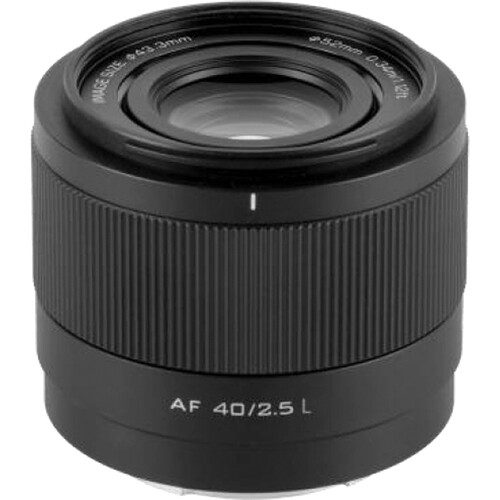
- AF 40mm f/2.5 Air L: $176, 169g, 0.34m minimum focus, 0.14x magnification, 52mm filter
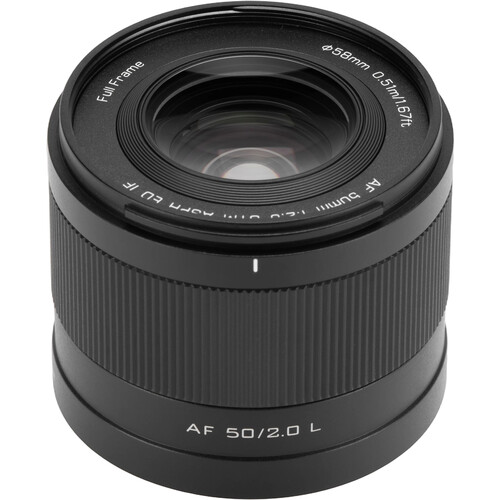
- AF 50mm f/2 Air L: $199, 205g, 0.51m minimum focus, 0.11x magnification, 58mm filter
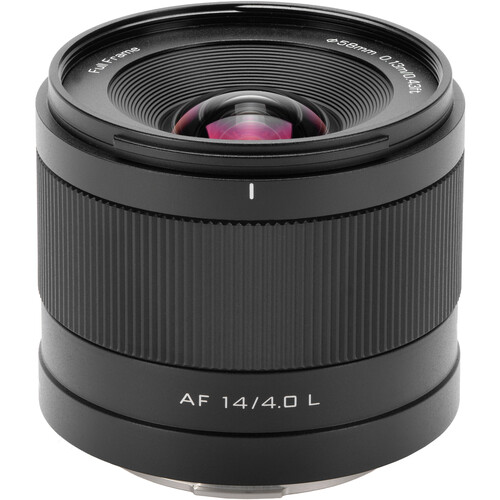
AF 14mm f/4 Air L: The Drama Machine
This lens is for architecture, interiors, big landscapes, tight spaces, and ultra-wide video. Its 112.6-degree view pulls in everything. Buy it because you want the 14mm perspective, and skip it if you just want a cheap lens.
Performance: Early L-mount testing found impressive frame-wide sharpness, even at f/4. Australian Photography saw a sharp center wide open and very good corners by f/5.6. For a $199 ultra-wide, that’s pretty good.
Autofocus: The strongest early L-mount report of the four. Testers describe it as fast, silent, and fully supportive of eye and face tracking. Low light is the one soft spot, since f/4 gives the camera less light to work with.
The look: Crisp, contrasty, and dramatic. Lines race toward vanishing points. Close subjects dominate the frame. With 0.23x magnification and focus down to 0.13m, you can put a wildflower right against the front element and still hold the mountain behind it.
Watch for: Flare with bright light in or near the frame, and vignetting wide open. Vignetting is the darkening of image corners, and a lens profile or a quick slider in Lightroom handles most of it.
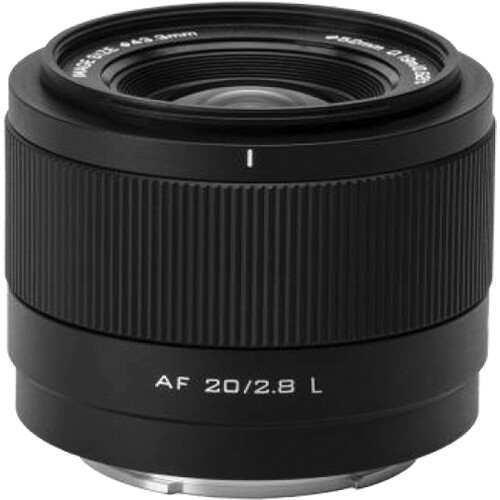
AF 20mm f/2.8 Air L: The Everyday Wide
The 20mm is the most useful wide in the set. It feels spacious without the aggressive stretch of 14mm, which makes it easier to compose for travel, landscapes, real estate, environmental portraits, and vlogging.
On an APS-C body it becomes roughly a 30mm equivalent, a lovely compact documentary lens.
Performance: Very good center sharpness at f/2.8, with the best overall results from f/4 to f/8. Extreme corners run soft wide open. Vignetting is noticeable at f/2.8, and the distortion has a complex pattern that’s hard to fix by hand, so leave the profile on.
Autofocus: The most body-sensitive lens here. On newer Sony bodies it’s quick and quiet. Amateur Photographer found poor phase-detection behavior on older ones. Native L-mount support looks promising, but check tracking and low-light acquisition on your camera first.
The look: Modern and contextual. Seven aperture blades create crisp 14-point sunstars past about f/5.6. Flare resistance is good, though distinct ghosts can show up with the sun in frame.
AF 40mm f/2.5 Air L: The One-Lens Answer
If you want one small lens for everything, start here. The 40mm sits between the classic 35mm reportage view and the 50mm normal view. It’s perfect for photographers who find 35mm a little wide and 50mm a little tight.
Street, documentary, family, food, travel. The perspective stays natural at normal working distances, and people look like themselves.
Performance: The L-mount review found a very sharp center at f/2.5, near-zero distortion, and excellent frame-wide results by f/5.6. Corners wide open are softer.
Autofocus: Quick, quiet, accurate, and consistent in the first L-mount test. E and Z reviews call it smooth and dependable, a step behind premium glass on large focus changes. Great for street and portraits. Less ideal for kids sprinting toward you.
The look: Clean, neutral, documentary. Colors and contrast draw consistent praise. Background blur stays smooth without screaming “shallow depth of field.”
Watch for: Chromatic aberration, the purple or green fringing along high-contrast edges. It’s visible wide open and fades by f/4 to f/5.6. Most of it cleans up in post.
AF 50mm f/2 Air L: The Valuable Star
Optically, this might be the best deal in the set. PCMag measured excellent resolution at f/2 with near center-to-edge consistency, and outstanding results from f/2.8 through f/11. Photography Life found it competitive with far more expensive 50mm lenses at matching apertures.
It’s a great first prime for a new full-frame shooter and a smart backup for a working pro. Portraits, lifestyle, interviews, low-light everyday shooting.
Autofocus: Accurate and quiet for stills, with solid eye detection. PCMag measured up to about 0.7 seconds on big focus changes. Video is the open question. Some testers saw hesitation or pulsing when subjects moved abruptly. Great for stills and controlled interviews. Test it before trusting it for run-and-gun video.
The look: Sharp, punchy, and contemporary. Nine aperture blades keep highlights round. Busy branches and high-contrast backgrounds can turn a bit busy, and some samples show onion-ring textures in out-of-focus highlights, a side effect of aspherical elements. Its personality comes from acuity, and it’s the opposite of the glow and softness of vintage glass.
Watch for: Close focus. At 0.51m and 0.11x, it’s the weakest of the four for tight detail work.
Where’s the Budget Gap?
Premium lenses still win in these areas:
- Aperture speed: f/1.4 and f/1.2 designs gather more light and blur backgrounds more
- Build and sealing: Check weather-sealing claims lens by lens, since a coated front element offers far less protection than full gaskets
- Controls: Expect minimal switches and rings on the Air series
- Correction dependence: These lenses lean on profiles for vignetting and distortion
- Autofocus refinement: Linear motors still beat STM for fast action
- Bokeh: Premium portrait glass renders smoother, calmer backgrounds
Best Pairings
Buying all four makes sense for educators, rental houses, or creators who use every focal length. The 40mm and 50mm overlap a lot. For most photographers, a pair is the smarter buy.
- Travel and architecture, 14mm + 40mm (341g): Dramatic ultra-wide plus a natural walk-around view
- Vlogging and portraits, 20mm + 50mm (364g): Handheld wide plus subject separation and low-light reach
- Documentary and family, 20mm + 40mm (328g): Context-first coverage that disappears in a jacket pocket
- Maximum optical value, 14mm + 50mm (377g): The two strongest performers with clear creative roles
- Smallest setup, 40mm alone: The best balance of perspective, aperture, and weight
Who Should Look Elsewhere
- Fast-action shooters who need flagship tracking
- Low-light event photographers, since only the 50mm reaches f/2
- Astrophotographers chasing premium coma control, though the 20mm works for entry-level night sky
- Portraitists who want creamy f/1.4 blur
- Pros who need rugged builds and full control layouts
The Freedom of Small Glass
The best lens is the one you bring. At $168 to $199, the Air series makes it easy to try a focal length you’ve been curious about, like that wild 14mm view or the straightforward nature of a 40mm. A 14mm and a 40mm together weigh less than most standard zooms, and they’ll push you to see something new.
These lenses won’t replace premium glass for every job. They will get you out the door lighter, and they’ll deliver files sharp enough to print big. Maybe grab one or four, pick a focal length, and go explore.
Join the discussion in the forum.




Elevate Your Vision


Read this story and all the best stories on The Luminous Landscape
The author has made this story available to Luminous Landscape members only. Upgrade to get instant access to this story and other benefits available only to members.
Why choose us?
Luminous-Landscape is a membership site. Our website contains over 5300 articles on almost every topic, camera, lens and printer you can imagine. Our membership model is simple, just $2 a month ($24.00 USD a year). This $24 gains you access to a wealth of information including all our past and future video tutorials on such topics as Lightroom, Capture One, Printing, file management and dozens of interviews and travel videos.
- New Articles every few days
- All original content found nowhere else on the web
- No Pop Up Google Sense ads – Our advertisers are photo related
- Download/stream video to any device
- NEW videos monthly
- Top well-known photographer contributors
- Posts from industry leaders
- Speciality Photography Workshops
- Mobile device scalable
- Exclusive video interviews
- Special vendor offers for members
- Hands On Product reviews
- FREE – User Forum. One of the most read user forums on the internet
- Access to our community Buy and Sell pages; for members only.
You may also like