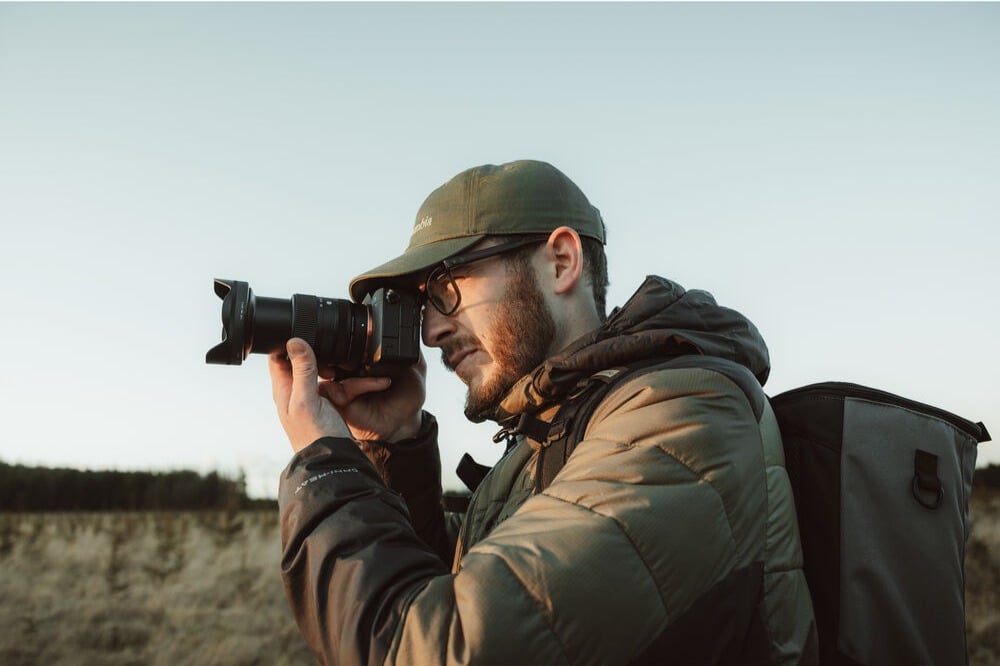




Terry McDonald has spent three decades photographing places most of us will never stand in. Snowbound peninsulas in Iceland. Salt flats in Ethiopia’s Danakil Depression. Fog-thick forest floors in Ontario.
And in his new book, The Art of the Landscape, he opens not with a triumphant image but with an admission of defeat, Ansel Adams calling landscape photography “the supreme test… and often the supreme disappointment.”
That’s the tone McDonald wants to set from page one. Get the disappointment out of the way early, he says, so you have somewhere solid to build from.
It’s a fitting start for a photographer who has spent this book, his fourth under the luxBorealis banner, drawing a line most photographers won’t. No sky swaps. No generative AI for fills or removals. No borrowed presets.
In a year when GenAI has become the default conversation in every corner of the photo world, McDonald picked this moment to say, in print, exactly where he stands.
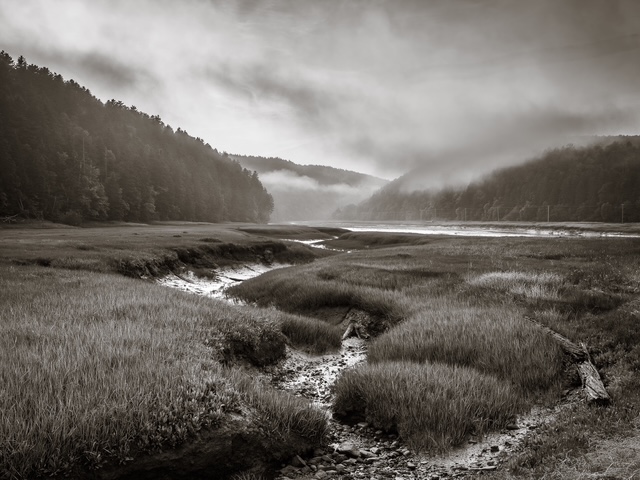
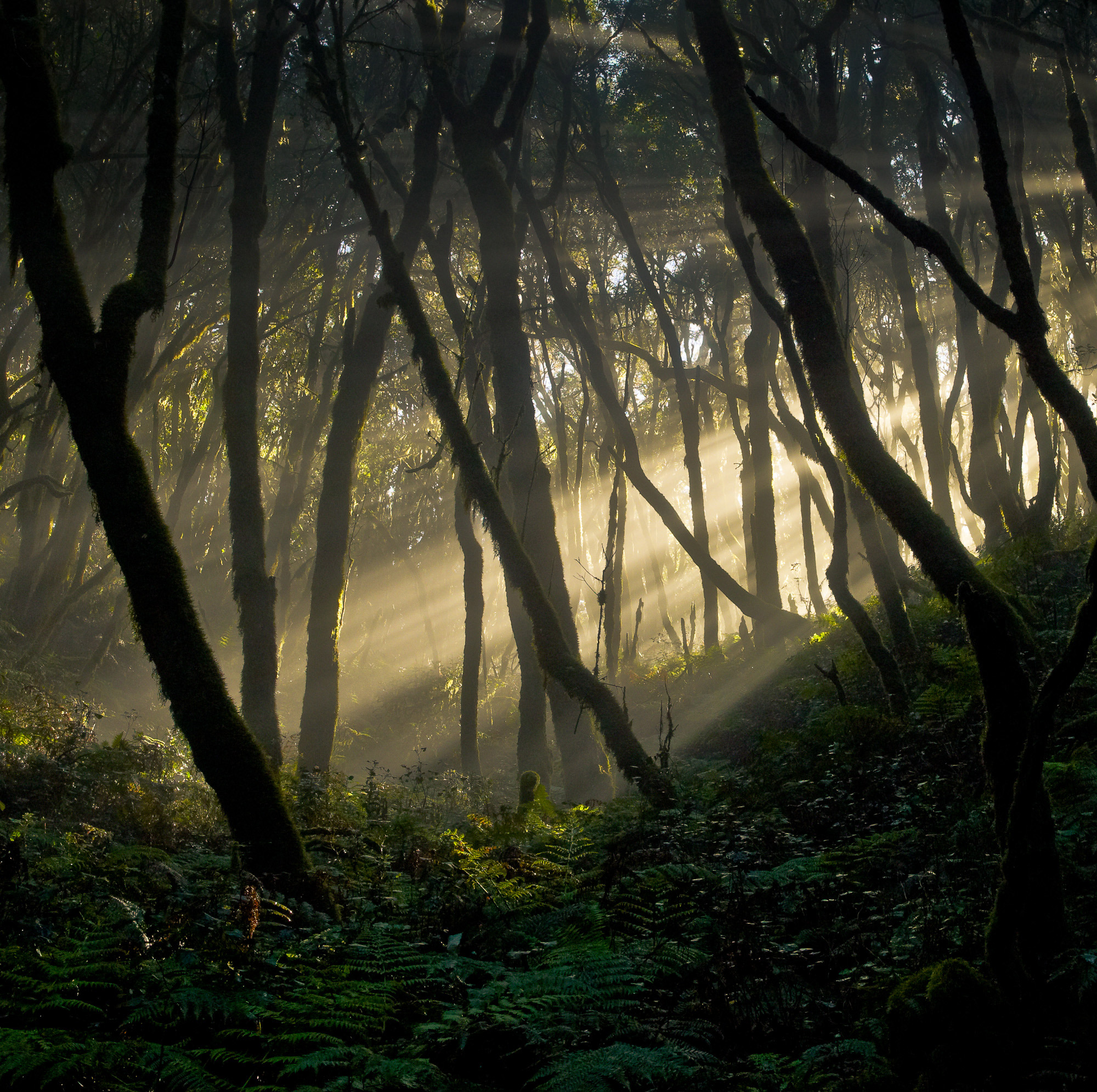
35mm • ƒ5.6 @ 1/500 • ISO 400 • 0 EV
A Line He Had to Draw Somewhere
McDonald traces the decision back to an article he wrote for LuLa last year on the different flavors of AI creeping into image making. Writing that piece pushed him past the GenAI question and into a bigger one: what counts as a photograph he actually made.
“I began questioning the use of any kind of software-driven result that is not directly the product of my own skills and talents,” he says.
That question doesn’t stop at generative fills. McDonald extends it to presets and filters too, tools that have been part of digital editing for so long that most photographers never stop to interrogate them.
“Photographers have more to gain from spending the time learning the techniques rather than scrolling through look-books of filters and presets,” he says. Learn the editing software itself, he argues, and you grow your own vision. Buy someone else’s preset pack, and you’re wearing someone else’s vision instead.
He’s careful not to paint with too broad a brush. Some photographers use presets as a teaching tool, pulling them apart to see how they work. That’s a different thing entirely. What concerns McDonald is the quiet, unexamined adoption of tools built by someone else, without ever asking whether the result is actually yours.
“Originality comes from the skills and talents of the photographer, not some software engineer who designs filters or that of another photographer who markets pre-sets,” he says.
For McDonald personally, the standard is simple. He wants his final images to look like what he stood in front of. That leaves no room for a preset to nudge the color, or an AI fill to patch a sky.
“When readers look at my photos, they can be confident that there is no magic elixir,” he says. “Each photograph is the product of straight photography.”
He sees a marketing hand behind a lot of this. Editing software companies have pushed steadily toward the software-driven result, one click, one look, done for you.
“I want to bring it back to the photographer-driven result,” he says.
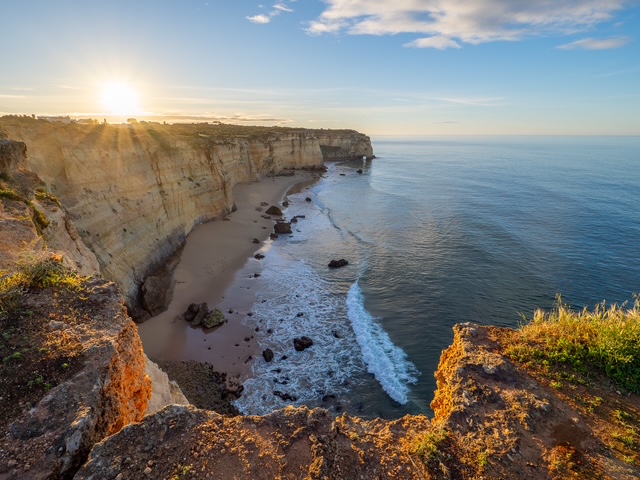
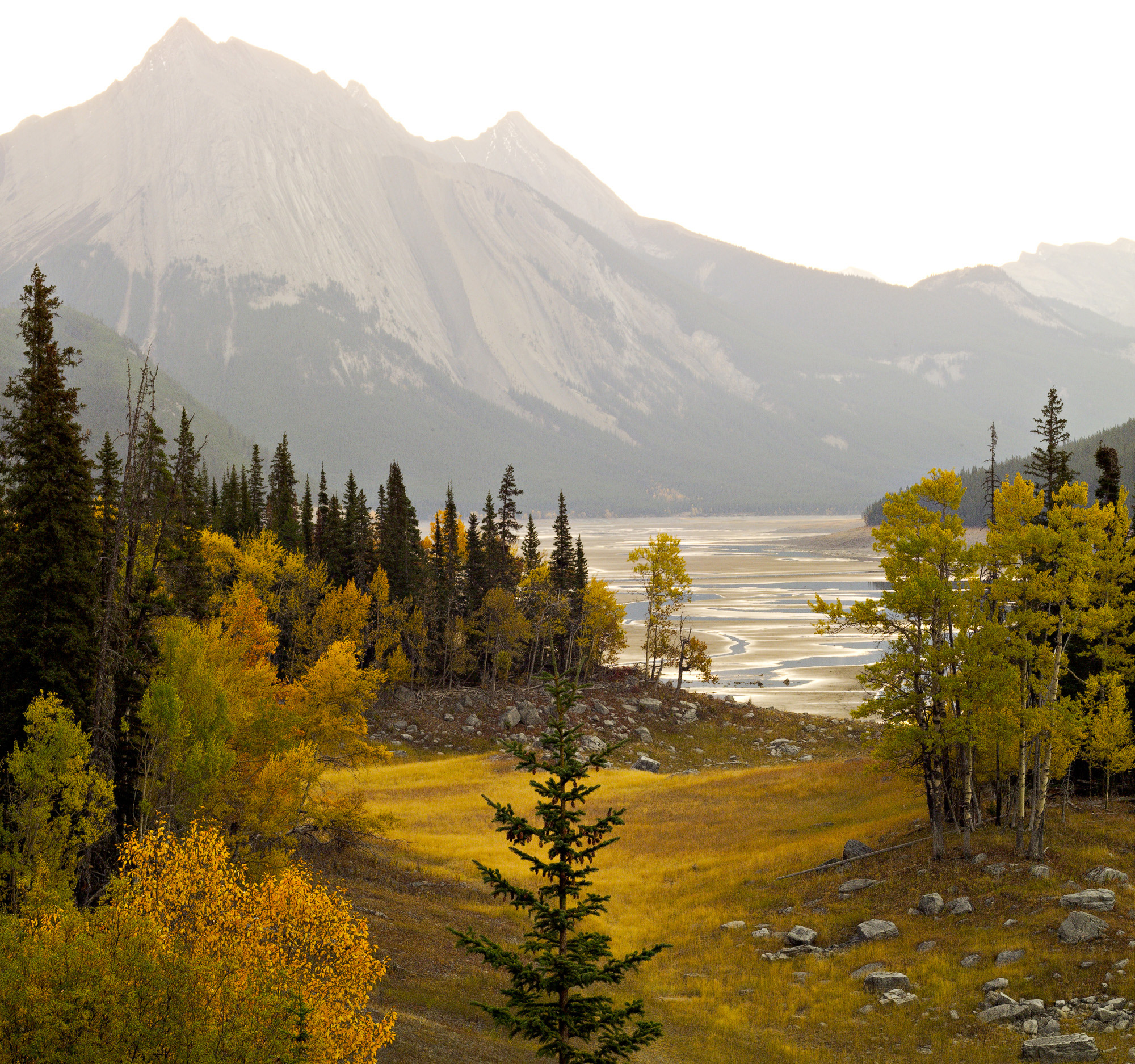
16mm • ƒ8 @ 1/400 • ISO 200 • Polarizing filter • –12⁄3 EV
Standing on the Shoulders of the f/64 Group
McDonald didn’t arrive at this position overnight. He cut his teeth on Ansel Adams’s The Camera, The Negative, and The Print, the foundational texts of the f/64 Group, the mid-century movement that championed sharp, unmanipulated, “straight” photography over the soft-focus painterly style that came before it.
“I’m a product of the f/64 Group from the 1950s and 60s,” he says. “So straight photography has been with me since the start.”
McDonald frames it as technique but also identity. Nature for nature’s sake. Photography for photography’s sake. Any move toward turning a photograph into something closer to a painting, he says, simply doesn’t sit well with him.
“It was once thought that the only way photography could compete with ‘real art’ is if it emulated it,” he says. “Photography has so many unique qualities which do not need propping up by trying to make it look like something else.”
His own goal is narrower and harder than it sounds: use photography’s realism to portray the natural world as close as possible to how he experienced it in the field. Not a Polaroid. Not straight-out-of-camera either, since a raw file rarely matches what the eye actually saw. What McDonald is after sits in the space between, built through careful, judicious editing that brings the digital file back into alignment with the moment, rather than away from it.
“I’ve not yet hit the limit of straight photography,” he says, “so I’ll stick with it.”
Letting Nature Speak for Itself
McDonald’s commitment to straight photography shows up in another choice that’s drawn its share of pushback: he mostly leaves people out of his landscapes. At one competition in England, judges marked him down for it, arguing a human figure was needed for scale or a focal point.
He understands instinct. Some viewers need a human hook to feel connected to a scene. McDonald’s simply isn’t interested in providing one.
“I feel we need to appreciate nature for what it is, without some human hook to hang it on,” he says. “Let nature speak for itself.”
McDonald points to the rise of “natural capital” thinking, the tendency to value wild places only in economic terms.
“Natural systems are under ever-increasing threats and in this economic-driven world, there is constant pressure to put a value on natural systems as resources,” he says. “When is enough, enough?”
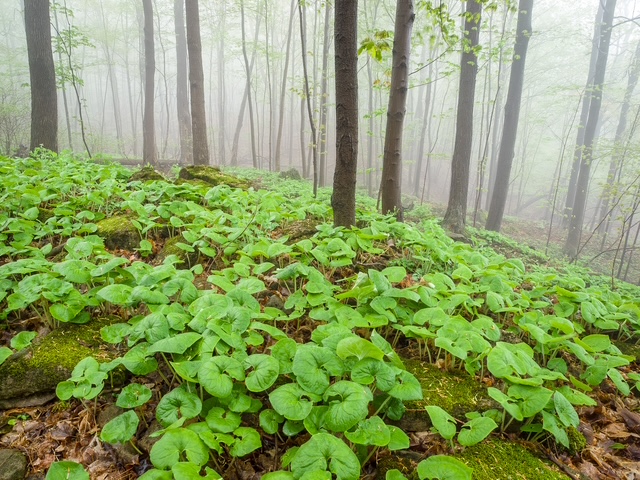
24mm • ƒ11 @ 1/2sec. • ISO 100 • Polarizing filter • 0 EV
The Foreground Anchor, and Knowing When to Walk Away
Structurally, McDonald teaches photography as a three-part process: Visualization, Field Craft, Screen Craft, a framework he’s used in workshops and PhotoTalks for years before it became a book.
Visualization itself he borrows directly from Adams, the idea of holding the finished photograph in your head while you’re still piecing together the scene in front of you.
Inside Field Craft sits one of his most useful teaching tools, the foreground anchor, an element that grounds a composition and gives the eye somewhere to land. But McDonald refuses to force one into existence.
- If a foreground anchor isn’t there, he moves on.
- He’s seen too many anchors that feel manufactured to fit the shot rather than found in it.
- There’s always another photograph to make.
The patience comes from decades in the field. McDonald leans on an Ansel Adams line to explain it: “Twelve significant photographs in any one year is a good crop.” In an age of high frame rates and bottomless memory cards, he thinks photographers have lost the instinct to know when a session simply isn’t working, and to let it go.
He draws a related distinction between a “sketch” and a dud. The idea came from a Robert Bateman lecture some thirty years ago, when the naturalist and painter passed around his sketchbooks. McDonald realized plenty of his own frames were exactly that: practice with light, shape, texture, and perspective, never meant to be finished. A sketch still carries the spark that made him stop and shoot in the first place. A dud never had one, and no amount of editing will bring it back.
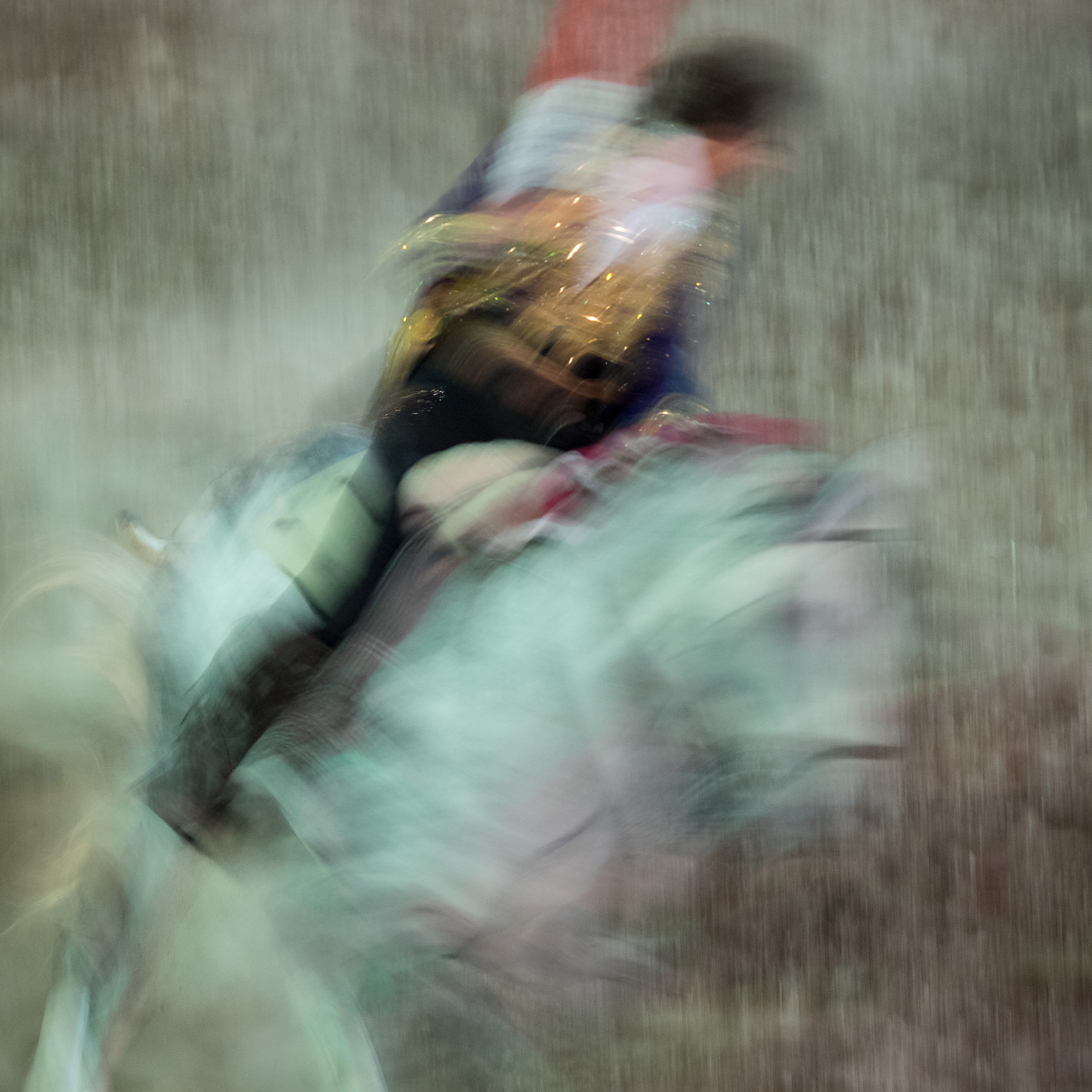
Even his Intentional Camera Movement work started this way, born out of boredom on a fifteen-year-old, backseat road trip across Canada with his family. Somewhere around 90 km/h through the prairies, McDonald started experimenting with shutter speed and aperture out the window, long before he knew ICM had a name.
“Again, photographer-driven results rather than turning to editing software to create an effect,” he says.
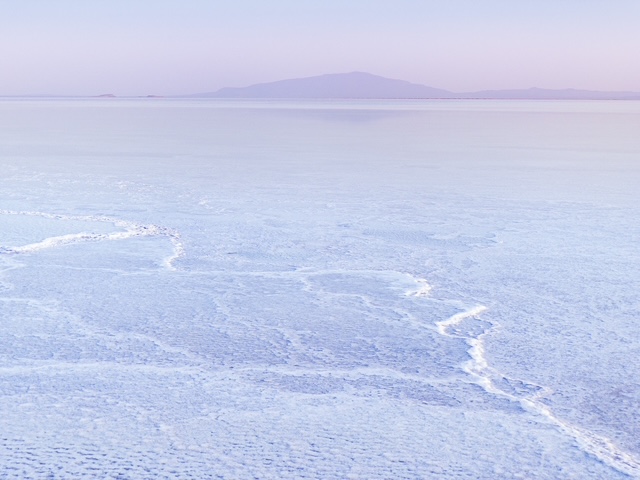
50mm • ƒ2.8 @ 1/120 • ISO 20 • +11⁄3 EV
The Shot That Breaks His Own Rules
Which brings us to Vatnsnes across Húnaflói, a spare, almost featureless view across an Icelandic bay to snow-covered mountains beyond. It’s one of McDonald’s three favorite images from that trip. It’s also, by his own account, an image that breaks nearly every rule the book spends its pages laying out.
The trip happened in March, on a week-long, off-the-beaten-track drive toward Akureyri and Myvatn in a rental car that wasn’t even four-wheel drive. The peninsular road was gravel. McDonald and his wife pushed north out of Skagaströnd, drawn by the loneliness of the place rather than away from it.
“I wish I could remember what caused us to look southwards,” he says. “But we pulled off and stopped. And drank in the desolation of the view.”
No obvious foreground anchor. No human figure. Just a wide, quiet expanse that, in McDonald’s words, works precisely because it doesn’t follow the rules he’s spent a book laying out.
“It’s the exception that proves the various rules it doesn’t follow,” he says.
Two of his three favorite images from that entire Iceland trip came from that single day, the third from the day before. None of them, he notes, look anything like the Iceland that shows up on social media. Maybe that’s exactly why they’ve stayed with him.
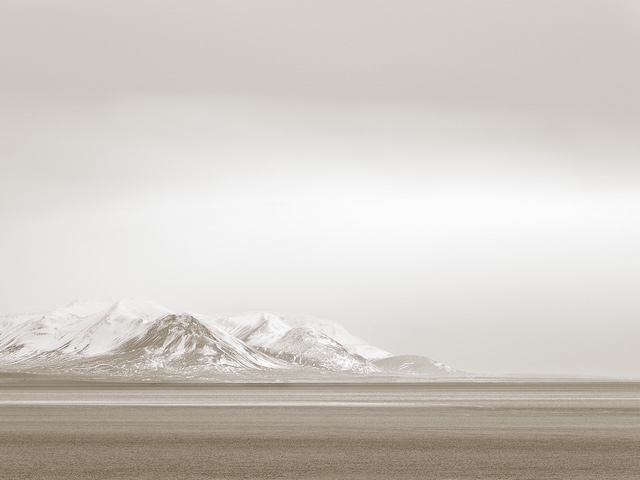
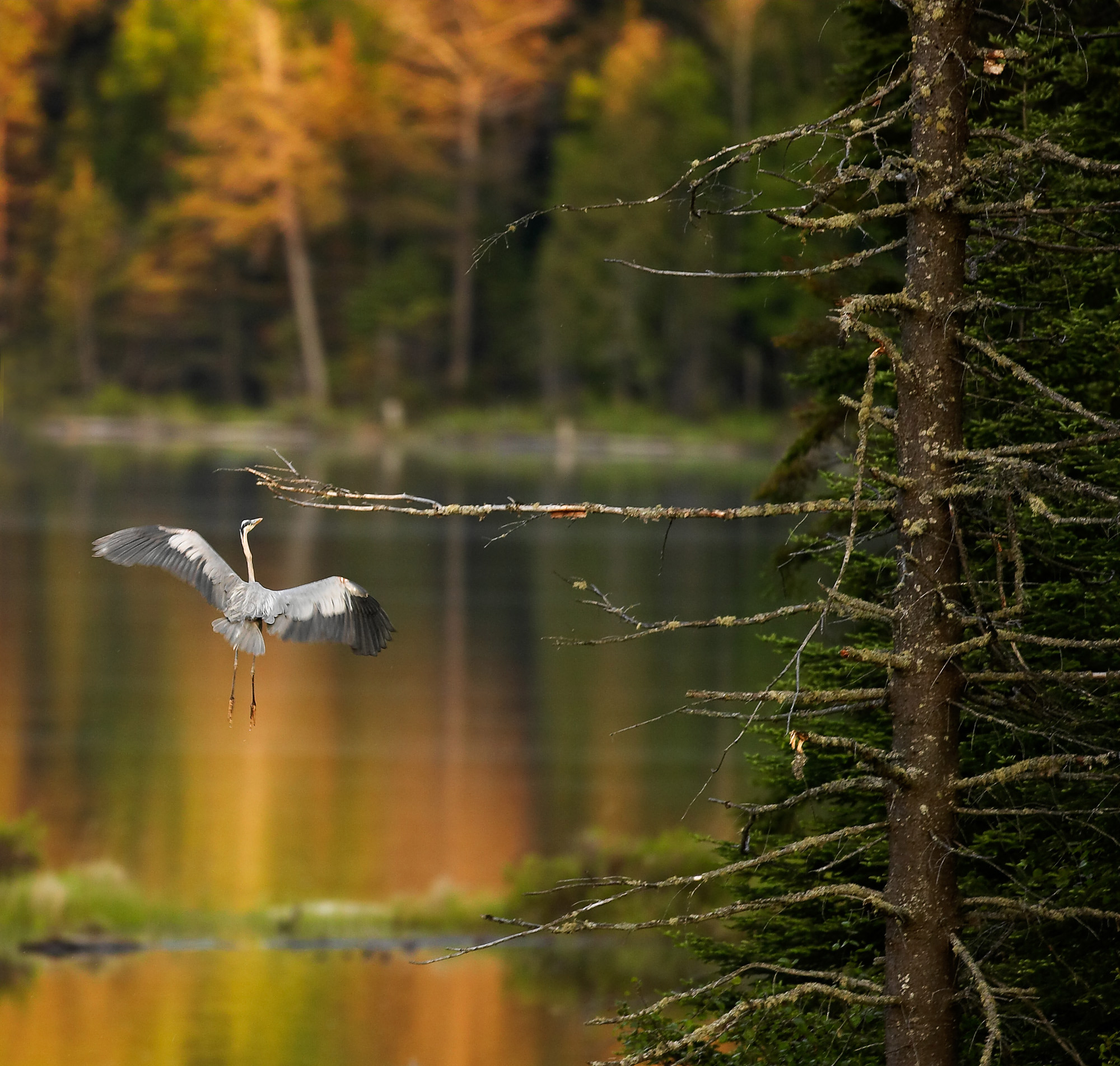
200mm • ƒ5.6 @ 1/100 • ISO 100 • +2⁄3 EV
Knowing It When You Feel It
McDonald reaches for Fred Picker’s line to describe the moment a composition finally clicks: the composition is correct when the scene is looking back at you. Pressed to explain what that actually feels like, he admits he still hasn’t found the words after years of trying.
“I don’t know, but I’m wondering if it might just be a bit of OCD showing through,” he says, “where everything feels right because everything is in its visual place.”
Foreground and background in balance. Left and right. Light and dark. Leading lines doing their job, edges clean, nothing clipped that shouldn’t be. When all of it locks together, McDonald knows it, even if he still can’t fully articulate why.
That same openness shows up in Time Passages, an image that leans into intentional softness in a genre that treats corner-to-corner sharpness like scripture. The shack in the frame is tack sharp. The background is tack sharp. The motion belongs entirely to the wind.
His advice to photographers wedded to sharpness at all costs is simple and good-natured: lighten up, try something different. He’s quick to turn that same advice back on himself, aware that his own hard line on GenAI and presets will strike some readers the same way.
“I think it’s important to try different approaches,” he says. “Even if you don’t like them, you might learn something along the way or even discover something different.”
Homework From the Masters
The book closes with an exercise: ten questions to deconstruct a master photographer’s image, piece by piece. McDonald has been doing some version of that work his whole career, an instinct he traces to a Philosophy of Art elective he took as an undergraduate, taken for the same reason art students spend hours in museums.
“Not to copy the masters,” he says, “but to see what it is that makes their works so compelling.”
His advice to photographers working in medium or large format, or shooting primarily from a tripod, is short and warm: keep at it.
McDonald still travels with a tripod himself, still slows down and makes fewer, more deliberate exposures, a habit he traces straight back to the discipline of shooting limited rolls of film.
The Art of the Landscape is available now at theArtoftheLandscape.com, with sample pages to browse before you buy, and through McDonald’s blog at blog.luxborealis.com/shop. Readers can use the promo code INTRO for 33 percent off.
McDonald’s at work on a second project, an eBook built as a pure photographic folio, images and reflections, with no instruction attached at all.
** Terry has no presets for sale at this time. **
Elevate Your Vision


Read this story and all the best stories on The Luminous Landscape
The author has made this story available to Luminous Landscape members only. Upgrade to get instant access to this story and other benefits available only to members.
Why choose us?
Luminous-Landscape is a membership site. Our website contains over 5300 articles on almost every topic, camera, lens and printer you can imagine. Our membership model is simple, just $2 a month ($24.00 USD a year). This $24 gains you access to a wealth of information including all our past and future video tutorials on such topics as Lightroom, Capture One, Printing, file management and dozens of interviews and travel videos.
- New Articles every few days
- All original content found nowhere else on the web
- No Pop Up Google Sense ads – Our advertisers are photo related
- Download/stream video to any device
- NEW videos monthly
- Top well-known photographer contributors
- Posts from industry leaders
- Speciality Photography Workshops
- Mobile device scalable
- Exclusive video interviews
- Special vendor offers for members
- Hands On Product reviews
- FREE – User Forum. One of the most read user forums on the internet
- Access to our community Buy and Sell pages; for members only.
You may also like