




Claire Rosen builds portraits with subjects who hold all the power. Any bird in front of her camera can end the session by simply turning away, and that prepares the choices she makes on set.
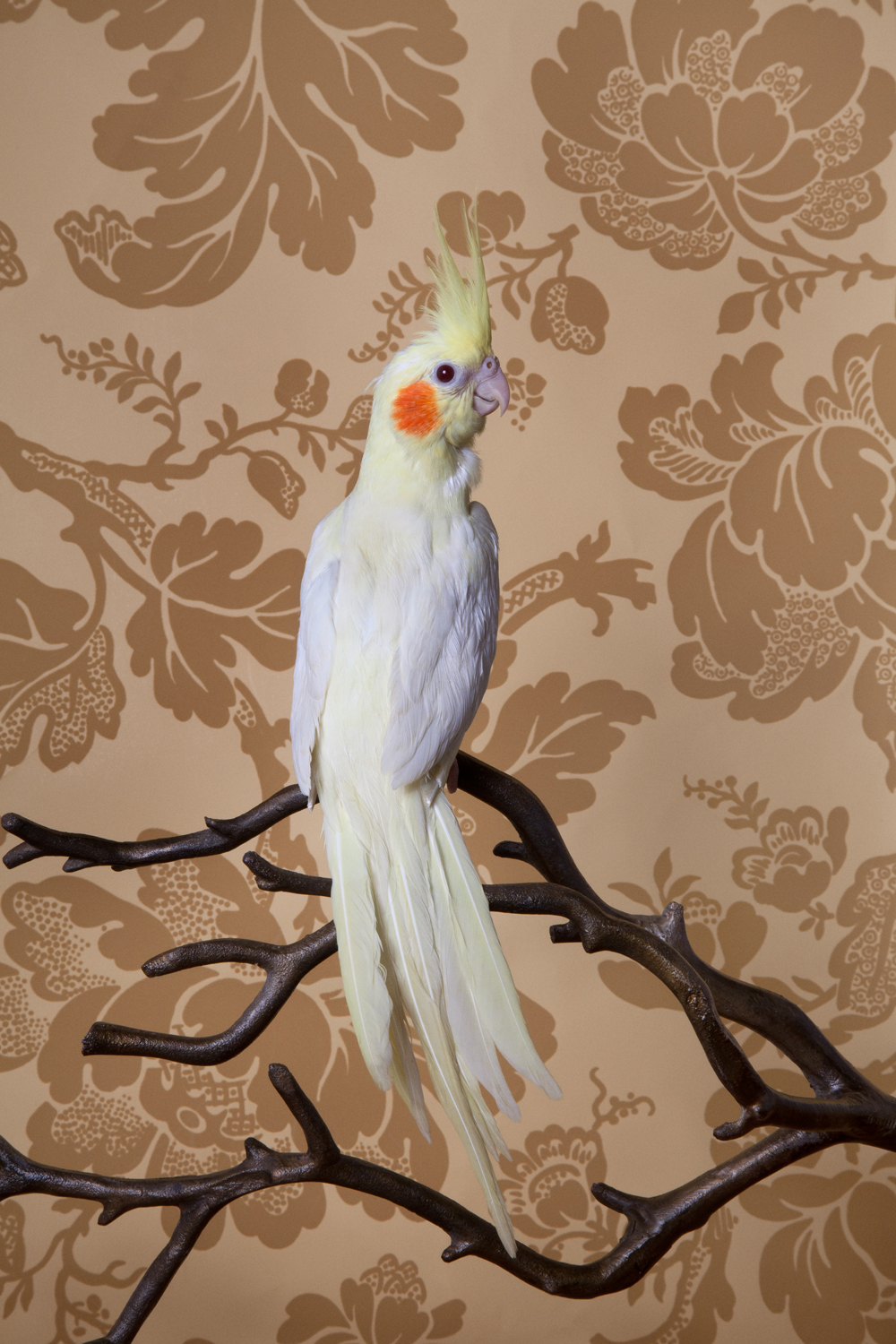
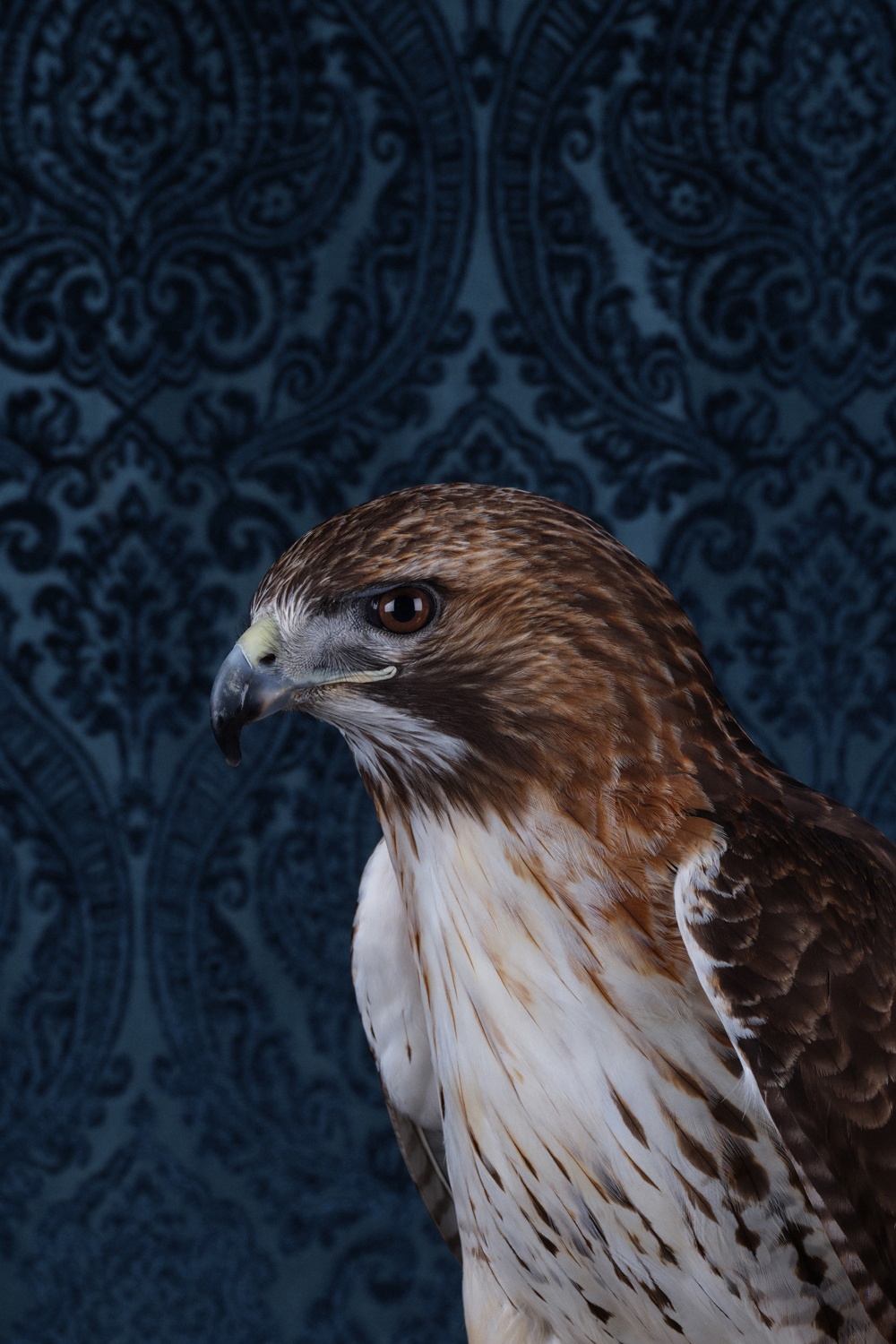
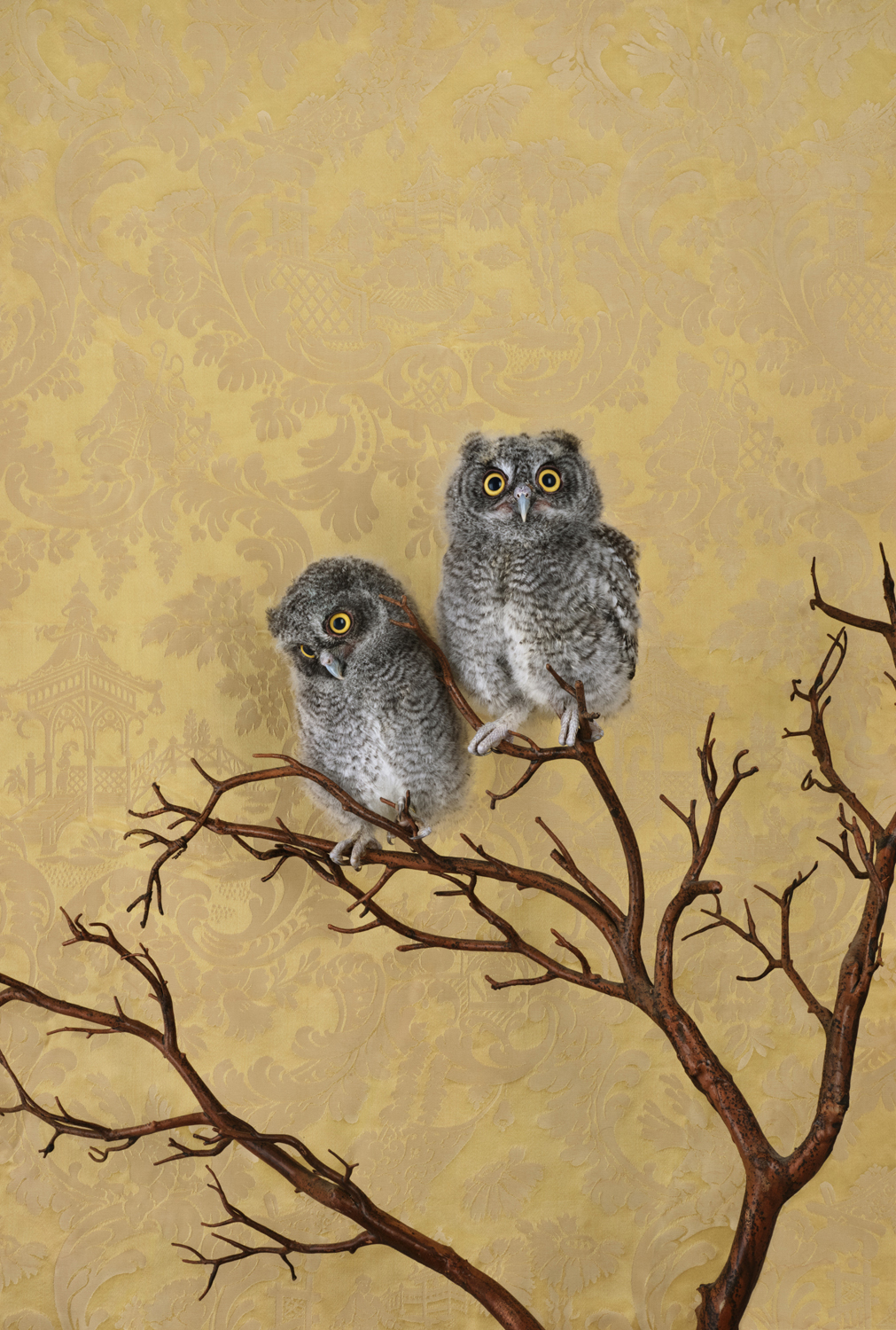
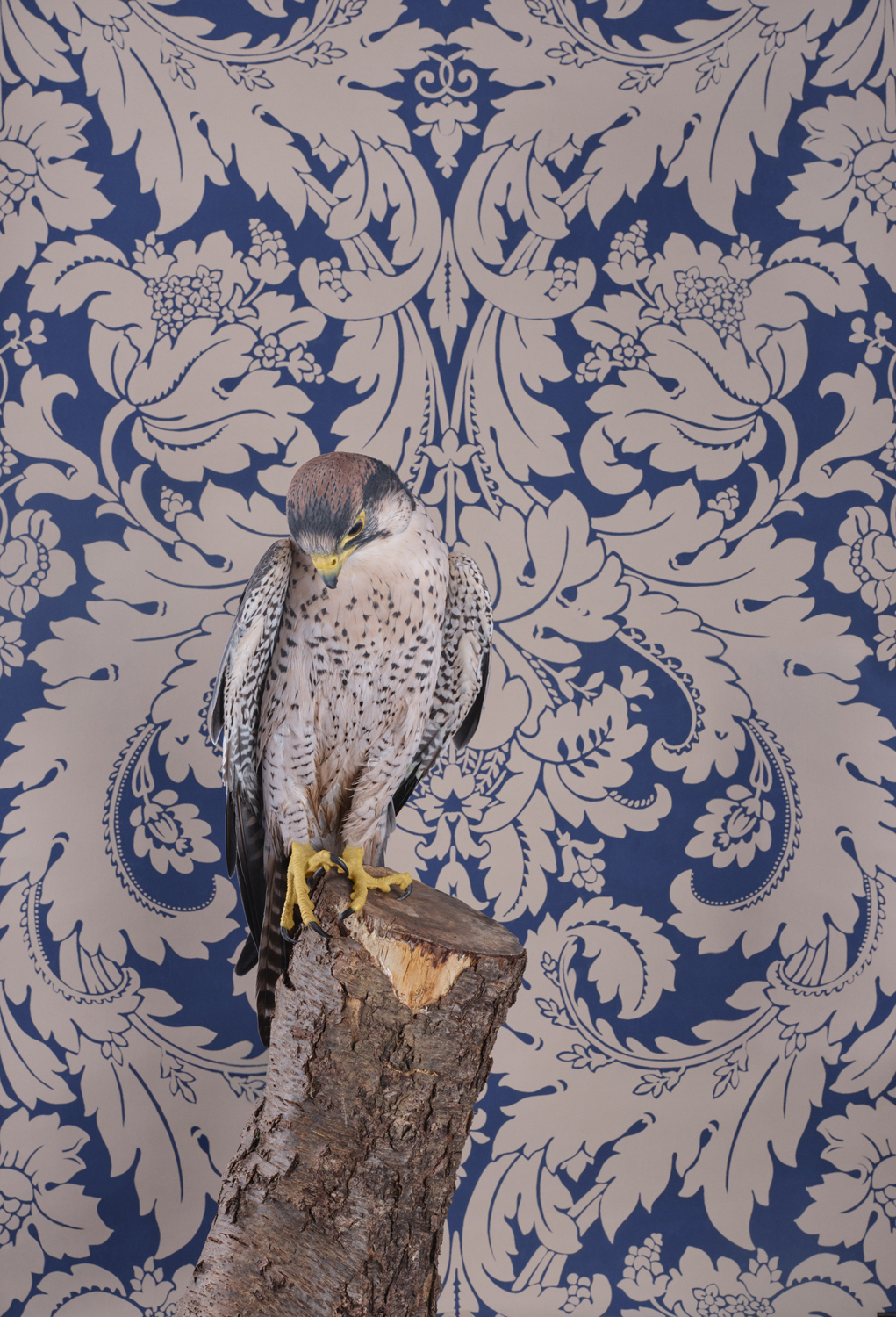
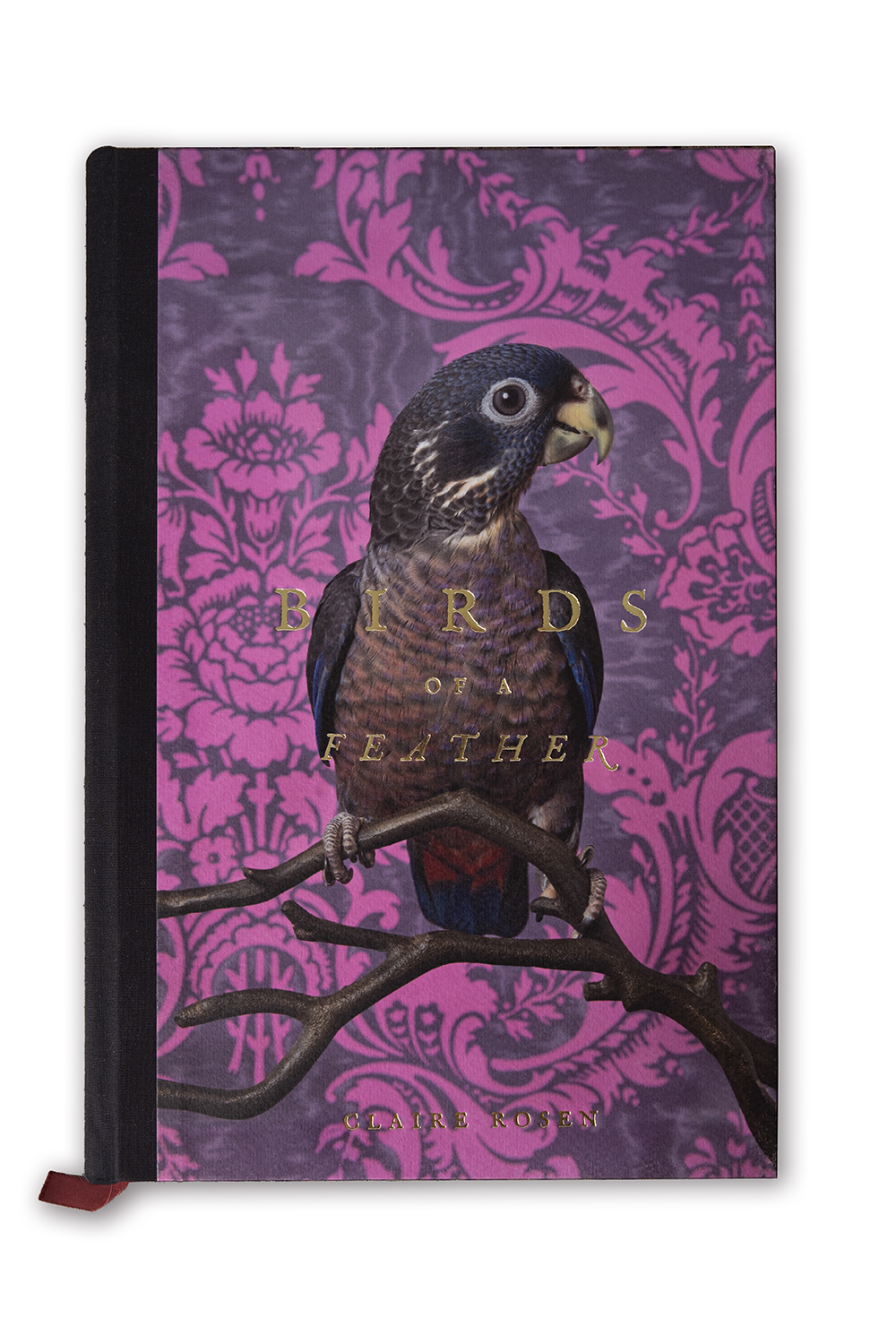
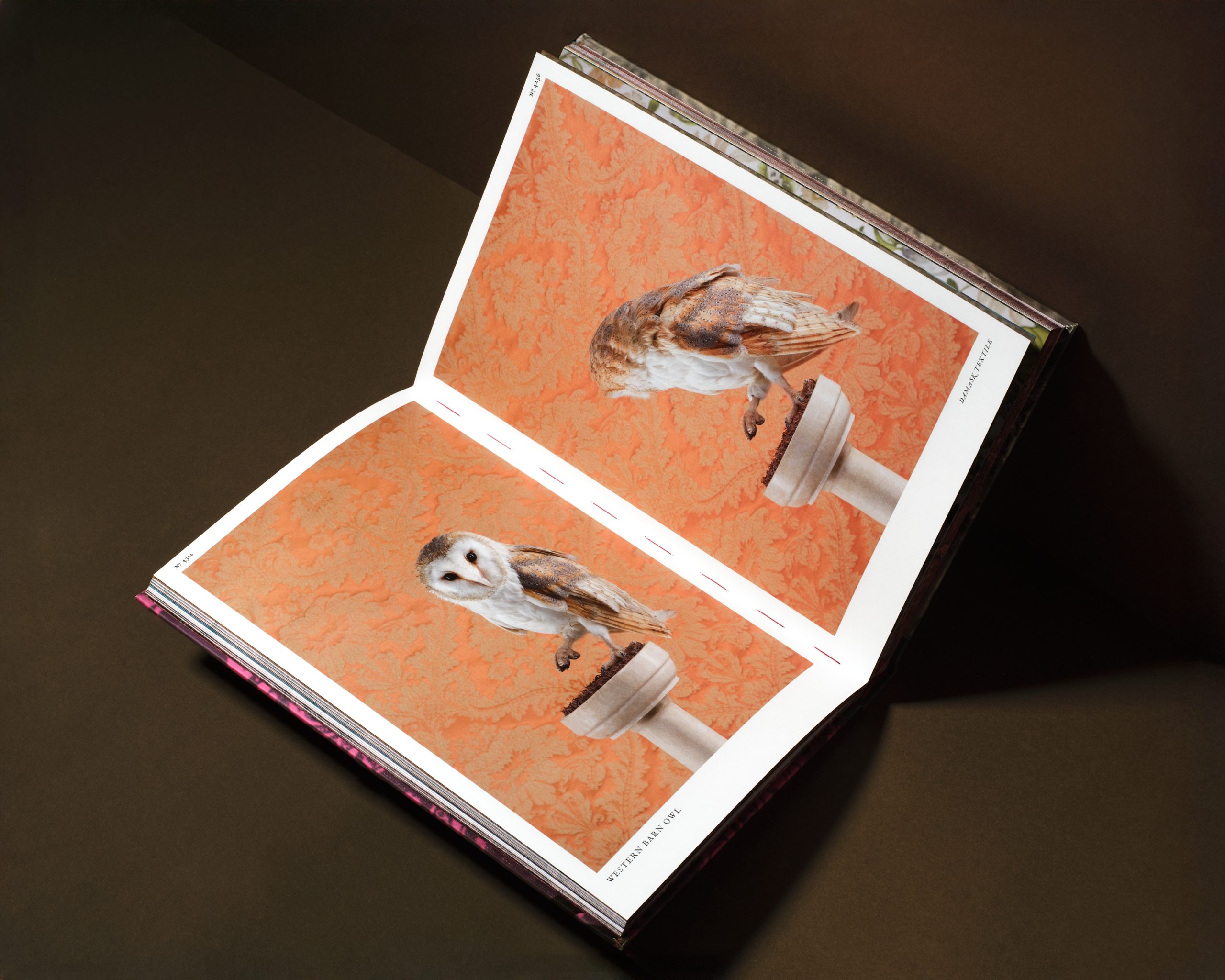
She’s photographed owls, falcons, flamingos, parakeets, and backyard chickens against opulent, Victorian-inspired wallpaper backdrops, and every one of the birds has called the shots. That tension, between control and consent, between beauty and the ethics of looking, sits at the center of her new photobook, “Birds of a Feather.”
It’s 120 color portraits built around one question: what might art owe nature in return?
© Claire Rosen / Warwick Editions & Workshop Arts
The Toucan That Started Everything
A decade-long project about birds found Rosen by accident. She was a working commercial and fashion photographer, doing “much more fashion-esque type of work,” when she went looking for a toucan to shoot and wandered into a pet store.
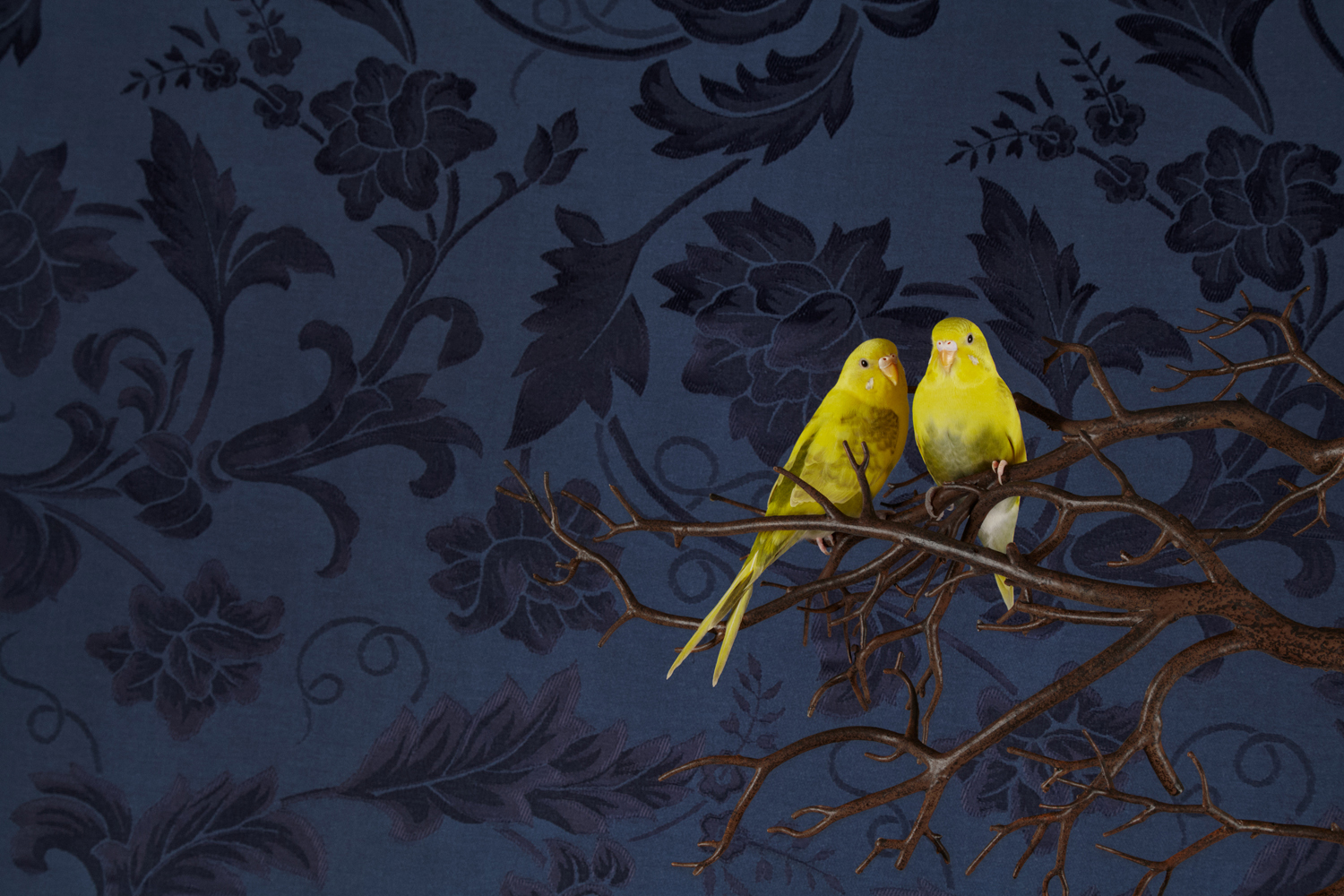
“I just had it in the back of my mind,” she told us. Around the same time, she was hunting for wallpaper for a different shoot and found a pattern covered in birds. “It just was like a little bit of a lightning storm. I was like, oh, I wonder if I could sort of make my own wallpaper with these birds.”
She tested the idea on her own pet parakeets, then brought it to the pet store and asked to try it with theirs. She expected little to come of it. “I got such a kick out of it. I didn’t think that anybody would care about it at all.”
She entered ten or twelve images to the Photoville fence in Brooklyn, a public outdoor exhibition, almost on a whim. That single day of shooting, roughly fifty frames, turned into commissions and print sales. “That was a really validating thing,” she said, “because the exposure of being on the Photoville fence really put the work out there, and it’s really exposed to a wide audience.”
© Claire Rosen / Warwick Editions & Workshop Arts
When Things Turned
Backlash followed. In 2012, Rosen found herself targeted by animal rights activists over her use of pet store birds. “It was definitely alarming to me,” she said.
Their criticism reshaped the project. Rosen began working almost exclusively with sanctuaries and rescue organizations, photographing birds who already had an established relationship with the people caring for them rather than birds pulled fresh from the wild or the retail trade.
That shift also pushed her toward a bigger idea: that decorative, seductive imagery could carry a conservation message underneath it, and that beauty might be an easier door into a hard conversation about bird population statistics.
Rosen let the criticism change her approach, and the project got stronger.
© Claire Rosen / Warwick Editions & Workshop Arts
Working the Room With Wild Collaborators
Here’s how she described her approach to working with birds on their own terms:
- She talks with handlers and caretakers ahead of time to understand what makes each bird comfortable: quiet or noise, dim light or bright, crowds or solitude
- She learns feeding schedules and the time of day each bird is most alert and engaged
- She tests every exposure and lighting setup completely before the bird ever enters the space, so its time in front of the camera stays as short as possible
- She lets the animal decide whether to participate at all, and stops after a try or two when interest fades
- She sometimes turns away entirely, watching through a tablet screen rather than staring directly at a skittish subject
“If they don’t want to participate, they don’t have to,” she said. “The animal has to decide to participate.”
Rosen shoots continuously once the bird is in front of the camera, sometimes with flash and sometimes without, depending on the species and the setting, because “the magic happens” in a narrow window and each moment is the only take she might get.
You follow the moment instead of directing it, and you prepare so you’re ready the instant it arrives.
© Claire Rosen / Warwick Editions & Workshop Arts
The Camera That Gets Out of the Way
Rosen shoots Fujifilm, and she’s candid about what that relationship actually looks like day to day. Her attention stays on everything else happening around her.
“I really appreciate their cameras because they just work,” she said. “I don’t have to think about them and they don’t get caught up like some of the other large format cameras. I’m so focused on everything else that’s happening. The fact that they’re just easy going and I don’t have to worry about it is like my favorite thing about it.”
She works with the Fujifilm GFX100, and the files carried her through a book that spans camera bodies she used more than a decade ago. “I shoot with the GFX100 and the files are just always so good and so forgiving. If you mess something up, they’re pretty good about it.”
Her kit stays lean by design. She works with a single lens across the entire project, the GF32-64mm F4 R LM WR, and lets her exposure choices do the rest of the work. Here’s how she described her approach:
“The f-stop varies depending on the lighting conditions, but I choose an aperture that creates a very small amount of separation between the bird and the background, while maintaining enough depth of field that the bird can move a bit and remain sharp, and the background still feels in focus. I’m also trying to maintain a fast enough shutter speed to accommodate the birds’ movement, sometimes while working within the constraint of the flash sync speed, and keeping the ISO as low as possible.”
That’s a masterclass: separation, speed without noise, every setting built around a bird that won’t sit still.
Here’s a tip worth borrowing for your own archive: Rosen worked with a retoucher for two years to bring older Canon-era files up to a consistent standard alongside newer captures, leaning on AI-assisted sharpening to close the gap.
Modern processing tools can update and improve long-forgotten photos, so your decade-old files work well next to your newest work.
© Claire Rosen / Warwick Editions & Workshop Arts
Building a Book From Two Thousand Images
Turning thirteen years of shoots into a 208-page hardcover meant returning to material Rosen had passed over the first time around. She and a longtime creative collaborator worked through roughly one to two thousand images and landed on the 120 that made the final cut.
“The pictures are related by color but not necessarily in a literal way,” Rosen explained. “It was about the kind of dialogue of the birds across the page with each other.” Facing pages consider how the birds’ gazes interact, how they occupy negative space together, and what mood emerges when one portrait sits beside another.
The book also carries a research thread Rosen stumbled into. While digging into the Victorian era and the legacy of naturalists like Audubon, whose scientific illustrations required killing the birds he painted, she came across a lineage of women largely written out of ornithology’s popular history.
One of them effectively founded the concept of birdwatching itself, arguing in a book called “Birds Through the Opera Glass” that you learn more from observing a living bird than from trapping and killing one. Another founded one of the country’s first hawk sanctuaries, an hour from Rosen’s own farm, a discovery that surprised her completely.
Those histories now run through “Birds of a Feather” as quotes and context alongside essays from Femke Speelberg of the Metropolitan Museum of Art and National Geographic’s Joel Sartore.
If you want to see the full project, you can find “Birds of a Feather” at claire-rosen.com.
Photographer, or Something More
We asked Rosen when she started calling herself an artist rather than a photographer. For her, it happened early, and accuracy drove the decision.
“Photography, I feel, is a part of the tool set,” she said. “For me a lot of the time it’s about the conceptualization and the world building. The photography is the tool that makes it work for me, because I’m not a painter, I’m not good at drawing on that level. It feels like the perfect medium to communicate with, but it’s not about photography for me.”
That world-building is where she says the real satisfaction lives, even against the current moment’s skepticism about staged, elaborate imagery. “Especially with AI is something I’m contending with now, where people either think the work is AI or they’re like, why don’t you just do this with AI,” she said.
“For me, the travel, the meeting the people, the working with the animals, the anxiety of whether it will work, all of the adventure of my lifetime making this work is very fulfilling and satisfying and thrilling. It’s just thrilling.”
She laughs at how it sounds from the outside. “I’m sure other people would think that’s a really silly way to spend your time. It’s like throwing dinner parties for animals. It’s a little ridiculous.” Underneath the whimsy sits something more deliberate: a version of the world built on her own terms, standing against what she calls “the drudgery of this contemporary society that we’ve made.”
The Practice Behind the Portraits
Toward the end of our conversation, I asked Rosen what advice she’d offer other artists. Her answer skipped gear and technique entirely and went straight to protecting the part of the process that gets sacrificed first when life gets busy.
“My words of encouragement would be to not give up your sense of play and experimentation,” she said. “My practice is so rooted in play and messing around, and not worrying if it’s going to be something that other people will like, but it’s about the experiences that I want to have. Coming from that place, I feel like it just always works out. But it’s the sort of the quickest thing that we forget to do, or that gets sacrificed for all of the have-to-dos.”
She’s honest that holding onto that practice takes real, unglamorous boundaries. She caps her phone at an hour a day. She set Sundays aside as a day she has to make pictures, no exceptions. “They suck sometimes, and that’s fine,” she said. “I just have to make something.”
That’s the encouragement we need: create a process, set boundaries, and protect the time you give your own work.
Birds of a feather stick together, and so do artists. Claire Rosen’s decade with this project started with a wallpaper pattern and led to the broader purpose of conservation. Thank you Claire Rosen for sharing your work and thoughts with us. And congratulations on IPA Book Photographer of the Year, https://photoawards.com/social/zoom.php?eid=8-1722618110-26!
Elevate Your Vision


Read this story and all the best stories on The Luminous Landscape
The author has made this story available to Luminous Landscape members only. Upgrade to get instant access to this story and other benefits available only to members.
Why choose us?
Luminous-Landscape is a membership site. Our website contains over 5300 articles on almost every topic, camera, lens and printer you can imagine. Our membership model is simple, just $2 a month ($24.00 USD a year). This $24 gains you access to a wealth of information including all our past and future video tutorials on such topics as Lightroom, Capture One, Printing, file management and dozens of interviews and travel videos.
- New Articles every few days
- All original content found nowhere else on the web
- No Pop Up Google Sense ads – Our advertisers are photo related
- Download/stream video to any device
- NEW videos monthly
- Top well-known photographer contributors
- Posts from industry leaders
- Speciality Photography Workshops
- Mobile device scalable
- Exclusive video interviews
- Special vendor offers for members
- Hands On Product reviews
- FREE – User Forum. One of the most read user forums on the internet
- Access to our community Buy and Sell pages; for members only.
You may also like