




Images and text © Paul Bock 2026
Under the Arizona sun, water and time have been collaborating for millions of years. Inside the Upper and Lower Antelope Canyon, flash floods carved narrow passages through Navajo Sandstone, shaping walls that feel at once geological and strangely human.
What interested me was not the canyon as a landmark, but as a place where form begins to drift away from literal meaning. In these spaces, stone turns fluid, shadows become structural, and light behaves almost like a living material. At times the walls suggest faces, figures, architecture, or movement, but never completely. The associations appear briefly and then dissolve back into rock.
The photographs move gradually from softer, flowing forms toward more rigid and monumental structures, then finally toward openness and light. Rather than isolated images, I think of them as fragments of the same visual conversation.
The extraordinary color inside these canyons is real and constantly changing. Direct sunlight creates bright yellows and whites, the sandstone itself carries deep reds and oranges, and reflected skylight introduces unexpected violets and blues. None of it stays still for long.
The images were made inside the Upper and Lower Antelope Canyon near Page, Arizona, within the Navajo Nation. These slot canyons were formed over roughly 190 million years as seasonal floodwaters cut through layers of Navajo Sandstone, once ancient desert dunes compressed into stone.
Photographing there feels less like documenting a landscape and more like entering a moving system of reflected light. The canyon changes minute by minute. A slight shift in the sun transforms the walls completely, turning solid rock into something closer to fabric, smoke, or skin.
This project of ten images was awarded the PFIAP distinction, recognizing the technical and artistic merit of the portfolio.
The Scream
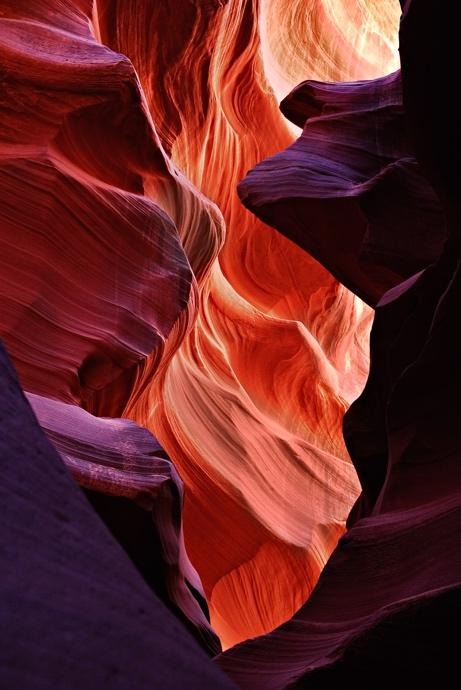
I began the sequence with this image because it immediately felt emotional rather than geological. The shape appeared suddenly out of the wall and disappeared just as quickly when viewed from another angle.
The tight framing removes any sense of scale. It could be a tiny detail or a massive formation. Either way, the hollowed shape and dark center carry an unmistakably human tension.
The Blade
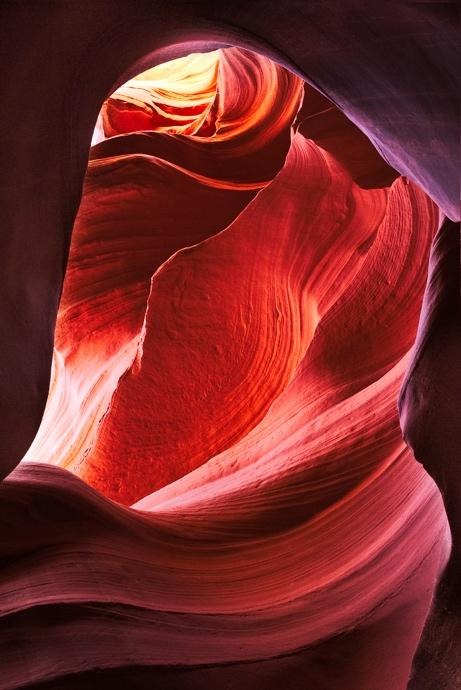
This one is really about contrast: a thin edge of illuminated sandstone against heavy shadow.
The canyon briefly stops feeling soft here. Instead of flowing curves, the rock sharpens into something precise and almost dangerous. I liked how the light turns the edge nearly translucent while the surrounding mass remains dense and immovable.
Faces
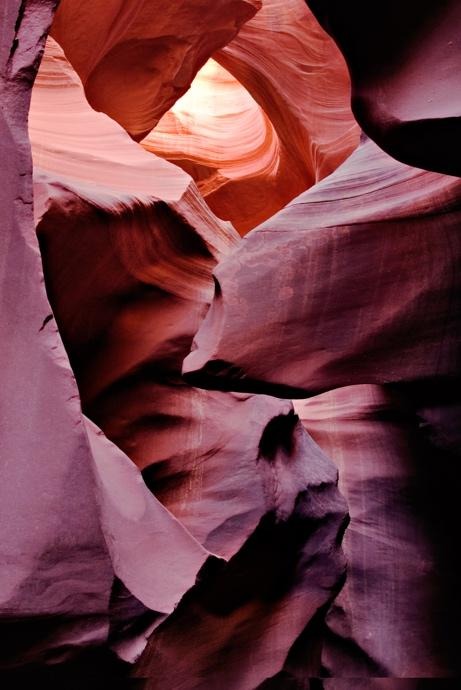
The longer I looked at these walls, the more they started suggesting overlapping profiles and expressions. Not clearly enough to become literal, but just enough for the mind to keep searching.
I intentionally excluded the ground and sky so the forms could float without scale or orientation. The image becomes less about place and more about perception.
The Chin
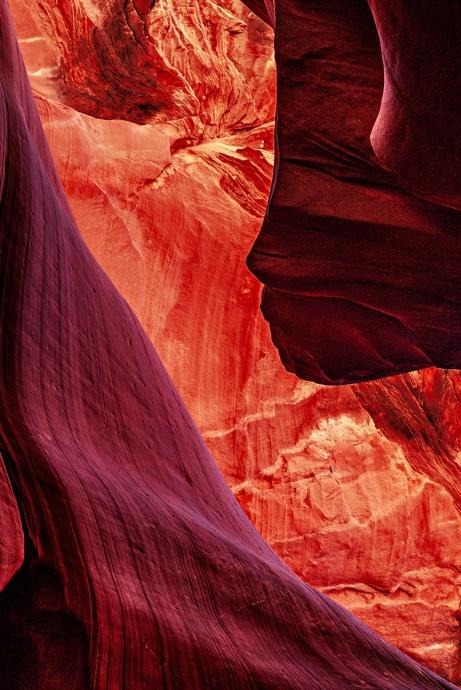
This photograph slows the sequence down.
The shapes are heavier, broader, and quieter than the images before it. What interested me most was the surface itself—the fine textures and wind-like striations that make the stone feel almost touchable.
Sometimes the canyon feels theatrical. Here it simply feels ancient.
The Dance
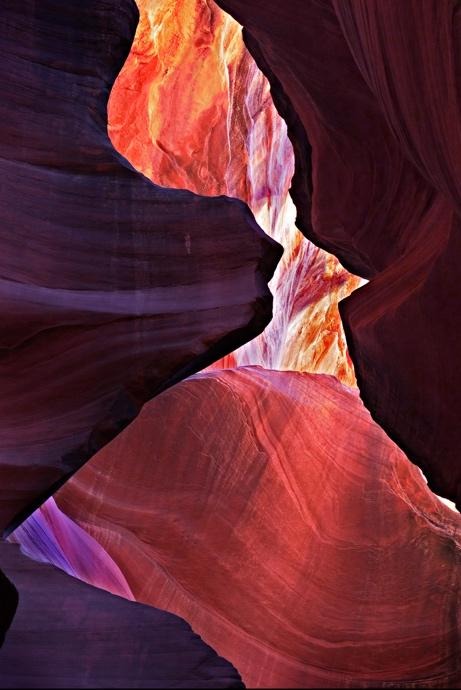
This was one of those moments where the canyon briefly stopped looking like stone altogether.
The shape suggested movement immediately: a twisting figure, hair in motion, fabric turning in light. Another viewer might see something entirely different, which is part of why I left the framing tight and unresolved.
The colors and transitions were already there; the challenge was simply to photograph them before the light changed again.
Hourglass
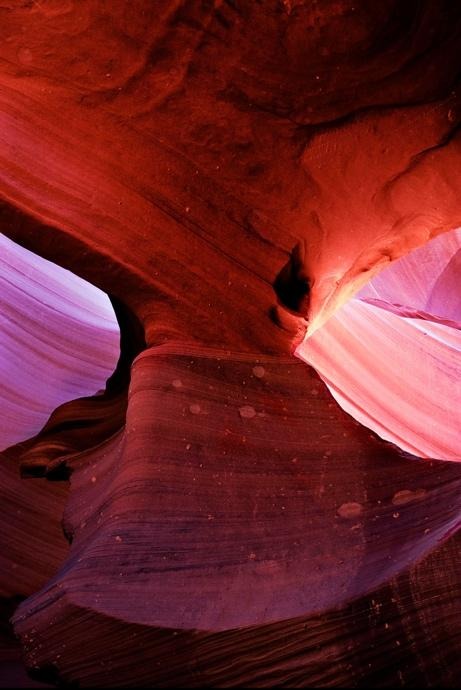
The narrow center naturally suggested the shape of an hourglass, which made the title unavoidable.
Light barely reaches this part of the canyon directly. By the time it arrives, it has already bounced through layers of sandstone and reflection, picking up warmth and saturation along the way. The rock almost appears to glow from inside.
Giant Steps
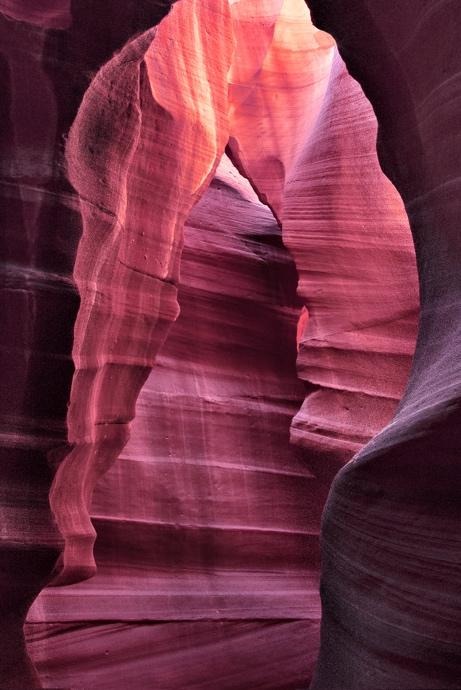
Here the canyon shifts from fluid to architectural.
The layered formations reminded me less of erosion and more of construction—as if the walls had been assembled rather than carved. After the intimacy of the earlier photographs, this image opens the space back up and lets the structure breathe.
Darth Vader
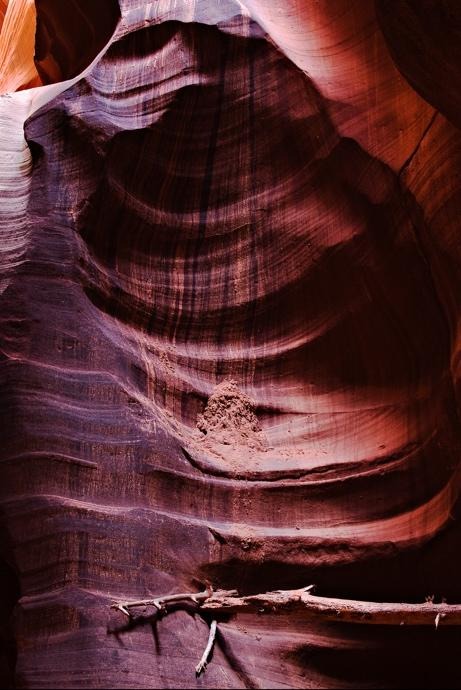
I almost didn’t title this one because the association felt too obvious once I saw it.
The resemblance lasts only for a moment before the form collapses back into shadow and rock. Still, that brief connection between ancient geology and modern mythology interested me enough to keep it in the sequence.
Rocks
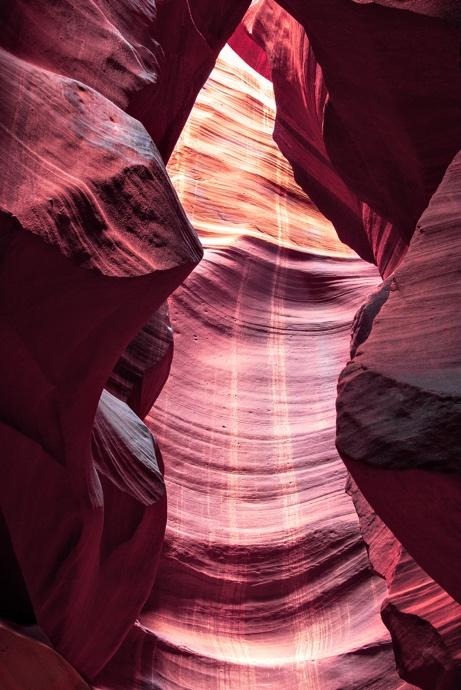
This image strips things down to surface, texture, and light.
No implied figures, no symbolism—just sandstone shaped by water and time. After several psychologically loaded images, I wanted one photograph that simply allowed the material itself to speak.
Looking Up
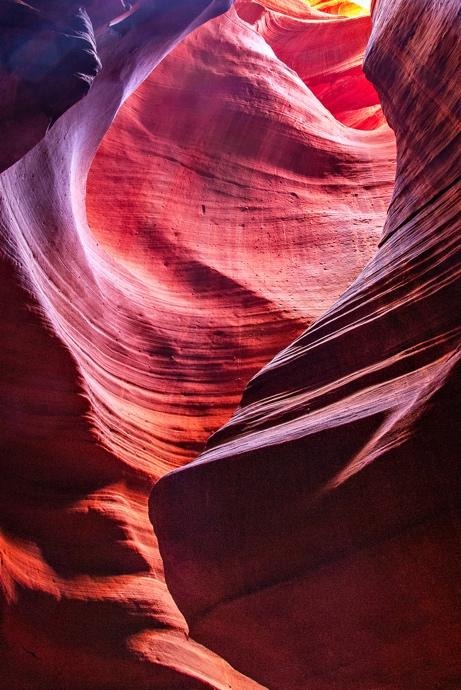
The final image opens the canyon back toward the sky.
After so many enclosed forms and shadows, this felt like release. The walls pull the eye upward toward the narrow opening where the entire experience begins: a thin ribbon of light entering from above.
Epilogue
Antelope Canyon is often described as sacred space, shaped by water, time, and light over immense stretches of history. Photographing there felt less like capturing scenery and more like paying attention to small moments of transformation—moments where stone briefly resembles memory, gesture, architecture, or living form.
What stayed with me most was how unstable everything felt. Nothing inside the canyon is visually fixed. A small movement of the sun changes color, depth, texture, and meaning. The photographs are simply records of those brief alignments.
Different viewers will inevitably see different things in these walls. That uncertainty is part of the experience. The canyon keeps changing, and so does the act of looking.
Elevate Your Vision


Read this story and all the best stories on The Luminous Landscape
The author has made this story available to Luminous Landscape members only. Upgrade to get instant access to this story and other benefits available only to members.
Why choose us?
Luminous-Landscape is a membership site. Our website contains over 5300 articles on almost every topic, camera, lens and printer you can imagine. Our membership model is simple, just $2 a month ($24.00 USD a year). This $24 gains you access to a wealth of information including all our past and future video tutorials on such topics as Lightroom, Capture One, Printing, file management and dozens of interviews and travel videos.
- New Articles every few days
- All original content found nowhere else on the web
- No Pop Up Google Sense ads – Our advertisers are photo related
- Download/stream video to any device
- NEW videos monthly
- Top well-known photographer contributors
- Posts from industry leaders
- Speciality Photography Workshops
- Mobile device scalable
- Exclusive video interviews
- Special vendor offers for members
- Hands On Product reviews
- FREE – User Forum. One of the most read user forums on the internet
- Access to our community Buy and Sell pages; for members only.
You may also like