




Let’s be honest. When most photographers hear “GoPro,” they think helmet cams, surf clips, and that over-sharpened, fish-eye-everything look. GoPro has owned the action camera lane for years, and that’s fine.
But the new Mission 1 Pro ILS is a different kind of announcement. This is GoPro making a deliberate move toward compact cinema territory – and for a certain kind of photographer or videographer, it deserves a closer look.
Note: GoPro announced the Mission 1 Pro ILS on April 14, 2026, with availability slated for Q3 2026. We haven’t had hands-on time with the camera yet. This is an analysis based on official launch material and early coverage.
What GoPro Announced
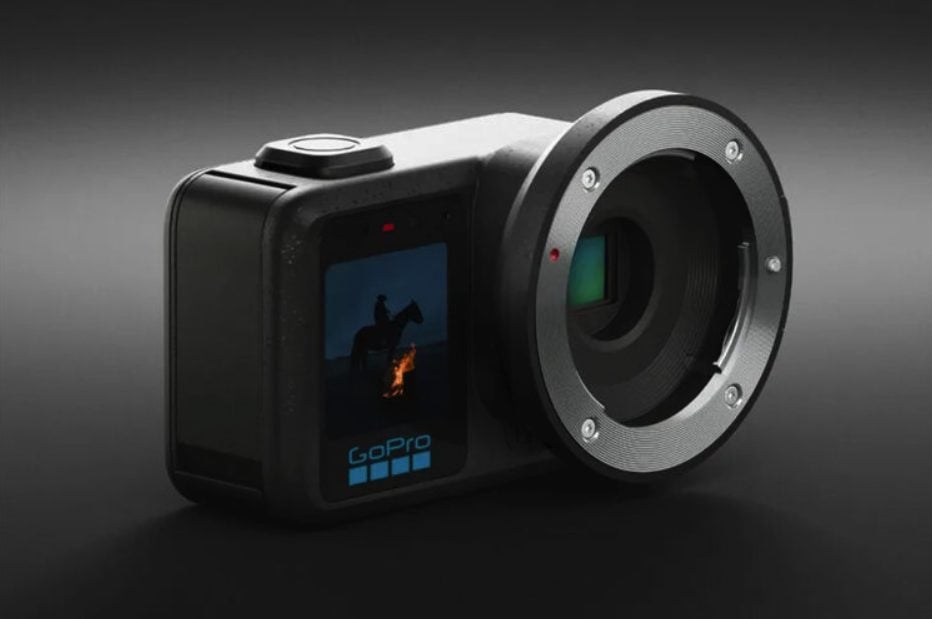
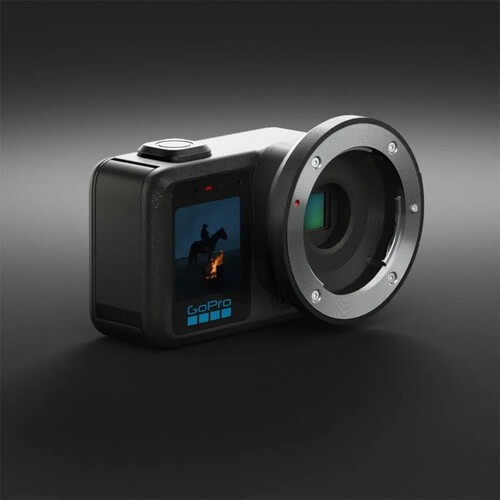
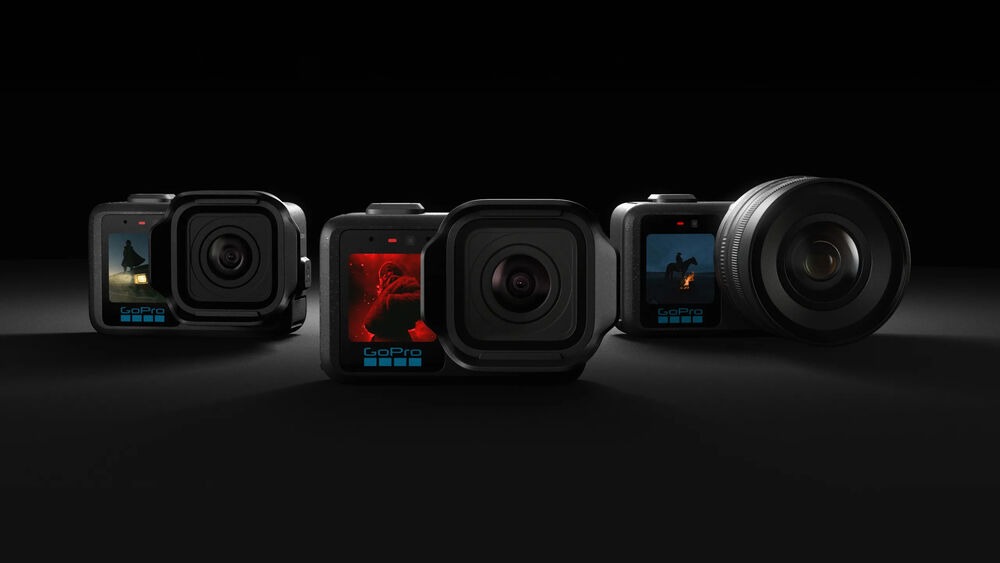
The Mission 1 family breaks into three cameras: the Mission 1, the Mission 1 Pro, and the Mission 1 Pro ILS. The first two are fixed-lens action cameras in the classic GoPro mold. The ILS – Interchangeable Lens System – is the one that changes the conversation.
All three share the same new 50MP 1-inch-type sensor and GP3 processor. That sensor is a big step up from the Hero 13’s 1/1.9-inch chip. You’re getting:
- 50MP stills vs. the Hero 13’s ~27MP
- Up to 14 stops of dynamic range (vs. a measured ~13 on the Hero 13)
- 8K60, 4K240, and open-gate 4K120 recording
- 10-bit GP-Log2 and HLG-HDR
- Up to 240Mbps bitrate
- 32-bit float audio
- 5+ hours runtime at 1080p
That sensor jump is the biggest thing that matters. Yet – the ILS is where GoPro’s ambitions get interesting.
The Mount That Changes Things
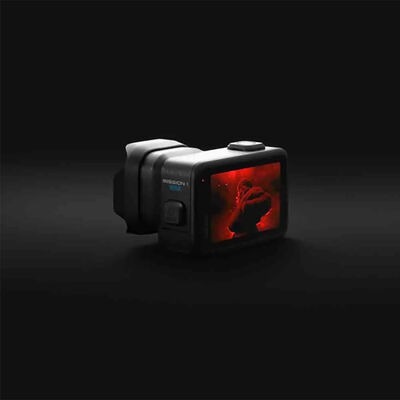
Here’s what makes the ILS unusual: it uses a Micro Four Thirds lens mount, but the sensor is still 1-inch.
A true MFT sensor – like what you’d find in a Panasonic GH7 or an OM System body – measures 17.3 x 13mm. The 1-inch sensor in the Mission 1 Pro ILS is 13.2 x 8.8mm. That’s about half the surface area, which means roughly a 1-stop light-gathering difference compared to a true MFT sensor.
The MFT mount gives GoPro access to a massive existing lens ecosystem without building one from scratch. That opens up useful creative territory.
The crop factor lands around 2.7-3x relative to full frame. That means:
- A 25mm MFT prime behaves like a ~75mm equivalent – great for compression and tight controlled work
- A 50mm becomes roughly 150mm equivalent – serious telephoto reach in a tiny package
- An Olympus 7-14mm ultra-wide becomes more like a 21-42mm – useful, just less expansive than the focal length suggests
Wide-angle gets compressed. Telephoto, macro, and specialty glass get interesting.
The Autofocus Conversation
The Mission 1 Pro ILS is manual focus only. Early hands-on coverage confirms the mount has no electronic contact pins, meaning focus and aperture control are manual with MFT glass.
For some shooters, that’s a dealbreaker.
This camera is built for setups where you know your working distance ahead of time – crash rigs, drone payloads, car mounts, underwater housings, gimbal work, macro setups, controlled video production. In those contexts, manual focus is standard practice.
Focus aids include punch-in zoom and focus peaking – workable tools when you’re setting up a shot in advance rather than chasing a subject.
Why This Matters to Photographers with MFT Glass
To those photographers who already own Micro Four Thirds lenses: those lenses still have work.
If you shoot with OM System, Panasonic Lumix G series, or have a collection of adapted manual glass, the Mission 1 Pro ILS gives those lenses a new job. A niche one – of course – but a real one.
A small MFT prime like the Panasonic 25mm f/1.7 or the Olympus 45mm f/1.8 pairs well with this body for controlled video work on a gimbal or rig where size and weight matter.
The telephoto math works well here. Macro photographers running the Olympus 60mm f/2.8 macro would see it behave like roughly 180mm equivalent – impressive reach in a body that fits almost anywhere.
The MFT ecosystem is deep. Primes, zooms, cinema primes, adapted Leica glass, speed boosters (which can partially compensate for the crop factor) – the creative options expand considerably compared to any previous GoPro.
The Crash Cam Case
The term “crash cam” comes from film production – a small, ruggedized camera placed somewhere a larger camera won’t fit. Car bumpers, underwater housings, tight rigging setups, POV mounts, FPV drones. Put it somewhere your main camera can’t go.
This is where the Mission 1 Pro ILS makes the most sense.
Combine GoPro’s HyperSmooth stabilization with manual MFT lenses, a 1-inch sensor with 14 stops of DR, 10-bit log, and a body small enough to mount almost anywhere – and you have a B-camera that does things a GH7 or OM-1 won’t do from those positions.
The larger cameras are capable – they just won’t fit.
Worth noting on weather sealing: the ILS body is weatherproof, and for real underwater work you’ll need a dedicated housing, same as any ILC. The fixed-lens Mission 1 and Mission 1 Pro are waterproof to 20 meters out of the box – that remains GoPro’s advantage for pure underwater action work.
Where It Sits Against the Competition
The 1-inch sensor behind an MFT mount is a creative tool with a specific job. You get different depth of field rendering, a different low-light ceiling, and different subject isolation than a true MFT body. The GH7 – with PDAF, 7.5-stop IBIS, ProRes RAW, and a larger sensor – is a more capable hybrid body for photographers who need stills performance, reliable AF, and professional video specs in one package. These two cameras serve different roles.
The ILS has no final pricing yet (announced April 14, shipping Q3 2026), and physical dimensions are still conflicting in early reports. Until GoPro publishes final specs and reviewers test production units, any image quality verdict rests on official claims and pre-release footage.
From that early footage: it looks cleaner and less processed than previous GoPro output. Highlight control and shadow rendering both appear improved. Promising – needs confirmation.
The Industry Signal
Stepping back from the spec sheet and looking at what GoPro is saying with this camera…
Action camera makers have been bumping into the ceiling of the fixed-lens form factor for years. DJI, Insta360, and GoPro have all pushed resolution, stabilization, and dynamic range about as far as a tiny fixed-lens camera body allows. The next move is going to involve bigger sensors, interchangeable lenses, or both.
GoPro chose both. Rather than building a full mirrorless system from scratch, or upsizing to a true MFT sensor, they found a middle path: an established lens mount, a sensor size that keeps the body compact and thermally “able”, they aimed at the compact cinema and specialty rig market rather than competing with the GH7 on its own turf.
It’s a smart read of where they can compete. And it points toward a category that’s been underserved – the pocketable, rugged, interchangeable-lens cinema body you’d put on a drone or a rally car.
The Bottom Line
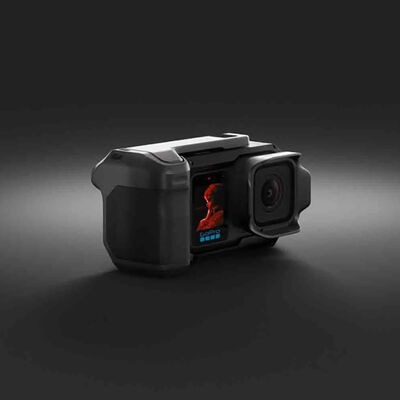
The Mission 1 Pro ILS has a specific job: go where your main camera won’t fit, and do it with real lens flexibility, log color science, and GoPro-grade ruggedness.
For landscape and fine art photographers, this probably lives in the “fascinating but outside my workflow” category as a primary body. For hybrid shooters, video-first creators, and photographers who want a specialized B-cam with real lens flexibility, this is worth watching.
Pricing and production reviews will tell the final story. The Mission 1 Pro ILS is a smart, honest step in a new direction.
Stay tuned – when production units ship, we’ll get one in hand for a full field review.





Elevate Your Vision


You may also like