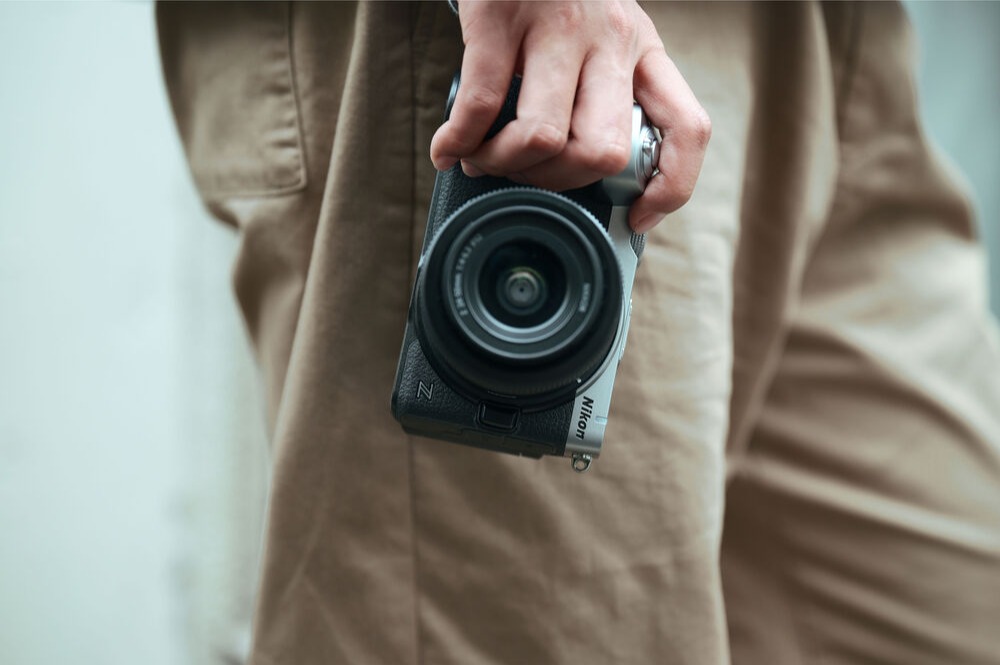





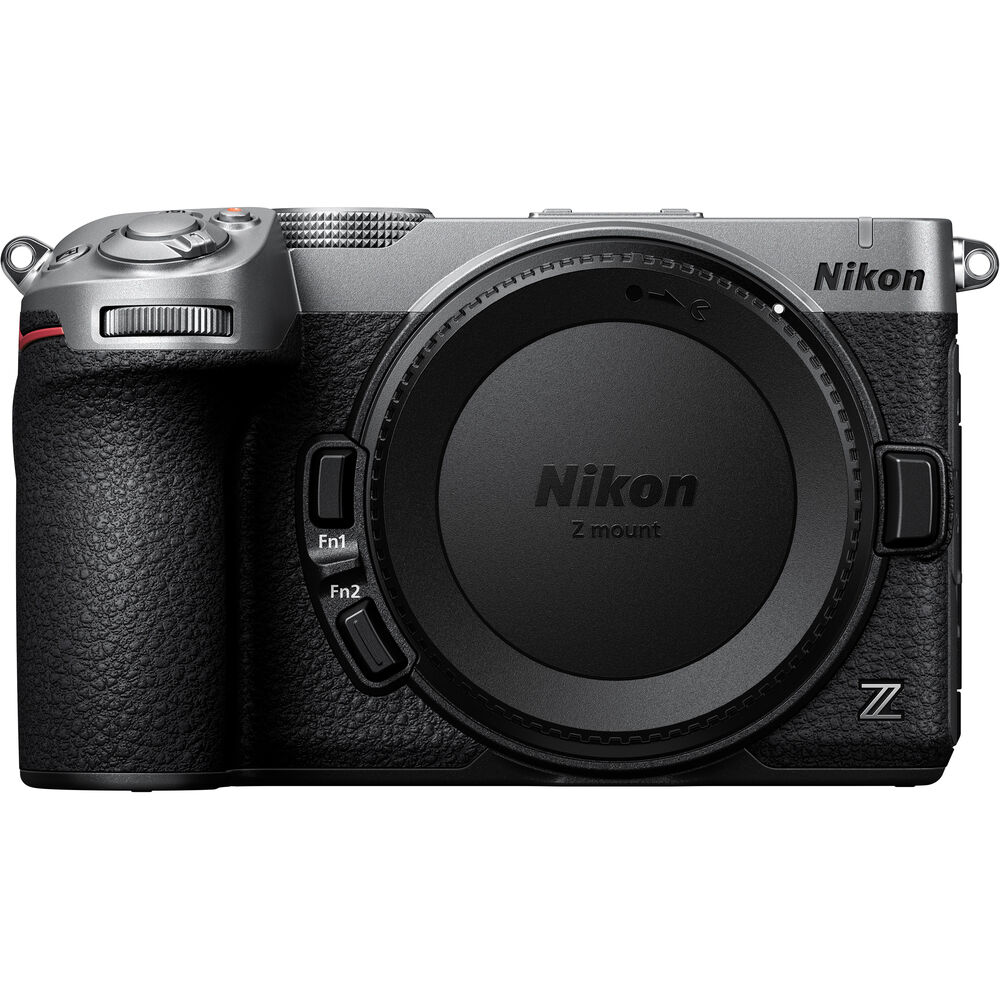
Nikon is betting a lot of us will. The new Z5IIC takes the 24.5MP backside-illuminated sensor, EXPEED 7 processor, autofocus and 5-axis stabilization from the Z5II, and then removes the electronic viewfinder entirely.
What’s left is a flatter, cleaner body built for people who already compose on a screen. Nikon says the C stands for “casual.”
Tucked inside is something we didn’t expect to see at this price: internal 12-bit N-RAW video recorded straight to an SD card.
That makes it the least expensive full-frame camera to shoot internal RAW video.
The Z5IIC ships mid-October 2026. It’s $1,399.95 body-only, or $1,699.95 with the compact NIKKOR Z 24-50mm f/4-6.3, in silver/black or all black.
We haven’t had one in our hands yet, so consider this a first look built from Nikon’s specs and early coverage. Here’s our quick read:
- The good: Z5II image quality, IBIS rated to 7.5 stops, modern subject-detection AF, and filmmaking tools that usually cost a lot more
- The tradeoffs: no EVF, a single SD slot, a low-resolution rear screen, and cropped 4K/60p
- The bottom line: a legitimate hybrid camera, and the most interesting one Nikon has made for screen-first creators
What Nikon Built
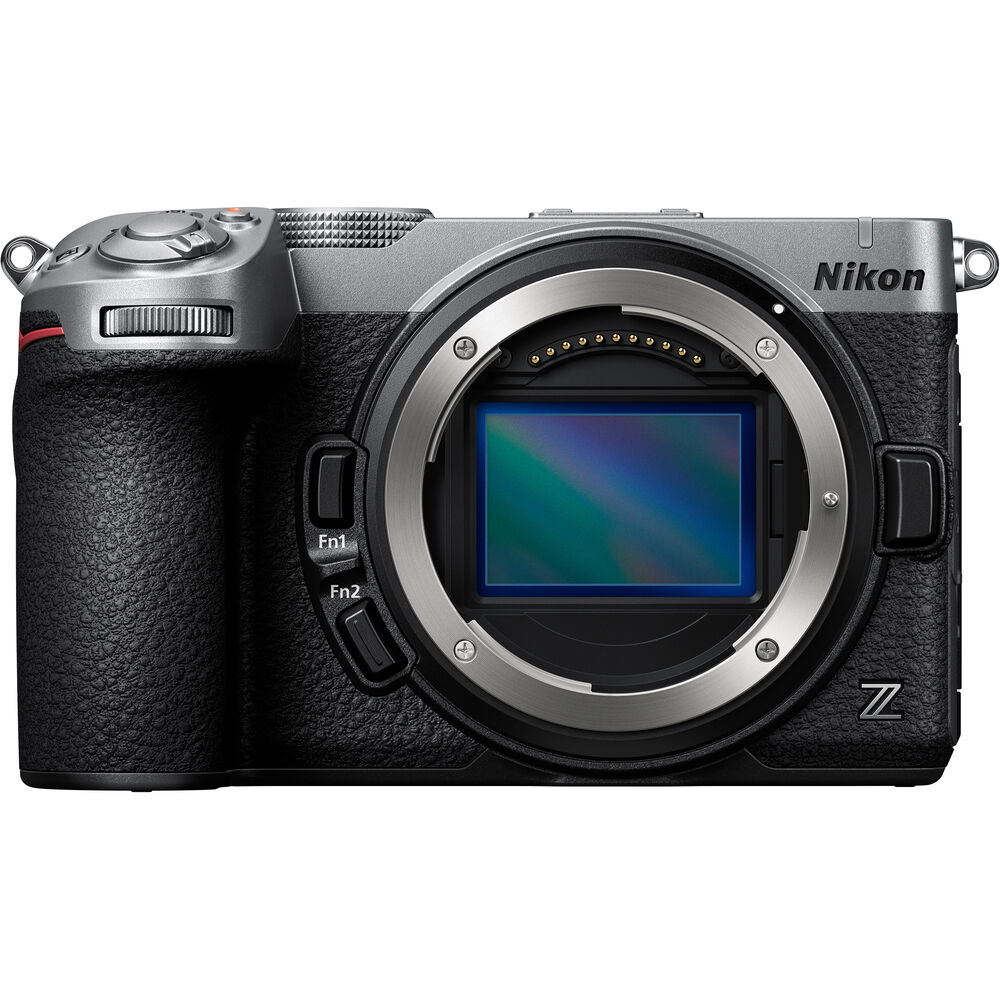
Yes, this is a true full-frame camera.
The sensor measures 35.9 x 23.9mm, the standard FX format, so the 24mm end of the kit lens gives you a real 24mm field of view. That size that delivers strong high-ISO files and shallow depth of field.
| Feature | Nikon Z5IIC |
|---|---|
| Sensor | 24.5MP full-frame BSI CMOS |
| Processor | EXPEED 7 |
| Stabilization | 5-axis IBIS, up to 7.5 stops center / 6 stops periphery (CIPA) |
| Autofocus | Hybrid phase/contrast, 299 auto-area points, 3D Tracking, 10 subject types |
| Burst | About 14 fps extended; 30 fps JPEG in High-Speed Frame Capture+ with pre-release |
| Shutter | Mechanical, electronic front-curtain and electronic; 1/8000 sec to 900 sec |
| Stills ISO | 100-64,000 |
| Video | Full-width 4K to 30p; 4K/60p with DX crop; Full HD to 120p |
| Codecs | 12-bit N-RAW, 10-bit H.265 (N-Log, HLG), 8-bit H.264 |
| Screen | 3.2-inch fully articulating touchscreen, 1.04M dots |
| Viewfinder | None |
| Storage | One UHS-II SD slot |
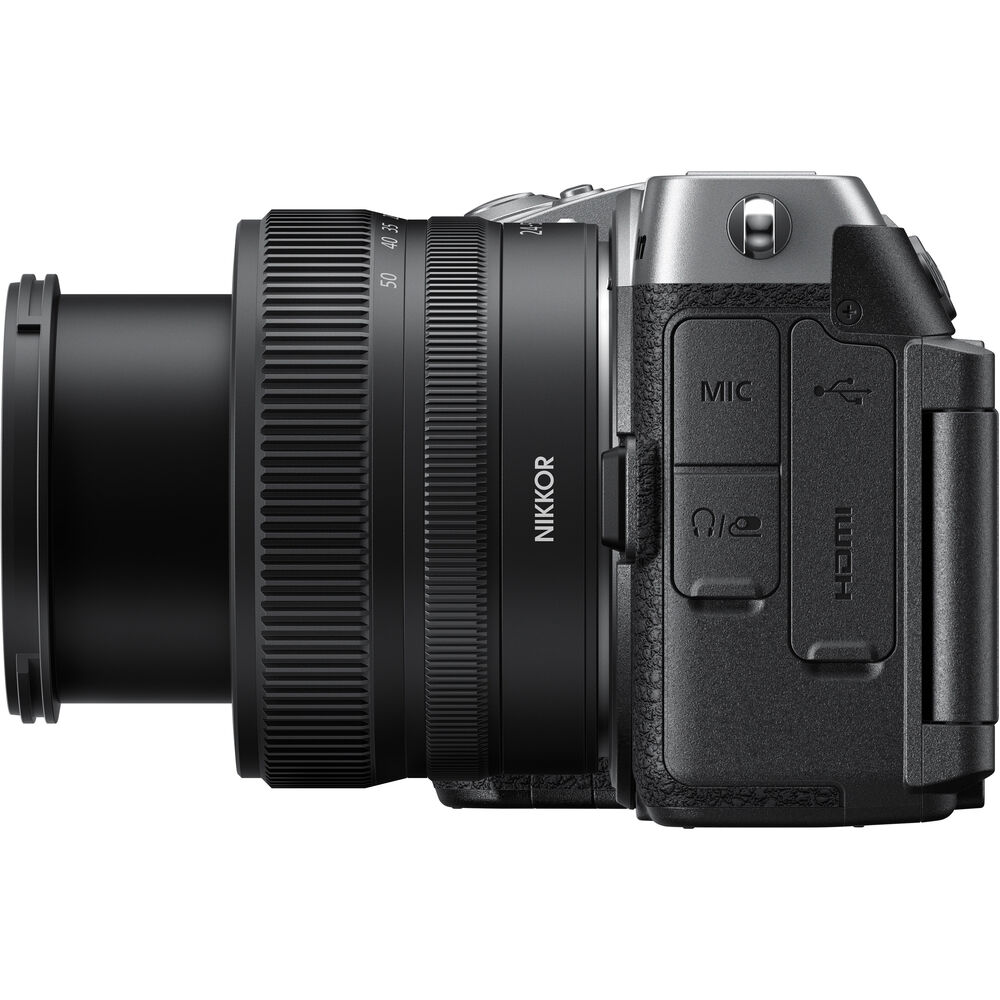
| Ports | 3.5mm mic, 3.5mm headphone/remote, USB-C, Micro HDMI |
| Size | 134 x 80.5 x 72mm |
| Weight | 620g with battery and card (538g body only) |
| Price (US) | $1,399.95 body / $1,699.95 with 24-50mm |
A BSI sensor moves the wiring behind the light-sensitive layer, so more light reaches each photosite. This means cleaner shadows and better low-light performance than older front-illuminated designs of the same resolution.
The Missing Viewfinder: Liberating or Frustrating?
This is the whole camera in one question. Everything else about the Z5IIC follows from Nikon’s decision to drop the EVF.
A whole generation of photographers learned to see through a phone held at arm’s length.
For them, a rear screen feels natural and an eyepiece feels like an extra step. Street shooters love it too, since you keep eye contact with your subject and the camera looks less intimidating.
But if you grew up pressing a camera to your face, you know what an EVF gives you:
- Glare-free viewing in bright sun, when exposure, color and fine detail get hard to judge on an LCD
- Stability, since bracing the camera against your face steadies long lenses and slow shutter speeds
- Focus confirmation for manual lenses and careful landscape work
We don’t understand this though…on a camera where the screen is your only window, Nikon chose a 1.04-million-dot panel.
That’s roughly half the resolution of the Z5II’s 2.1-million-dot display. The screen is larger at 3.2 inches and fully articulating, which helps for high angles, low angles and vertical framing. We just wish it were sharper.
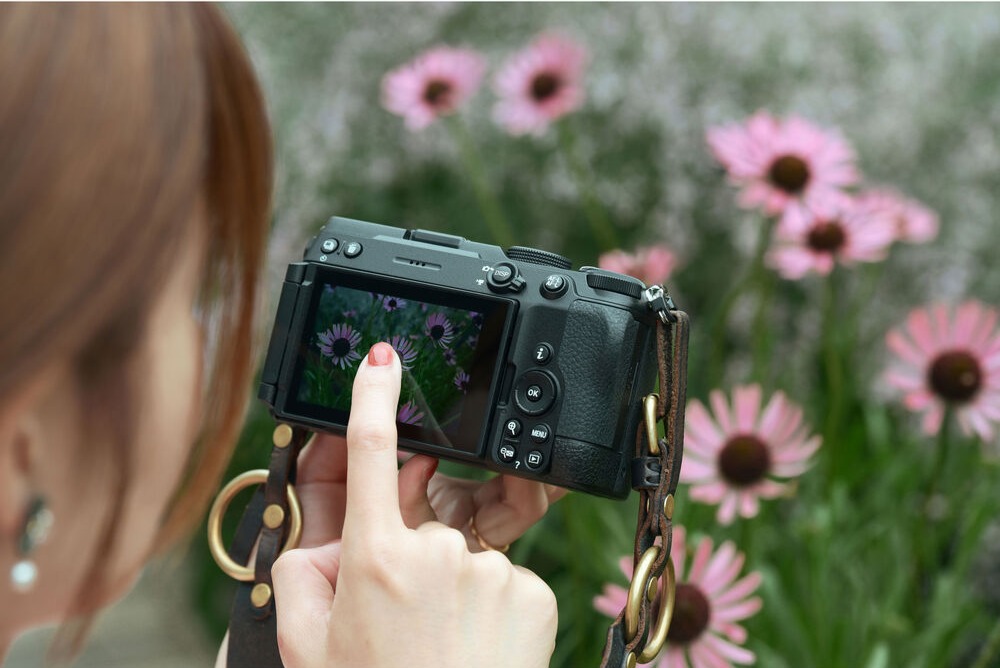
Image Quality, Stabilization and Autofocus
Z5II Files in a Smaller Package
Nikon says the Z5IIC and Z5II share the same full-frame image quality, and early independent testing backs that up. You get 14-bit NEF raw files, ISO 100-64,000, and all the tonal range you’d expect from a modern 24MP full-frame sensor. That’s plenty for professional work and big prints, though it won’t give you the cropping room of a 33MP or 45MP body.
Landscape shooters get two quiet gifts. The camera keeps a full mechanical shutter, which avoids introducing the rolling-shutter distortion electronic shutters can cause sometimes.
Manual exposures stretch all the way to 900 seconds, which is great news for night skies and long ND work without an external timer.
Stabilization
The 5-axis in-body stabilization (IBIS) is rated up to 7.5 stops at the center of the frame and 6 stops at the edges under CIPA testing. On paper, a shot that needs 1/60 second handheld could stretch past a full second in ideal conditions.
Your results will vary with technique and focal length, but this helps handheld in low light shooting and makes unstabilized primes and vintage glass far more usable.

Modern Nikon Autofocus
The AF system uses 3D Tracking and recognizes 10 subject types, including people, dogs, cats, birds, vehicles, aircraft and fish. Nikon rates low-light acquisition down to -10 EV, though that’s measured with an f/1.2 lens under specific test conditions.
Action is where the monitor-first design shows limits. Continuous shooting tops out around 14 fps in extended mode. The 30 fps High-Speed Frame Capture+ mode, with pre-release capture, records JPEG only.
There’s also no AF joystick, so you’ll move focus points with the touchscreen or four-way controller. That works fine for street and travel. For birds in flight with a long lens, it’s a harder sell.
Video: The Real Deal
Here’s something that excites us. The Z5IIC records 12-bit N-RAW internally to a single SD card. At $1,399.95.
That’s awesome – RAW video captures the sensor data before the camera bakes in white balance, sharpening and heavy compression. That gives us far more room to push exposure, rescue highlights and shape color in the grade.
Until recently, this kind of file usually meant an external recorder or a much more expensive body.
The rest of the video toolkit backs that up:
- 10-bit H.265 with N-Log for a lighter workflow that still grades well
- HLG for HDR delivery
- Proxy files alongside RAW for smoother editing
- Waveform monitoring, timecode and focus-breathing compensation
- Clips up to 2 hours 5 minutes
- Creator tools like Product Review Mode, a red recording border, a REC lamp and USB-C webcam streaming
- Mic and headphone jacks, so you can monitor audio properly
The drawback: Full-width, oversampled 4K stops at 30p. Switch to 4K/50p or 60p and the camera crops to the DX (APS-C) area, so your 24mm kit lens behaves like roughly 36mm. For narrative work at 24p, that doesn’t matter at all. For handheld vlogging or matching 30p and 60p shots from one tripod position, it matters. Full HD slow motion tops out at 120p.
A practical note: N-RAW eats storage. Budget for fast V90 SD cards, plenty of drive space and a computer that can handle the files. With only one slot, a card failure means lost footage, so offload and backup often.

The 24-50mm Kit: Small, Practical, Slow
The NIKKOR Z 24-50mm f/4-6.3 is a portability lens first. It weighs 195g, retracts to about 51mm long and focuses as close as 0.35m. Paired with the body, you’re carrying roughly 815g of full-frame kit.
Independent reviews describe good center sharpness and quiet, accurate autofocus. They also note visible vignetting and distortion at 24mm before corrections, though in-camera and raw-converter profiles handle most of it.
The zoom range is only 2x, and the aperture slides from f/4 to f/6.3 near 50mm.
That’s fine for daylight travel, family, street and landscapes. It’s tough for portraits, dim interiors, and if you like that cinematic subject separation.
Our suggestion? Pair the body with a small, fast prime.
Retailers will also sell bundles with the NIKKOR Z 40mm f/2 and the 26mm f/2.8 pancake, and the 40mm is the one we’d grab. That one lens unlocks the low-light and shallow-focus potential this sensor was built for. Landscape shooters chasing edge-to-edge detail for large prints should look at the Z 24-70mm f/4 S.
Nikon Z5IIC vs Canon EOS R8 Mark II
You might be wondering how this stacks up against Canon’s new R8 Mark II. See LuLa’s rundown here:
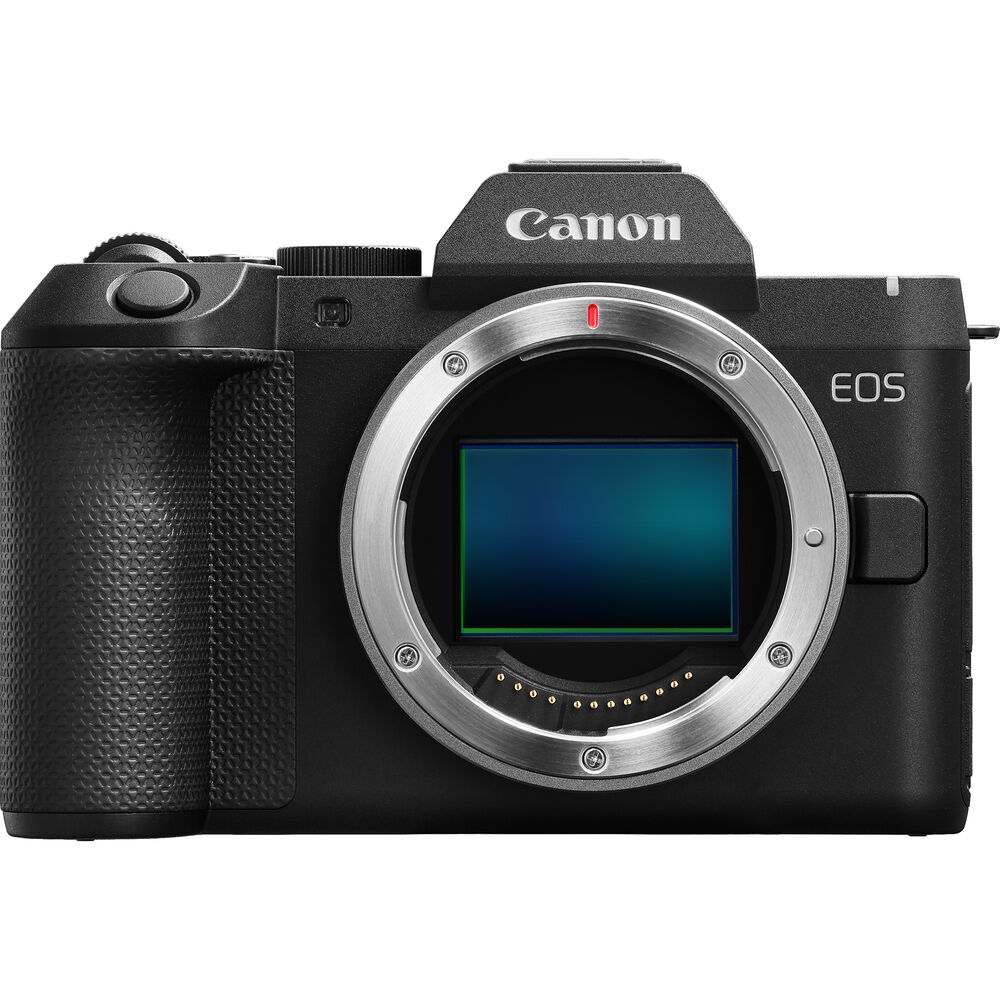
It’s the obvious rival, it ships in late October, and it takes the opposite path. Canon keeps everything a traditional photographer expects and charges a little more for it.
Nikon strips the body down and spends the savings on video tools.
| Feature | Nikon Z5IIC | Canon EOS R8 Mark II |
|---|---|---|
| Price, body | $1,399.95 | $1,899 |
| Price, 24-50mm kit | $1,699.95 | $2,099 |
| Sensor | 24.5MP BSI full-frame | 24.2MP full-frame |
| IBIS | 5-axis, up to 7.5 stops | 5-axis, up to 7.5 stops |
| Viewfinder | None | 2.36M-dot OLED, 0.70x |
| Rear screen | 3.2-inch, 1.04M dots | 3.0-inch, 1.62M dots |
| AF joystick | No | Yes |
| Fastest burst | 14 fps raw; 30 fps JPEG | 40 fps electronic with raw and pre-capture |
| Mechanical shutter | Yes | No (EFCS and electronic only) |
| 4K/60p | DX crop | Uncropped, oversampled from 6K |
| Full HD slow motion | 120p | 180p |
| Internal RAW video | 12-bit N-RAW | No |
| Log | N-Log, HLG | Canon Log 3, HLG/PQ |
| Card slots | One UHS-II SD | One UHS-II SD |
| Battery rating | About 350-390 shots | About 340 LCD / 220 EVF |
| Weight with battery and card | 620g | 546g |
Where Canon Wins
Canon’s biggest edge has nothing to do with the sensor. It’s the viewfinder, plus the joystick that makes tracking a moving subject through it easy. Add uncropped 4K/60p, 180p slow motion and a 74g lighter body, and the R8 Mark II becomes the more complete everyday hybrid. Your 24mm stays 24mm at 60p, which matters for those vlogging, doing gimbal work and interiors.
One caution on that 40 fps burst. It runs on the electronic shutter, so fast panning or quick lateral movement can skew. We’re waiting for real-world rolling-shutter testing before we call it a sports camera.
Where Nikon Wins
Nikon saves you $499 on the body and $399 on the kit. It adds internal 12-bit RAW, waveform monitoring, a full mechanical shutter, 900-second exposures and a bigger EN-EL15c battery.
Nikon Z also has more native full-frame third-party autofocus lenses today, including a growing Tamron lineup, plus F-mount glass through the FTZ adapter.
Our Take
- Photographer who also shoots video: Canon R8 Mark II
- Budget filmmaker working at 24-30p: Nikon Z5IIC
- Vlogger with a kit zoom: Canon R8 Mark II
- Landscape photographer: Canon, narrowly, for the EVF
- Street shooter who composes on screen: Nikon Z5IIC
- Wedding and event pro: neither, since both have one card slot (backup?)
- Already invested in a system: stay put, your lenses matter more
The Rest of the Field
The Z5II Is the Real Question
For many of us, the smartest comparison sits inside Nikon’s own lineup. The Z5II launched in April 2025 at $1,696.95 and now lists at $1,849, about $450 more than the Z5IIC. Same sensor, same processor, same AF, same image quality. For the difference you get a bright EVF, dual SD slots, a sharper rear screen and traditional controls.
Retailers already sell the Z5II body between $1,599 and $1,699, and Nikon has listed refurbished bodies at $1,359.95. Check street prices before you decide.
If you love Nikon’s files but hesitate on the no-viewfinder concept, the Z5II solves every one of the Z5IIC’s biggest weaknesses.
Panasonic Lumix S9
The S9 is the closest in spirit, another stylish flat-top full-frame camera with no EVF. It’s lighter at about 486g and stronger for social video, with 6K Open Gate capture, easy multi-aspect reframing and a Real Time LUT workflow.
The Nikon counters with a deeper grip, a mechanical shutter and internal N-RAW. Think of Nikon as the better stills camera and the S9 as the purpose-built social video tool.
Sony a7C II
Sony keeps things compact while holding onto the viewfinder. You get 33MP, an EVF, IBIS rated around 7 stops and a mature compact-lens lineup, at about 514g. Its 4K/60p is also cropped, and it costs noticeably more. Sony proves you can go small without losing the eyepiece. Nikon wins on value if you can truly live without one.
Who Should Buy It, and Who Should Pass
Consider the Z5IIC If You’re
- A smartphone upgrader who composes on a screen and wants real optical depth of field and cleaner low-light files
- A YouTube or product creator who values the flip screen, recording indicators, audio jacks and USB streaming
- A travel or family documentarian who wants full-frame quality in a small kit
- A budget filmmaker ready to learn N-Log or RAW without buying an external recorder
- A Nikon Z shooter looking for a flatter second body that shares lenses, batteries and color
- A street photographer who likes keeping the camera away from the eye
Skip It If You’re
- A landscape photographer who depends on an EVF for glare-free composition and manual focus
- A wedding or event pro who needs dual-card backup
- A wildlife, aviation or sports shooter who needs eye-level stability with long lenses
- A vlogger who needs wide 4K/60p
- Chasing the smallest full-frame body, since Canon, Sony and Panasonic all weigh less

Worth Watching
The Z5IIC is one of the most technically ambitious cameras at its price. A stabilized full-frame sensor, modern AF, internal N-RAW, N-Log and real audio monitoring for $1,399.95 is a seriously nice package.
Its value comes down to one thing. If losing the viewfinder feels fine, this camera hands you most of the Z5II’s image-making power in a lighter, more playful shape. If it feels like a missing limb, the Z5II or the Canon R8 Mark II will make you happier.
Sources
- Nikon Z5IIC product page (Nikon USA)
- Nikon USA Z5IIC press release
- Nikon Corporation release announcement
- Nikon Z5IIC vs Z5II comparison (Nikon USA)
- Nikon Z5II product page (Nikon USA)
- CineD: Nikon Z5IIC announced
- PetaPixel: Nikon Z5 IIC review
- RedShark News: Nikon Z5IIC announced
- Newsshooter: Nikon Z5IIC announced
- Fstoppers: Nikon Z5IIC
- Imaging Resource: Nikon Z5IIC
- Digital Camera World: Nikon Z5IIC
- The Gadgeteer: Nikon Z5 IIC
- Canon USA: EOS R8 Mark II announcement
- CineD: Canon EOS R8 Mark II announced
- Newsshooter: Canon EOS R8 Mark II
- RedShark News: Canon EOS R8 Mark II specs and price
Join the discussion in the forum.





Elevate Your Vision


Read this story and all the best stories on The Luminous Landscape
The author has made this story available to Luminous Landscape members only. Upgrade to get instant access to this story and other benefits available only to members.
Why choose us?
Luminous-Landscape is a membership site. Our website contains over 5300 articles on almost every topic, camera, lens and printer you can imagine. Our membership model is simple, just $2 a month ($24.00 USD a year). This $24 gains you access to a wealth of information including all our past and future video tutorials on such topics as Lightroom, Capture One, Printing, file management and dozens of interviews and travel videos.
- New Articles every few days
- All original content found nowhere else on the web
- No Pop Up Google Sense ads – Our advertisers are photo related
- Download/stream video to any device
- NEW videos monthly
- Top well-known photographer contributors
- Posts from industry leaders
- Speciality Photography Workshops
- Mobile device scalable
- Exclusive video interviews
- Special vendor offers for members
- Hands On Product reviews
- FREE – User Forum. One of the most read user forums on the internet
- Access to our community Buy and Sell pages; for members only.
You may also like