




Jon Ortner started chasing wild places with a butterfly net. He was five years old, and it never really stopped.
The early fascination with insects, animals, and geology carried him to the American Museum of Natural History as a kid, then to university, where he flirted with ecology and zoology before a college course on Buddhist and Hindu philosophy set his path in a different direction.
At 21, a trip to the Himalaya and the sacred sites of Nepal and India changed the direction of his life for good.
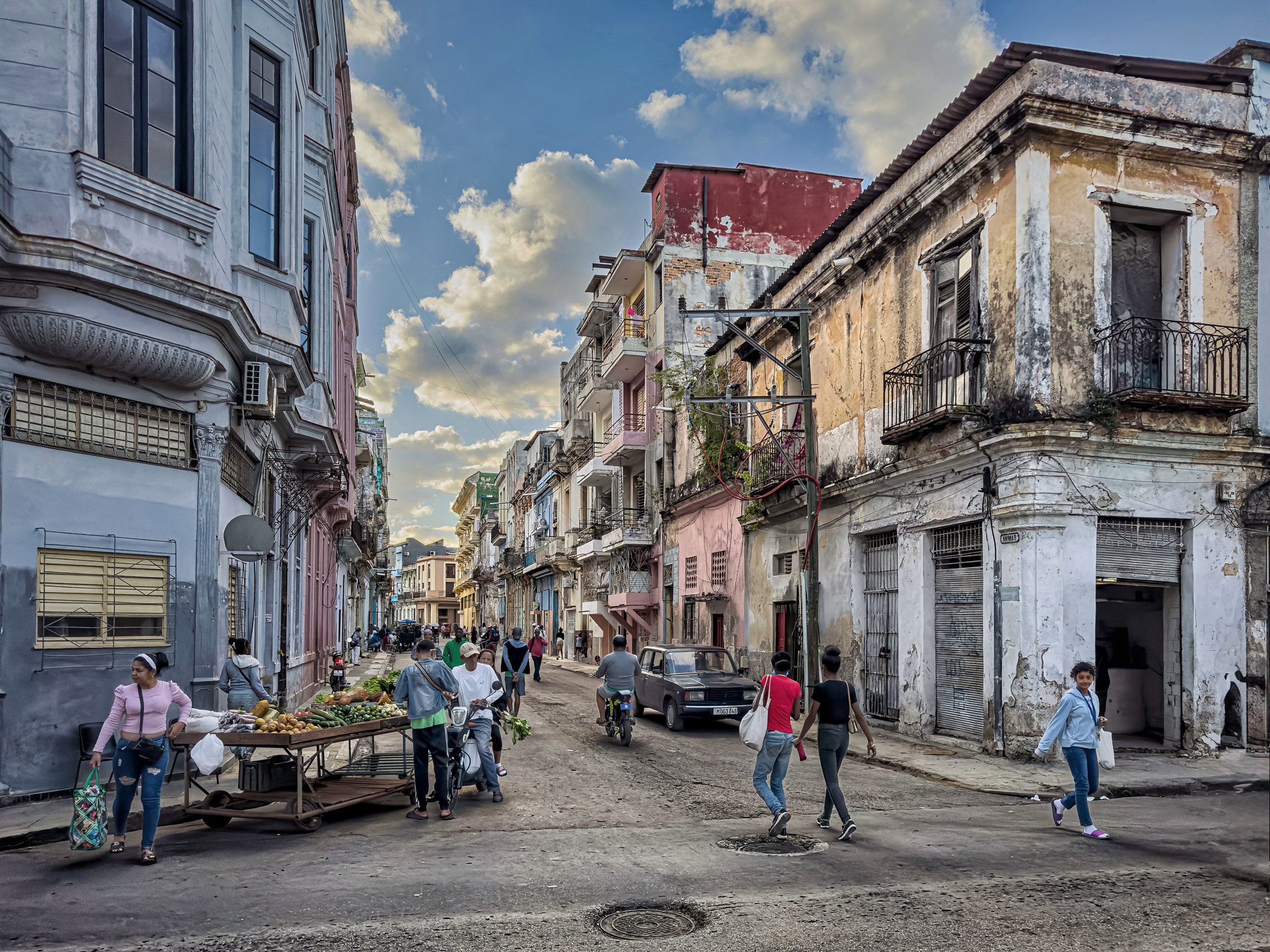
That single journey set off twenty-five years of trekking through Southeast Asia, photographing sacred monuments and pilgrimage routes across Nepal, Bhutan, Ladakh, Tibet, Cambodia, Thailand, Laos, Myanmar, Bali, and Java.
Along the way he built a career few photographers can match: eight internationally published fine art books, commercial work for Fuji, Kodak, and Nikon, and features in National Geographic, GEO, and Architectural Digest.
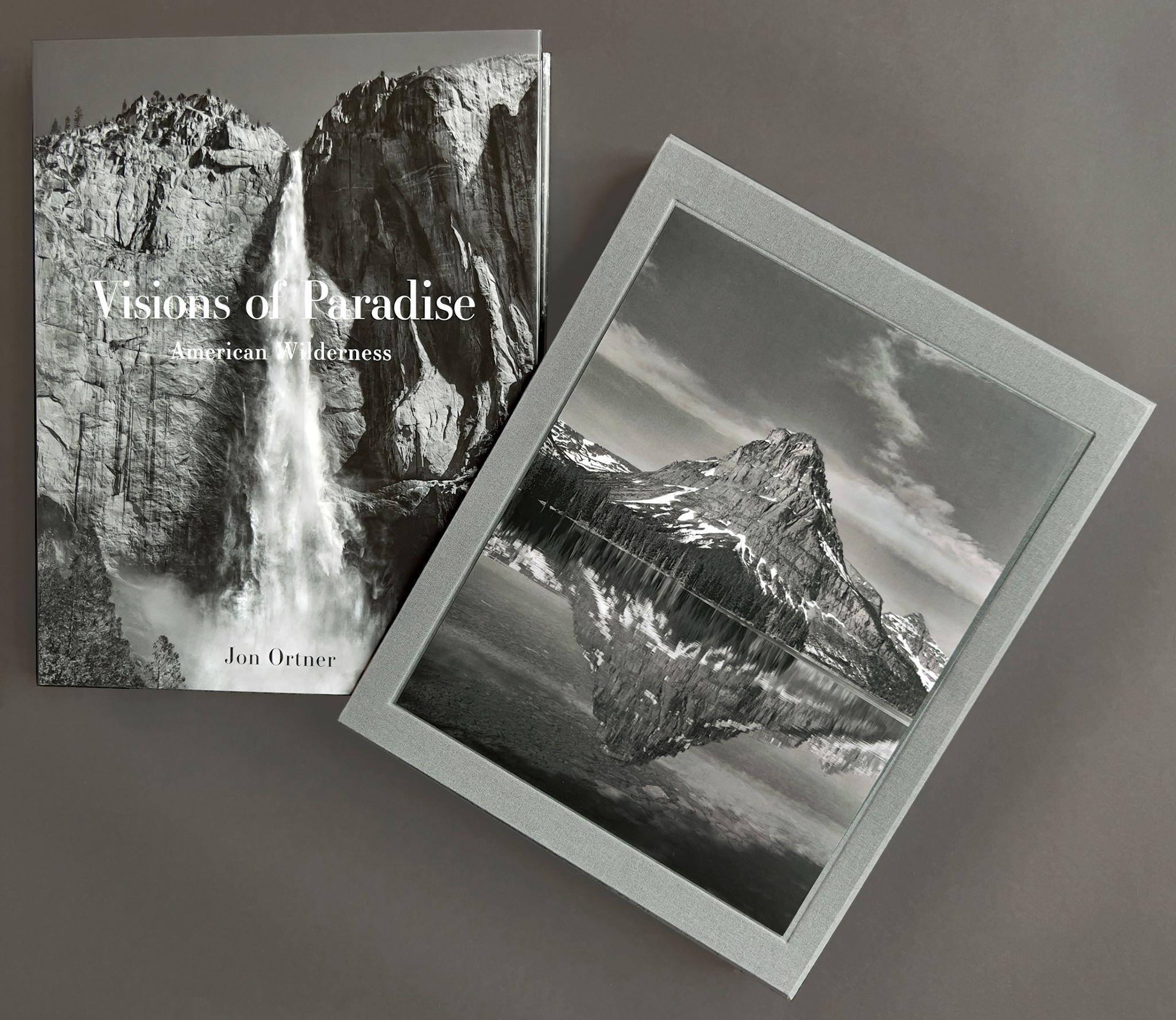
His newest book, Visions of Paradise: American Wilderness, turns that same devotion toward home ground. It’s a 200-image, black-and-white survey of America’s wild places, shot entirely on large and medium format film, printed in Belgium with three double gatefolds.
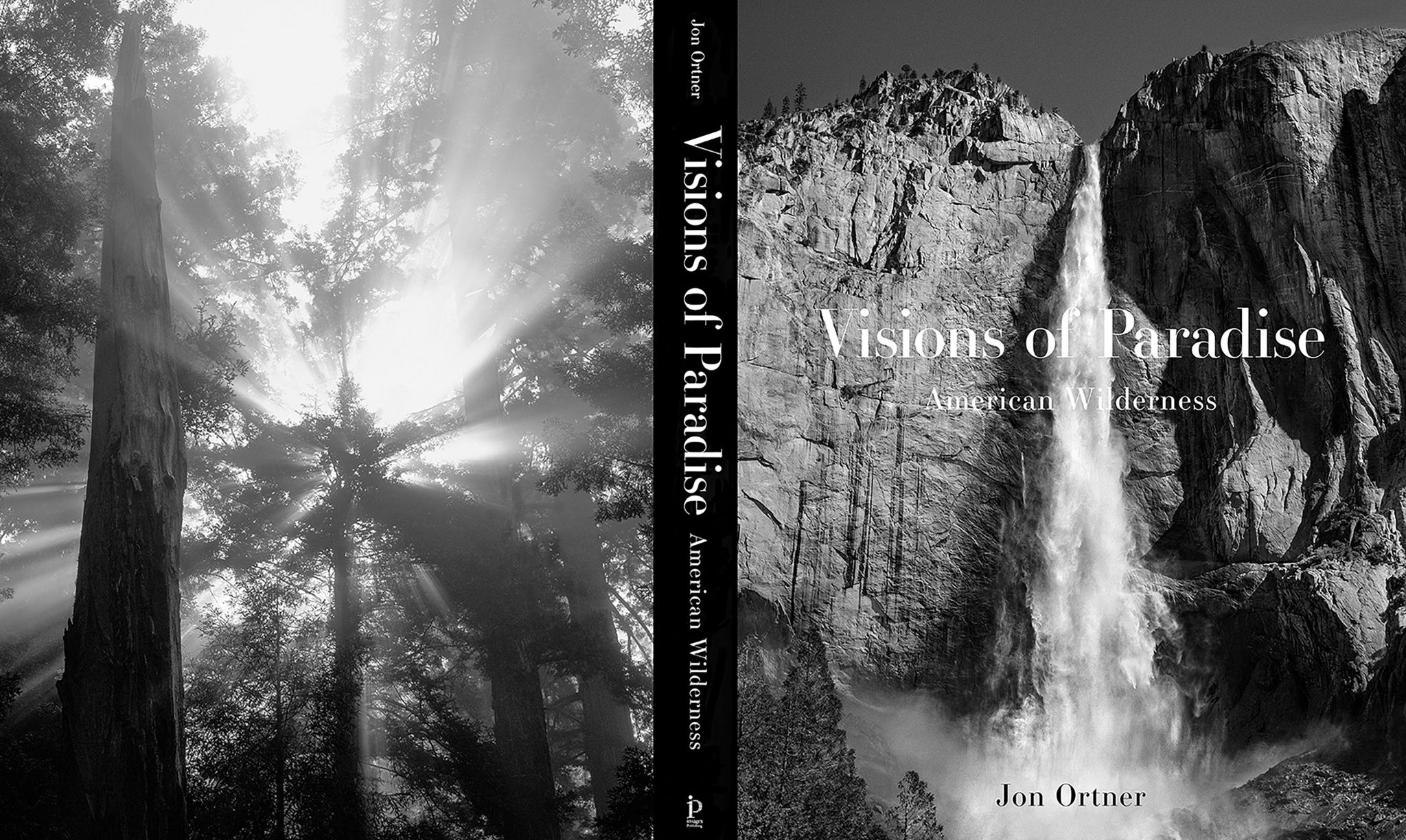
Published by Images Publishing, it’s the kind of object that reminds you a photobook can still be a physical, tactile thing worth holding and poring over.
We were able to interview Jon and asked him to walk us through how the book came together.
Finding the Wilderness
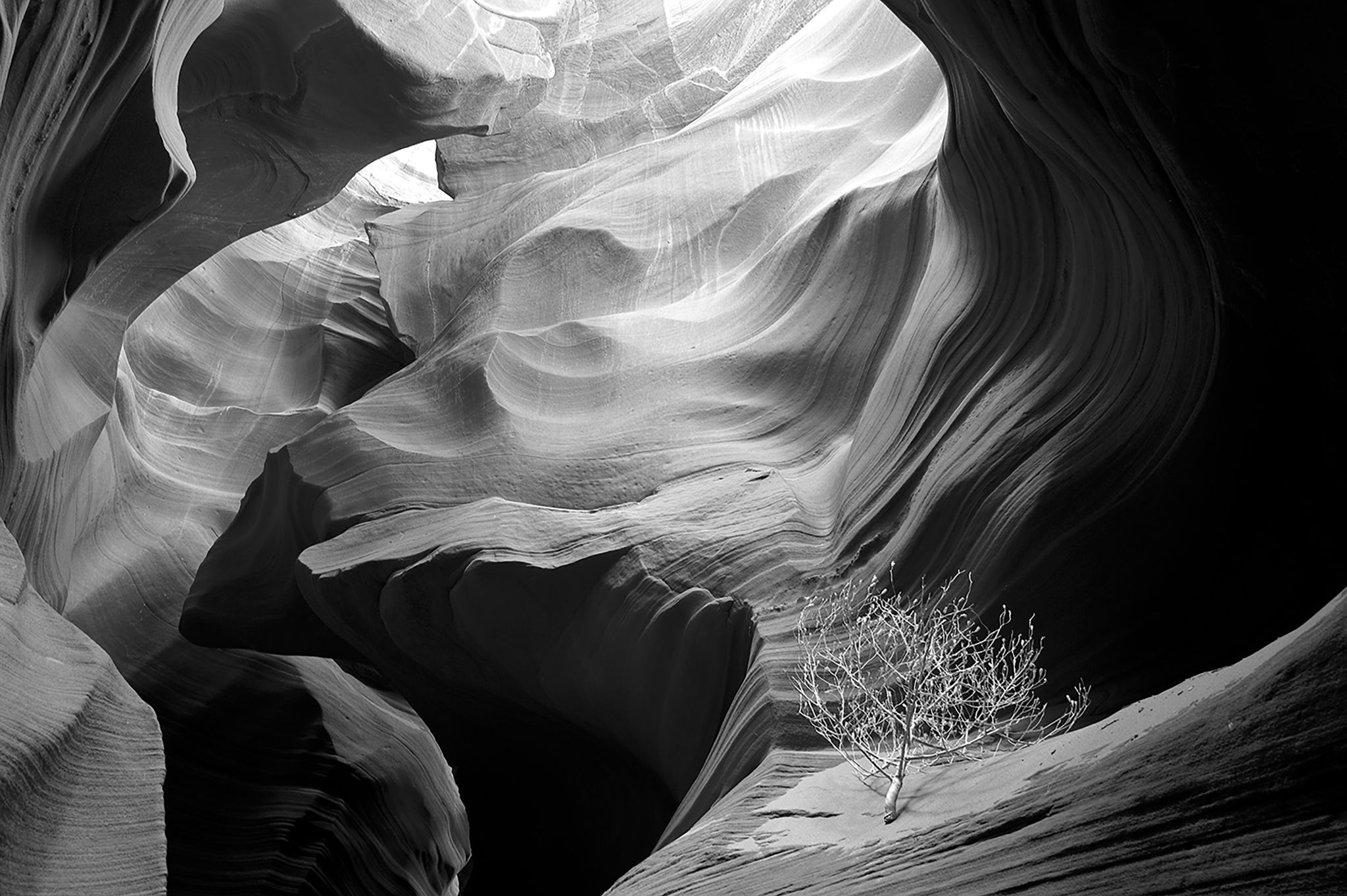
Jon traces the seed of Visions of Paradise back to a German magazine article about White Pocket and The Wave, two surreal rock formations on the Colorado Plateau.
That discovery pulled him into the deserts and canyons of the Grand Staircase-Escalante National Monument, the Vermilion Cliffs Wilderness, and the tribal lands of the Southwest, and turned him into what he calls a slot canyon aficionado, chasing the deepest and most convoluted canyons in the country.
He’d already been shooting black and white alongside color for his entire career. While his color work became the book Canyon Wilderness of the Southwest, he was working on something else: a monochrome book covering the wilderness locations that meant the most to him personally.
The challenge, he says, isn’t finding beautiful places. Millions of people already visit Yellowstone, Yosemite, Bryce, and Zion every year trying to do exactly that. The challenge is time, research, planning, determination, and a good deal of luck.
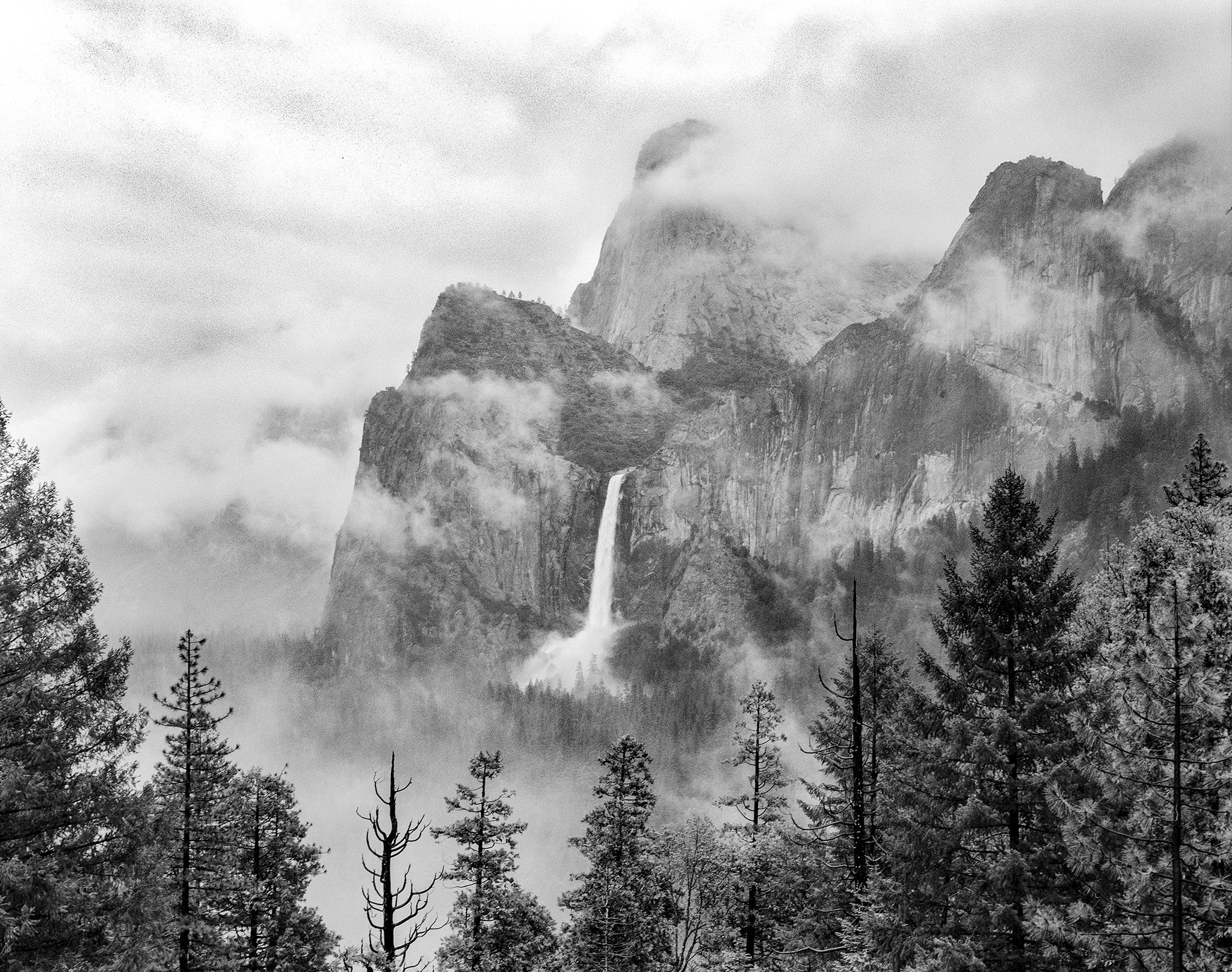
Jon’s been through it: dreamlike snowstorms at Bryce Canyon and Cedar Breaks, monsoon clouds rolling over Monument Valley, and the narrow spring window in Death Valley when wind speeds are just right to etch the dunes into the surreal, interwoven patterns that make the final images sing.
“Every photograph in this book is the result of a special time, with special light, that may only happen for a few moments, frozen in time by the magic of photography,” he told us.
The Gear: Fuji Panoramic and the Tank
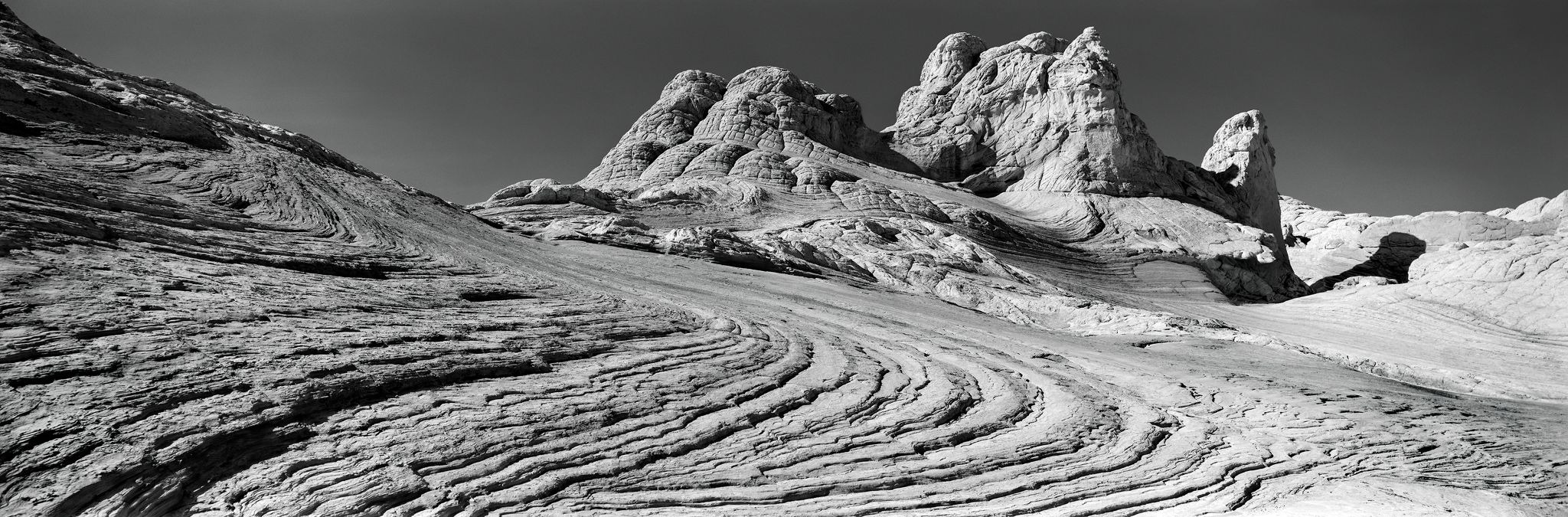
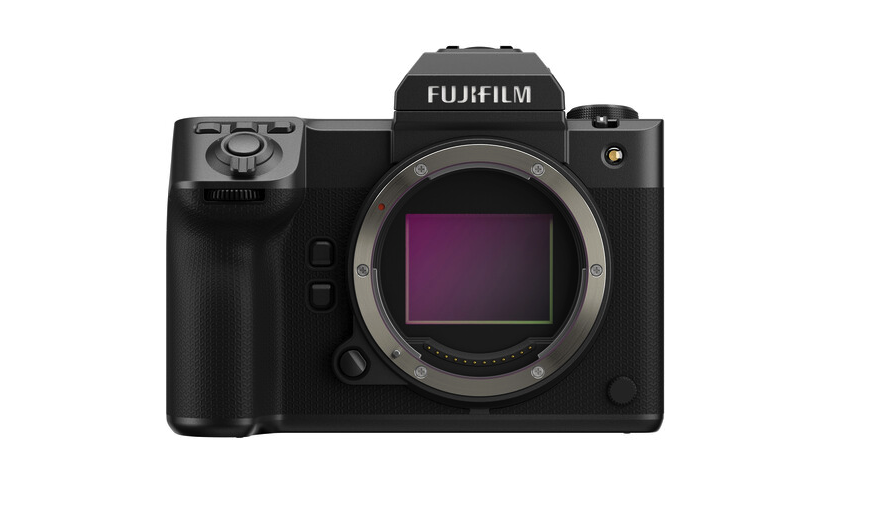
Every image in Visions of Paradise was made with two cameras. The Fuji GX617, a 6x17cm panoramic view camera with four lenses, built with a carbon fiber body light enough to carry deep into the backcountry. And the Pentax 67II, a 6x7cm medium format body Jon calls, with some affection, “the Arnold Schwarzenegger of cameras.” Heavy, nearly indestructible, and paired with Japanese lenses he describes as extraordinarily sharp.
All of it shot on Kodak T-Max 100, 120mm black and white film, which Jon calls the finest grain film ever made.
All of this travels heavy. Packs often ran 45 pounds or more once you add water, food, maps, first aid kits, and heavy duty tripod heads, all carried in Tamrac Expedition packs across trails that are often steep, rocky, and indistinct.
Some days meant 15 miles of hiking, starting before dawn and ending back at the truck in full darkness, in areas with zero cell service. Jon’s matter of fact about the risk in that. He and Martha have come across people in serious trouble more than once, in the Himalaya and in the American wilderness alike.
A Workflow Built on Patience
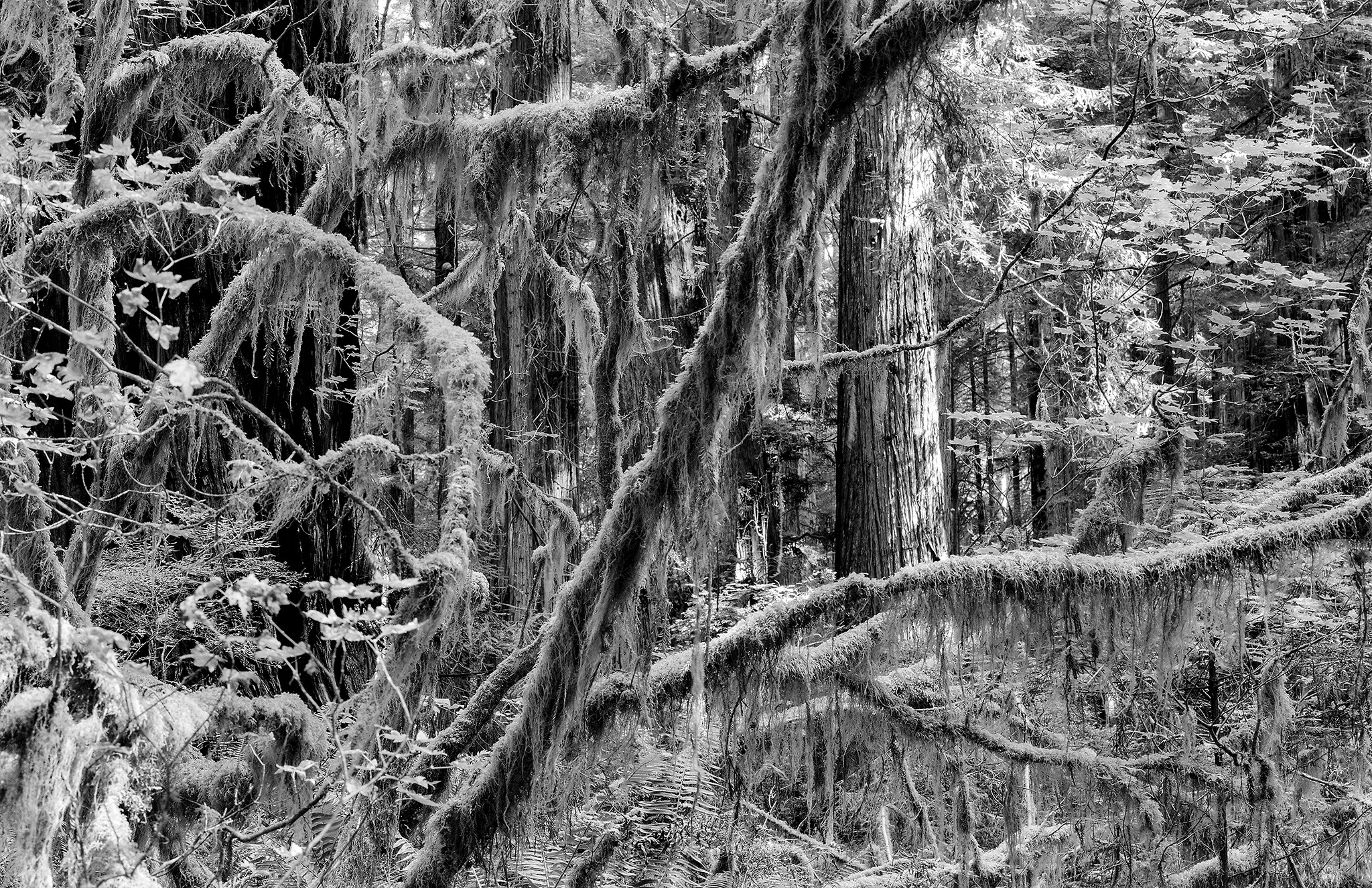
Large format work in the field is slow by design, and Jon’s process shows why. Cameras and lenses get mounted on the tripod first. Then comes the deep red filter work he uses to darken skies and lighten foliage, a technique with roots straight back to Ansel Adams and Clyde Butcher.
The filters are so dense you can’t focus through them, so he composes on the ground glass with a loupe, or through the Pentax viewfinder, before dropping the filter into place.
Light readings come next, followed by exposures that sometimes stretch several minutes. He brackets four to five exposures per scene to give himself a range of negative densities to work with later. On extended stays, like several days in the Death Valley dunes or the wet redwood groves, he’ll commit to a single camera format for the day rather than hauling both. It’s safer in rugged terrain.
Unexposed film gets shipped ahead by FedEx to the first location. Exposed film ships straight back to the lab. Getting large format cameras through airport security stopped being simple 15 years ago, so now everything just goes through the scanner as carry on.
Once developed, every roll gets a physical contact sheet. Negatives are archived, then examined on light tables and scanned on Heidelberg Tango drum scanners to produce the digital files used for the Belgium printing.
A Partnership on the Production Side
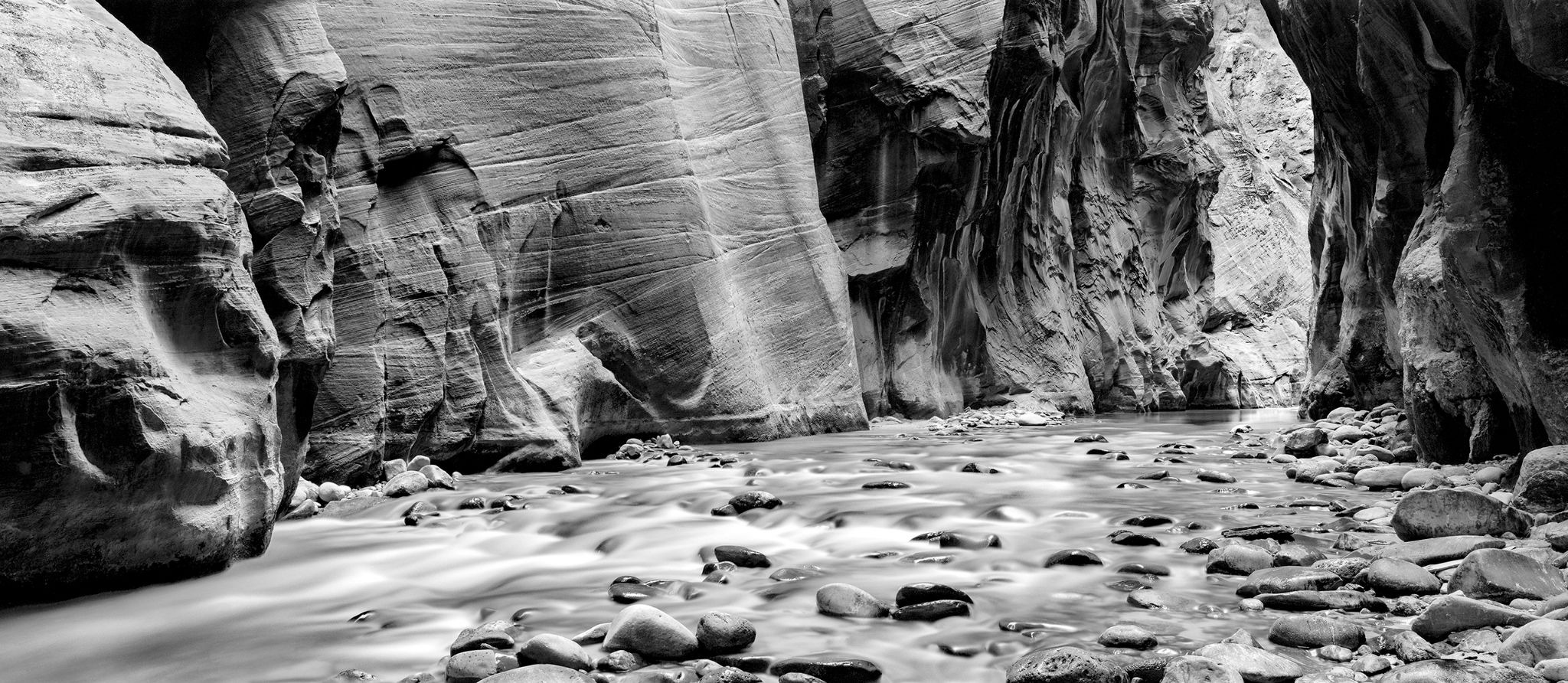
Jon’s publishing history reads like a tour of the world’s best printers: Toppan in Japan for Angkor and Buddha, stochastic printing and tri toned inks for his first black and white book, Peak of Perfection. But Visions of Paradise carries a particularly personal production story.
The book’s design and layout came together over two years, led by Jon’s wife and business partner, Martha McGuire. Martha has trekked and explored every location alongside Jon, from the Himalaya to the Bristlecone Pine forests, and she processed every digital scan from the original negatives herself, building what amounts to a digital darkroom to bring out the best in each image.
Photography and Place
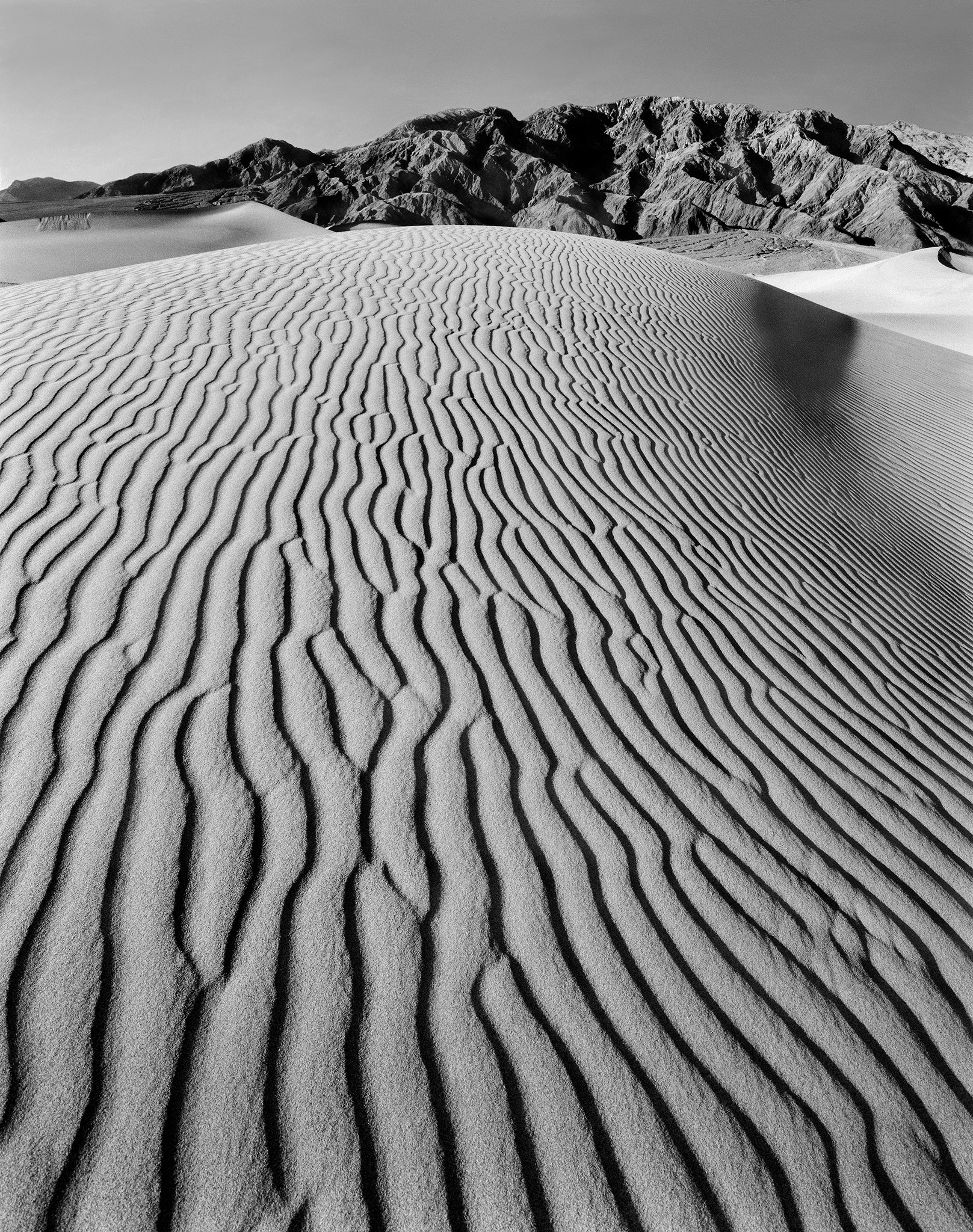
Jon leans on other voices to describe what he’s after. Cinematographer Randy Sellers wrote that the book’s black and white images “transcend color photorealism,” reading as both real and surreal at once.
In the foreword, writer Michael Ernest Sweet points to Henri Cartier-Bresson’s line that photography means putting the head, eye, and heart on the same line of sight, and argues each frame in Visions of Paradise reflects two decades of patience, failed attempts, and hard won craft.
Jon spent his career trying to reach past what a place looks like toward what it feels like, walking the same wilderness the Diné and Hopi have long revered and respected, and trying to translate that into black and white film.
What He Hopes You Take Away
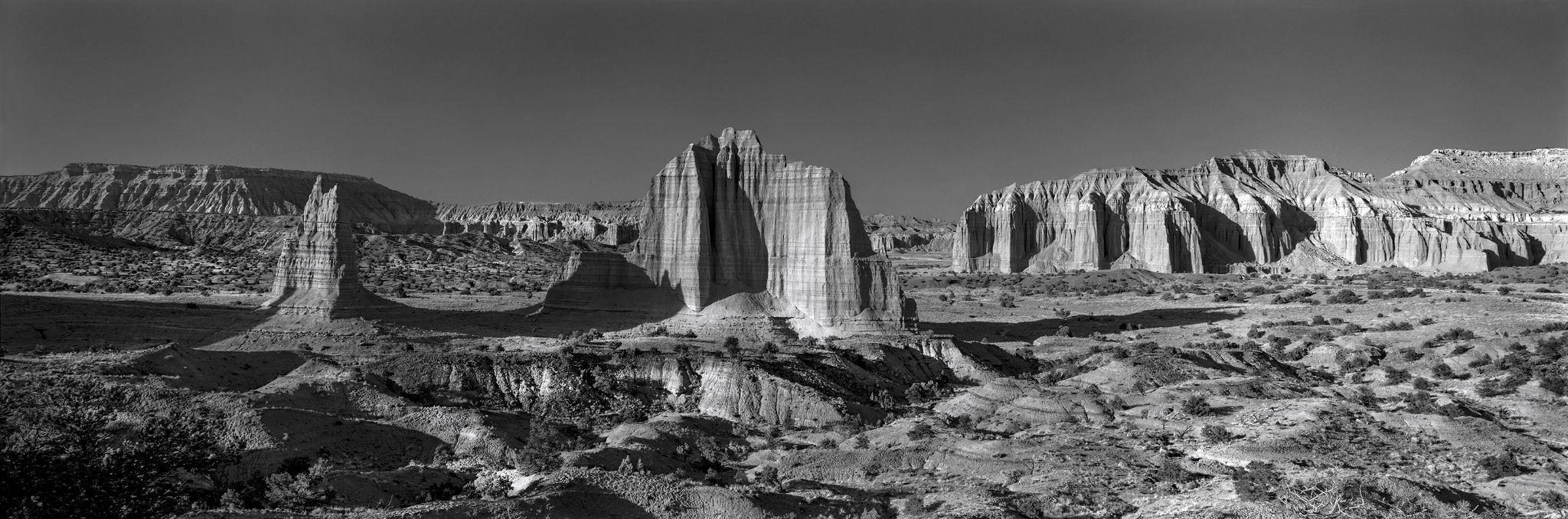
Jon Ortner calls Visions of Paradise a personal journey of discovery, one built from a spiritual connection to nature that he’s chased and been in tune with his entire life. He wants viewers to feel the same excitement he feels standing in these places, where nature, light, and time line up into something close to visual poetry.
He closes the book with a passage from the Navajo Night Chant, and it’s as good a place as any to end here too
All day long may I walk. Through the returning seasons may I walk. On the trail marked with pollen may I walk. With beauty may I walk.
Visions of Paradise: American Wilderness is available now through Images Publishing or https://amzn.to/4fDof2N . See more of Jon Ortner’s work at ortnerphoto.com.

Elevate Your Vision


You may also like