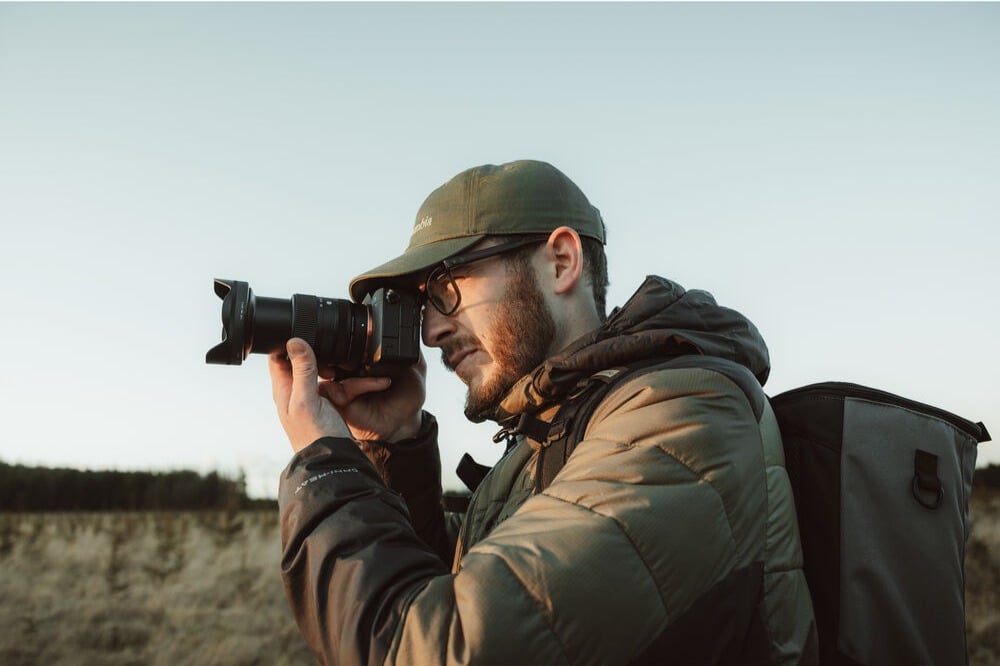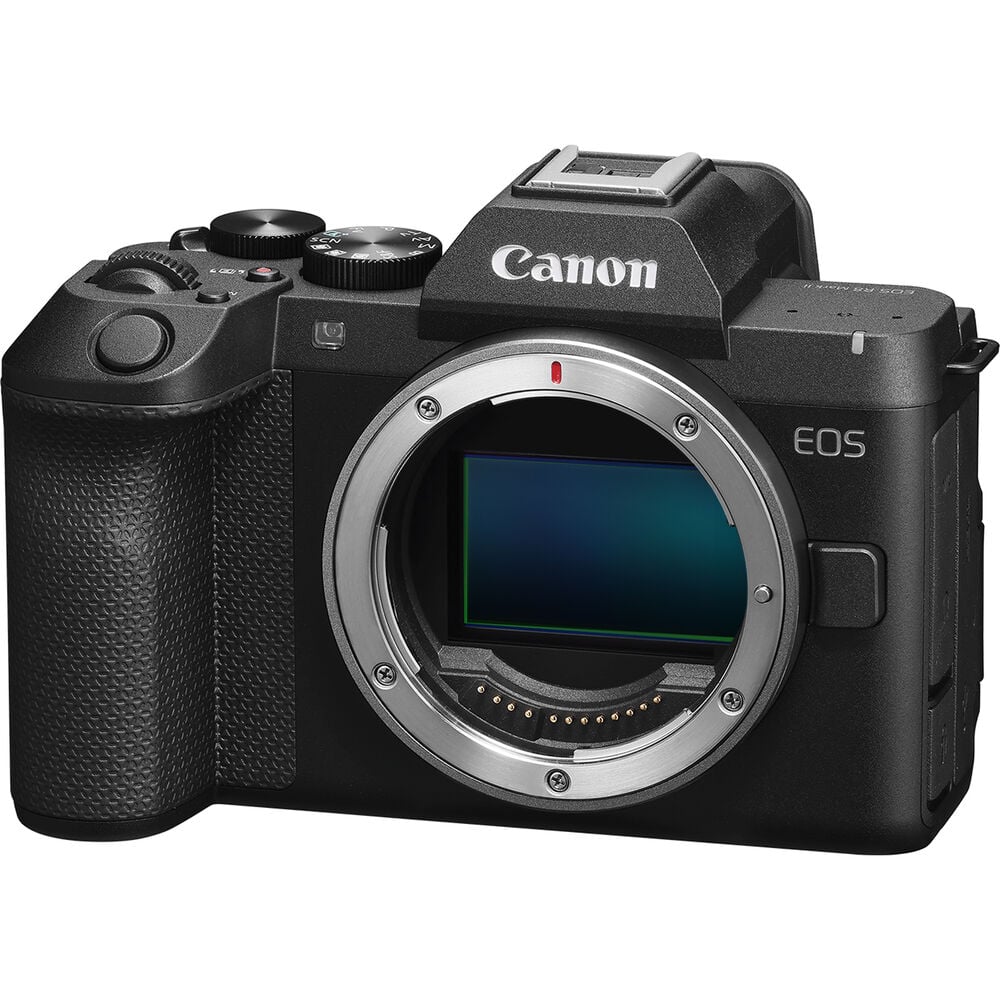



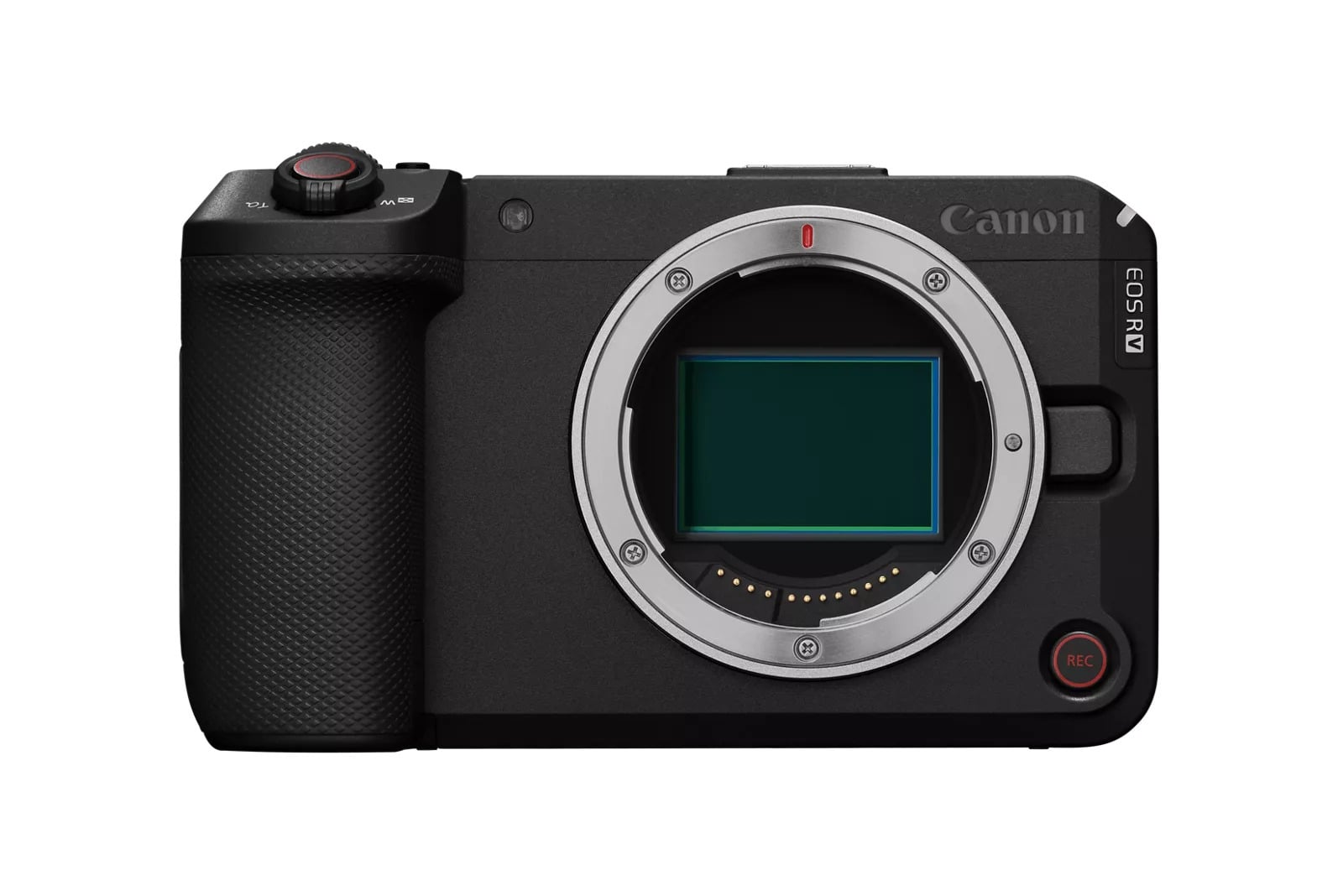


The EOS R6V is Canon’s first V-series full-frame mirrorless body, and it’s a clear signal that the line between photographer and filmmaker has collapsed.
This is a 32.5MP, 7K, actively cooled RF camera with some serious stabilization, brilliant autofocus, and a price that undercuts the R6 Mark III by $300. For the right kind of creator, it’s one of the more interesting tools Canon has made in years.
For the pure stills shooter? That’s a different conversation, and we’ll get there.
What Canon Actually Built
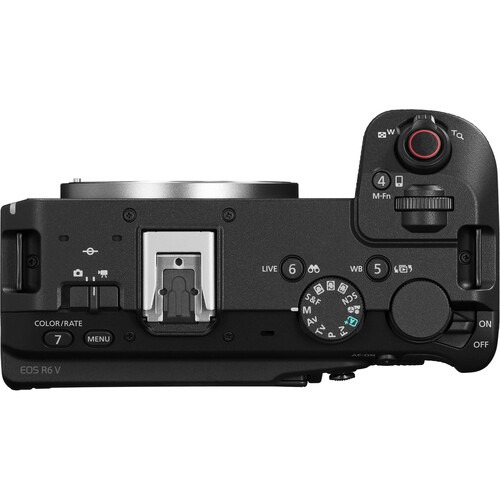
The R6V shares its imaging foundation with the R6 Mark III, built around the same 32.5MP full-frame CMOS sensor and DIGIC X processor.
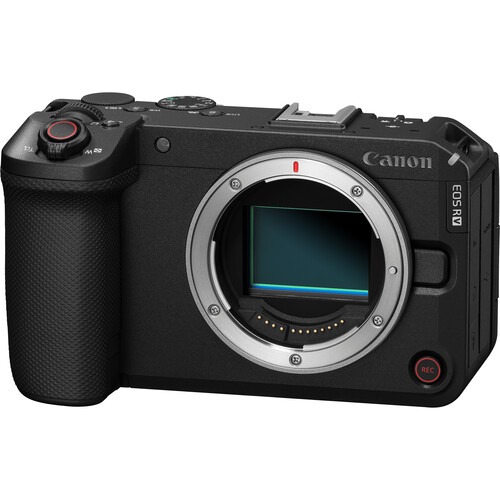
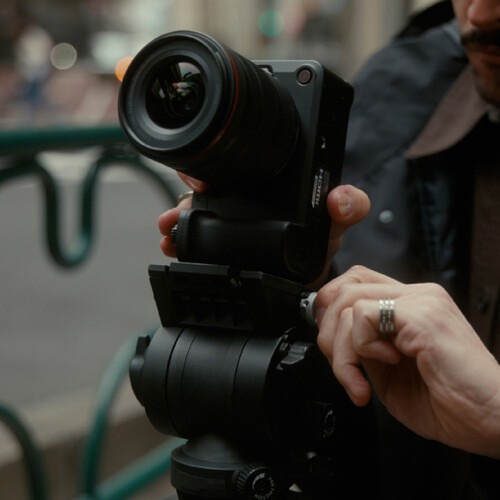
Canon took that platform and redesigned everything around video: a flatter body profile, an internal cooling fan, a rotating UI, dedicated tally lamp, side tripod mount for vertical rigs, and a full cinema feature seems to take from the Cinema EOS line.
The headline specs:
- 32.5MP full-frame CMOS, 6960 x 4640 max resolution
- 7K 30p open-gate RAW (full 3:2 sensor coverage), 7K 60p RAW Light
- Oversampled 4K up to 60p, uncropped 4K up to 120p, 2K/FullHD up to 180p
- Canon Log 2 and Log 3, with 15+ stops of dynamic range in Log 2
- Dual Pixel CMOS AF II with subject detection for people, animals, and vehicles
- 5-axis IBIS rated up to 7.5 stops combined with compatible RF lenses
- Active internal cooling fan for sustained high-bitrate recording
- 40 fps electronic shutter, ~12 fps mechanical, with 0.5s pre-capture (~20 frames)
- ISO 100-64,000, expandable to 50-102,400
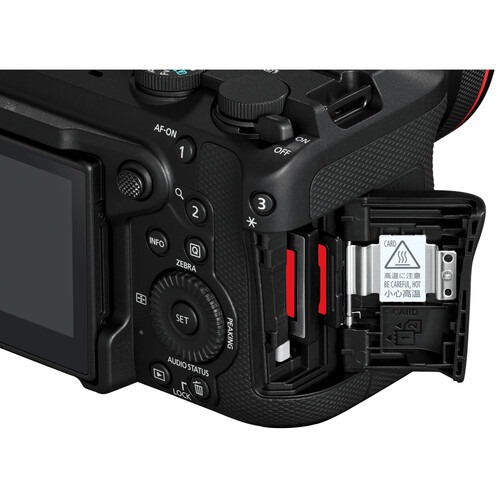
- Dual card slots: CFexpress Type B and SD UHS-II
- Full-size HDMI for 7K ProRes RAW to external recorders (Atomos Ninja support)
- USB-C 3.2 Gen 2 for data, power, and 4K 60p streaming
- Weather-sealed body at roughly 598g, or about 688g ready-to-shoot
- $2,499 USD body only, available late June 2026
Those specs are an amazing value for a video camera. Think about it this way: Canon took the R6 III’s sensor and AF system, wrapped it in a flat, video-optimized body with a fan, and gave it a cinema grade feature set at a mirrorless stills price point.
That combination doesn’t exist anywhere else in the RF ecosystem right now.
The 7K Open-Gate Advantage
The most useful video feature for hybrid creators is the 7K open-gate recording mode. Why?
Open-gate means the camera captures video the full 3:2 sensor area in a single master clip. In post, you extract whatever aspect ratio you need: 16:9 for YouTube, 9:16 for Reels and Shorts, 1:1 for Instagram, all from the same file. No multi-camera setup, no separate vertical rig, no re-shooting content.
For landscape photographers who also make films about their work, this is a big deal. A single golden-hour sequence at a coastal cliff can become a YouTube video, a vertical Reel, and a square teaser, all from one sensor.
The fan keeps the camera running long enough to capture everything, including extended time-lapses, long interviews on location, and full workshop sessions that would have cooked an earlier R-series body.
Stabilization: Real-World Impact
Canon rates the coordinated IS system at up to 7.5 stops combined with compatible RF lenses. Paired with something like the RF 14-35mm F4 L IS USM, make handheld video usable in the field.
What that means in practice:
- Handheld blue-hour shooting in low coastal light without a tripod
- Walk-and-talk workshop footage that doesn’t need a gimbal
- Smooth B-roll through forest interiors and mountain paths
- Usable handheld stills in conditions that would previously require a tripod
The R6V also offers Movie Digital IS as an additional layer of digital stabilization for highly unstable scenarios, like footage from a moving vehicle or rough terrain. There’s a bit of a crop factor with digital IS enabled, but the option to stack all three systems (IBIS, optical IS, digital IS) gives filmmakers huge flexibility in run-and-gun situations.
Autofocus?
Dual Pixel CMOS AF II from the R6 Mark III carries over intact, and it’s one of the best AF systems in the RF lineup. Subject detection covers people, animals, and vehicles, with the ability to register up to 10 specific faces in-camera for prioritized tracking.
For landscape photographers, this matters most in the moments when the camera has to track something quickly: a bird lifting off a coastal rock, a hiker crossing a ridgeline, a breaking wave. The system should handle this all without fighting you.
Movie Servo AF is supposed to offer cinematic focus pulls with adjustable speed and sensitivity. Not tried this in practice, but we remain skeptical.
The Video Value Case: What $2,499 Gets You
Let’s talk about what this camera represents as a video tool, because the value here is awesome if you’re into shooting video.
7K open-gate RAW recording, 7.5 stops of coordinated stabilization, and Dual Pixel CMOS AF II in a weather-sealed full-frame body for $2,499 – that combination would have cost you significantly more even two years ago, and in a dedicated cinema body, it still does cost a bunch more.
The Sony FX3 sits around $4,287 body only and tops out at 4K. The Canon EOS C70 starts around $3,499 but captures a Super35 sensor, smaller than full-frame. To get full-frame, 6K-plus, serious IBIS, and Cinema-grade AF in a single body from any manufacturer, you’re typically looking at $4,000 and up.
The R6V makes sense if you need the “V”.
The “V” 7K open-gate format alone has professional post-production value: 12-bit RAW files with enough resolution to reframe, punch in, stabilize in post, and still deliver a clean 4K or 6K master without visible quality loss. Paired with Canon Log 2’s 15+ stops of dynamic range, you have real latitude for color grading in high-contrast landscape scenarios – like golden hour on a mountain ridge, backlit forest canopy, a stormy coastline with blown highlights and deep shadows all in the same frame. It’s exciting to think about what it can handle.
Now add the autofocus. Dual Pixel CMOS AF II tracks subjects with the kind of reliability that used to require a dedicated camera assistant on a professional set. The camera handles focus so you can handle the shot.
Then layer the stabilization on top. 7.5 stops of combined IBIS and lens IS means smooth, usable handheld footage without a gimbal in most situations. A gimbal adds weight, setup time, and a mechanical feel to footage that sometimes reads as overproduced. This camera will be wonderful for “fly on the wall” documentaries.
At $2,499 and you have a legitimate professional video tool that also shoots 32.5MP stills. For hybrid creators, educators, workshop leaders, and landscape filmmakers who’ve been waiting for a full-frame RF body within reach, this is the answer.
The Missing Viewfinder: Let’s Talk About It
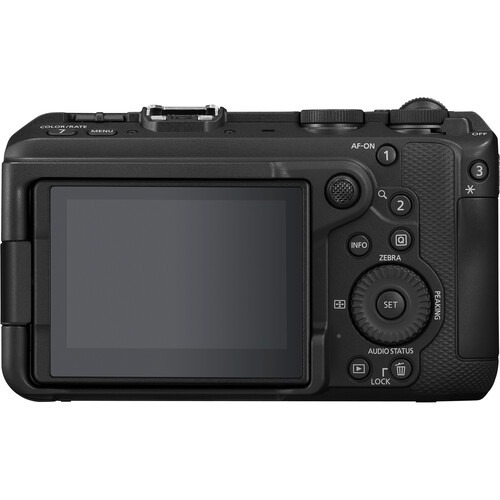
The R6V has no built-in EVF.
That’s a major design decision, and Canon’s reasoning isn’t hard to read: cutting the viewfinder assembly is one of the more effective ways to reduce cost, reduce body thickness, and signal clearly that this camera prioritizes screen-based and gimbal-based video work over traditional eye-level shooting. The $300 price difference between the R6V and R6 Mark III roughly maps to what an EVF costs to engineer and manufacture at this level.
For hybrid creators who shoot primarily through an LCD or monitor, this tradeoff makes sense.
For landscape photographers, it’s a genuine bummer.
Composing on a rear LCD in bright alpine sun, coastal glare, or direct overhead light requires shading the screen with a hand or a loupe, and some say it changes the physical relationship between photographer and scene.
An EVF lets you lock in with your body as a third point of contact, which improves stability and precision on tight compositions. Aligning a horizon across a distant ridgeline, fine-tuning foreground placement on a rock formation, or pulling manual focus on a specific element in a wide-angle scene all become harder on a flat LCD.
The R6V pairs with Canon’s optional EVF-DC2 accessory viewfinder via the hot shoe, but that’s an added cost, an additional piece of gear to carry, and still doesn’t replicate the built-in experience of an R5 or R6 Mark III. If EVF shooting is central to your photography process, the R6V requires you to adapt your workflow in ways that the R6 Mark III and R5 series do not.
What This Camera Does Well for Landscape Stills
Set the viewfinder conversation aside for a moment. The stills performance on the R6V is solid.
- 32.5MP gives you meaningful crop room, solid panorama flexibility, and comfortable print sizes through most standard landscape applications
- The R6 III sensor is a well-regarded Canon file with good dynamic range and clean high-ISO performance, and the R6V shares that foundation
- 40 fps electronic with pre-capture helps in the unpredictable moments: wildlife crossing a frame, a wave hitting at exactly the right angle, light breaking through cloud cover at speed
- Weather sealing and sub-700g ready weight make this a hiking-friendly body in the way most cinema cameras aren’t
- ISO performance to 64,000 (expandable to 102,400) opens up options in low light
For a landscape shooter who also wants capable stills, the R6V does okay. The sensor and AF system are proven. The limitation is in the shooting experience rather than the output quality. It really would have been nice to have an upres pixel shift capability to help the stills capability.
A Landscape Kit That Makes Sense
If the R6V fits your workflow, here’s a compact three-lens RF system built around it. These are F4 L lenses: light, weather-sealed, and optically excellent without the weight of the F2.8 lineup.
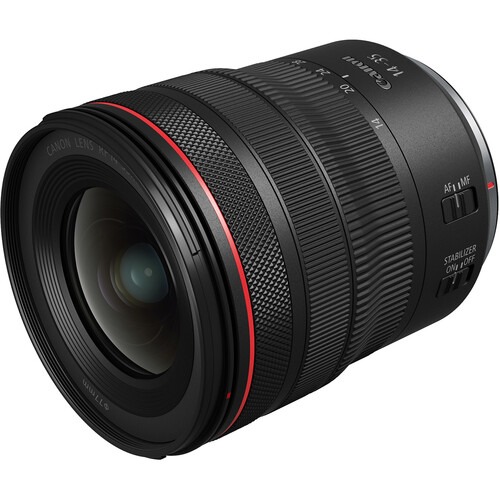
RF 14-35mm F4 L IS USM
This is the workhorse for most Canon landscape work.
- True 14mm at the wide end with optical IS rated up to 5.5 stops standalone, up to 7 stops combined with IBIS
- About 540g with 77mm front filter threads for circular polarizers and ND filters
- Covers everything from ultra-wide coastal drama to standard environmental 35mm without changing lenses
- Weather-sealed throughout
For most landscape situations, this lens covers the majority of shots. It lives on the camera.
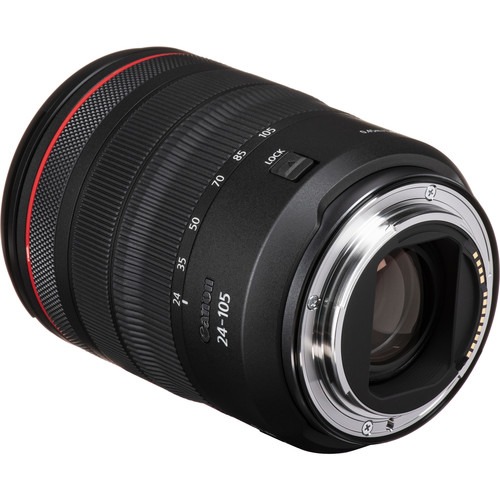
RF 24-105mm F4 L IS USM
When you want one-lens flexibility for a long day on the trail:
- Constant F4 from 24 to 105mm covers vistas, mid-range compression, and environmental details
- Strong L-series optics with good stabilization
- A solid choice for dusty environments, spray, and situations where you don’t want to swap glass
- Some have quietly admitted this is their desert-island lens (not saying who!)
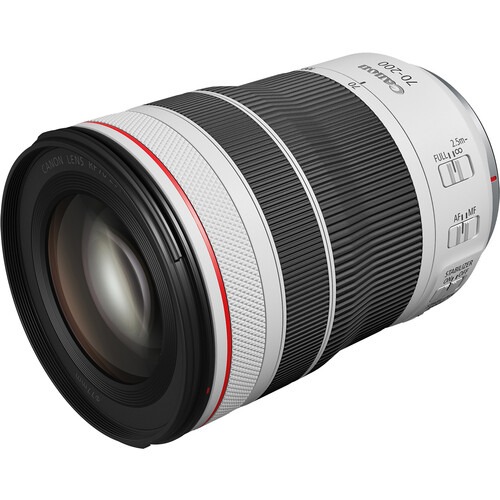
RF 70-200mm F4 L IS USM
This telephoto earns its place in the pack.
- Only about 695g and 119mm long, far more trail-friendly than any F2.8 telephoto
- Up to 7.5 stops combined stabilization on IBIS bodies
- 0.28x magnification and 0.6m minimum focus for compressed near-far compositions
- Weather-sealed and proven in rough conditions
Paired together, the 14-35 and 70-200 cover ultra-wide drama to compressed mountain layers with nothing redundant between them. Add the 24-105 when you want a single-lens travel option. All three stay under 2kg combined, which is great if hiking.
Who This Camera Is For
Canon’s own language targets content creators and advanced videographers, and the spec sheet shows that. The R6V DOES make a strong case for a specific kind of landscape photographer: one whose work lives as much on screens as on walls.
This camera makes sense if you:
- Produce YouTube content, tutorials, Reels, documentaries or short films alongside your landscape stills
- Teach workshops and want to document your sessions in high-quality video
- Stream or shoot live from the field
- Want 7K open-gate for multi-format delivery from a single master file
- Prefer a lighter, more compact body over maximum stills resolution
- Shoot on gimbals or rigs where an EVF is irrelevant
This camera makes less sense if you:
- Prioritize eye-level composition as a core part of your stills process
- Print large and want R5-class 45MP or medium format resolution
- Shoot in sandy, dusty coastal environments where a fan introduces long-term risk
- Rarely shoot video and want a clean, stills-optimized body
For pure stills landscape work, the R6 Mark III, R5, remains the stronger Canon choice.
Price and Availability
- Body only: $2,499 USD
- Kit with RF 20-50mm F4 L IS USM PZ power zoom: $3,699 USD
- Europe: approximately 2,549 EUR body only
- Available late June 2026
The Real Question
Canon didn’t build the R6V for the photographer who sets up a tripod before sunrise and waits for the light to change. They built it for video people who want the form factor of a still camera. So – if you want to capture that moment in both a sharp still and a beautifully graded 7K sequence, the R6V was made for you.

Elevate Your Vision


You may also like