



We started this series with curiosity (Part 1) and persistence (Part 2). For the last chapter, Stephen and I walked the gallery together, and the conversation turned to the longer view: who shapes us, what we build with our hands, and what our pictures become with time.
Stephen Wilkes is in a rare position to talk about all three. He’s looking at America in Detail, the project he shot for Epson in 2000, as brand-new prints a quarter century later. And he learned from one of the great mentors in photography.
Lesson 1: A great mentor tells you you’re ready
Stephen started shooting at 12 and had his own business at 16. At 19, he spent a summer working for Jay Maisel. “It was like getting a master’s degree in photography.”
After that summer, Stephen traveled to China and brought the pictures back to show Jay. Jay looked through them and delivered his verdict in classic Jay style: Stephen was too good to keep assisting. Stephen worried no one would hire him, so Jay made an offer.
He’d make Stephen his associate, give him an office, help negotiate every job, and let him shoot as much film as he wanted for free. In exchange, Jay kept 75 percent of what Stephen earned for those first years. “I was like, where do I sign?”
The business help mattered. What mattered more was the belief. Stephen’s father was a brilliant, self-made businessman who never thought photography was a real career.
“He(Jay) told me I was really good in a moment when… I was fighting to keep my head above water… And so when Jay, in a way, validated me, it changed everything for me. And I think, you know, that’s what great mentors do. They inspire you.”
Stephen passed those lessons on in his documentary Jay Myself, which tells Jay’s life story through his move out of the Bank, his famous six-story home in New York, at 84. “In a way, you get mentored through watching that film.”
Jay also showed him what a work ethic looks like at the top. Even on commercial jobs, Jay always took time to shoot his own pictures. “He just was relentless… Jay’s whole life is like a visual diary… His whole life is in his pictures.”
Most of us have someone whose encouragement kept us going. Many of us are now in a position to be that person for someone else. A few supportive words can change a young photographer’s life.
Lesson 2: Master the craft so you can forget about it
Stephen’s “Day to Night” pictures are sharp from front to back. People assume he stacks focus. He gets it all in one frame, a skill he credits to years on view cameras, from America in Detail to his Ellis Island project.
On this trip he shot 4×5 transparency film, where a quarter stop decided whether you had a picture or not. His advice for young photographers is direct:
“If you could shoot analog first and then go into digital, it wires your brain completely differently… when I was shooting transparency, you’re one quarter of a stop off, it’s over, you’re done.”
He reads light with his eye and kept a spot meter close. “I used the spot meter more than anything else, because I was a big spot meter guy.”
He even worked out his own approach to the zone system for color.
Remember the Field of Dreams sky from Part 2? Graduated ND filters on the lens made it, right in camera. His Polaroids from that shoot match the final prints exactly. “I was just obsessed with getting it in the camera.”
And here’s why it matters:
“People sometimes, you know, poo poo being technical, but the truth is, if you look at Avedon’s work, if you look at Penn, they were master technicians… the reason they could do what they did was because they never had to think about the technique. They could just focus on… the art, on the subject, on what they were seeing.”
Stephen loves what digital makes possible, too. The craft he built on film is what makes those tools so powerful in his hands.
Lesson 3: The print is where the experience lives
For Stephen, the print is the final work, the version of a picture people will stand in front of.
His test for every print is a feeling:
“Does it match the way I felt when I was there? Am I giving you a visceral experience when you look at the photographs?”
In 2000, digital printing was brand new, and Stephen worked with Mac Holbert at Nash Editions, Graham Nash’s pioneering print studio.
Early inks had trouble with deep blacks. The breakthrough came when a new paper arrived for testing, Epson Premium Luster, and they ran the Alaska glacier. “When that print started coming out of the machine, I got so excited… we were seeing a depth of color and a black point that we frankly had not seen.”
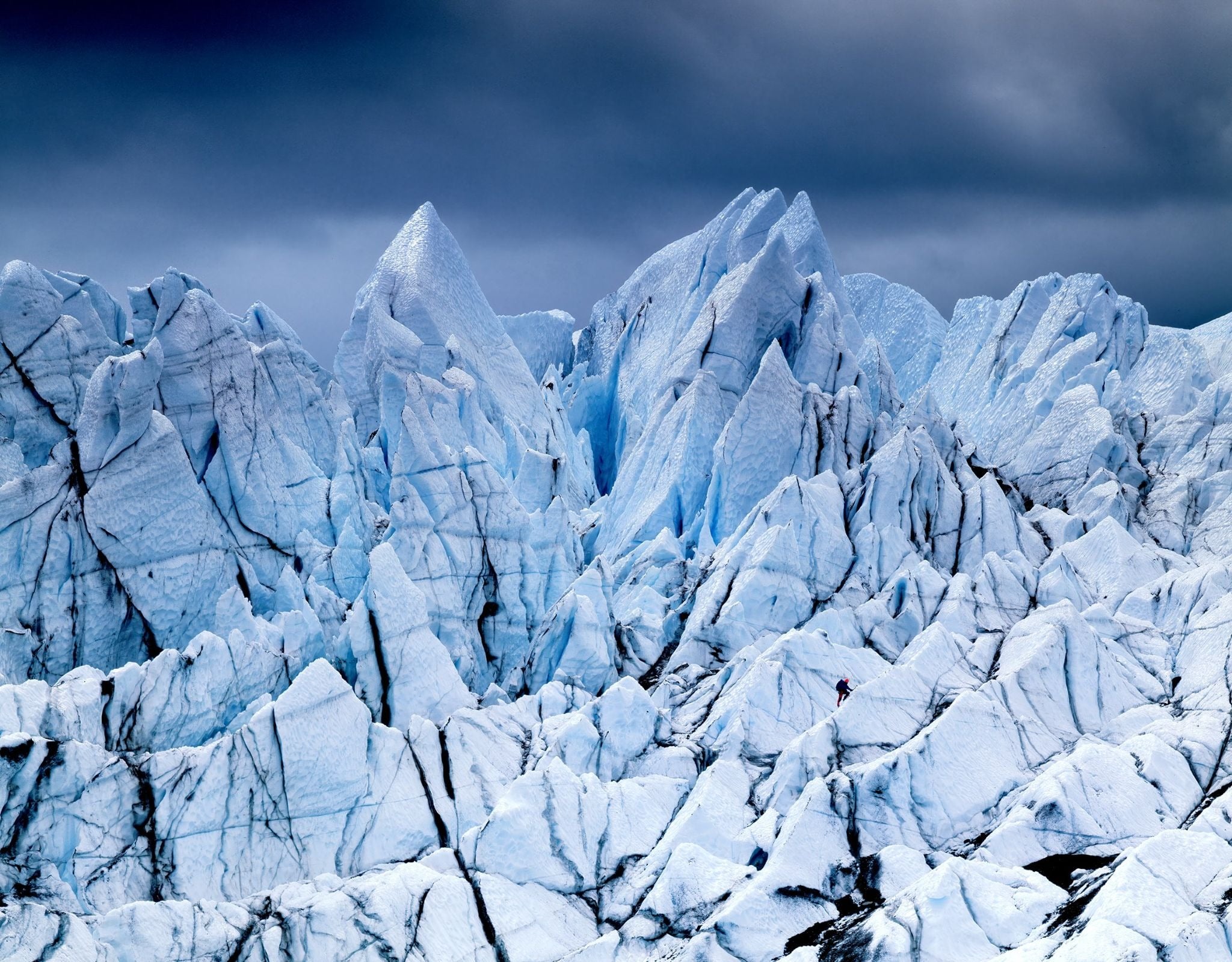
At the shows in New York, Chicago, Los Angeles and San Francisco, photographers walked up to the prints with loupes, hunting for anything that looked digital. The prints held up. “We passed the loupe test, so to speak.”
Rodeo Boys shows what he means. Stephen found two young rodeo riders in Texas, worn out on a hot day and fast asleep. “I just set my camera so quietly and, you know, made this picture.”
In the new print, the detail carries the story.
“You can literally see the texture in the boots. You can see the wear of the sole… the weaving in the hats. It’s just that everything is there.”
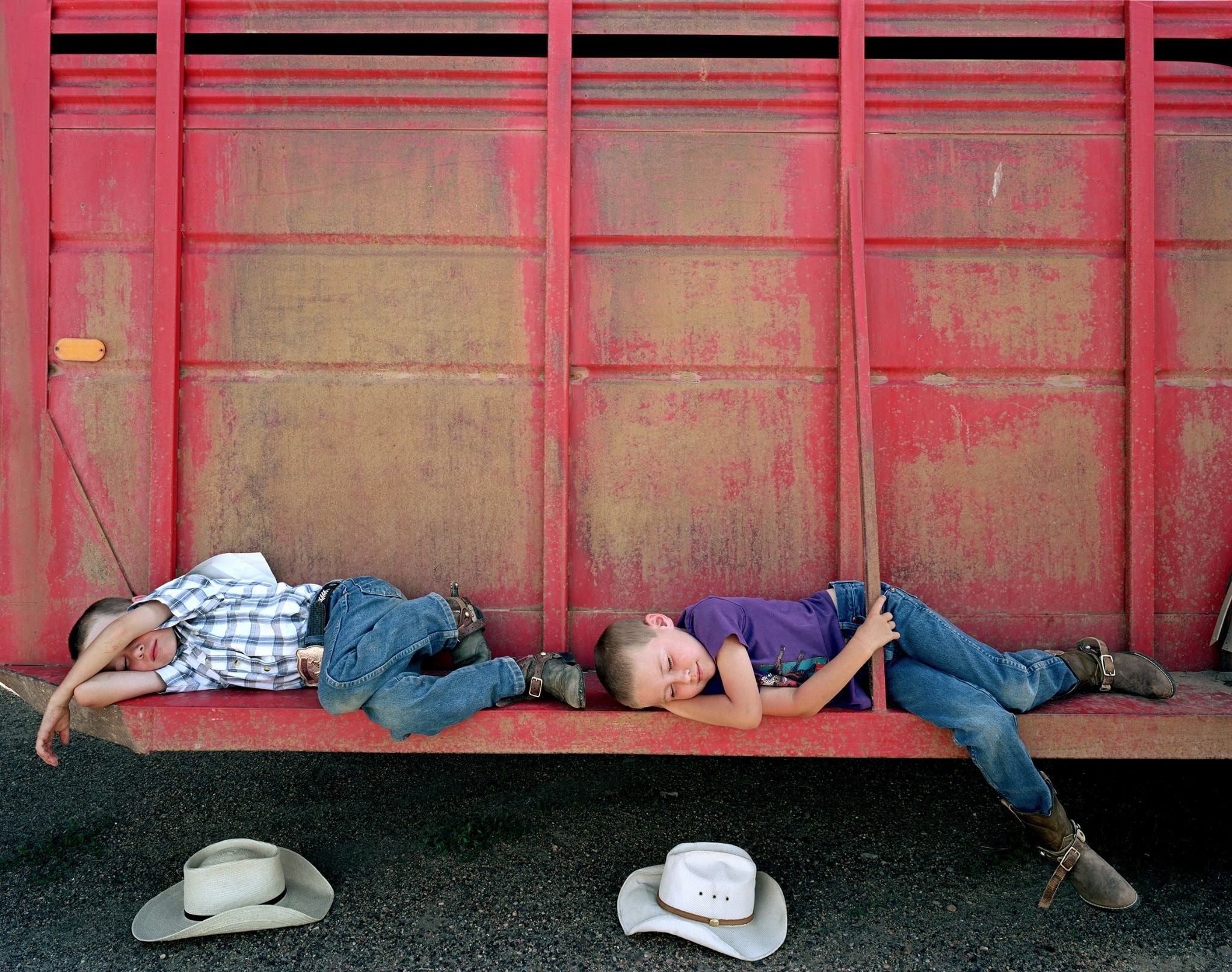
“I want people to have an experiential feeling when they look at these pictures… you become part of what I’m seeing… and you get to feel what I felt in that moment.”
That’s a great reason to print big. A large print invites the viewer to walk up close and stay a while.
Lesson 4: Good work grows more powerful with time
Stephen made America in Detail before smartphones, before algorithms, back when the big worries were Y2K and hanging chads. “Give me that stress any day compared to what we’re living through right now.”
“This is a window into what was… I think it becomes more important and more powerful as a body of work as it ages.”
With today’s scans, inks and printers, he’s seeing things in these pictures he never saw before,
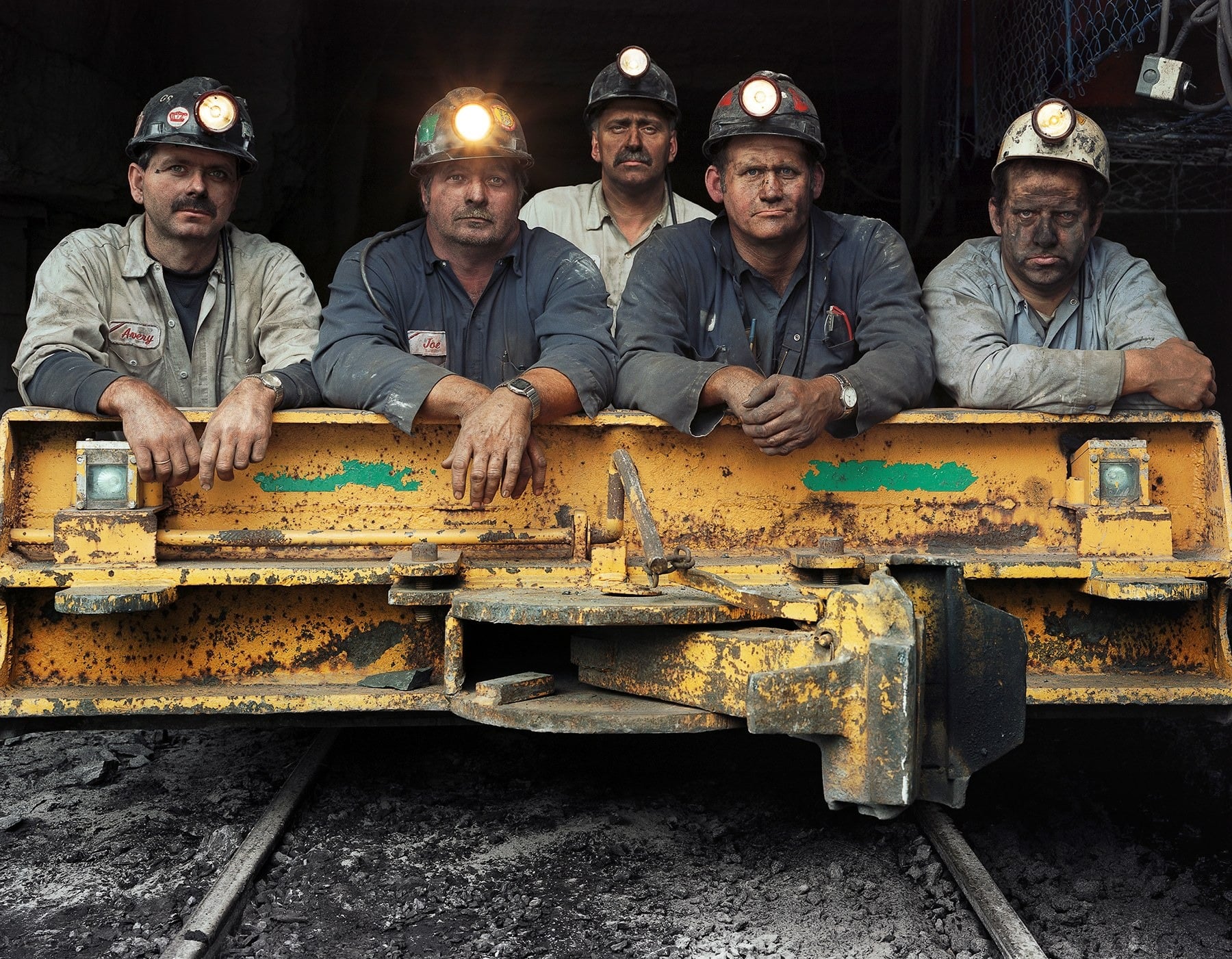
even in the original prints. Take the Coal Miners. Stephen went several hours down a West Virginia mine and spent the whole time reclined under a three-foot ceiling.
He wanted to show each man’s presence, and the almost heroic way they carry their work. He made maybe five frames.
“He just turned for a second. I got one frame like that. Again, this is four by five sheet film… I caught the angle of reflection just for that one moment. And that’s the print. That’s it. That’s the moment.”
In the new print, the miners’ hands hold as much story as their faces. “You can almost feel the dirt on their hands, the texture.”
Shooting sheet film trains you to see the frame before you press the shutter. That habit pays off in any format, and it pays off again years later, when you go back to the work.
“It’s just really fun, I think, as a photographer and an artist to be able to get the opportunity to sort of rediscover your work 25 years later.”
That’s a gift any of us can give ourselves. Go back into your archive. The pictures you made 10 or 20 years ago may hold more than you could see at the time, and today’s tools might finally let you show it.
Back to the light table
Seeing these prints took Stephen straight back to the light table.
“It was as close to me as having the experience when you’re at the light table and you put that loupe on it and you go right into that image. It’s like you’re diving into it.”
That quiet moments with a loupe is what he misses most about film.
“I didn’t have to guess anything. I didn’t have to change anything. It was just there. Either it was there or it wasn’t there.”
That’s a fitting place to end this series.
Curiosity put Stephen in the shade with Allie Peek. Persistence kept him at the Field of Dreams until the lights came on. A mentor’s belief got him started, and the craft he poured into every sheet of film lets him dive into those pictures all over again, 25 years on.
You can practice each of those, starting with your next outing.
Try this
- Revisit your archive. Pick one picture from at least ten years ago, slides and negatives included. Note what you see now that you missed before.
- Print one picture big. Choose an image full of texture and print it as large as you can. Then walk up close and see what the screen hid.
- Be someone’s Jay. Find one photographer whose work you believe in and tell them, specifically, what’s good about it.
Thanks for walking with us
That wraps our series with Stephen Wilkes. Catch up on Part 1, Shoot What Makes You Curious, and Part 2, Stay Until the Light Changes. All three videos are on our YouTube channel.
Thank you to Stephen for his time and generosity, and to Epson and Walt & Company for making this series possible. Stephen is also working on a new book about America. We’ll keep you posted.
All photographs © Stephen Wilkes, from America in Detail, created for Epson in 2000 and reprinted in 2026.
America in Detail, Discovering Its Life and Light was on view October 17 to 31, 2026 at JL Modern with Holden Luntz Gallery in Palm Beach, Florida, sponsored by Epson.
Sources
- Jay Myself: Watch It, Now Available for Streaming (Luminous Landscape)
- Stephen Wilkes, official site
- In Discussion: Stephen Wilkes, “Beyond the Horizon” (Holden Luntz Gallery)
Elevate Your Vision


Read this story and all the best stories on The Luminous Landscape
The author has made this story available to Luminous Landscape members only. Upgrade to get instant access to this story and other benefits available only to members.
Why choose us?
Luminous-Landscape is a membership site. Our website contains over 5300 articles on almost every topic, camera, lens and printer you can imagine. Our membership model is simple, just $2 a month ($24.00 USD a year). This $24 gains you access to a wealth of information including all our past and future video tutorials on such topics as Lightroom, Capture One, Printing, file management and dozens of interviews and travel videos.
- New Articles every few days
- All original content found nowhere else on the web
- No Pop Up Google Sense ads – Our advertisers are photo related
- Download/stream video to any device
- NEW videos monthly
- Top well-known photographer contributors
- Posts from industry leaders
- Speciality Photography Workshops
- Mobile device scalable
- Exclusive video interviews
- Special vendor offers for members
- Hands On Product reviews
- FREE – User Forum. One of the most read user forums on the internet
- Access to our community Buy and Sell pages; for members only.
You may also like