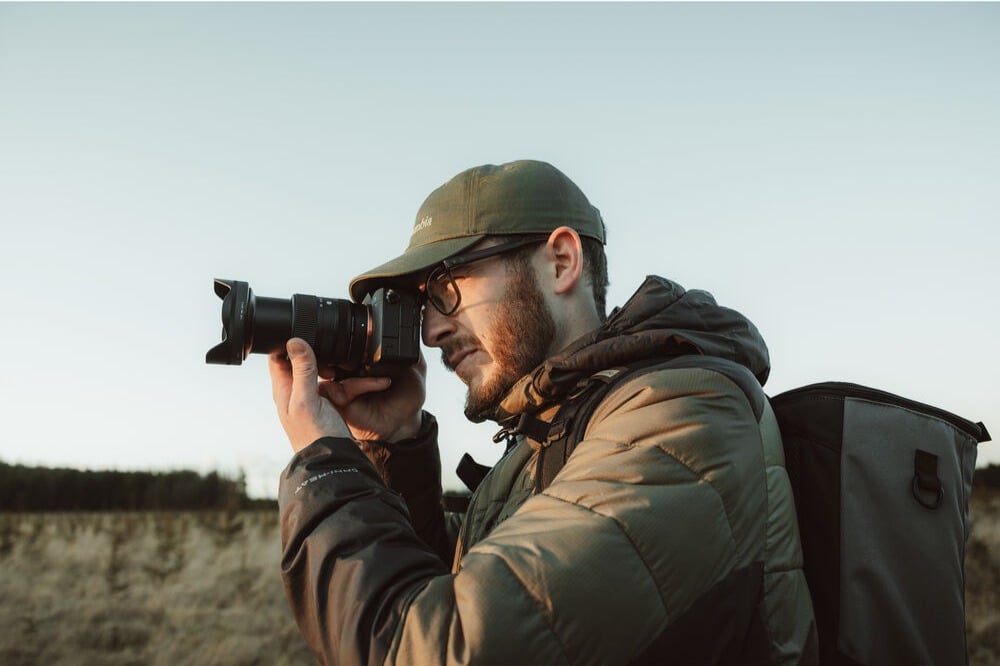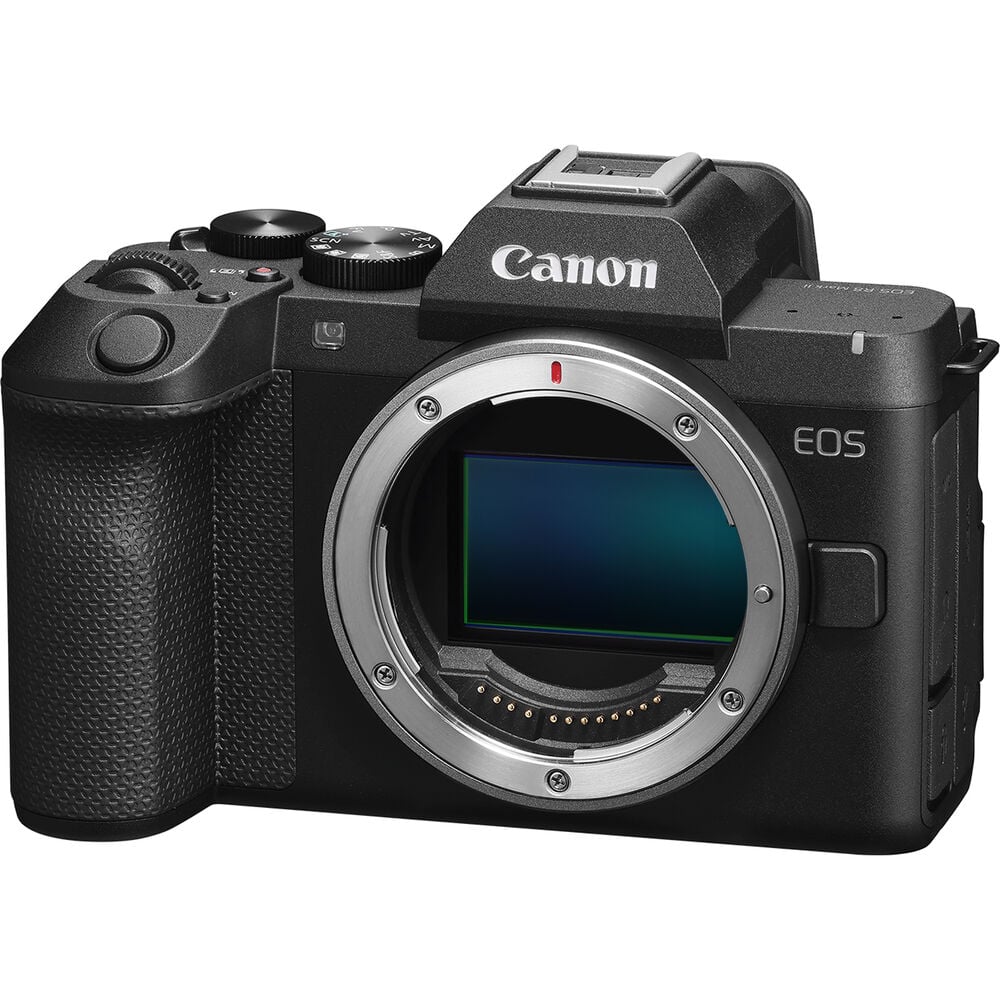




A photographer friend preparing for upcoming trips, wrote to ask me about what gear he should bring. Specifically, he wanted to know whether to pack a full camera kit — or rely on the iPhone camera in his pocket.
As the iPhone evolves and matures into a camera that is taken more seriously, it’s a question I hear more and more often, and the answer isn’t as simple as “yes” or “no.”
The real question isn’t about the device. It’s about expectations, subject matter, and how the final images will be used.
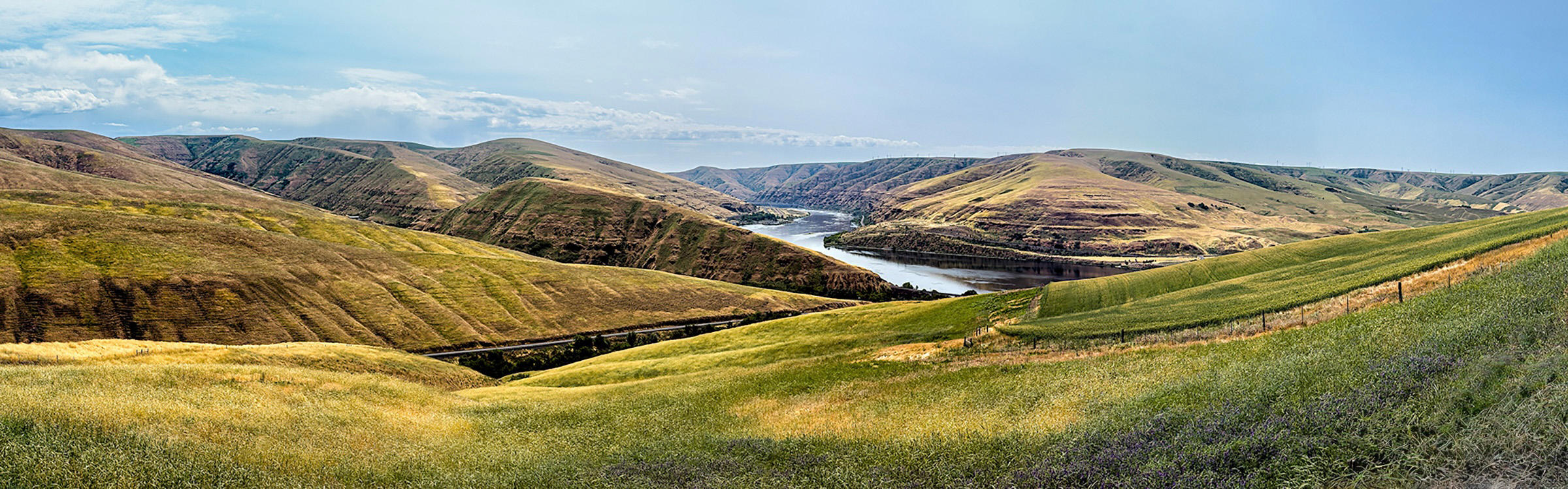
7-Image Stitch of Snake River in The Palouse, Native Camera and BimoStitch
The Real Trade-Off
Travel photography has always involved compromise — but often we create that compromise ourselves by trying to be ready for everything.
We tend to pack gear based on what we might encounter. A long lens in case something is far away. A macro lens in case something small catches our attention. We prepare for every possibility, just in case — and often end up carrying far more than we actually use.
What I’ve come to appreciate about the iPhone is that it shifts that mindset entirely. We bring one device — and with it, a remarkable range of creative possibilities. Wide, telephoto, close-up, low light, long exposure, and more — all available instantly, without the need to anticipate every scenario in advance.
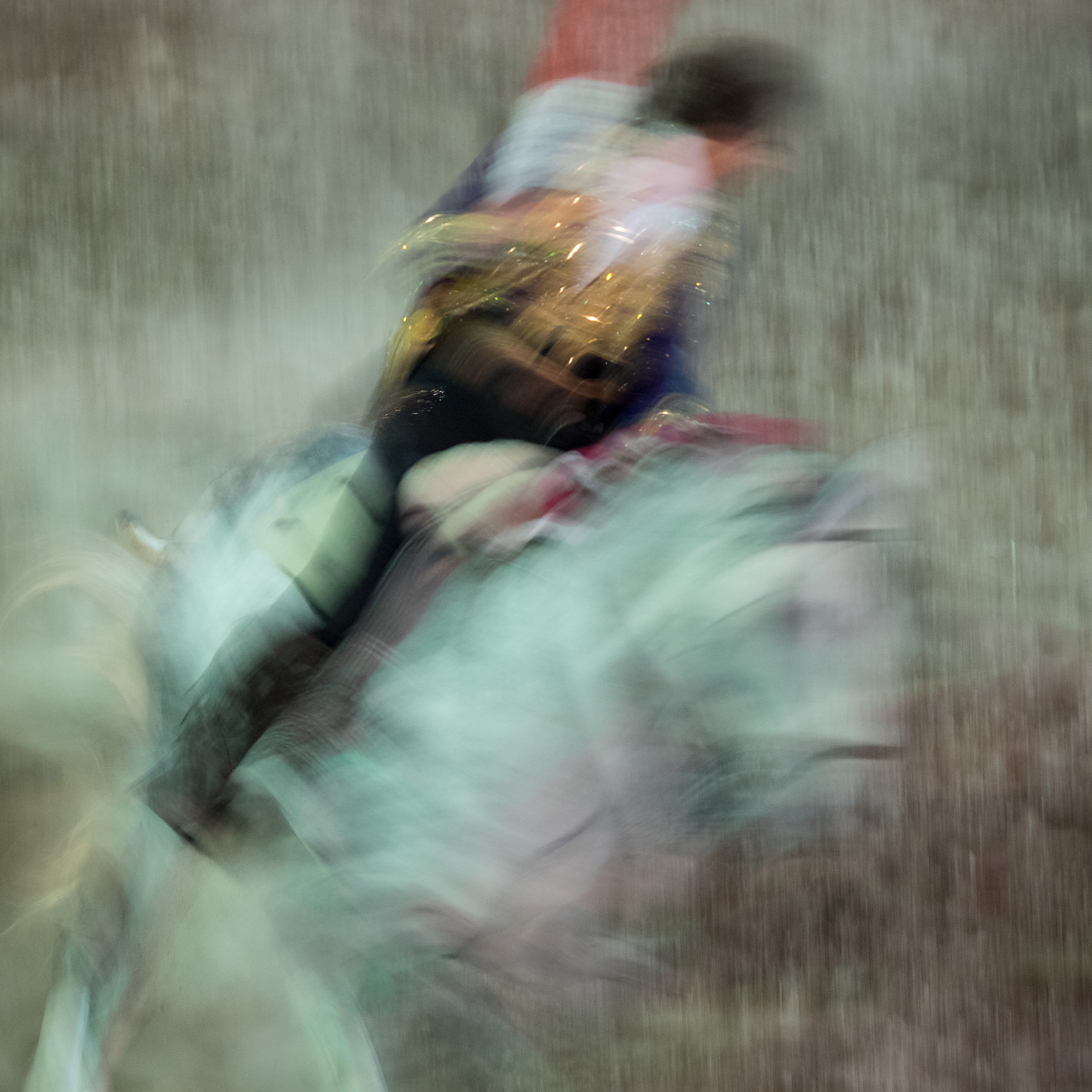
I saw this in a powerful way at the end of an iPhone workshop I led on Cape Cod. On our final day at the seashore, one participant was recording a long exposure of waves washing over rocks. Another was photographing small flowers along the edge of the beach. Another was creating abstracts using intentional camera movement. One even had her iPhone in a plastic bag, photographing a crab in a tide pool!
And it struck me: everyone was using the same device — yet each person was exploring a completely different kind of photography.
That experience reinforced something I’ve come to believe strongly. We need to move beyond the idea that our traditional camera is our “real” camera, and that an image made with an iPhone is somehow less meaningful. It isn’t. The value of a photograph isn’t determined by the device used to record it, but by the vision, awareness, and intent of the photographer.
The iPhone isn’t a lesser camera — it’s a different kind of camera, with strengths that invite a more flexible, responsive, and creative way of working.

Understanding Capability and Limits
Beginning with the iPhone 13 Pro series in 2021, Apple standardized its high-end camera systems across both Pro models. Prior to that, the Pro Max often received camera advantages not found in the smaller Pro version. From the iPhone 13 Pro forward, however, the Pro and Pro Max models have shared the same camera systems, differing primarily in physical size, battery life, and screen dimensions. For photographers, this means image quality and lens performance are effectively identical between the two models in a given generation.
That said, not all lenses within these models offer the same resolution. While Apple introduced a 48MP sensor with the iPhone 14 Pro, subsequent models expanded that capability across additional lenses. The table below summarizes which lenses can produce full-resolution 48MP ProRAW files when properly configured.
iPhone Pro Models: 48MP ProRAW Capability by Lens
| iPhone Model | Ultra-Wide (0.5x) | Main (1x) | Telephoto | Notes |
|---|---|---|---|---|
| 14 Pro / Pro Max | No | Yes (48MP) | No (3× is 12MP) | First iPhone with 48MP main sensor |
| 15 Pro / Pro Max | No | Yes (48MP) | No (3× / 5x are 12MP) | 15 Pro Max has 5× tetraprism lens (12MP only) |
| 16 Pro / Pro Max | Yes (48MP) | Yes (48MP) | No (5× is 12MP) | Ultra-wide upgraded to 48MP |
| 17 Pro / Pro Max | Yes (48MP) | Yes (48MP) | Yes (4× is 48MP) | First model with 48MP across all three lenses |
Understanding this progression helps set realistic expectations. Even with the most advanced models, not every lens delivers the same level of detail. Choosing the right lens — and working within its strengths — remains one of the most important decisions you make in the field.
At the same time, iPhones continue to have practical limitations. They are not well suited for distant subjects, wildlife, or situations that require significant cropping. These are areas where a traditional camera still offers clear advantages.
For many travel photographers, however, these limitations are less restrictive than they might seem. When your subjects align with what the iPhone does well — landscapes, architecture, details, and creative interpretations — it becomes an exceptionally capable and liberating tool.
Practical Tip: Choose a Pro model. Standard and “Plus” iPhones are often less expensive, but they use a simpler camera system. The Pro models offer the features and flexibility photographers appreciate. I’ve seen many people experience buyer’s remorse after choosing a non-Pro phone without realizing the difference.
Technique Matters More Than Gear
It’s worth remembering that the most important parts of a photograph don’t come from the camera at all. Composition, perspective, light, and the ability to recognize a compelling moment matter far more than the device you’re using. The iPhone is simply a tool — an increasingly capable one — but it’s your eye, your curiosity, your unique take, and your willingness to engage with a scene that ultimately determine the strength of the image. I’ve found that using the iPhone has sharpened my awareness and my decision-making as a photographer.
Bridging the Gap with Software
Another important shift is happening not in the camera — but in the software we use to process our images.
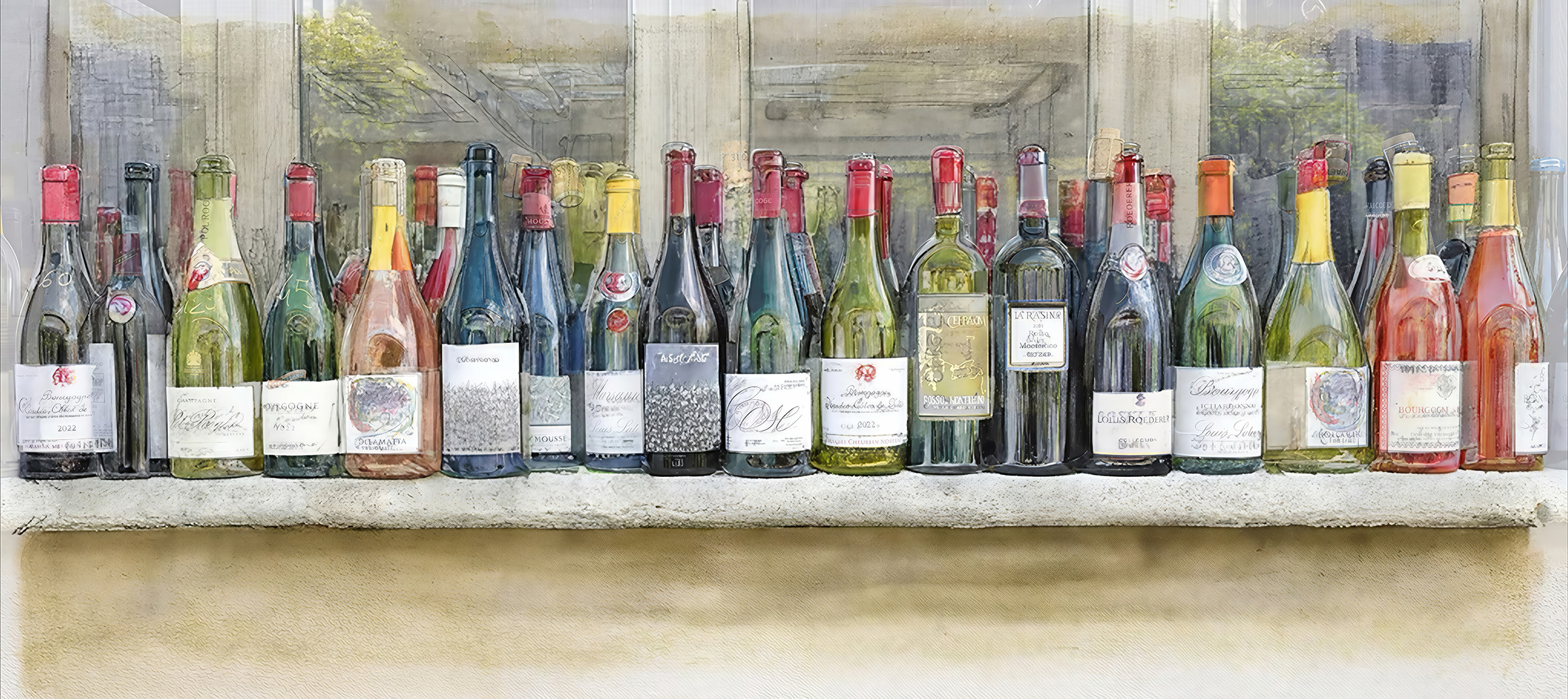
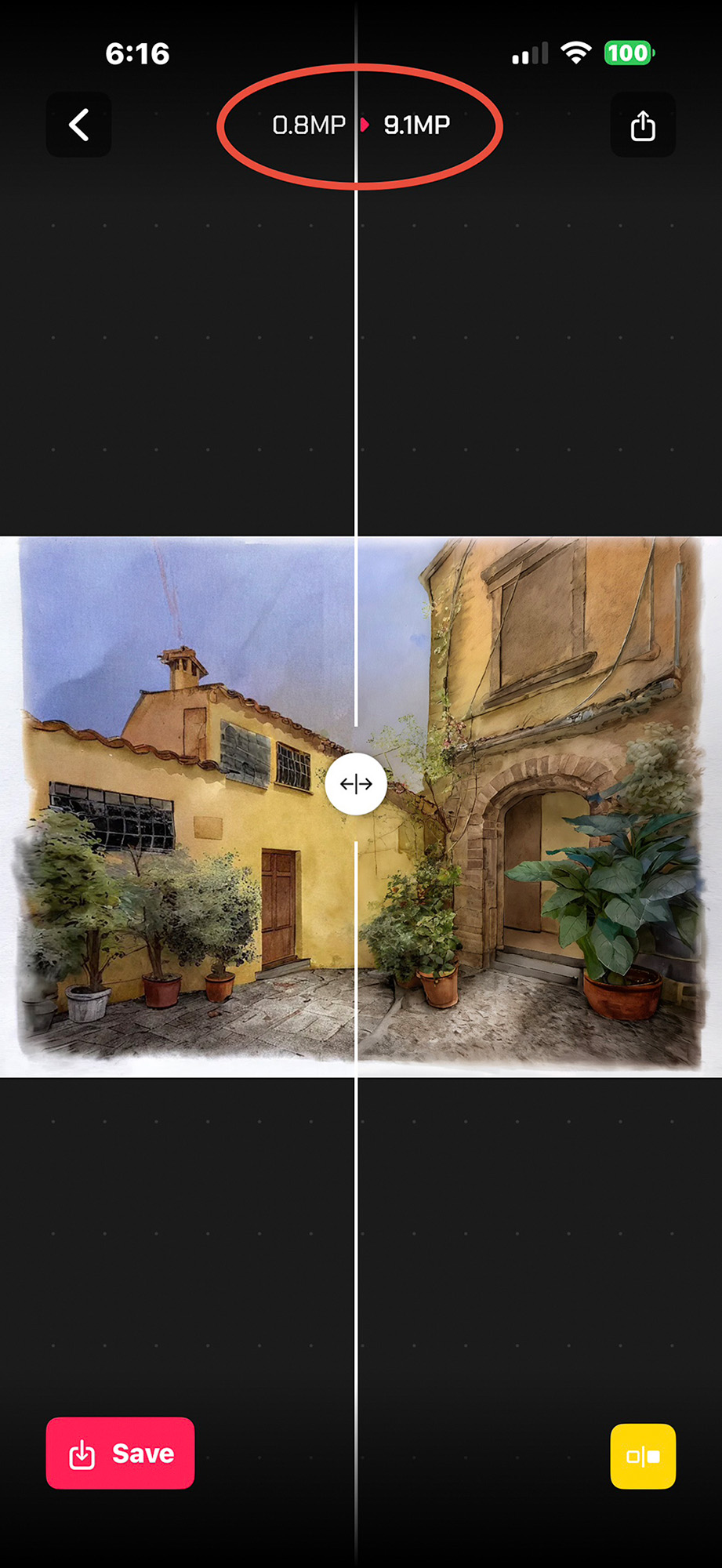
iPhone apps, including Lightroom Mobile, Apple Photos, Snapseed, and TouchRetouch, now incorporate AI-based masking, healing, and removal tools that are both powerful and rapidly improving. And we can use other techniques like combining a low-resolution image from a painterly app, like AI Gahaku, with the original image in the app, Image Blender. In this way we can increase an image of less than a megapixel to multiple megapixels creating an image we can do more with than post on social media.
The upscaling tool, Gigapixel AI from Topaz Labs, long available on the desktop, is now available for our mobile devices as well.
Increasingly, these tools are influencing not just the technical quality of our images, but their final aesthetic — allowing us to refine detail, simplify compositions, and more fully realize our creative intent, using the darkroom in the palm of our hands.
Accessories: Help or Hassle?
I’ll admit — I can be a bit skeptical when it comes to iPhone accessories.
There was a time when I used them more regularly. Earlier iPhones lacked features we now take for granted, such as a true macro capability or longer focal lengths. During that period, I found some third-party lenses — particularly those from Reeflex and ShiftCam — to be well made, with high-quality optics that meaningfully extended what the phone could do.
Today, however, I rarely use them. With current iPhone models offering built-in macro, 48mp ultra-wide, and longer telephoto options — up to 100mm and beyond — the need for external lenses has diminished significantly.
That said, I’m not opposed to accessories. I’m simply selective. For me, they need to offer something the phone cannot do on its own — or do it meaningfully better. Infrared photography is a perfect example. With a filter mount (I prefer the Neewer mount which can be found for any iPhone) and an infrared filter, it’s possible to create images that would otherwise be impossible with the iPhone alone.
The other consideration is practicality. Many accessories require proprietary cases, don’t work with the case I prefer, or require using the phone without a case altogether. For a device I carry and use throughout the day, that added complexity often outweighs the benefit.
For many photographers, the appeal of the iPhone is its simplicity and portability. Accessories can expand capability — but they can also work against those very advantages.
A Different Way to Think About Our iPhones
My late friend and extraordinary photographer and teacher, Kevin Raber, often described the iPhone as “a camera that could make calls.” Today, it’s fair to say the iPhone is first and foremost a camera.
Ultimately, the goal isn’t to replace our traditional cameras. It’s to understand the strengths of the tool we have with us — and use it well. The best camera for travel is the one that allows us to move freely, stay present, and still return home with images we’re proud to share.
Rad Drew is a photographer and educator from Indianapolis, Indiana, specializing in mobile and infrared photography. He teaches workshops and webinars worldwide.
Learn more at:
https://raddrewphotography.com
https://linktr.ee/RadDrew



Elevate Your Vision


Read this story and all the best stories on The Luminous Landscape
The author has made this story available to Luminous Landscape members only. Upgrade to get instant access to this story and other benefits available only to members.
Why choose us?
Luminous-Landscape is a membership site. Our website contains over 5300 articles on almost every topic, camera, lens and printer you can imagine. Our membership model is simple, just $2 a month ($24.00 USD a year). This $24 gains you access to a wealth of information including all our past and future video tutorials on such topics as Lightroom, Capture One, Printing, file management and dozens of interviews and travel videos.
- New Articles every few days
- All original content found nowhere else on the web
- No Pop Up Google Sense ads – Our advertisers are photo related
- Download/stream video to any device
- NEW videos monthly
- Top well-known photographer contributors
- Posts from industry leaders
- Speciality Photography Workshops
- Mobile device scalable
- Exclusive video interviews
- Special vendor offers for members
- Hands On Product reviews
- FREE – User Forum. One of the most read user forums on the internet
- Access to our community Buy and Sell pages; for members only.
You may also like