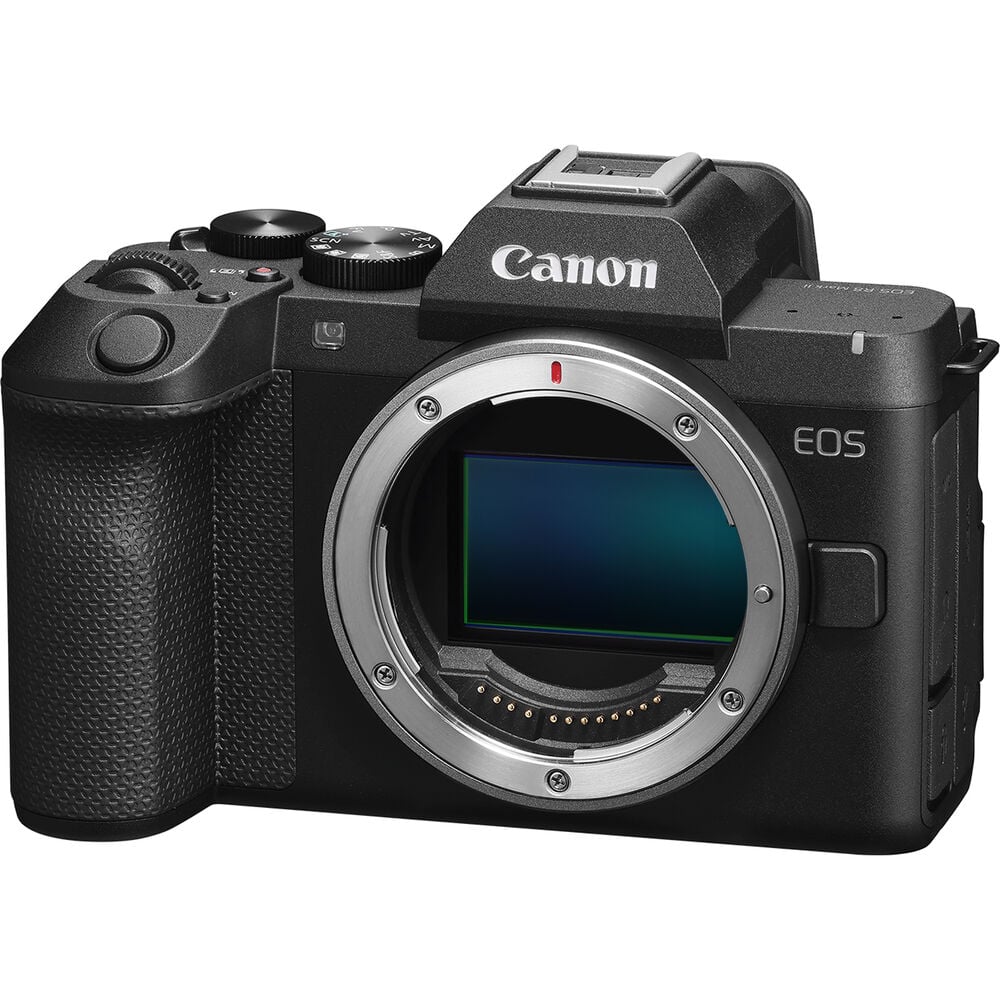






A Lens Gap Filled
Canon RF APS-C and Nikon Z DX shooters have had solid options for kit zooms. If you wanted a fast, constant-aperture standard zoom…well that’s been a different story.
Tamron’s 17-70mm F2.8 Di III-A VC RXD has been available for Sony E and Fujifilm X mounts for a while now, and it’s earned a strong reputation as one of the best all-around APS-C lenses you can buy.
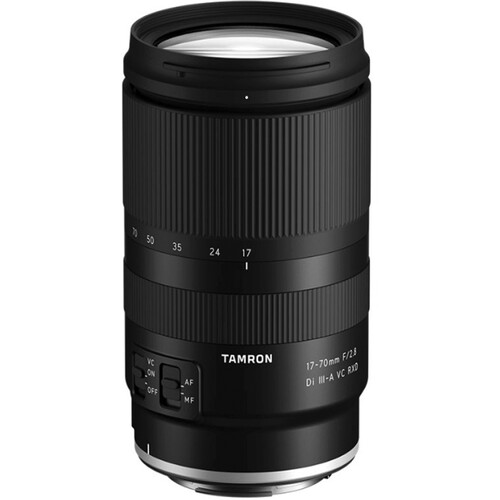
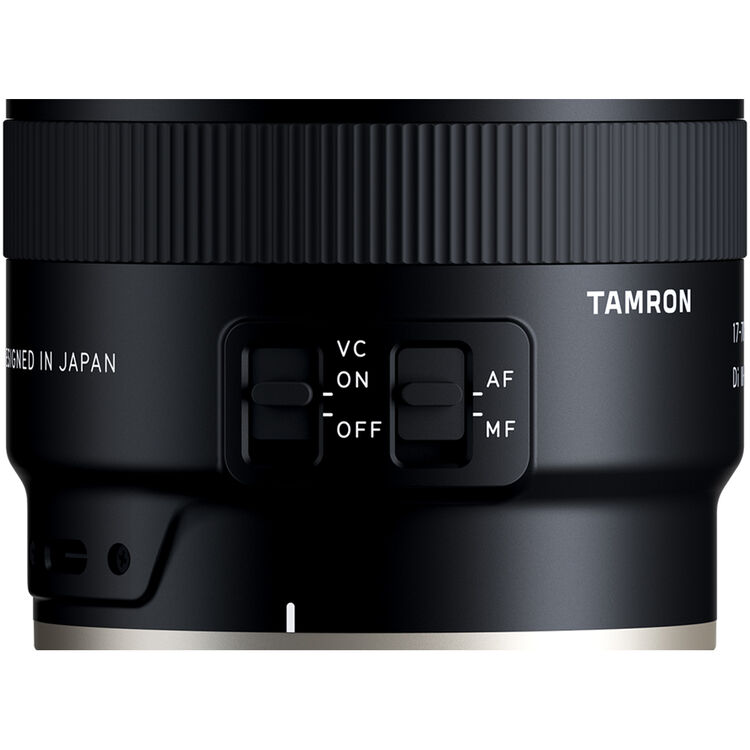
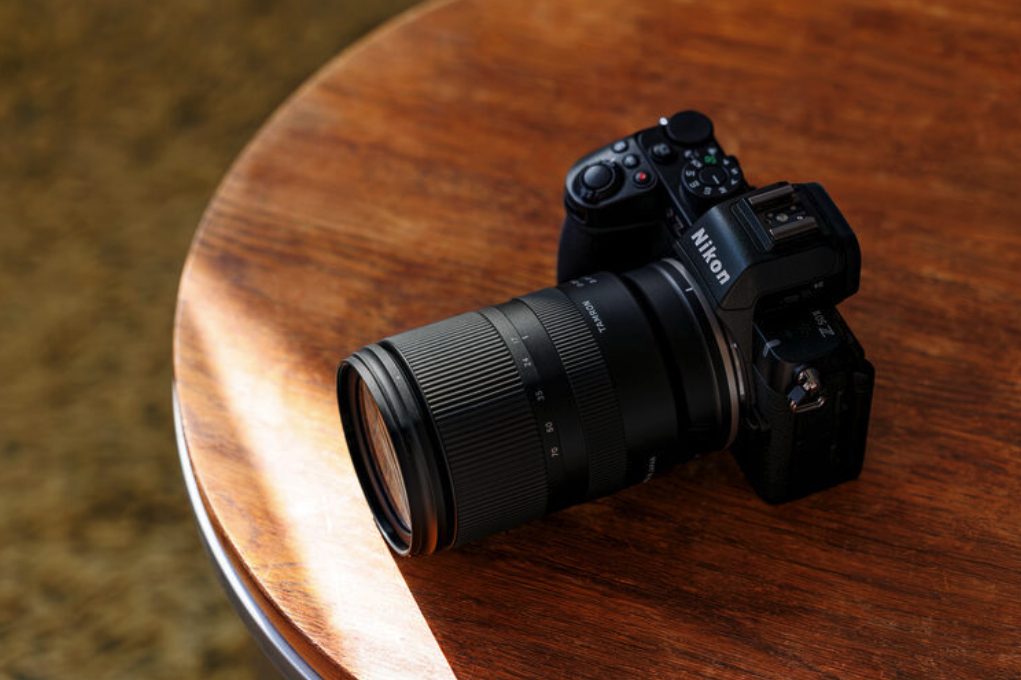
Now Tamron is bringing it to Canon RF and Nikon Z mounts at $749 USD, shipping July 2026. Both mounts get the same core lens – same optics, same stabilization system, same AF motor. The RF version adds physical AF/MF and VC on/off switches on the barrel, which matters more if you shoot video.
This lens fills a real gap. Canon RF APS-C has the Sigma 18-50mm f/2.8, which is a good lens, but it tops out at an effective 80mm. Nikon Z DX shooters have had even fewer options at constant f/2.8. The Tamron pushes to an effective 105mm on Nikon Z and 112mm on Canon RF – and keeps f/2.8 the whole way.
What You’re Getting
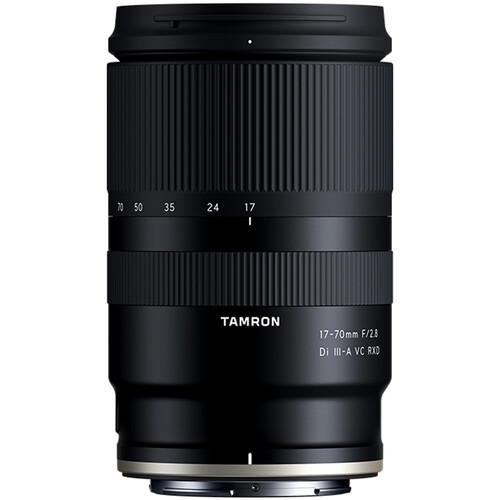
The optical formula is 16 elements in 12 groups, with aspherical and low-dispersion glass throughout. The 9-blade rounded diaphragm produces clean out-of-focus rendering. Minimum focus distance is 0.19m at 17mm, which gives you some close-up ability without a dedicated macro lens.
Weight runs 530g for the RF version and 540g for the Z version. Both are about 117-121mm long with a 67mm front filter thread. These are solid, substantial lenses.
Both versions include USB-C for firmware updates and support for Tamron Lens Utility, which lets you customize focus ring behavior and update firmware down the road.
The AF motor is Tamron’s RXD (Rapid eXtra-silent Drive) – a stepping motor system that’s quiet and fast. Reviews of the Sony and Fuji versions consistently describe AF as reliable and responsive for both stills and video, with minimal focus breathing during recording.
What Is a VC?
VC stands for Vibration Compensation – Tamron’s in-lens image stabilization system. Canon calls theirs IS, Nikon calls theirs VR, Sony uses OSS.
Different names, same core purpose: reduce blur from hand movement so you can shoot at slower shutter speeds or hold handheld video steadier.
Tamron’s VC system uses a gyro sensor and a floating lens element to compensate for horizontal, vertical, and diagonal movement. On the 17-70mm, it operates in multiple modes including a panning mode for tracking subjects.
For Canon RF APS-C and Nikon Z DX shooters, this is important because many popular bodies in those systems – the R50, R10, Zfc, Z30 – don’t have in-body stabilization (IBIS) or very limited stabilization. A lens with strong built-in VC gives you some handheld headroom that you wouldn’t have otherwise. For video, it’s going to help be smooth and look less shaky.
Reviewers of the Sony version report shooting handheld at shutter speeds they wouldn’t normally try, and still coming away with sharp frames. This should carry directly to the RF and Z versions as well.
Optical Performance: What the Reviews Say
Because the RF and Z versions share their optical design with the existing Sony and Fuji lenses, published tests give a solid picture of what to expect.
PCMag awarded the lens Editors’ Choice, calling out premium optics and outstanding sharpness at a price that undercuts Sony and Fujifilm’s own 16-55mm f/2.8 offerings.
The Phoblographer went as far as calling it the best lens for Sony APS-C cameras, full stop.
Lab tests from ePHOTOzine and Amateur Photographer show excellent central sharpness at wide open across most of the zoom range. Edges sharpen up by f/5.6 to f/8. At the wide end, uncorrected files show visible distortion and some corner softness – typical for a high-ratio zoom at this price. Enable in-camera lens corrections or apply a raw profile and most of that cleans up.
Chromatic aberration is well-controlled. Flare is managed. Bokeh at f/2.8 is pleasing – not prime-level smooth, but clean and undistracting for a zoom.
Imaging Resource’s hands-on describes it as a solid all-around lens with consistent performance across the focal range. That’s probably the proper expectation to have: this lens delivers at every focal length without excelling dramatically at any one of them.
Who This Lens Is For

Hybrid shooters and YouTube creators – If you’re on a Canon RF or Nikon Z APS-C body and shooting a mix of photos and video, this is the most practical single-lens solution available. The focal range covers wide establishing shots through tight B-roll. VC helps the handheld footage stay smooth. The consistent f stop across focal lengths will give help with video consistency. The quiet RXD motor is supposed to keep AF noise out of your audio. The RF version’s physical switches let you kill stabilization fast when you move to a gimbal.
Travel and everyday photographers – The effective 25.5-112mm range covers most situations you’ll encounter without swapping lenses. Perfect for on the go and street photographers who like a zoom. Weather resistance means you are supposed to be able to shoot some in the rain. The constant f/2.8 keeps exposure consistent as you zoom, which is wonderful to still have the lens throw when the light is changing fast.
Photographers upgrading from kit lenses – The step up from a variable-aperture kit zoom to a constant f/2.8 is huge. Wider depth of field across the zoom range, better low-light performance, and VC to help you. That combination is wonderful.
Where It Compromises

Size and weight are the biggest tradeoffs. On a compact body like the Canon R50 or Nikon Zfc, this lens will feel a little big. Digital Camera World notes “feels large on small bodies” as a real thing to think about. If you bought an APS-C camera for its portability maybe factor that in.
Edge sharpness and distortion at 17mm are good but imperfect. For critical landscape work at the wide end, you should probably shoot more stopped down at f/8 and apply corrections.
Subject separation at f/2.8 is solid, but those portrait photographers chasing maximum background blur through optics will still get more from a fast prime in the 50-85mm equivalent range. This lens could be seen more as a generalist.
The Bottom Line
The Tamron 17-70mm F2.8 at $749 gives Canon RF APS-C and Nikon Z DX shooters something they haven’t had – an affordable, stabilized, constant f/2.8 standard zoom with a range that covers nearly every everyday shooting situation. The Sony and Fuji versions have been proven and now the RF and Z versions bring the same optics with added controls and USB-C support.
If you’re on an APS-C mirrorless body and shooting a mix of stills and video, this is the lens to consider before spending more on native glass or jumping to full frame. It seems like a good “jack-of-all-trades” lens.
Want 30 years of photography knowledge, tutorials, and interviews with working photographers? Luminous Landscape membership is $24 a year – just $2 a month. Join photographers who are serious about getting better.





Elevate Your Vision


You may also like